Dwarf mbuna
Chindongo demasoni
Also known as Pseudotropheus demasoni
FreshwaterFish
Care at a glance
- Temperature
- 75–82°F
- 24–28°C
- pH
- 7.5–8.5
- Adult size
- 3.5 in
- 9 cm
- Minimum tank
- 53 gal
- 200 L
- Temperament
- Aggressive
- Social behavior
- Social
- Tankmates
- With caution
- Swim level
- Middle
- Diet
- Herbivore
- Difficulty
- Difficult
- Breeding
- Mouthbrooder
- Rarity
- Rare
- Family
- Cichlidae
- Origin
- Lake Malawi
Overview
The dwarf mbuna is an aggressive, territorial cichlid for a rocky Lake Malawi tank. It is best left to experienced keepers.
Did you know
Dwarf mbuna attack their own kind so hard that keeping just two or three usually ends with the weaker ones killed. Crowding them in big numbers is the safer approach, since the constant aggression gets shared around instead of focused on one victim.
Caring for the dwarf mbuna
Give dwarf mbuna at least 53 gal (200 L) with a big rockwork setup full of caves and passages. Leave open swimming lanes between the rock piles to help spread out aggression.
Keep the water hard and alkaline, at 75 to 82°F (24 to 28°C) and a pH of 7.5 to 8.5. They are grazers, so feed algae and spirulina-based foods rather than a meaty diet, which can cause bloat.
Dwarf mbuna are aggressive and territorial. Keep a large group, a dozen or more, and house them only with other tough mbuna, never with timid fish.
The sexes look nearly identical. Like other Malawi cichlids, the dwarf mbuna is a maternal mouthbrooder, and the female holds the eggs and fry in her mouth.
Good to know
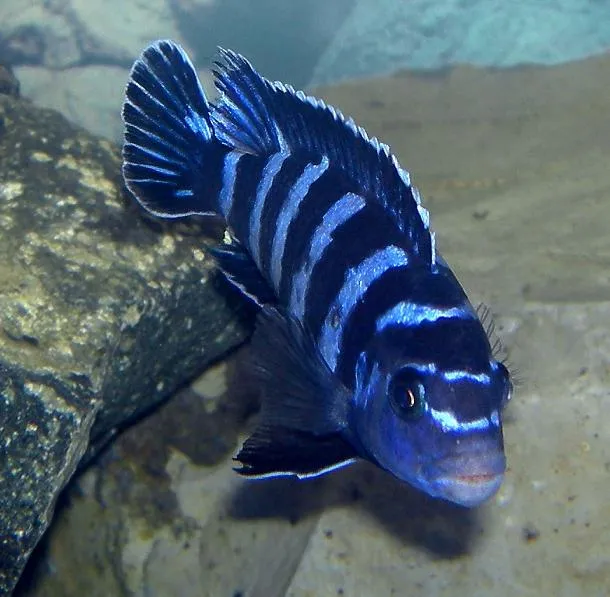
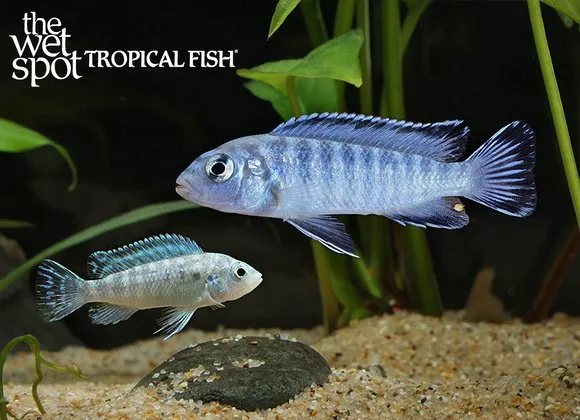
The dwarf mbuna, Chindongo demasoni, is a mbuna cichlid in the family Cichlidae. It wears bold blue and black vertical bars.
In the wild
The dwarf mbuna comes from the rocky shores of Lake Malawi around Pombo Rocks. It lives in the shallow zone among piled boulders and crevices. The lake is hard and alkaline, with a pH well into the 8s.
Common questions
What size tank does a dwarf mbuna need?
A dwarf mbuna needs at least 53 gal (200 L). It spends most of its time in the middle.
What temperature and pH does a dwarf mbuna need?
A dwarf mbuna is comfortable at 75–82°F (24–28°C) with a pH of 7.5–8.5.
What does a dwarf mbuna eat?
A dwarf mbuna is a grazer that eats algae and spirulina-based foods. Avoid a meaty diet, which can cause bloat.
How big does a dwarf mbuna get?
An adult dwarf mbuna reaches about 3.5 in (9 cm).
How does a dwarf mbuna breed?
The dwarf mbuna is a maternal mouthbrooder, like other Malawi cichlids. The female keeps the eggs, and later the fry, in her mouth.
Related species
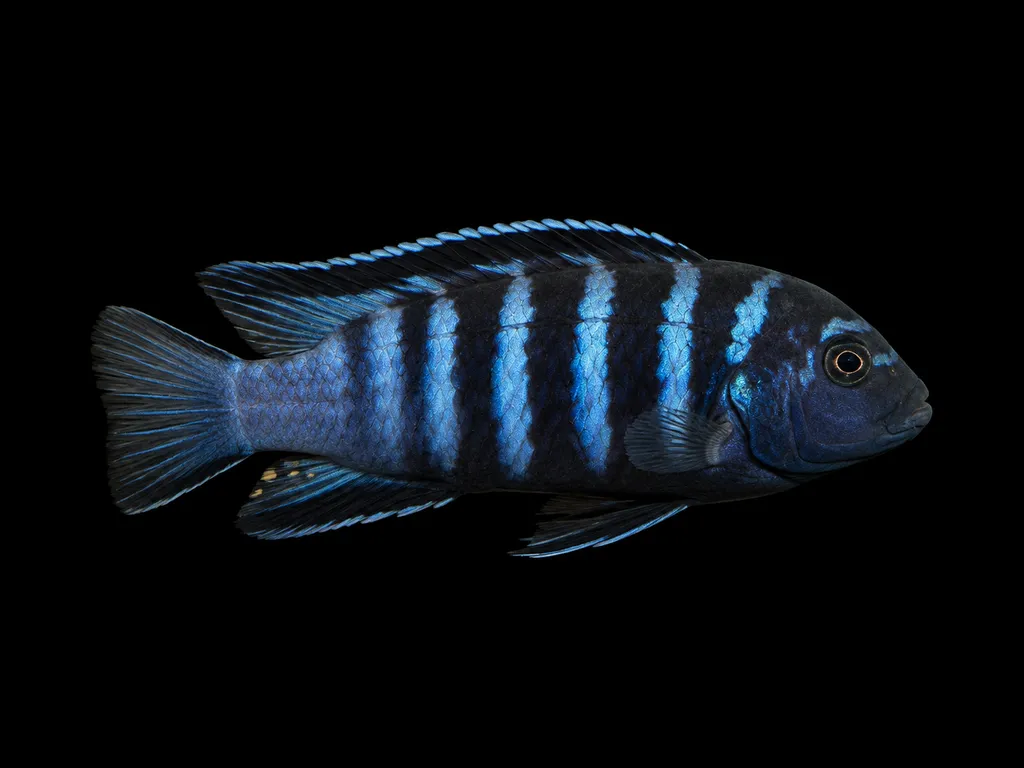 5.1 in (13 cm)53 gal (200 L)75–81°F (24–27°C)
Elongate mbuna
Chindongo elongatus
5.1 in (13 cm) · 53 gal (200 L)
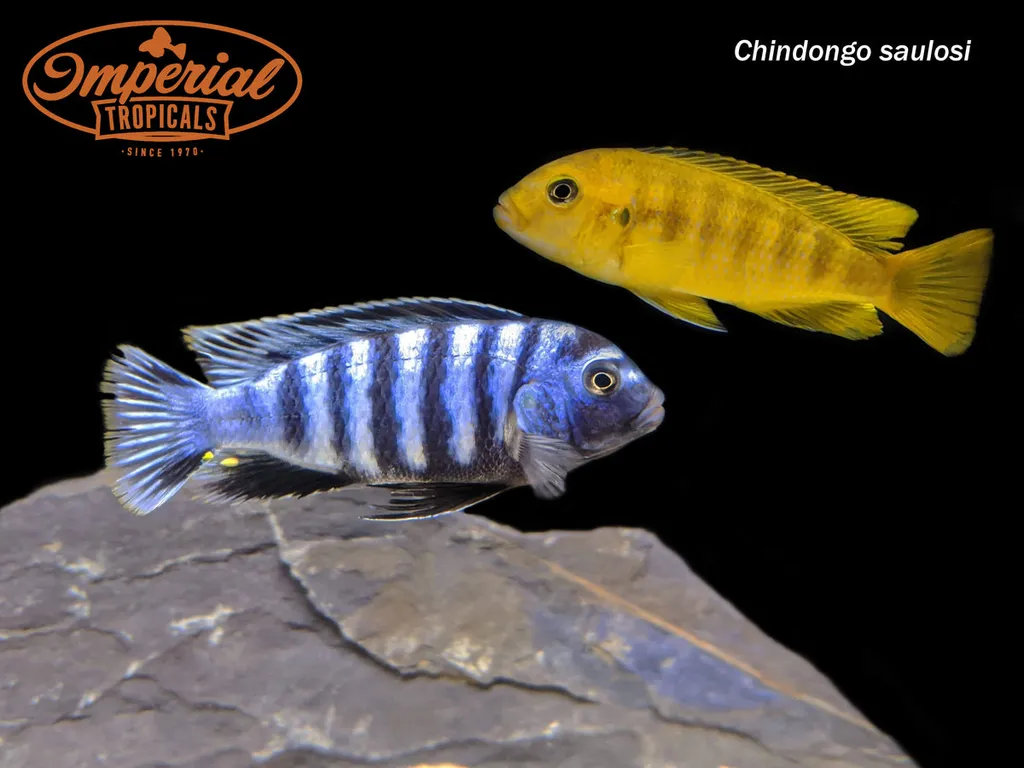 3.9 in (10 cm)42 gal (160 L)73–81°F (23–27°C)
Saulosi mbuna
Chindongo saulosi
3.9 in (10 cm) · 42 gal (160 L)
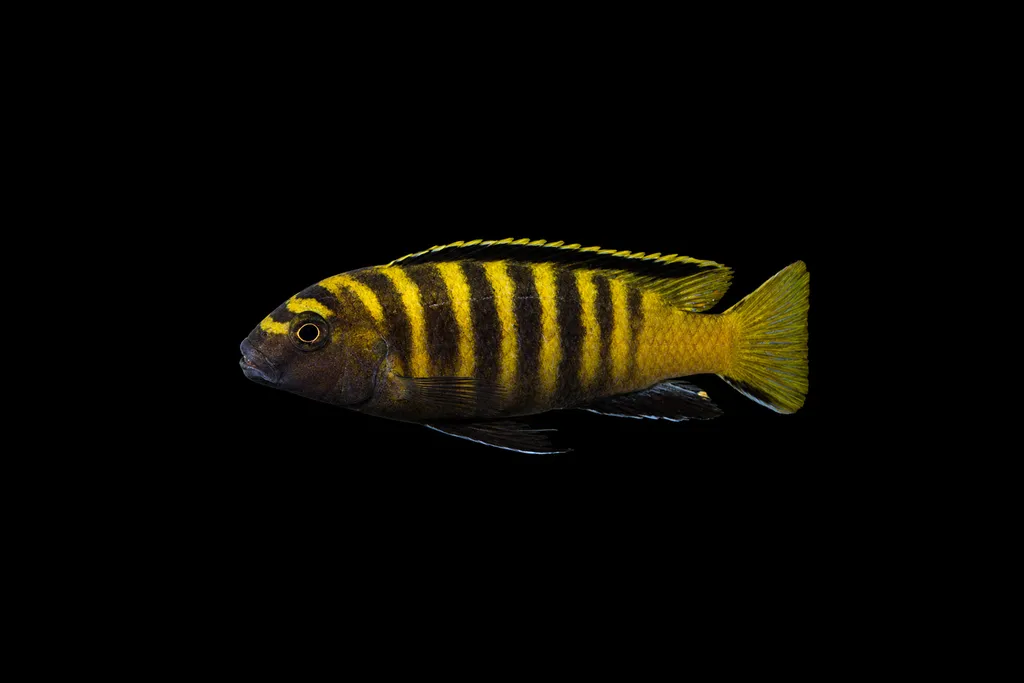 3.7 in (9.5 cm)42 gal (160 L)75–82°F (24–28°C)
Yellow chindongo
Chindongo flavus
3.7 in (9.5 cm) · 42 gal (160 L)
 4.7 in (12 cm)53 gal (200 L)75–81°F (24–27°C)
Powder blue cichlid
Chindongo socolofi
4.7 in (12 cm) · 53 gal (200 L)
 3.5 in (9 cm)30 gal (115 L)75–82°F (24–28°C)
Zebroides cichlid
Cynotilapia zebroides
3.5 in (9 cm) · 30 gal (115 L)
 3.9 in (10 cm)29 gal (110 L)77–84°F (25–29°C)
Afra cichlid
Cynotilapia afra
3.9 in (10 cm) · 29 gal (110 L)