Sand-sifting star
Archaster typicus
Also known as Sand Sifting Starfish, Common Sea Star, Sand Star, Sand Sea Star
SaltwaterInvertebrate
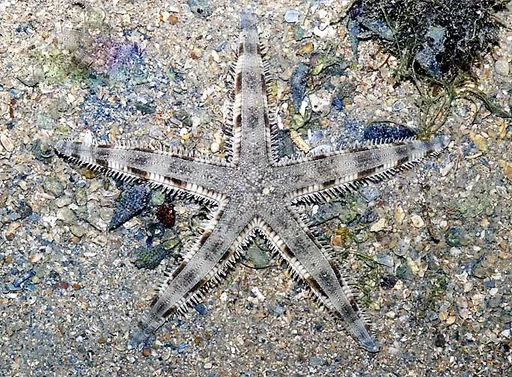
Care at a glance
- Temperature
- 75–81°F
- 24–27°C
- pH
- 8.1–8.4
- Adult size
- 4.7 in
- 12 cm
- Minimum tank
- 53 gal
- 200 L
- Temperament
- Peaceful
- Social behavior
- Solitary
- Swim level
- Bottom
- Difficulty
- Easy
- Breeding
- No record
- Rarity
- Common
- Reef safe
- Reef safe
- Family
- Archasteridae
- Origin
- Indo-Pacific sand flats and seagrass beds, from the Maldives and East Africa to Japan and Hawaii, south to Australia and New Caledonia
Overview
Reef safe and uninterested in corals: it feeds on detritus, uneaten food, and the worms, copepods, and other microfauna living in the sand, cleaning and aerating the top layer of substrate as it burrows. That diet is also its biggest weakness in a small aquarium, since one star can strip a modest sand bed of its microfauna within months and then slowly starve once the food runs out; it really only does well long term in a large, mature tank with a deep, well-stocked sand bed behind it. Like every sea star, it needs a slow drip acclimation and stable salinity, since a sudden swing in specific gravity or pH can kill it outright, and it should never be lifted out of the water or exposed to air while being moved.
In the wild
Lives on shallow sand flats, seagrass meadows, and lagoon shallows across the Indo-Pacific, from the Maldives and East Africa to Japan and Hawaii, south to Australia and New Caledonia, often right in the intertidal zone. It spends its time moving over and just beneath the sand surface, sifting through the top layer of substrate as it forages, and needs a soft bed of fine to medium sand at least 5–8 cm deep to burrow into. It does best in an established aquarium with plenty of open sand footprint rather than a rock-choked aquascape, since it depends on that sand bed for both shelter and food. A tank of at least 200 litres (53 US gal) gives it enough sand surface area to forage without stripping the bed bare.
Good to know
One of the few starfish that pair up through pseudocopulation rather than simply broadcast spawning into open water: a male climbs onto a female and rides on top of her, sometimes for weeks, synchronizing his spawning with hers before they finally release eggs and sperm together. It is also frequently confused in the trade with the similar-looking Astropecten polyacanthus, a sand star that swallows small mollusks whole and carries the nerve toxin tetrodotoxin in its tissues; true Archaster typicus has blunt, flattened spines and suckered tube feet, while Astropecten has sharper spines and pointed, non-suckered tube feet built for digging rather than gripping.
Did you know
Mated pairs stay physically stacked together for weeks before spawning, and on natural sand flats in the Philippines, researchers have counted as many as seven mating pairs packed into a single square meter around the full moon.
Common questions
What size tank does a Sand-sifting star need?
A Sand-sifting star needs at least 53 gal (200 L). It spends most of its time in the bottom.
What temperature and pH does a Sand-sifting star need?
A Sand-sifting star is comfortable at 75–81°F (24–27°C) with a pH of 8.1–8.4.
How big does a Sand-sifting star get?
An adult Sand-sifting star reaches about 4.7 in (12 cm).
Related species
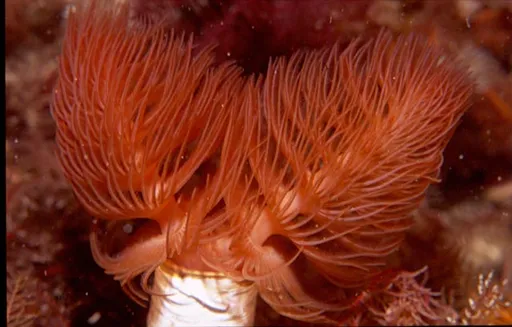 5.1 in (13 cm)20 gal (75 L)75–81°F (24–27°C)
Coco worm
Protula bispiralis
5.1 in (13 cm) · 20 gal (75 L)
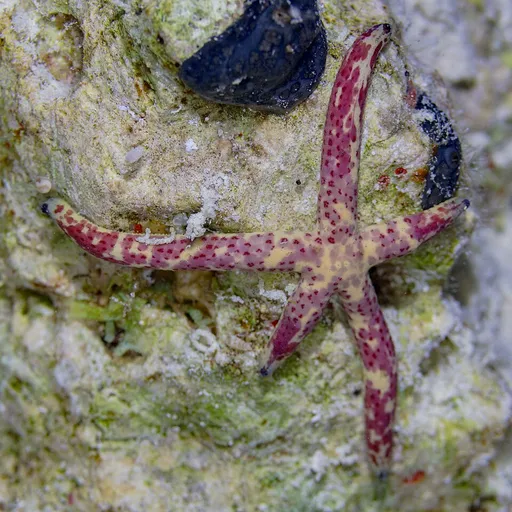 5.1 in (13 cm)53 gal (200 L)75–81°F (24–27°C)
Multicolor sea star
Linckia multifora
5.1 in (13 cm) · 53 gal (200 L)
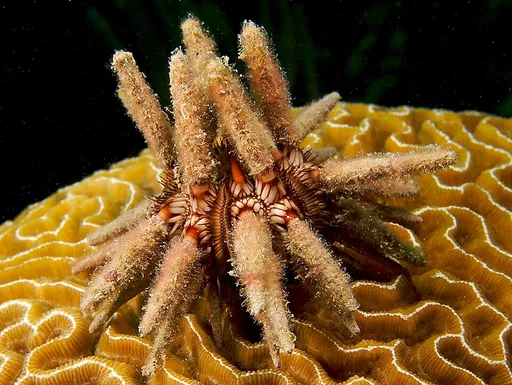 5.1 in (13 cm)20 gal (75 L)75–81°F (24–27°C)
Slate pencil urchin
Eucidaris tribuloides
5.1 in (13 cm) · 20 gal (75 L)
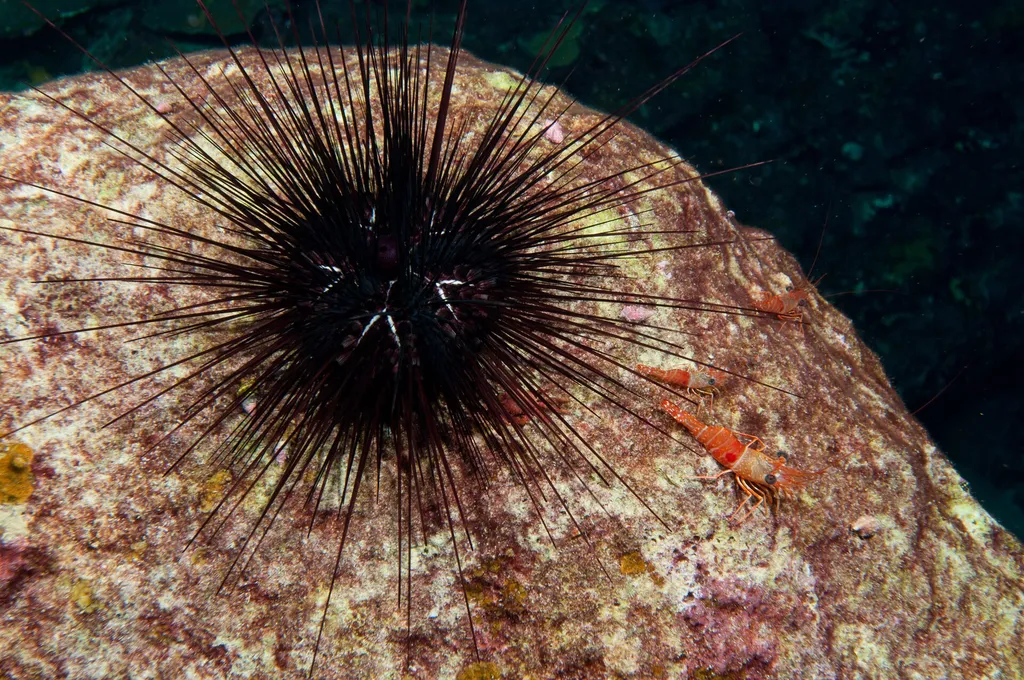 3.9 in (10 cm)79 gal (300 L)72–81°F (22–27°C)
Caribbean long-spined urchin
Diadema antillarum
3.9 in (10 cm) · 79 gal (300 L)
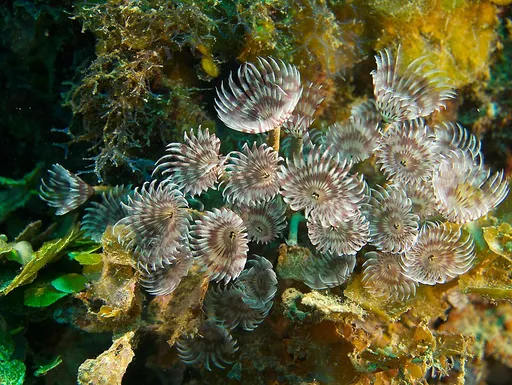 3.9 in (10 cm)11 gal (40 L)75–81°F (24–27°C)
Social feather duster
Bispira brunnea
3.9 in (10 cm) · 11 gal (40 L)
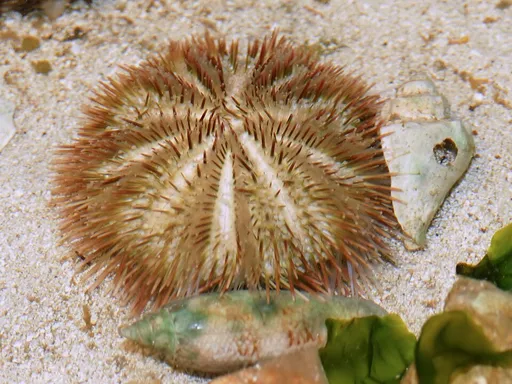 3.9 in (10 cm)20 gal (75 L)72–81°F (22–27°C)
White urchin
Lytechinus variegatus
3.9 in (10 cm) · 20 gal (75 L)