Romand's tropheops
Tropheops romandi
Also known as Romandi tropheops
FreshwaterFish
Care at a glance
- Temperature
- 75–82°F
- 24–28°C
- pH
- 7.5–8.5
- Adult size
- 3.1 in
- 8 cm
- Minimum tank
- 53 gal
- 200 L
- Temperament
- Aggressive
- Social behavior
- Social
- Tankmates
- With caution
- Swim level
- Bottom
- Diet
- Herbivore
- Difficulty
- Medium
- Breeding
- Mouthbrooder · Medium
- Rarity
- Rare
- Family
- Cichlidae
- Origin
- Lake Malawi
Overview
Romand's tropheops is an mbuna, a lively rock-grazing cichlid from Lake Malawi. It is aggressive and best with a little experience.
Did you know
Like other tropheops, Romand's tropheops grazes by tilting up to the rock and tugging tough algae loose with comb-like teeth.
Caring for the Romand's tropheops
A rocky tank of at least 53 gal (200 L) gives a group of Romand's tropheops the territories and sight breaks it needs. Use a sandy base, and stack generous piles of rock into caves and grazing surfaces where a film of algae can grow.
Keep the water hard and alkaline, at 75 to 82°F (24 to 28°C) and a pH of 7.5 to 8.5. Feed a vegetable-based diet of spirulina flake and algae wafers. Avoid rich meaty foods, which mbuna digest poorly.
It is lively and quarrelsome, and it works the rocks near the bottom. It is fine alone or in a group. In a group, stock more females than males so one male cannot corner a single target. Choose tank mates with care, sticking to other robust, similarly sized mbuna that can hold their own.
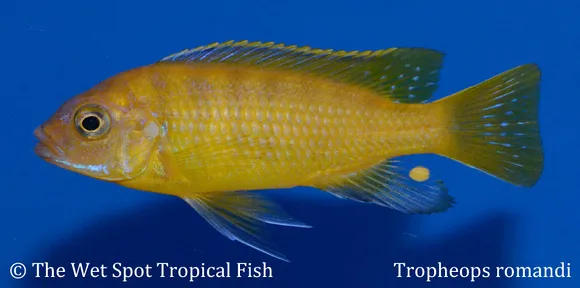
Females and young are a plain gold. A ripening male darkens as soon as he takes a territory, and dominant males show a brassy line along the dorsal fin. It is a maternal mouthbrooder, and the female holds the eggs and fry in her mouth for around three weeks. Breeding is of medium difficulty.
Good to know
Tropheops romandi is a cichlid in the family Cichlidae, and one of the smaller members of its genus. It also goes by the name romandi tropheops.
In the wild
Romand's tropheops grazes the shallow, rocky, algae-covered zones of Lake Malawi. The water there is hard, strongly alkaline, warm and clear.
Common questions
What size tank does a Romand's tropheops need?
A Romand's tropheops needs at least 53 gal (200 L). It spends most of its time in the bottom.
What temperature and pH does a Romand's tropheops need?
A Romand's tropheops is comfortable at 75–82°F (24–28°C) with a pH of 7.5–8.5.
What does a Romand's tropheops eat?
Romand's tropheops eats a vegetable-based diet of spirulina flake and algae wafers. Avoid rich meaty foods, which mbuna digest poorly.
How big does a Romand's tropheops get?
An adult Romand's tropheops reaches about 3.1 in (8 cm).
How can you tell a male Romand's tropheops from a female?
Males darken and show a brassy line along the dorsal fin once they become dominant. Females and young stay a plain gold.
How does a Romand's tropheops breed?
Romand's tropheops is a maternal mouthbrooder. The female holds the eggs and fry in her mouth for around three weeks, and breeding is of medium difficulty.
Related species
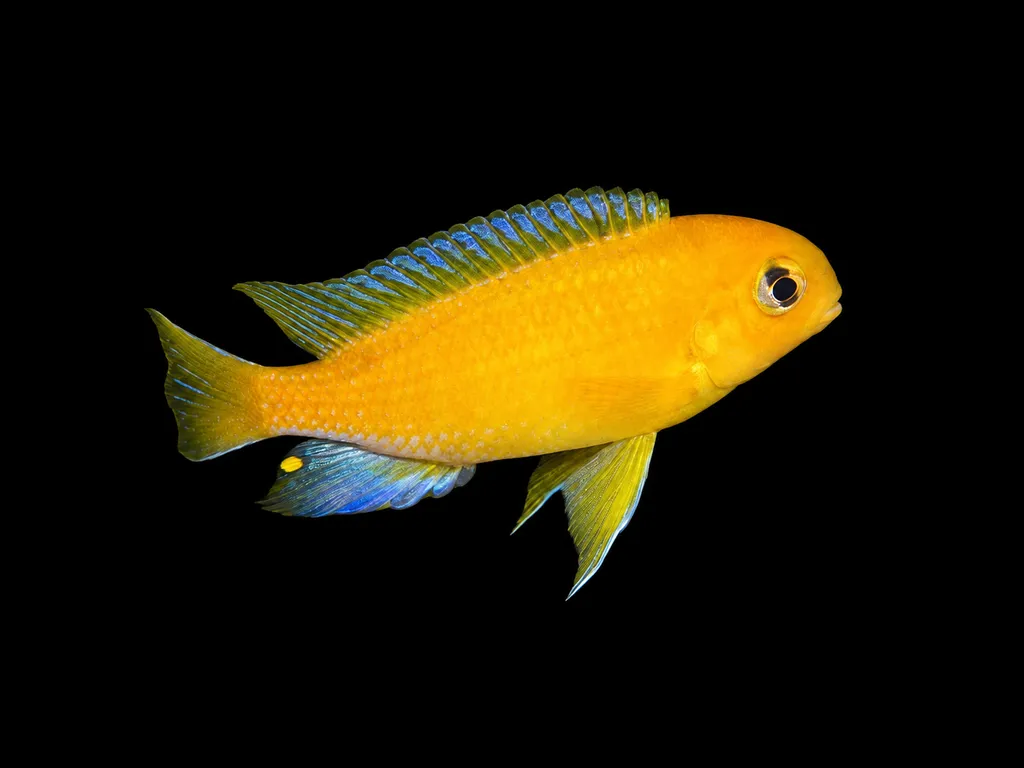 4.5 in (11.5 cm)66 gal (250 L)75–82°F (24–28°C)
Bigeye tropheops
Tropheops macrophthalmus
4.5 in (11.5 cm) · 66 gal (250 L)
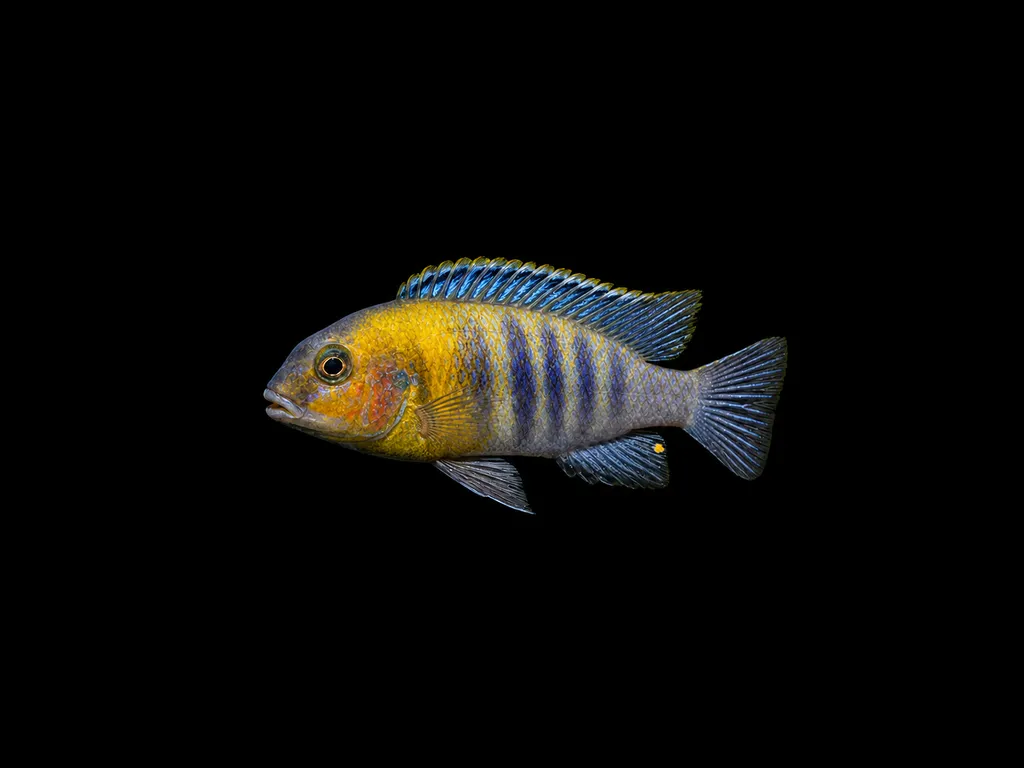 5.1 in (13 cm)74 gal (280 L)75–81°F (24–27°C)
Red cheek tropheops
Tropheops sp. 'Red Cheek'
5.1 in (13 cm) · 74 gal (280 L)
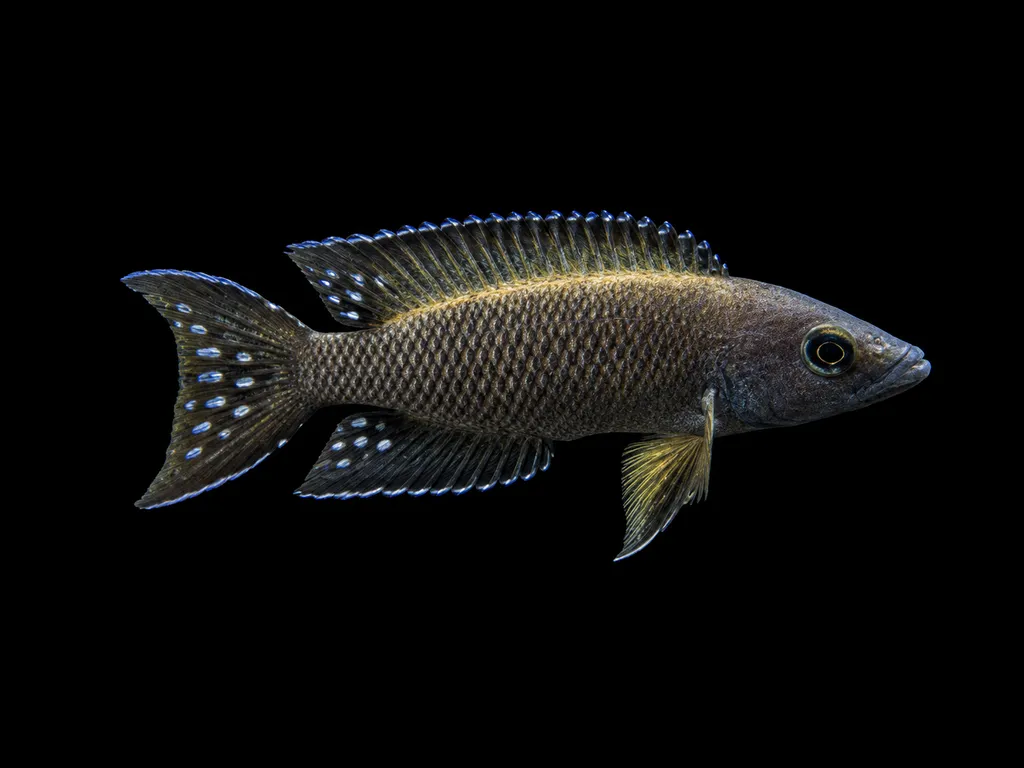 3.1 in (8 cm)28 gal (105 L)75–81°F (24–27°C)
Buescher's cichlid
Neolamprologus buescheri
3.1 in (8 cm) · 28 gal (105 L)
 3.1 in (8 cm)29 gal (110 L)75–81°F (24–27°C)
Hecqui shell dweller
Lepidiolamprologus hecqui
3.1 in (8 cm) · 29 gal (110 L)
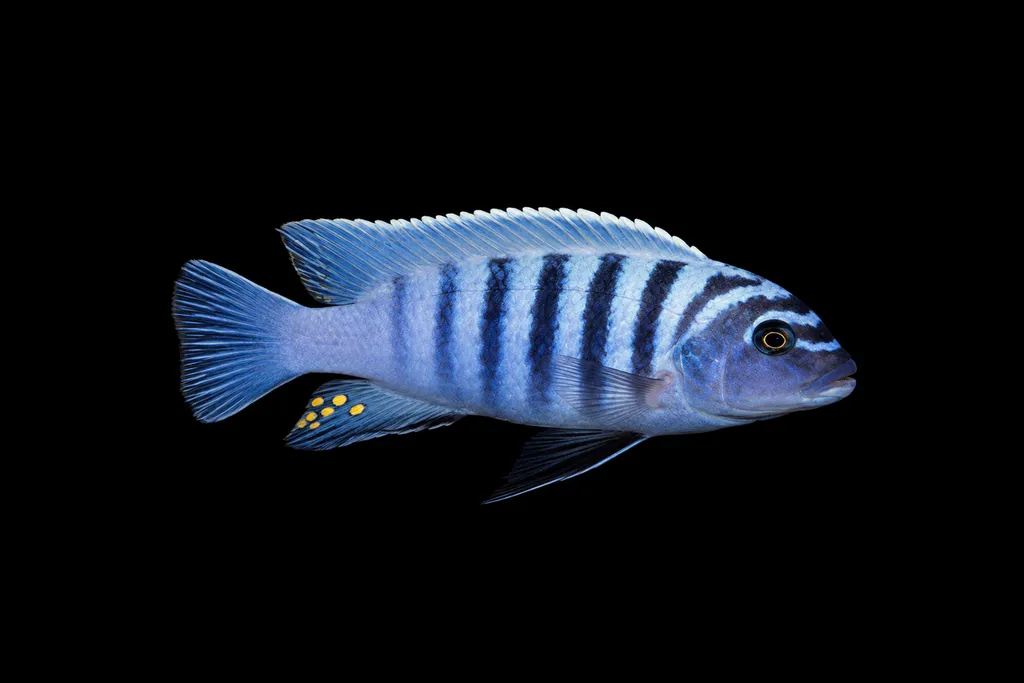 3.1 in (8 cm)42 gal (160 L)75–82°F (24–28°C)
Konings' zebra
Maylandia koningsi
3.1 in (8 cm) · 42 gal (160 L)
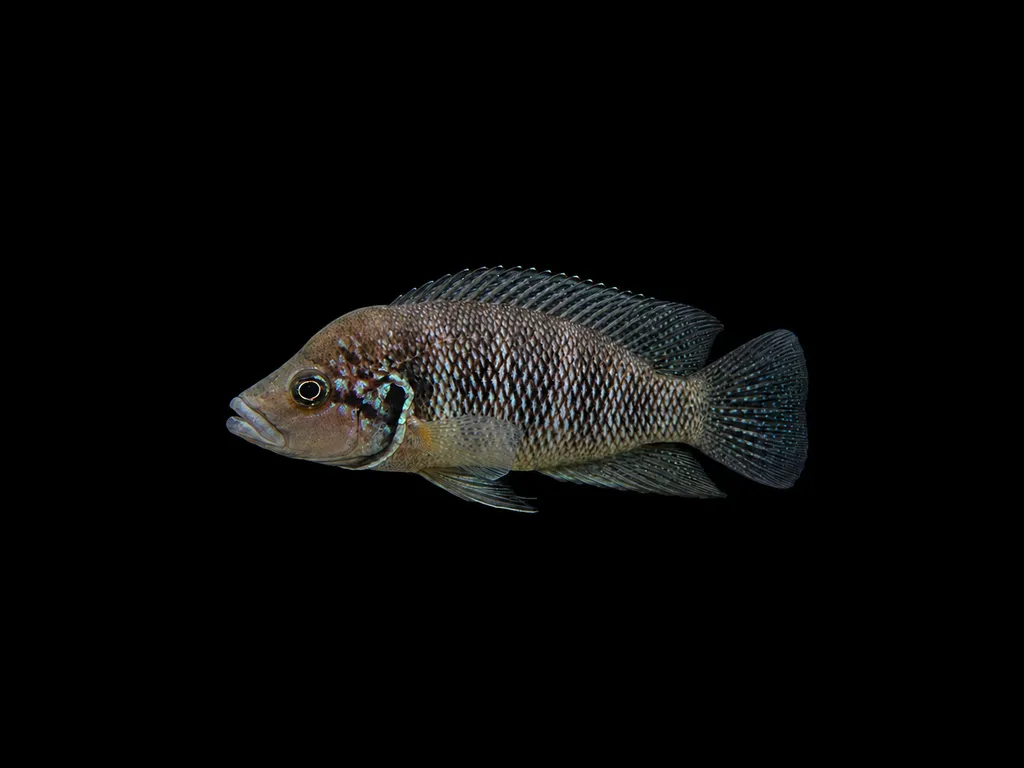 3.1 in (8 cm)18 gal (70 L)75–81°F (24–27°C)
Savory's cichlid
Neolamprologus savoryi
3.1 in (8 cm) · 18 gal (70 L)