Buescher's cichlid
Neolamprologus buescheri
Also known as Lamprologus buescheri, Zebra lamprologus
FreshwaterFish
Care at a glance
- Temperature
- 75–81°F
- 24–27°C
- pH
- 7.8–9.0
- Adult size
- 3.1 in
- 8 cm
- Minimum tank
- 28 gal
- 105 L
- Temperament
- Aggressive
- Social behavior
- Solitary
- Tankmates
- With caution
- Swim level
- Bottom
- Diet
- Carnivore
- Difficulty
- Medium
- Breeding
- Cave spawner · Hard
- Rarity
- Rare
- Family
- Cichlidae
- Origin
- Lake Tanganyika
Overview
Buescher's cichlid is a small, sharp-tempered rock dweller from Lake Tanganyika. It is best with a little experience.
Did you know
Buescher's cichlid has its own color forms on different stretches of the Tanganyika shoreline. Hobbyists label them by collecting site, such as Kachese, Gombi and Kamakonde, so one species turns up in several distinct local patterns.
Caring for the Buescher's cichlid
Keep a single Buescher's cichlid or one carefully introduced pair per rock stack, never a group, since it is intolerant of its own kind. A tank of at least 28 gal (105 L) suits a pair. Build tall stacks of rock full of narrow caves and crevices over a sandy floor.
Keep the water very hard and alkaline, at 75 to 81°F (24 to 27°C) and a pH of 7.8 to 9.0. Strong filtration keeps the water stable. Feed small carnivore foods such as frozen mysis, brine shrimp and cyclops, with quality pellets and flake.
Buescher's cichlid lives among vertical rock and caves on the bottom and defends its patch fiercely for its size. Give it a dedicated pile of rock and choose only robust tank mates. A species tank is the safest way to keep it.
It is a cave-spawning substrate brooder and one of the harder Neolamprologus to breed. A pair guards its very small broods inside a rock cave.
Good to know
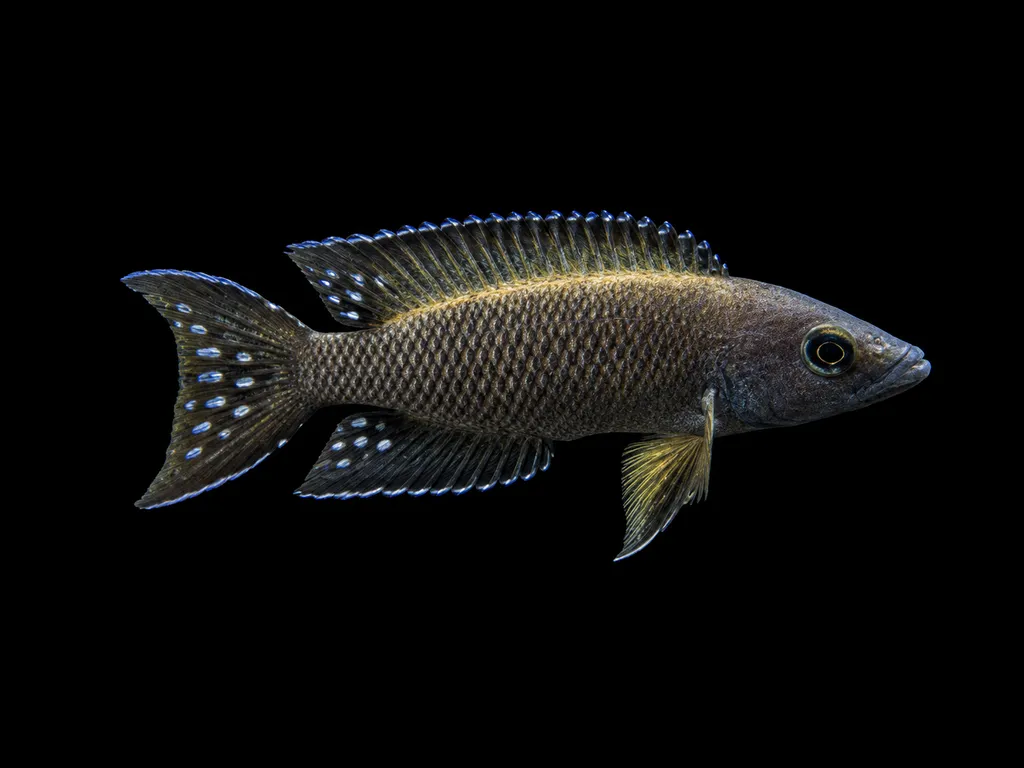
Neolamprologus buescheri belongs to the cichlid family. It is patterned in angular black or brown and cream stripes, with a slightly extended tail.
In the wild
Neolamprologus buescheri lives deep along steep, rocky shorelines in Lake Tanganyika. It stays in and around vertical rock faces riddled with cracks and caves. The lake is very hard, alkaline and warm.
Common questions
What size tank does a Buescher's cichlid need?
A Buescher's cichlid needs at least 28 gal (105 L). It spends most of its time in the bottom.
What temperature and pH does a Buescher's cichlid need?
A Buescher's cichlid is comfortable at 75–81°F (24–27°C) with a pH of 7.8–9.0.
What does a Buescher's cichlid eat?
A Buescher's cichlid eats small carnivore foods, such as frozen mysis, brine shrimp and cyclops, with quality pellets and flake.
How big does a Buescher's cichlid get?
An adult Buescher's cichlid reaches about 3.1 in (8 cm).
How does a Buescher's cichlid breed?
A Buescher's cichlid is a cave spawner and one of the harder Neolamprologus to breed. A pair guards its very small broods inside a rock cave.
Related species
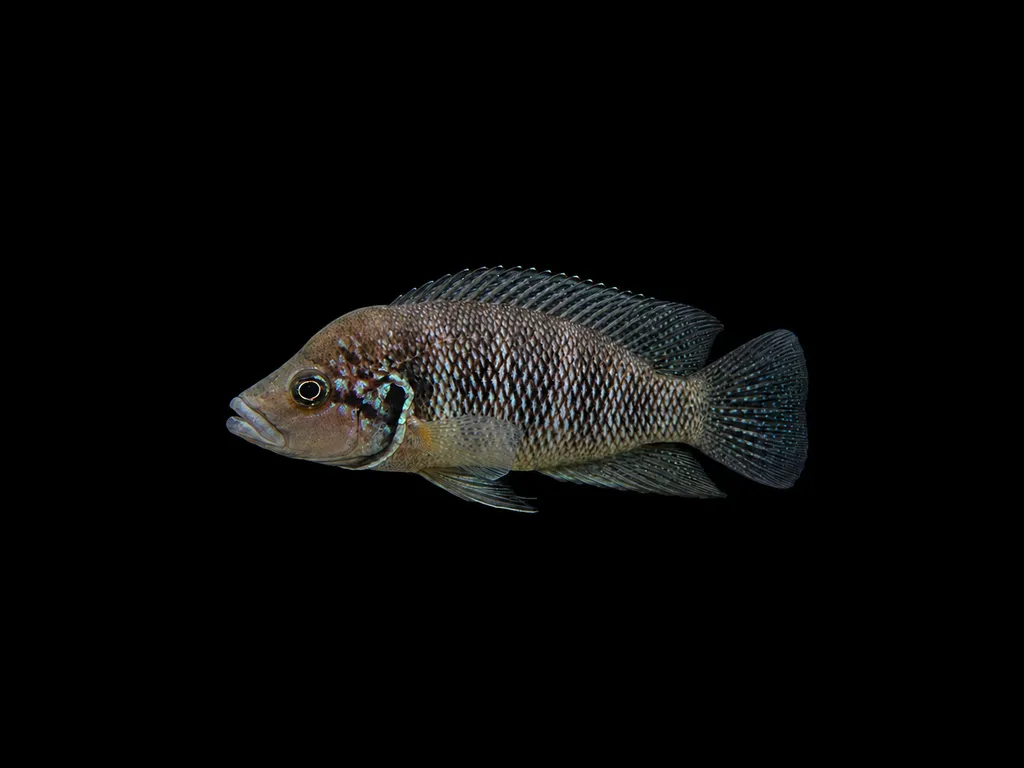 3.1 in (8 cm)18 gal (70 L)75–81°F (24–27°C)
Savory's cichlid
Neolamprologus savoryi
3.1 in (8 cm) · 18 gal (70 L)
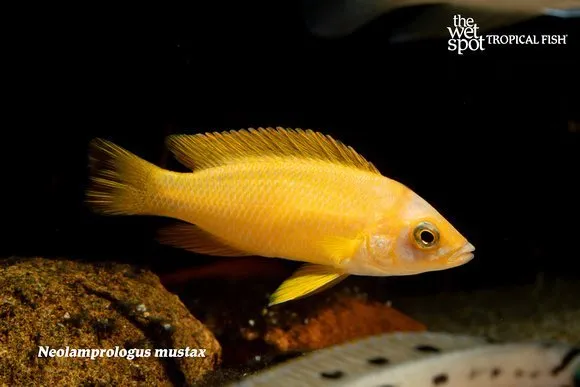 3.5 in (9 cm)42 gal (160 L)75–81°F (24–27°C)
Mustache lamprologus
Neolamprologus mustax
3.5 in (9 cm) · 42 gal (160 L)
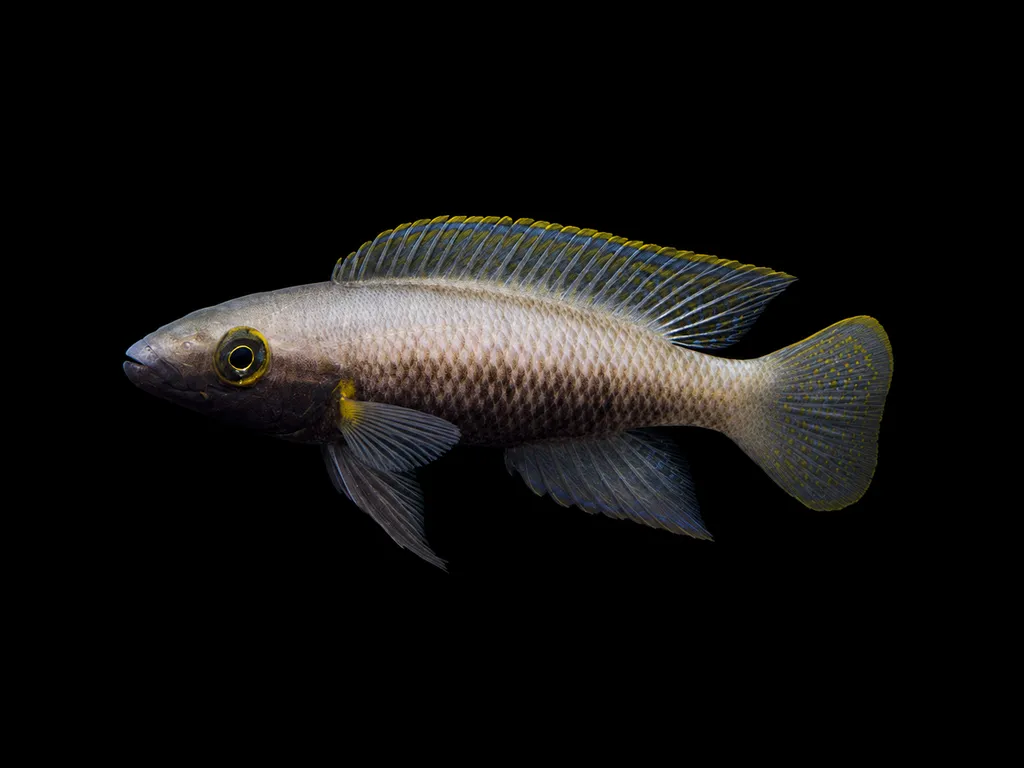 3.9 in (10 cm)42 gal (160 L)75–81°F (24–27°C)
Black-belly lamprologus
Neolamprologus nigriventris
3.9 in (10 cm) · 42 gal (160 L)
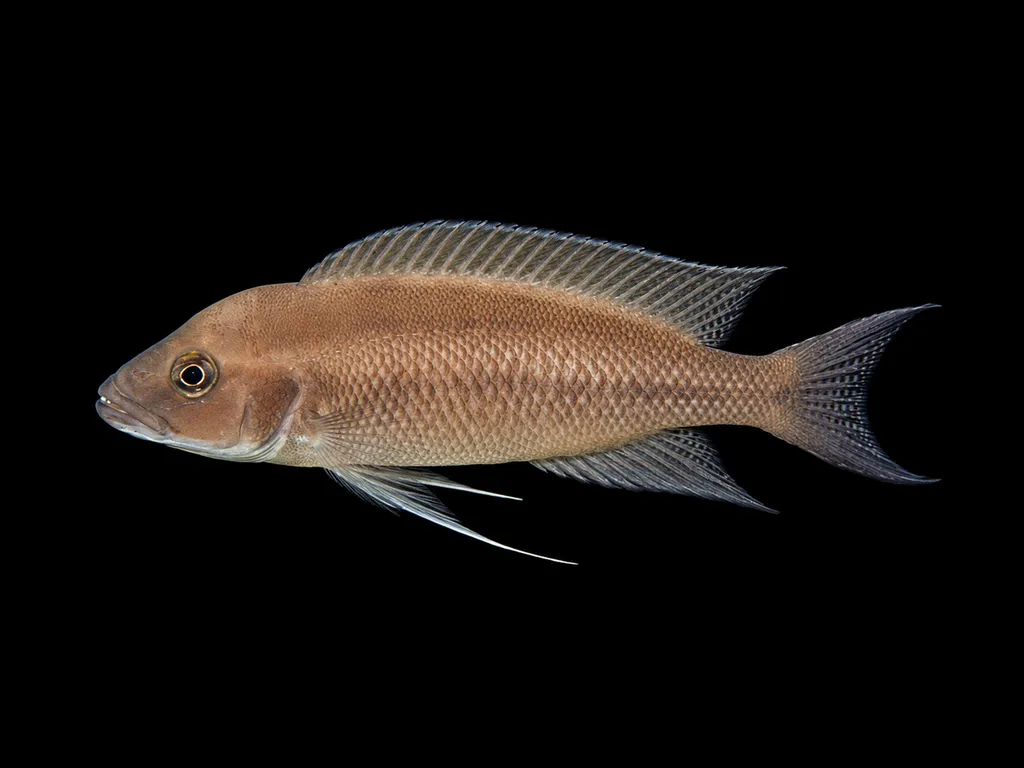 3.9 in (10 cm)42 gal (160 L)75–81°F (24–27°C)
Longtail lamprologus
Neolamprologus longicaudatus
3.9 in (10 cm) · 42 gal (160 L)
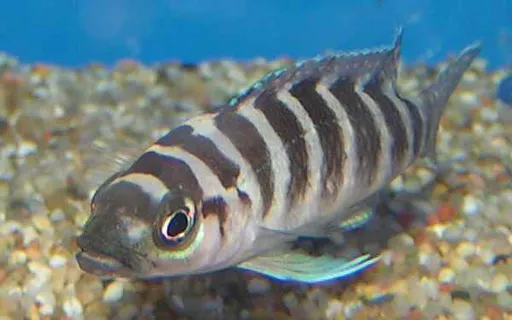 4.7 in (12 cm)29 gal (110 L)75–81°F (24–27°C)
Cylindricus cichlid
Neolamprologus cylindricus
4.7 in (12 cm) · 29 gal (110 L)
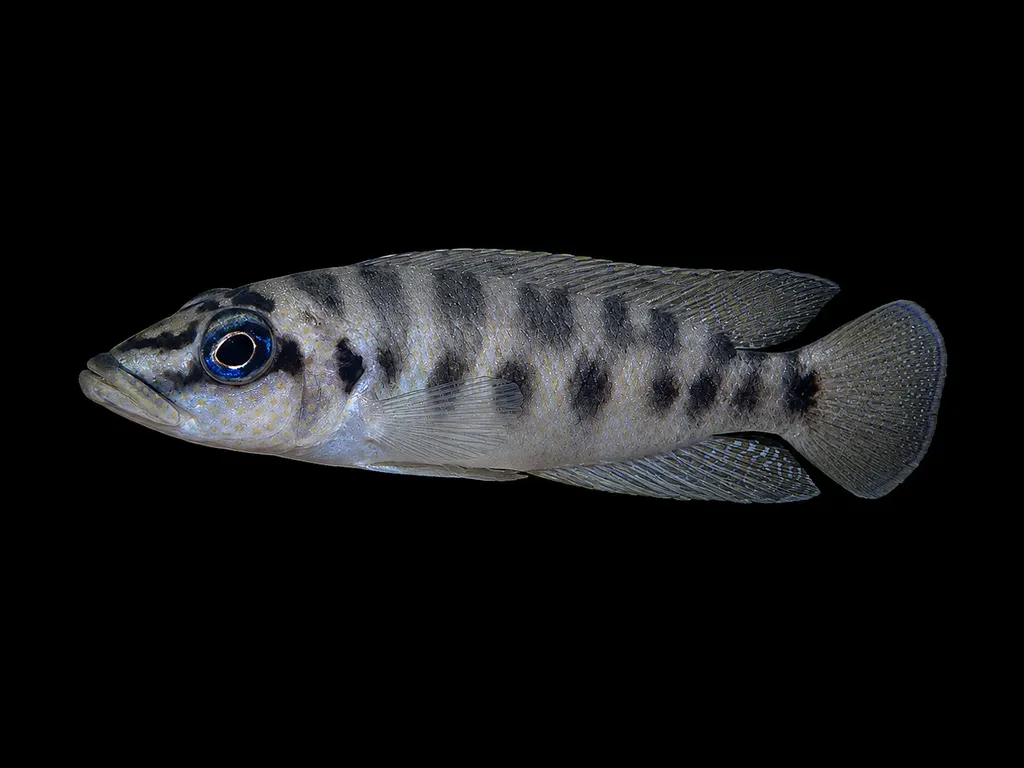 5.9 in (15 cm)66 gal (250 L)75–81°F (24–27°C)
Barred lamprologus
Neolamprologus fasciatus
5.9 in (15 cm) · 66 gal (250 L)