Red cheek tropheops
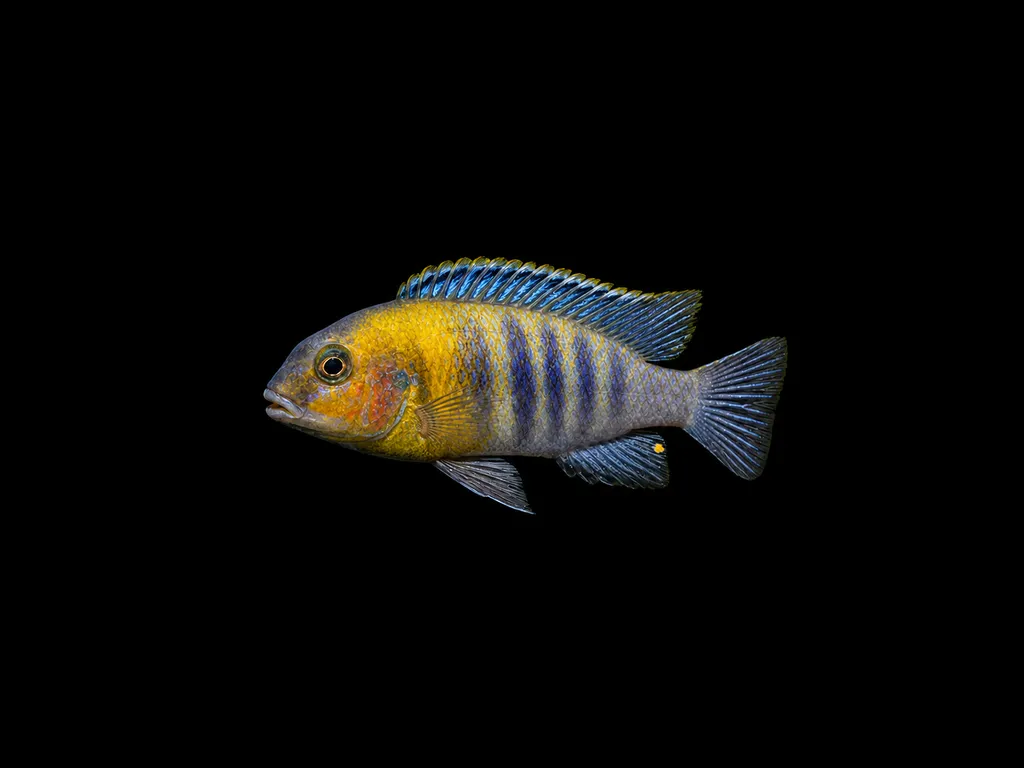
Tropheops sp. 'Red Cheek'
Also known as Red cheek mbuna, Tropheops red cheek, Pseudotropheus tropheops red cheek
FreshwaterFish
Care at a glance
- Temperature
- 75–81°F
- 24–27°C
- pH
- 7.6–8.6
- Adult size
- 5.1 in
- 13 cm
- Minimum tank
- 74 gal
- 280 L
- Temperament
- Aggressive
- Social behavior
- Social
- Own kind
- One male per tank
- Tankmates
- With caution
- Swim level
- Middle
- Difficulty
- Medium
- Breeding
- Easy
- Rarity
- Common
- Family
- Cichlidae
- Origin
- Rocky shorelines of Lake Malawi in East Africa.
Overview
Keep one male with several females in a rocky tank of at least 280 liters with hard alkaline water at 24 to 27 C, pH 7.6 to 8.6. It is a territorial mbuna, so provide caves and pair it with other sturdy rock dwellers. Feed a vegetable based diet of spirulina and algae pellets with light frozen treats. Starting with a group helps the fish sort out territories.
In the wild
This mbuna grazes algae along the rocky coasts of Lake Malawi and is named for the bright red flush on the cheeks and gill covers of dominant males. Males are otherwise dark to blue while females are usually plain brown or yellow. It holds and defends a feeding territory on the rocks.
Good to know
Tropheops sp. Red Cheek is one of many undescribed color forms in the Tropheops group, still traded under a location or nickname rather than a full species name. It is a maternal mouthbrooder and a steep sided algae grazer. The genus was once lumped into Pseudotropheus before being recognized on its own.
Did you know
Only the dominant male wears the namesake red cheeks in full, so a tank of subordinate fish can look surprisingly plain until one takes charge.
Common questions
What size tank does a Red cheek tropheops need?
A Red cheek tropheops needs at least 74 gal (280 L). It spends most of its time in the middle.
What temperature and pH does a Red cheek tropheops need?
A Red cheek tropheops is comfortable at 75–81°F (24–27°C) with a pH of 7.6–8.6.
How big does a Red cheek tropheops get?
An adult Red cheek tropheops reaches about 5.1 in (13 cm).
Related species
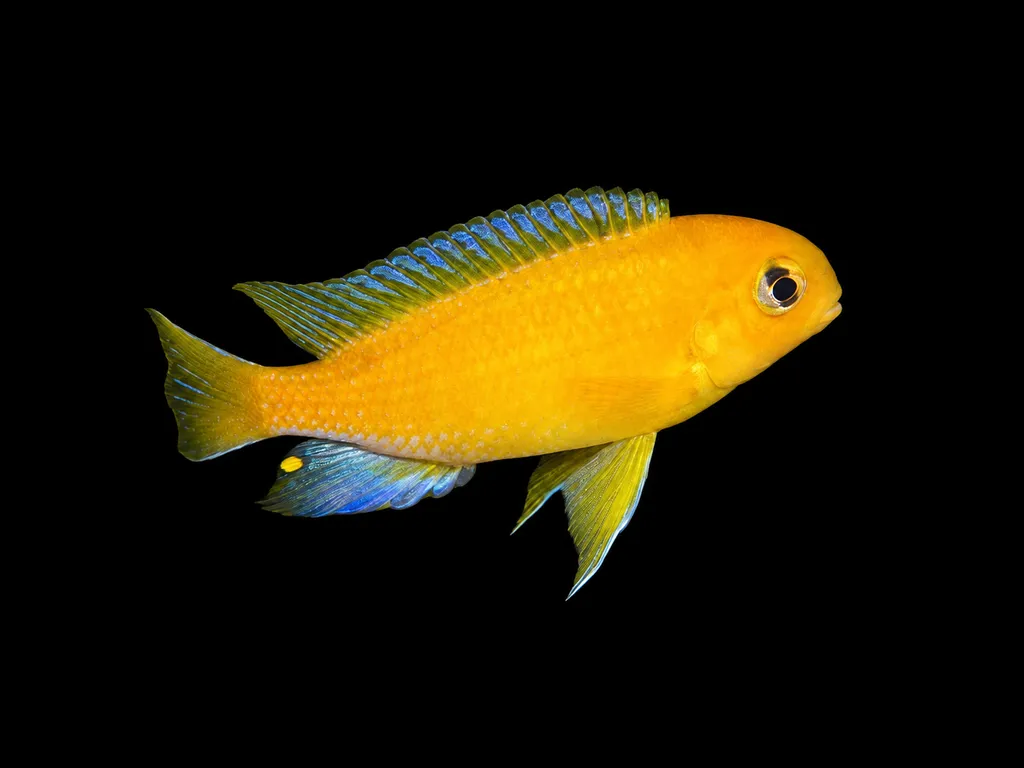 4.5 in (11.5 cm)66 gal (250 L)75–82°F (24–28°C)
Bigeye tropheops
Tropheops macrophthalmus
4.5 in (11.5 cm) · 66 gal (250 L)
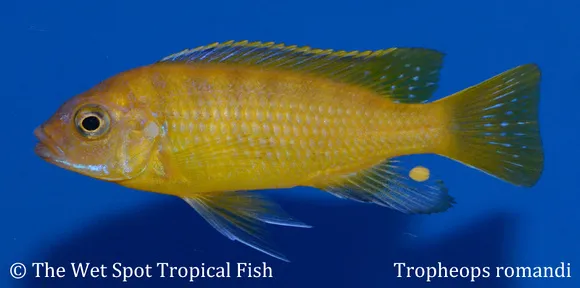 3.1 in (8 cm)53 gal (200 L)75–82°F (24–28°C)
Romand's tropheops
Tropheops romandi
3.1 in (8 cm) · 53 gal (200 L)
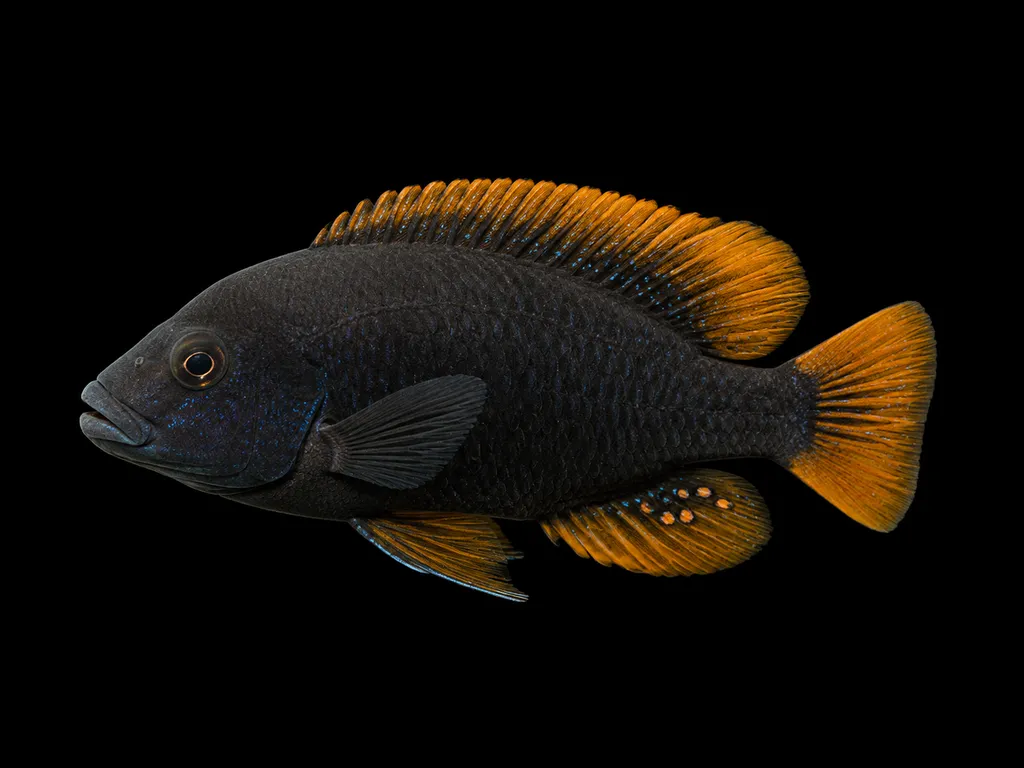 5.1 in (13 cm)53 gal (200 L)73–81°F (23–27°C)
Black and orange nyererei
Pundamilia igneopinnis
5.1 in (13 cm) · 53 gal (200 L)
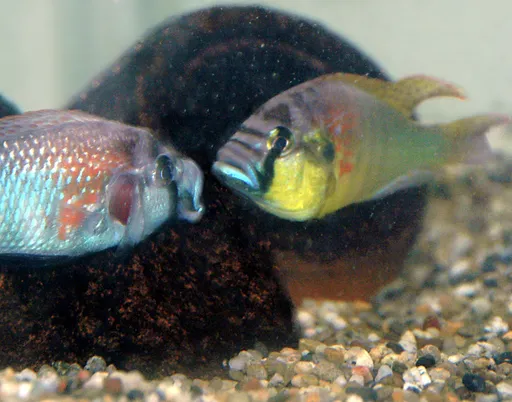 5.1 in (13 cm)53 gal (200 L)75–82°F (24–28°C)
Burton's mouthbrooder
Astatotilapia burtoni
5.1 in (13 cm) · 53 gal (200 L)
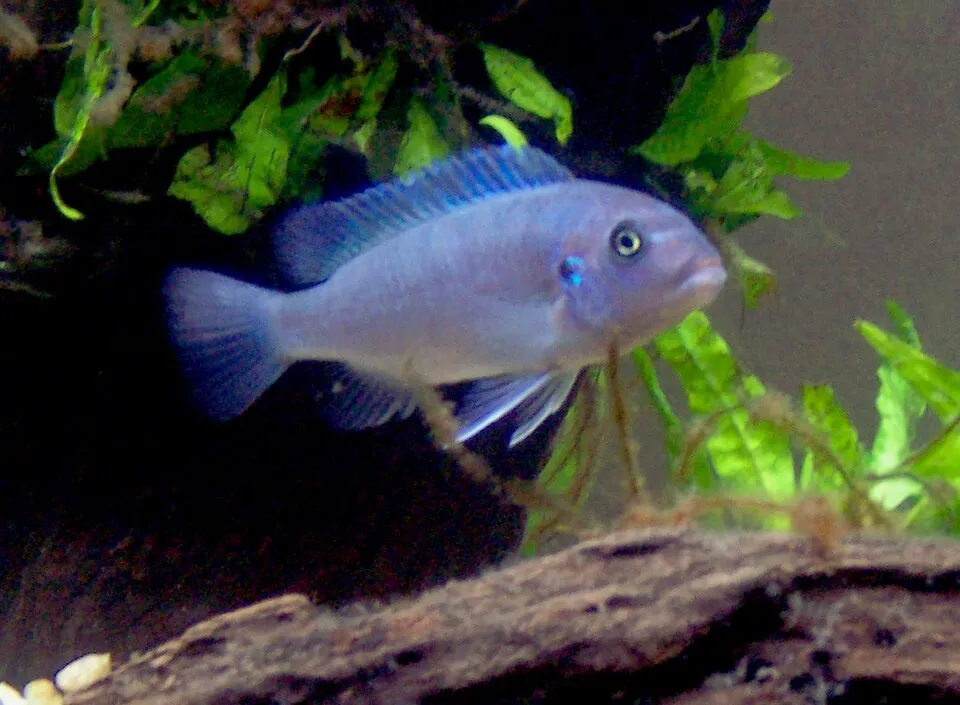 5.1 in (13 cm)45 gal (170 L)75–82°F (24–28°C)
Cobalt blue cichlid
Maylandia callainos
5.1 in (13 cm) · 45 gal (170 L)
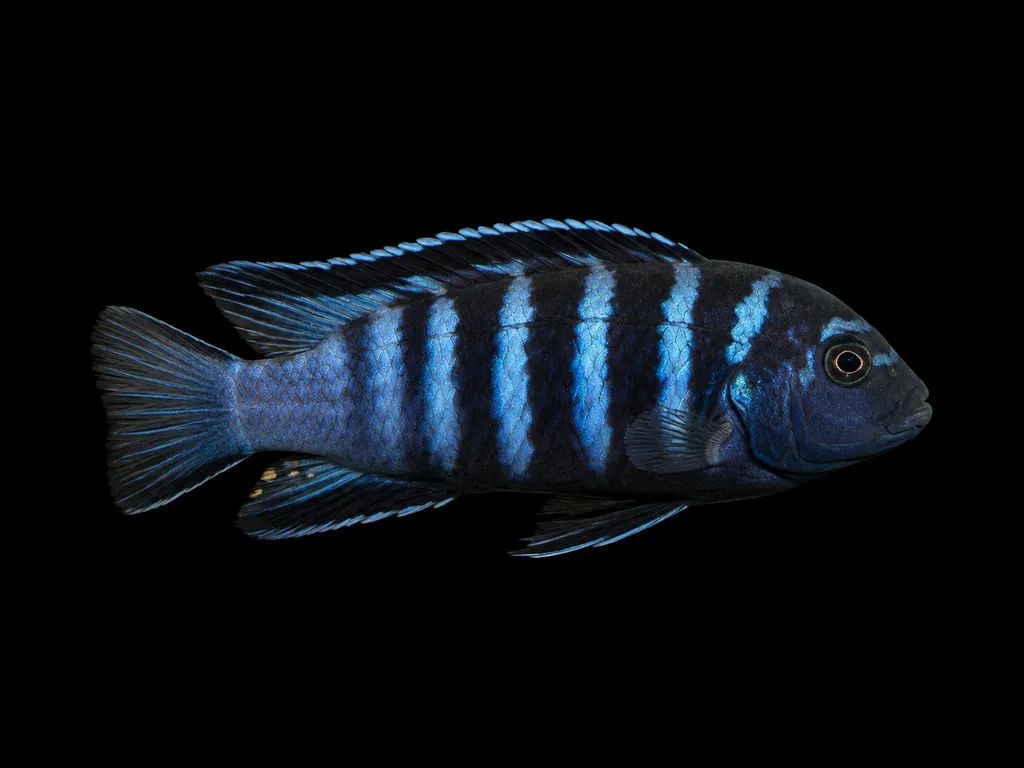 5.1 in (13 cm)53 gal (200 L)75–81°F (24–27°C)
Elongate mbuna
Chindongo elongatus
5.1 in (13 cm) · 53 gal (200 L)