Bigeye tropheops
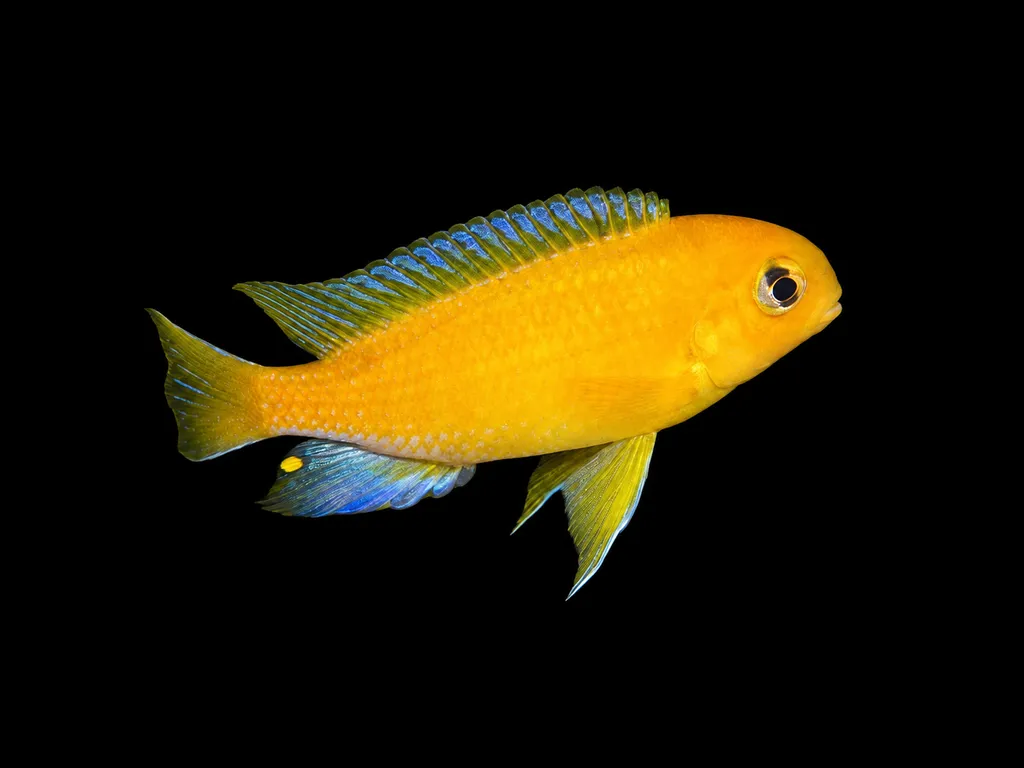
Tropheops macrophthalmus
Also known as Macrophthalmus tropheops
FreshwaterFish
Care at a glance
- Temperature
- 75–82°F
- 24–28°C
- pH
- 7.5–8.5
- Adult size
- 4.5 in
- 11.5 cm
- Minimum tank
- 66 gal
- 250 L
- Temperament
- Aggressive
- Social behavior
- Social
- Tankmates
- With caution
- Swim level
- Bottom
- Diet
- Omnivore
- Difficulty
- Medium
- Breeding
- Mouthbrooder · Medium
- Rarity
- Rare
- Family
- Cichlidae
- Origin
- Lake Malawi
Overview
The bigeye tropheops is a small but feisty mbuna from Lake Malawi that grazes algae off the rocks. It suits a keeper with a little experience.
Did you know
The bigeye tropheops feeds with its head angled down against the rock, cropping the algae film in short, jerky tugs. Like other Tropheops, it has a steep, down-turned mouth.
Caring for the bigeye tropheops
Give a bigeye tropheops at least 66 gal (250 L), with a lot of piled rock and caves over a sand floor. That lets each fish claim and defend a patch, the way it would on a natural reef of stone.
Recreate rift-lake conditions with hard, alkaline water, at 75 to 82°F (24 to 28°C) and a pH of 7.5 to 8.5. Its diet should be mostly vegetable, so feed a quality spirulina-based flake or pellet. Add the odd frozen treat, but do not overdo protein.
Keep it as a harem of one male with several females, which spreads out the male's aggression. It is a territorial rock dweller, so choose tank mates with caution. Pick other robust mbuna of similar temperament that can stand up for themselves, and keep it away from gentle open-water species.
It is a maternal mouthbrooder, so the female broods the eggs in her mouth. Breeding it is moderately difficult.
Good to know
The bigeye tropheops belongs to the cichlid family. Its name macrophthalmus means large-eyed, and its notably large eyes sit high on a steeply sloped head.
In the wild
The bigeye tropheops is endemic to Lake Malawi, where it lives on sloping and angled rock faces.
Common questions
What size tank does a bigeye tropheops need?
A bigeye tropheops needs at least 66 gal (250 L). It spends most of its time in the bottom.
What temperature and pH does a bigeye tropheops need?
A bigeye tropheops is comfortable at 75–82°F (24–28°C) with a pH of 7.5–8.5.
What does a bigeye tropheops eat?
A bigeye tropheops eats a mostly vegetable diet, such as a quality spirulina-based flake or pellet. Give it the odd frozen treat, but do not overdo protein.
How big does a bigeye tropheops get?
An adult bigeye tropheops reaches about 4.5 in (11.5 cm).
How does a bigeye tropheops breed?
The bigeye tropheops is a maternal mouthbrooder, with the female brooding the eggs in her mouth. Breeding it is moderately difficult.
Related species
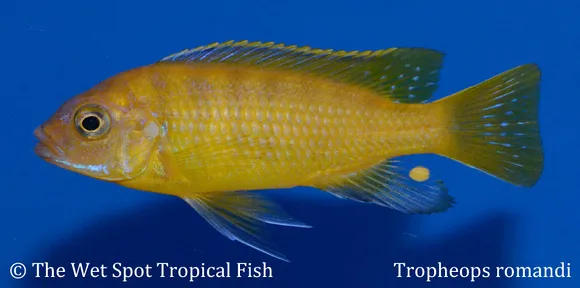 3.1 in (8 cm)53 gal (200 L)75–82°F (24–28°C)
Romand's tropheops
Tropheops romandi
3.1 in (8 cm) · 53 gal (200 L)
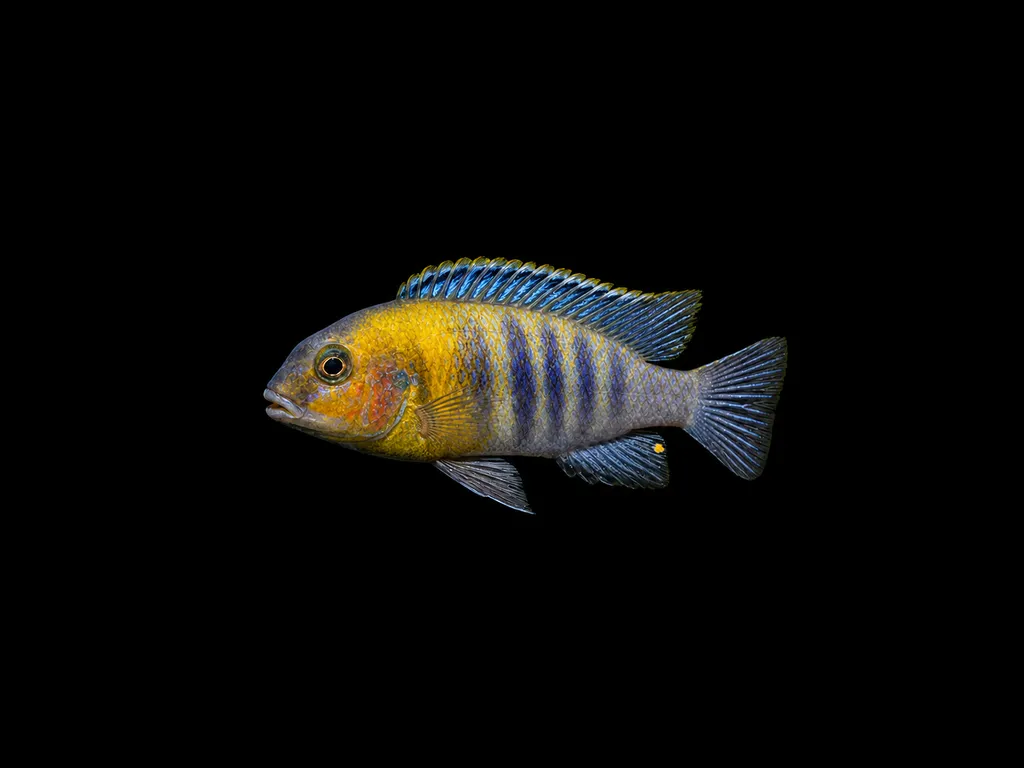 5.1 in (13 cm)74 gal (280 L)75–81°F (24–27°C)
Red cheek tropheops
Tropheops sp. 'Red Cheek'
5.1 in (13 cm) · 74 gal (280 L)
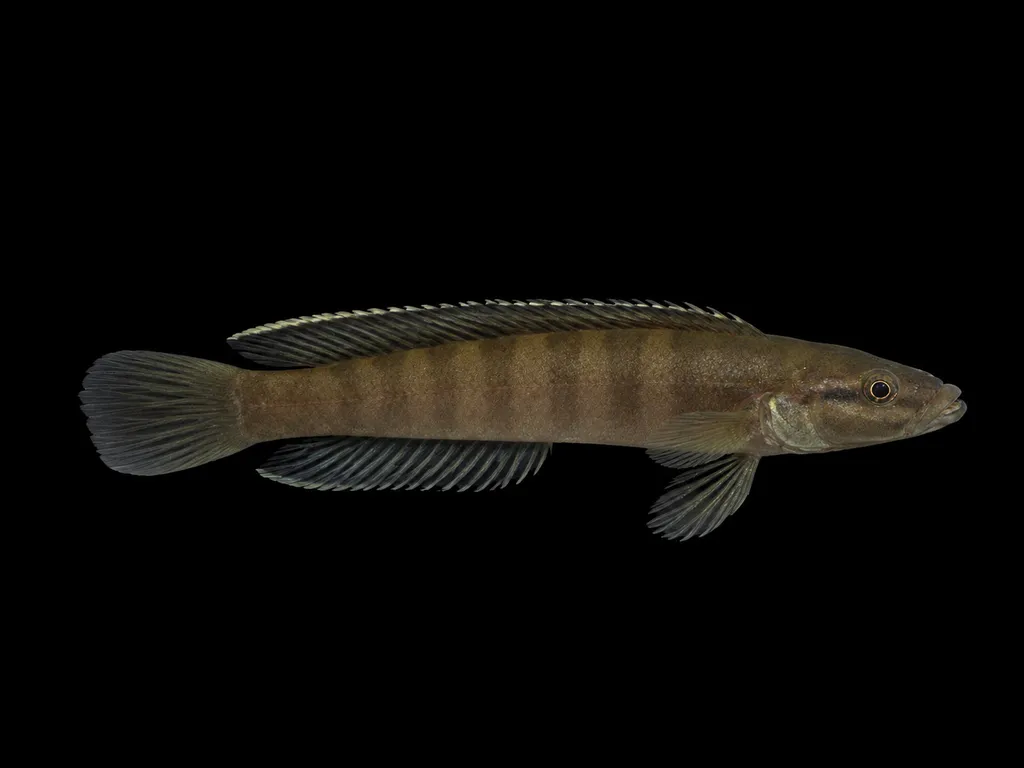 4.5 in (11.5 cm)53 gal (200 L)73–81°F (23–27°C)
Depressa teleogramma
Teleogramma depressa
4.5 in (11.5 cm) · 53 gal (200 L)
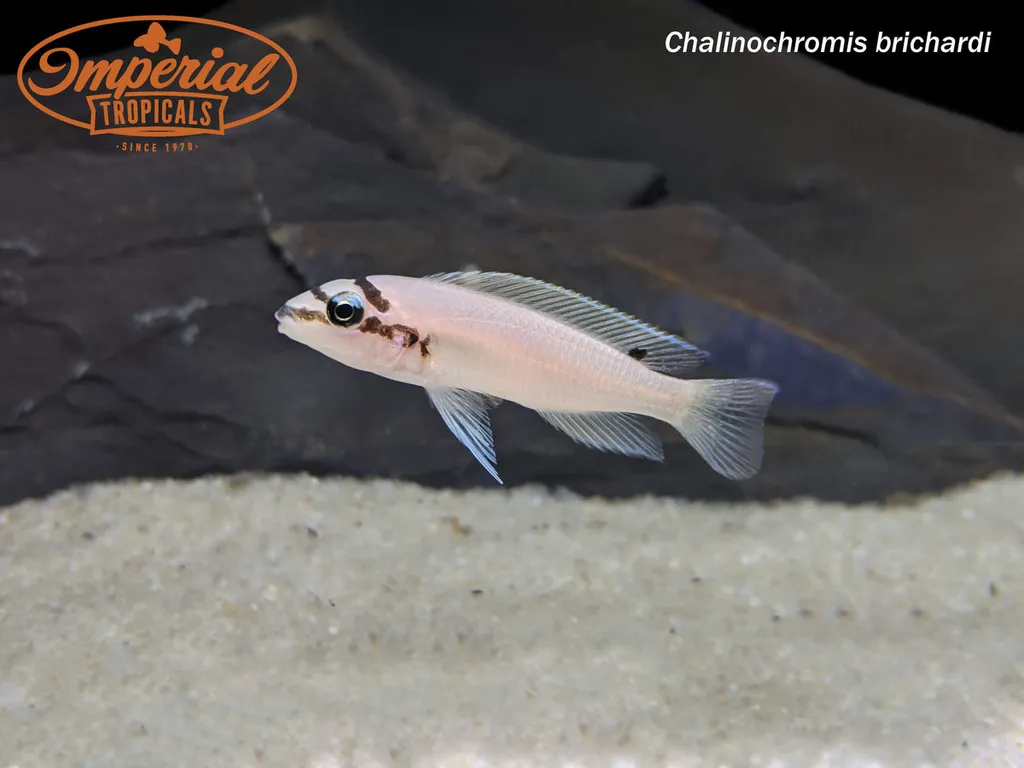 4.7 in (12 cm)53 gal (200 L)75–81°F (24–27°C)
Brichard's chalinochromis
Chalinochromis brichardi
4.7 in (12 cm) · 53 gal (200 L)
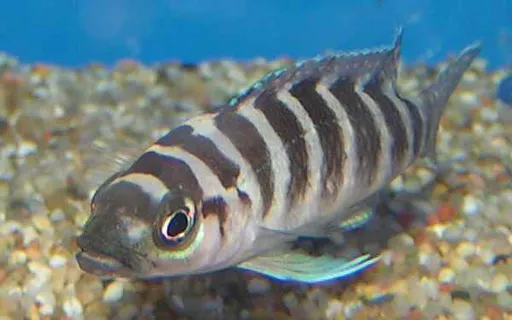 4.7 in (12 cm)29 gal (110 L)75–81°F (24–27°C)
Cylindricus cichlid
Neolamprologus cylindricus
4.7 in (12 cm) · 29 gal (110 L)
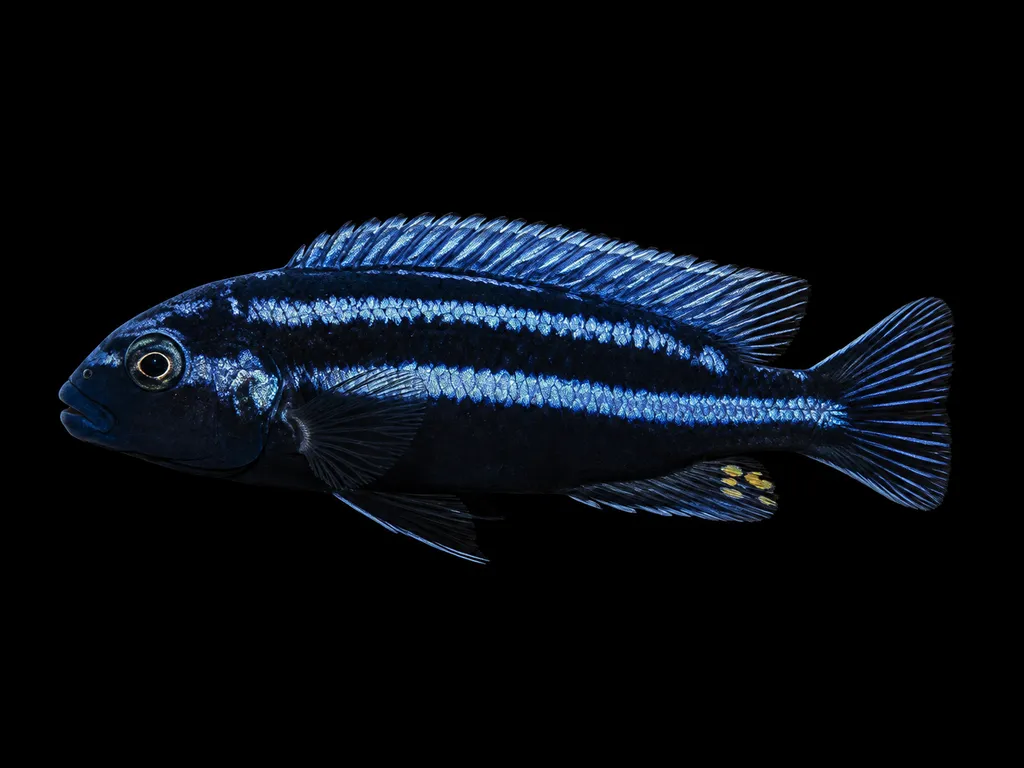 4.7 in (12 cm)66 gal (250 L)75–82°F (24–28°C)
Deepwater melanochromis
Melanochromis heterochromis
4.7 in (12 cm) · 66 gal (250 L)