Brichard's chalinochromis
Chalinochromis brichardi
Also known as Chalinochromis, Bridle cichlid
FreshwaterFish
Care at a glance
- Temperature
- 75–81°F
- 24–27°C
- pH
- 7.8–9.0
- Adult size
- 4.7 in
- 12 cm
- Minimum tank
- 53 gal
- 200 L
- Temperament
- Aggressive
- Social behavior
- Solitary
- Tankmates
- With caution
- Swim level
- Bottom
- Difficulty
- Medium
- Breeding
- Medium
- Rarity
- Rare
- Family
- Cichlidae
- Origin
- Rocky shorelines of the northern and western parts of Lake Tanganyika in East Africa.
Overview
A pair needs a tank of at least 200 liters with heavy rockwork and hard alkaline water at 24 to 27 C, pH 7.8 to 9.0. It is territorial and can be pushy, so it suits keepers with some experience of Tanganyikan cichlids. Feed frozen and dry foods including mysis, brine shrimp and quality pellets. Give it caves and passages to claim and defend.
In the wild
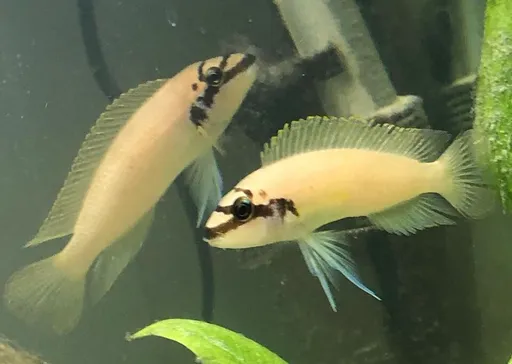
Brichard's chalinochromis is a rock dwelling relative of the julies from Lake Tanganyika. Adults are pale cream with faint markings and dark lines across the face. It threads through rocky slopes searching cracks for food.
Good to know
Chalinochromis brichardi is a cave spawner closely related to Julidochromis and shares their pattern of bonded pairs guarding a crevice. Juveniles carry bold dark stripes that fade to a plainer look as they mature. It is named after Pierre Brichard, who did much to introduce Tanganyikan cichlids to the hobby.
Did you know
Young fish look so different from adults, boldly striped versus nearly plain, that beginners sometimes think they bought two different species.
Common questions
What size tank does a Brichard's chalinochromis need?
A Brichard's chalinochromis needs at least 53 gal (200 L). It spends most of its time in the bottom.
What temperature and pH does a Brichard's chalinochromis need?
A Brichard's chalinochromis is comfortable at 75–81°F (24–27°C) with a pH of 7.8–9.0.
How big does a Brichard's chalinochromis get?
An adult Brichard's chalinochromis reaches about 4.7 in (12 cm).
Related species
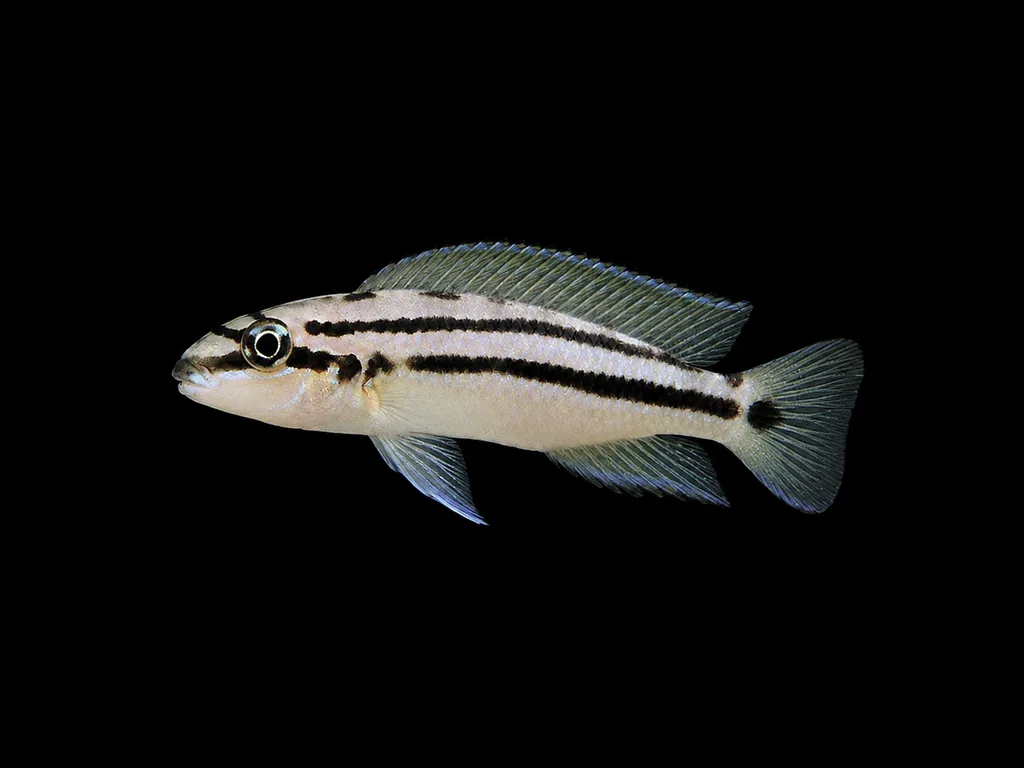 4.7 in (12 cm)53 gal (200 L)75–81°F (24–27°C)
Popelin's chalinochromis
Chalinochromis popelini
4.7 in (12 cm) · 53 gal (200 L)
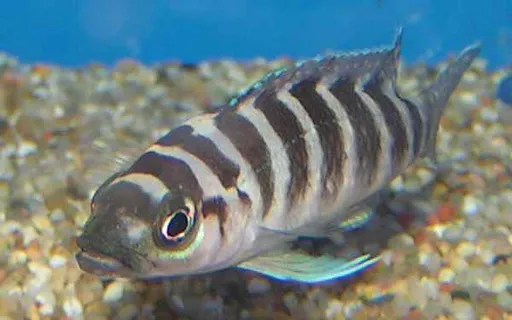 4.7 in (12 cm)29 gal (110 L)75–81°F (24–27°C)
Cylindricus cichlid
Neolamprologus cylindricus
4.7 in (12 cm) · 29 gal (110 L)
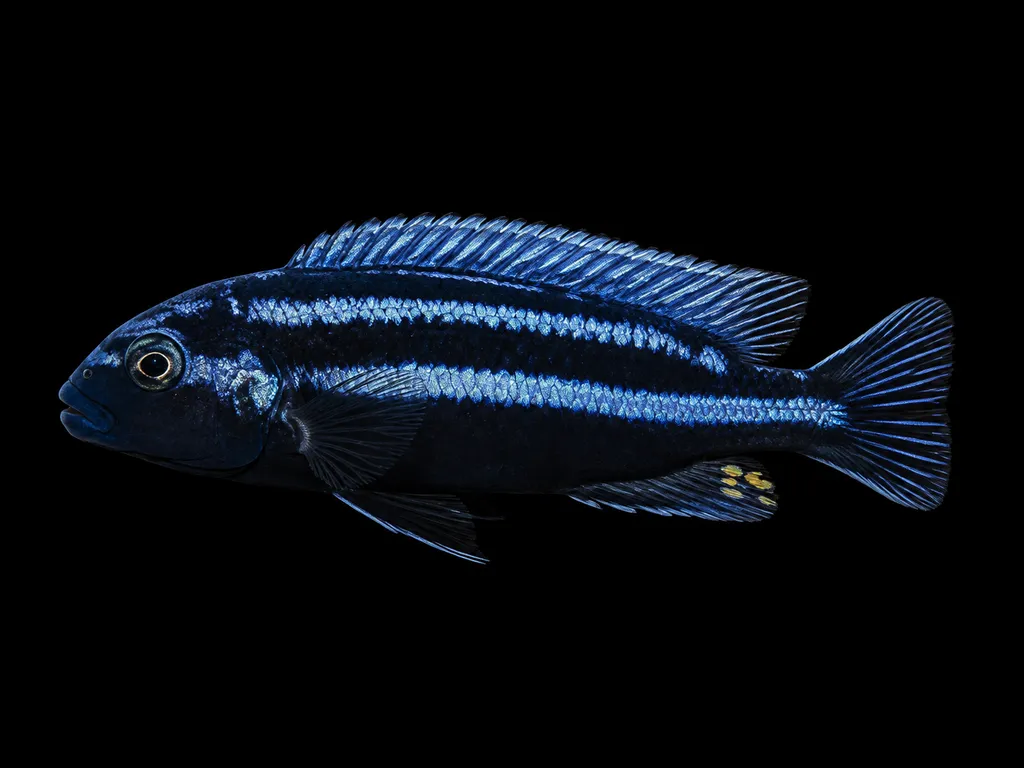 4.7 in (12 cm)66 gal (250 L)75–82°F (24–28°C)
Deepwater melanochromis
Melanochromis heterochromis
4.7 in (12 cm) · 66 gal (250 L)
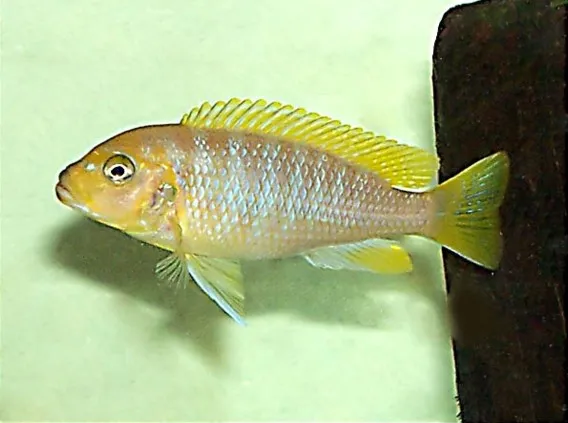 4.7 in (12 cm)66 gal (250 L)75–82°F (24–28°C)
Mayland's zebra
Maylandia hajomaylandi
4.7 in (12 cm) · 66 gal (250 L)
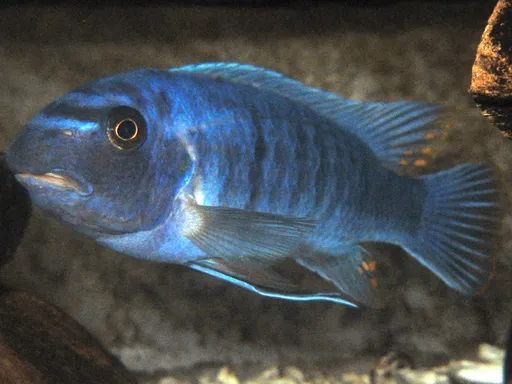 4.7 in (12 cm)53 gal (200 L)75–81°F (24–27°C)
Scrapermouth mbuna
Labeotropheus trewavasae
4.7 in (12 cm) · 53 gal (200 L)
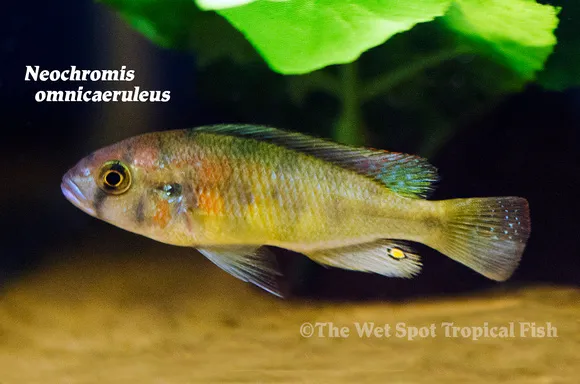 4.7 in (12 cm)66 gal (250 L)73–81°F (23–27°C)
Tricolor fulu
Neochromis omnicaeruleus
4.7 in (12 cm) · 66 gal (250 L)