Tricolor fulu
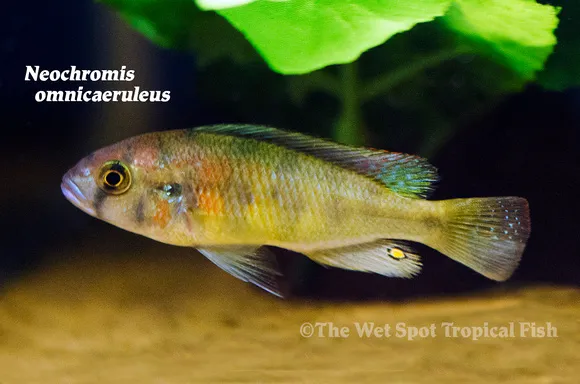
Neochromis omnicaeruleus
Also known as Nanochromis omnicaeruleus, Tricolour hap, Tri color fulu
FreshwaterFish
Care at a glance
- Temperature
- 73–81°F
- 23–27°C
- pH
- 7.0–8.5
- Adult size
- 4.7 in
- 12 cm
- Minimum tank
- 66 gal
- 250 L
- Temperament
- Aggressive
- Social behavior
- Solitary
- Tankmates
- With caution
- Swim level
- Bottom
- Diet
- Herbivore
- Difficulty
- Medium
- Breeding
- Mouthbrooder · Medium
- Rarity
- Rare
- Family
- Cichlidae
- Origin
- Lake Victoria rocky shores
Overview
The tricolor fulu is a territorial, algae-grazing cichlid for a large rock tank. It is a fish for a keeper with some cichlid experience.
Did you know
Female tricolor fulus come in three separate, inherited color forms within a single species. The species is a famous case of color polymorphism.
Caring for the tricolor fulu
Give tricolor fulus a large tank of at least 66 gal (250 L), which helps keep the peace. Build heavy rockwork over sand, with open grazing surfaces and clear territories. Bright light grows algae on those surfaces.
Aim for 73 to 81°F (23 to 27°C) and a pH of 7.0 to 8.5. Strong filtration handles a hearty grazer's appetite. It grazes the bottom and lower rocks, so its diet should be vegetable-based. Feed a spirulina pellet plus some frozen foods.
Keep a single male, since a second male will not be tolerated. If you keep females, provide several so his attention and aggression are spread out. Choose other robust Victorian or rift-lake cichlids as tank mates, with care.
Males are largely blue, while females are plain brown, orange-blotched or white-blotched. It is a maternal mouthbrooder, so the female carries the brood in her mouth. Breeding is of moderate difficulty.
Good to know
The tricolor fulu, Neochromis omnicaeruleus, is an algae-scraping member of the family Cichlidae. Researchers studying how new species form in Lake Victoria have followed it closely, and it has become a favorite study animal for biologists.
In the wild
The tricolor fulu grazes algae from rock on the exposed rocky shores of Lake Victoria. The water there is warm and hard-leaning to alkaline.
Common questions
What size tank does a tricolor fulu need?
A tricolor fulu needs at least 66 gal (250 L). It spends most of its time in the bottom.
What temperature and pH does a tricolor fulu need?
A tricolor fulu is comfortable at 73–81°F (23–27°C) with a pH of 7.0–8.5.
What does a tricolor fulu eat?
A tricolor fulu eats a vegetable-based diet, with a spirulina pellet plus some frozen foods. It grazes the bottom and lower rocks.
How big does a tricolor fulu get?
An adult tricolor fulu reaches about 4.7 in (12 cm).
How can you tell a male tricolor fulu from a female?
Males are largely blue. Females are plain brown, orange-blotched or white-blotched.
How does a tricolor fulu breed?
The tricolor fulu is a maternal mouthbrooder, so the female carries the brood in her mouth. Breeding it is of moderate difficulty.
Related species
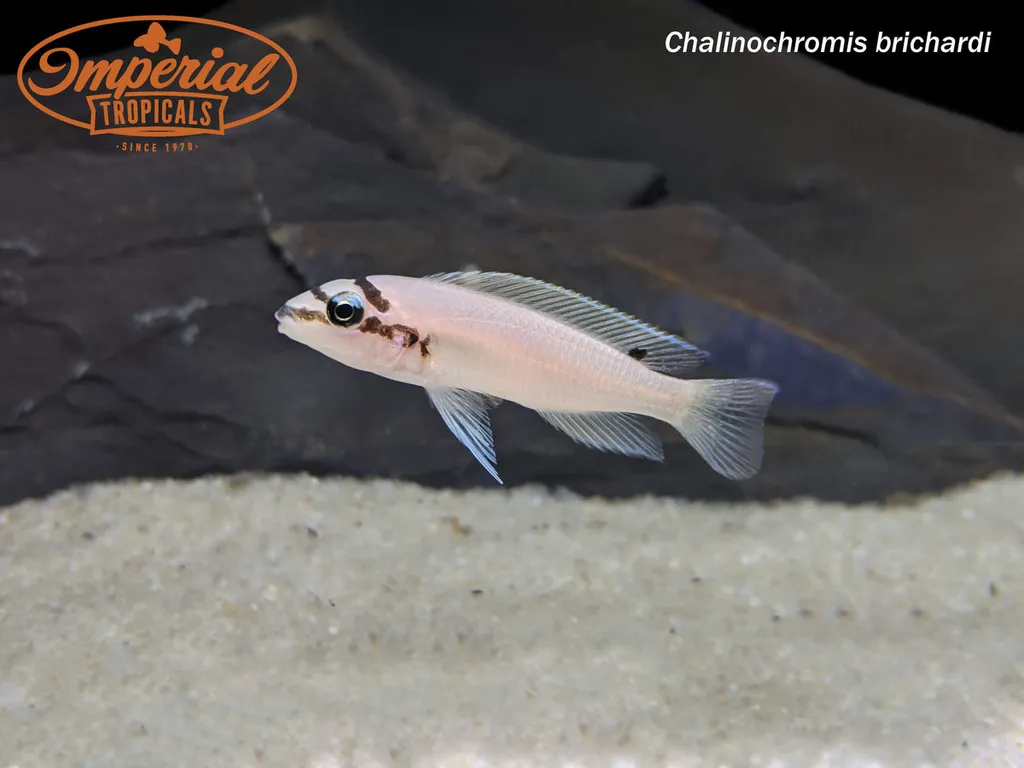 4.7 in (12 cm)53 gal (200 L)75–81°F (24–27°C)
Brichard's chalinochromis
Chalinochromis brichardi
4.7 in (12 cm) · 53 gal (200 L)
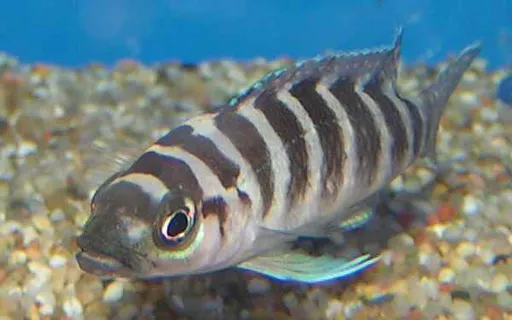 4.7 in (12 cm)29 gal (110 L)75–81°F (24–27°C)
Cylindricus cichlid
Neolamprologus cylindricus
4.7 in (12 cm) · 29 gal (110 L)
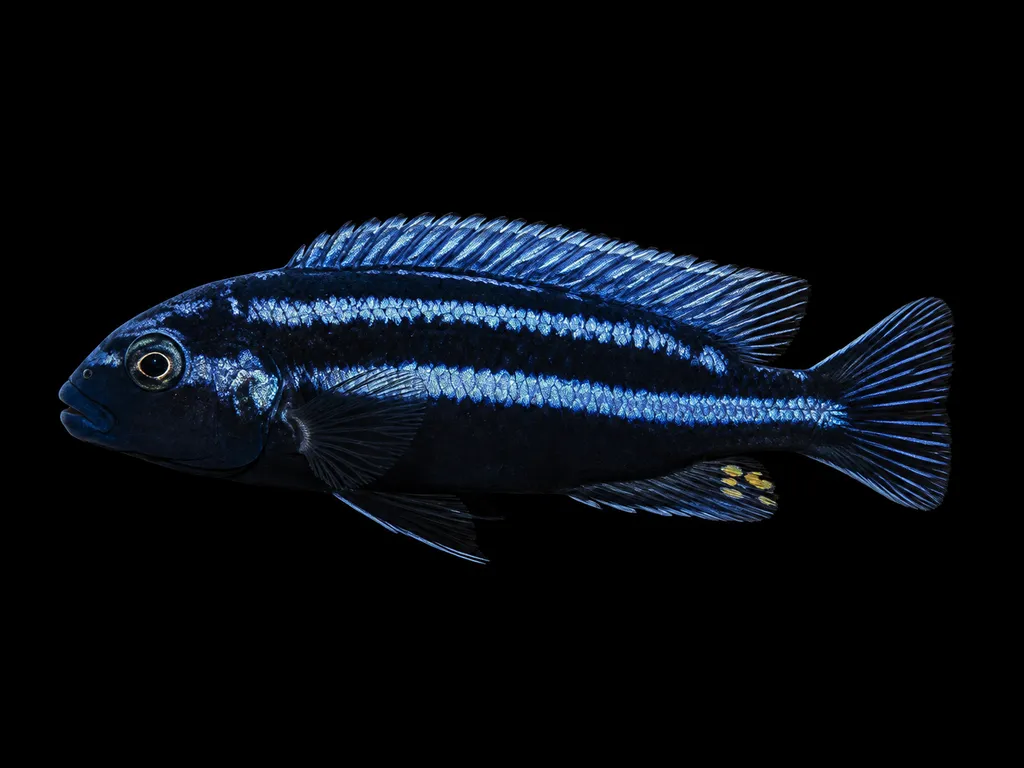 4.7 in (12 cm)66 gal (250 L)75–82°F (24–28°C)
Deepwater melanochromis
Melanochromis heterochromis
4.7 in (12 cm) · 66 gal (250 L)
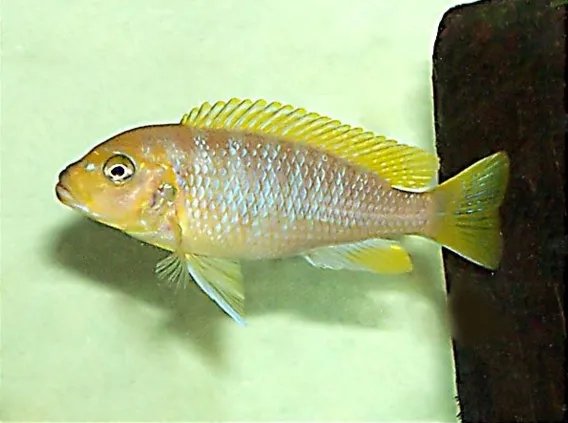 4.7 in (12 cm)66 gal (250 L)75–82°F (24–28°C)
Mayland's zebra
Maylandia hajomaylandi
4.7 in (12 cm) · 66 gal (250 L)
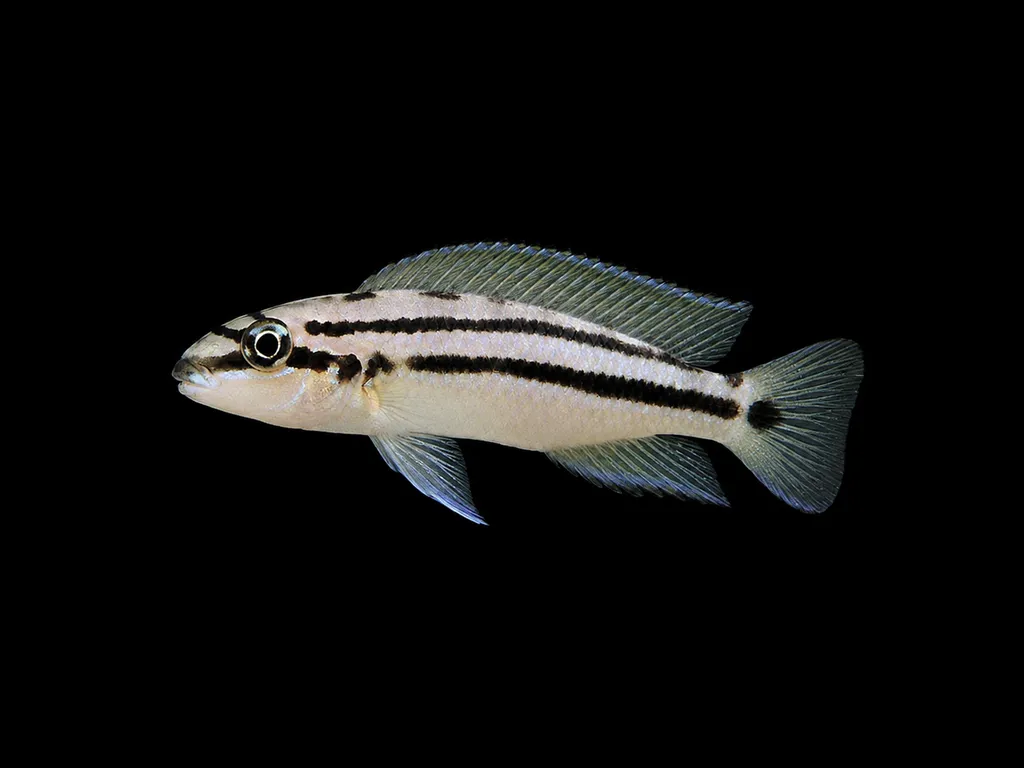 4.7 in (12 cm)53 gal (200 L)75–81°F (24–27°C)
Popelin's chalinochromis
Chalinochromis popelini
4.7 in (12 cm) · 53 gal (200 L)
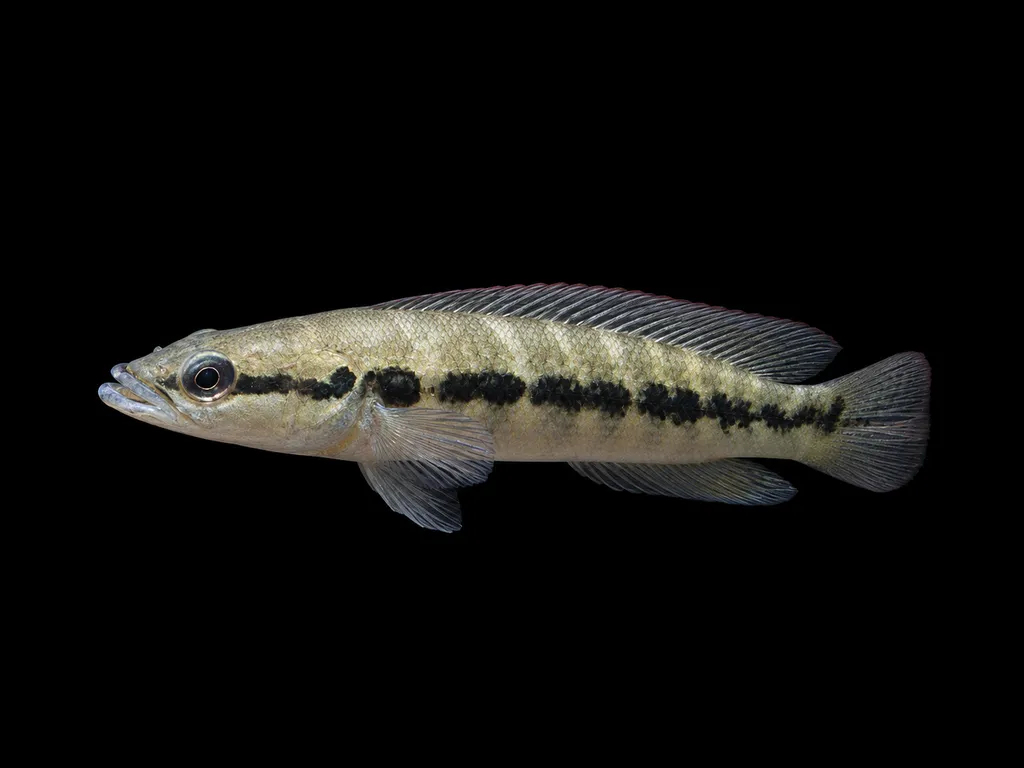 4.7 in (12 cm)79 gal (300 L)79–86°F (26–30°C)
Roundmouth pike cichlid
Crenicichla cyclostoma
4.7 in (12 cm) · 79 gal (300 L)