Rainbow darter
Etheostoma caeruleum
FreshwaterFish
Care at a glance
- Temperature
- 50–64°F
- 10–18°C
- pH
- 6.5–8.0
- Adult size
- 2.8 in
- 7 cm
- Minimum tank
- 25 gal
- 95 L
- Temperament
- Peaceful
- Social behavior
- Solitary
- Tankmates
- With caution
- Swim level
- Bottom
- Difficulty
- Medium
- Breeding
- Hard
- Rarity
- Very rare
- Family
- Percidae
- Origin
- United States
Overview
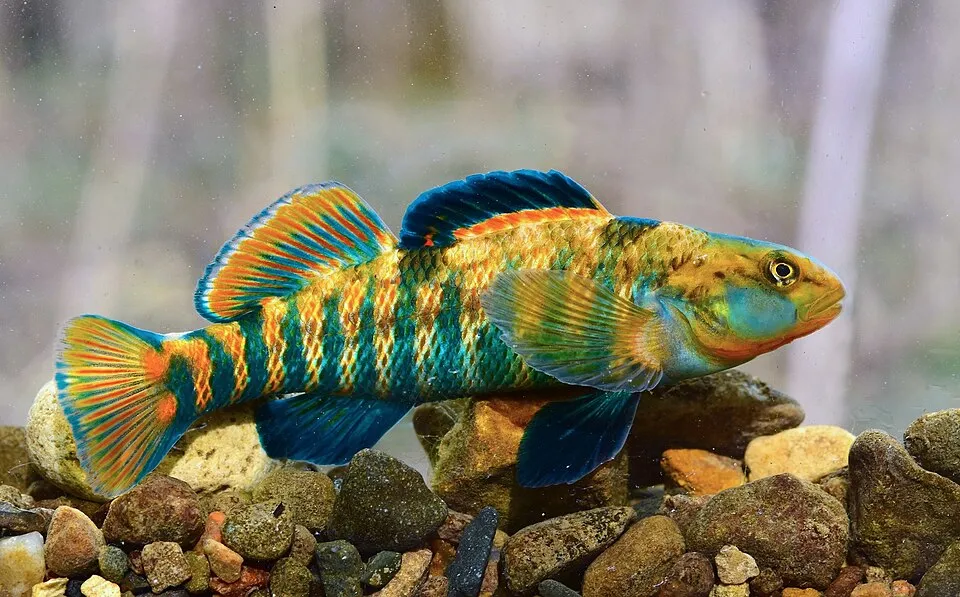
The rainbow darter is a small, peaceful bottom fish that keeps to itself and needs cold, clean, fast-flowing water to thrive. Give it a gravel and cobble floor with places to perch, and keep only a few together with their own space, since they claim small patches of the bottom. They want live and frozen foods such as bloodworms, blackworms, daphnia and small crustaceans, and rarely settle for flake. Brisk current and cool temperatures are not optional for this coldwater native. A tank of 95 liters or larger with a long footprint and strong flow gives them room along the bottom.
In the wild
Rainbow darters live in the fast, shallow riffles of clear creeks and small rivers across the eastern and central United States, holding position among gravel, rubble and cobble where the current is strongest. The water is cold and highly oxygenated. In the aquarium this means a coarse stony bottom, powerful flow and cool temperatures around 10 to 18 C, well below tropical levels. Keep the pH from about 6.5 to 8 and the oxygen high with vigorous surface movement. Warm, sluggish tanks will not do.
Good to know
The rainbow darter is a member of the perch family Percidae and grows to about 7 cm, with breeding males in brilliant blue-green and orange-red that rank among the most colorful of native fish. It spawns in spring in shallow riffles: the female works her body down into the gravel and lays a few eggs at a time, which the male fertilizes before they are left uncared for. Breeding it at home is difficult because it demands cold, well oxygenated water and a proper riffle to spawn.
Did you know
Breeding male rainbow darters turn brilliant blue-green and orange, giving the fish its name. To spawn, the female wedges the back half of her body down into the streambed gravel and lays just a few eggs at a time for the male to fertilize.
Common questions
What size tank does a Rainbow darter need?
A Rainbow darter needs at least 25 gal (95 L). It spends most of its time in the bottom.
What temperature and pH does a Rainbow darter need?
A Rainbow darter is comfortable at 50–64°F (10–18°C) with a pH of 6.5–8.0.
How big does a Rainbow darter get?
An adult Rainbow darter reaches about 2.8 in (7 cm).
Related species
 2.8 in (7 cm)25 gal (95 L)59–68°F (15–20°C)
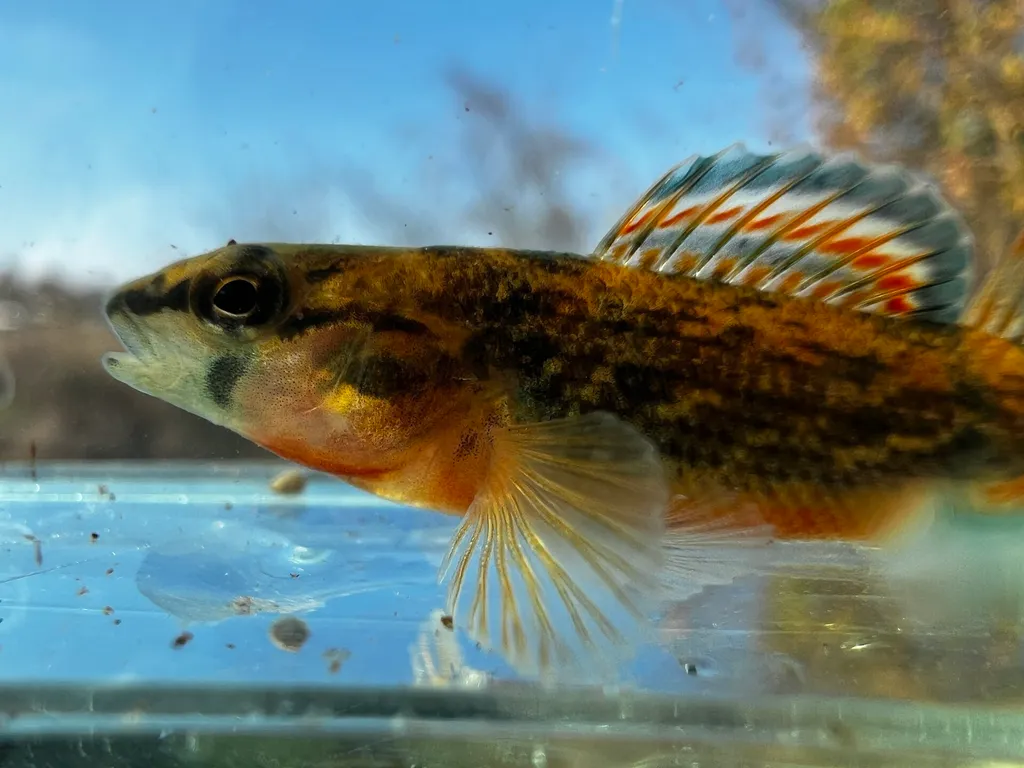
Orangethroat darter
Etheostoma spectabile
2.8 in (7 cm) · 25 gal (95 L)
 3.1 in (7.8 cm)26 gal (100 L)59–70°F (15–21°C)
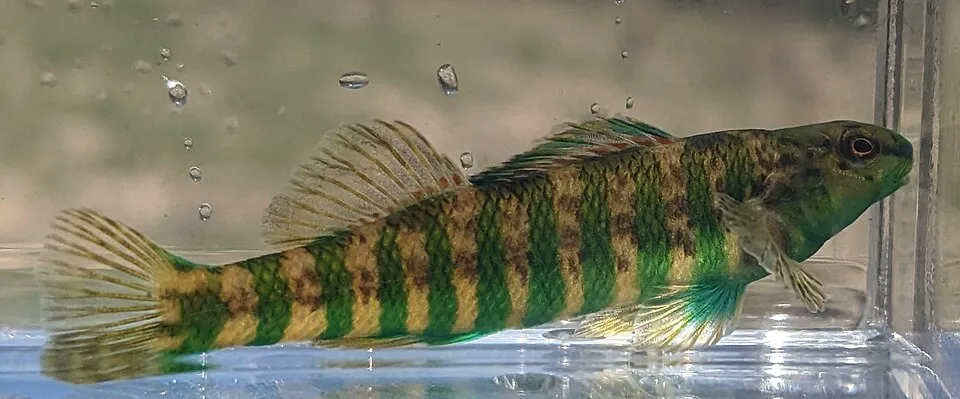
Banded darter
Etheostoma zonale
3.1 in (7.8 cm) · 26 gal (100 L)
 3.5 in (9 cm)29 gal (110 L)59–70°F (15–21°C)
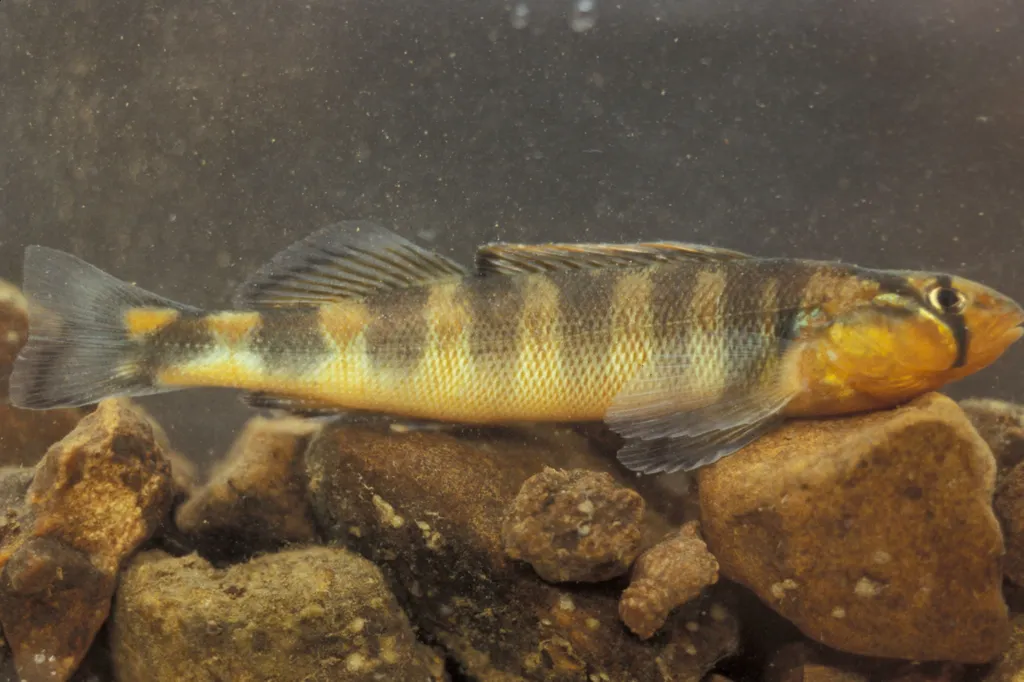
Gilt darter
Percina evides
3.5 in (9 cm) · 29 gal (110 L)
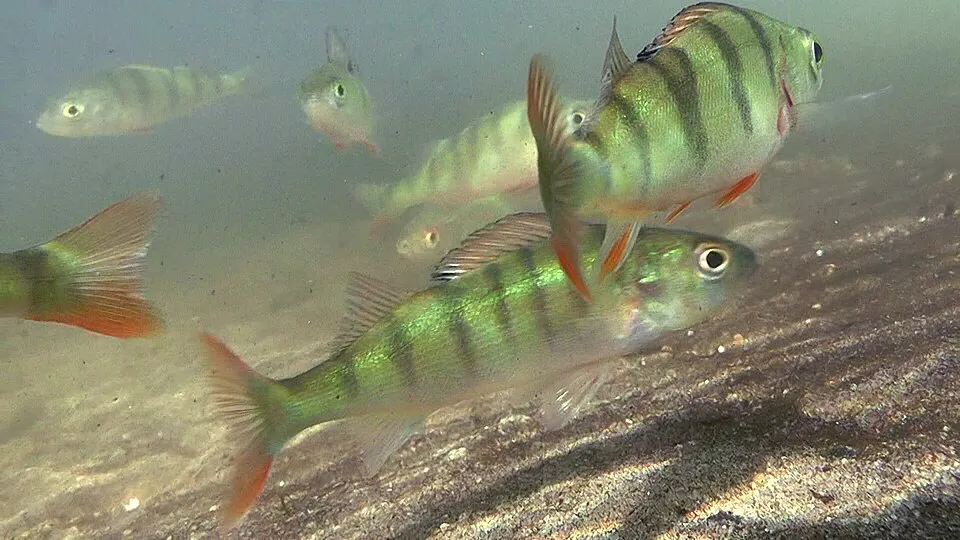 19.7 in (50 cm)119 gal (450 L)50–72°F (10–22°C)
European perch
Perca fluviatilis
19.7 in (50 cm) · 119 gal (450 L)
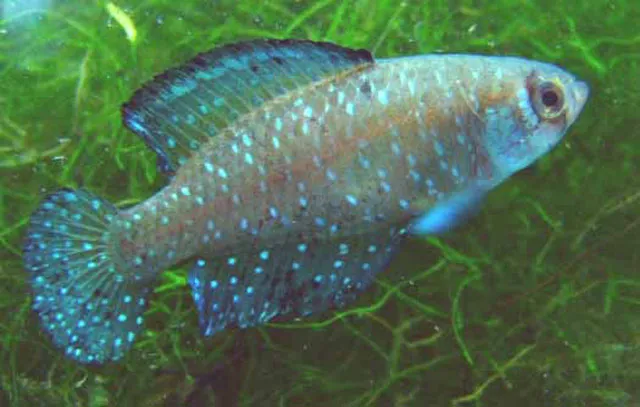 2.8 in (7 cm)18 gal (70 L)64–75°F (18–24°C)
Argentine pearl killifish
Austrolebias nigripinnis
2.8 in (7 cm) · 18 gal (70 L)
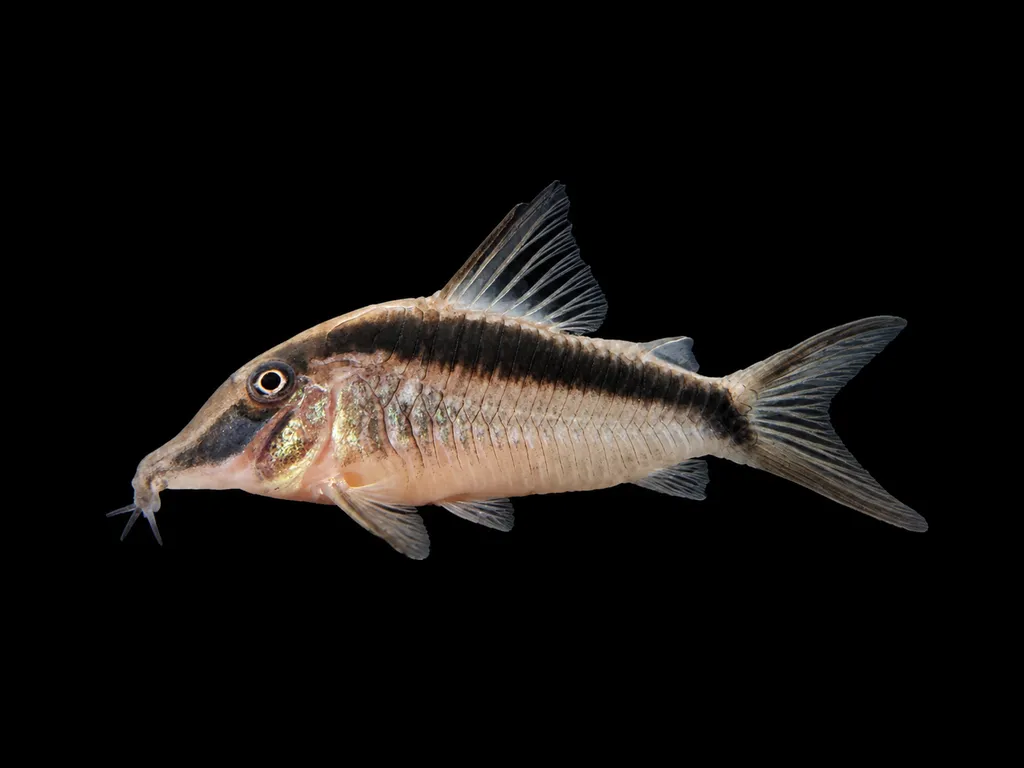 2.8 in (7 cm)30 gal (115 L)73–77°F (23–25°C)
Long nosed arched cory
Corydoras narcissus
2.8 in (7 cm) · 30 gal (115 L)