Banded darter
Etheostoma zonale
FreshwaterFish
Care at a glance
- Temperature
- 59–70°F
- 15–21°C
- pH
- 6.5–8.0
- Adult size
- 3.1 in
- 7.8 cm
- Minimum tank
- 26 gal
- 100 L
- Temperament
- Peaceful
- Social behavior
- Solitary
- Tankmates
- With caution
- Swim level
- Bottom
- Difficulty
- Difficult
- Breeding
- No record
- Rarity
- Very rare
- Family
- Percidae
- Origin
- United States
Overview
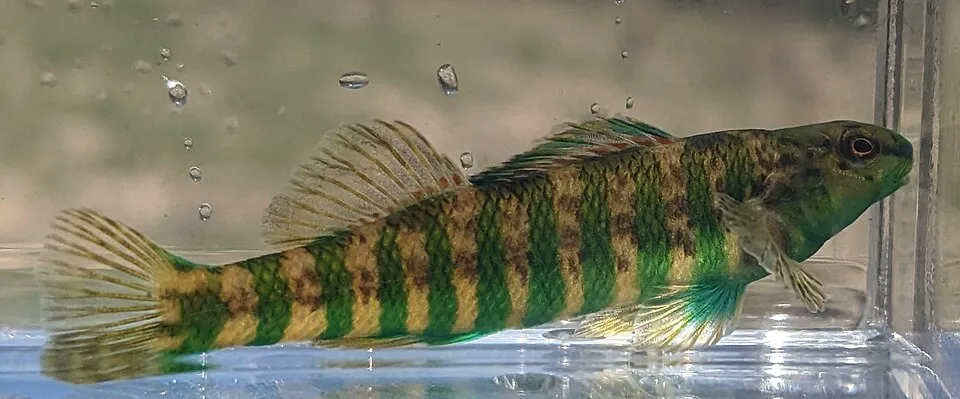
These are coolwater fish, so hold the temperature at 15 to 21 C with pH 6.5 to 8 and a lot of current and oxygen. They live near the bottom and aren't true schoolers, but they are peaceful and do fine in a small group of their own kind. A 100 liter tank with rocks and gravel suits them. Feed live or frozen meaty foods such as bloodworms and brine shrimp; most won't take flake.
In the wild
Banded darters live in clear, fast streams and small rivers in the eastern United States, especially the Ohio River drainage, over rock and gravel. They sit on the bottom in the current and need cool, well-oxygenated water. To keep them you have to recreate that: a chiller or a cool room, strong flow, and a rocky bed, which is why they're a demanding fish.
Good to know
This is a North American darter in the family Percidae, the same family as perch, and it grows to about 8 cm. Spawning males show green bands along the body. They are egg layers that deposit eggs on the bottom rather than guarding a nest. There is no clear aquarium breeding record for them.
Did you know
Darters have almost no swim bladder, so they don't hover the way most fish do. They rest flat on the bottom propped on their fins and move in short hops between rocks.
Common questions
What size tank does a Banded darter need?
A Banded darter needs at least 26 gal (100 L). It spends most of its time in the bottom.
What temperature and pH does a Banded darter need?
A Banded darter is comfortable at 59–70°F (15–21°C) with a pH of 6.5–8.0.
How big does a Banded darter get?
An adult Banded darter reaches about 3.1 in (7.8 cm).
Related species
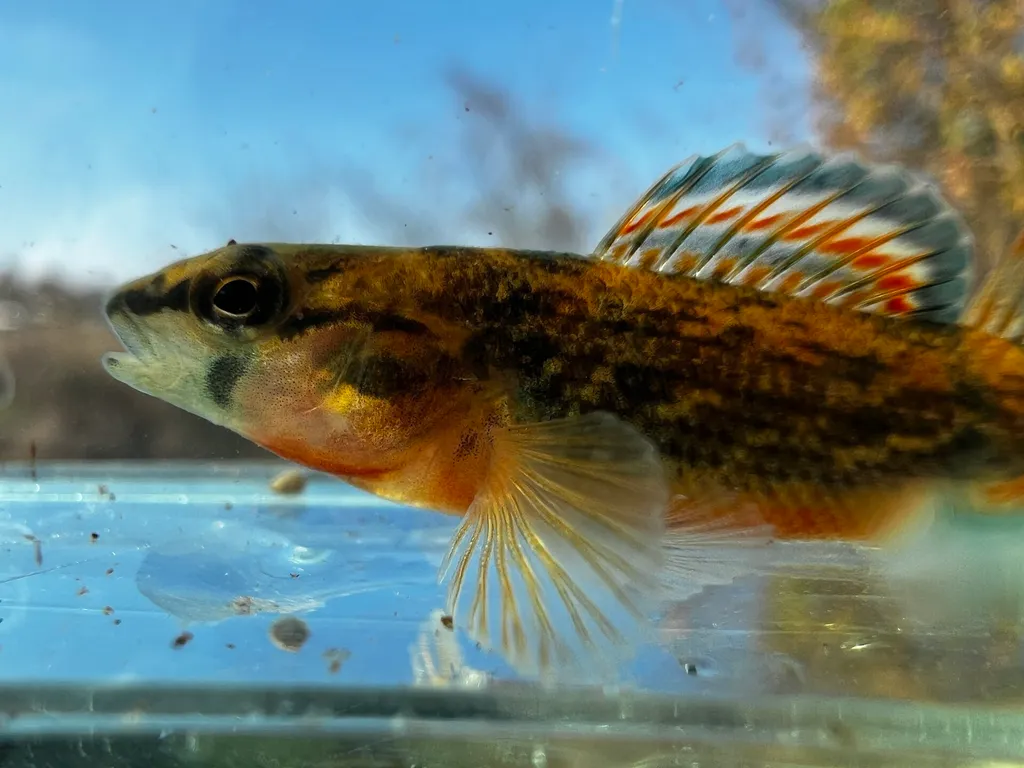 2.8 in (7 cm)25 gal (95 L)59–68°F (15–20°C)
Orangethroat darter
Etheostoma spectabile
2.8 in (7 cm) · 25 gal (95 L)
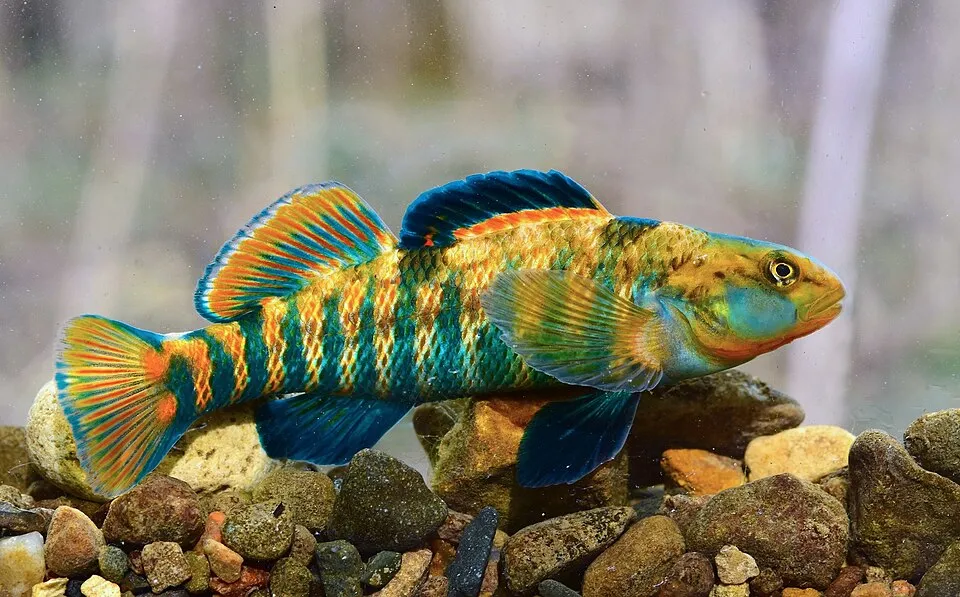 2.8 in (7 cm)25 gal (95 L)50–64°F (10–18°C)
Rainbow darter
Etheostoma caeruleum
2.8 in (7 cm) · 25 gal (95 L)
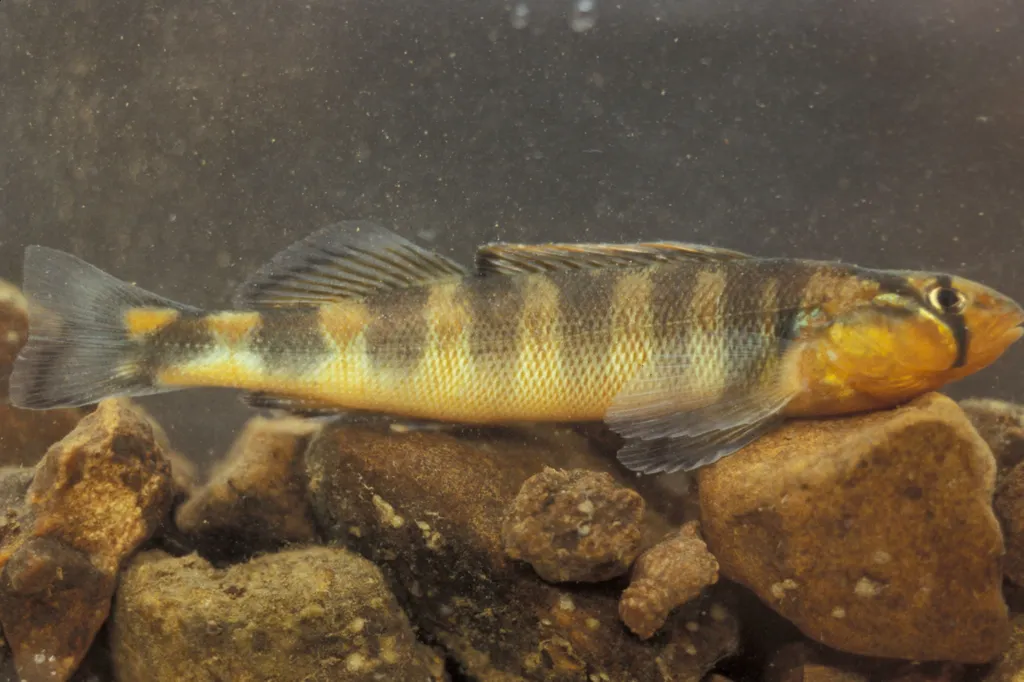 3.5 in (9 cm)29 gal (110 L)59–70°F (15–21°C)
Gilt darter
Percina evides
3.5 in (9 cm) · 29 gal (110 L)
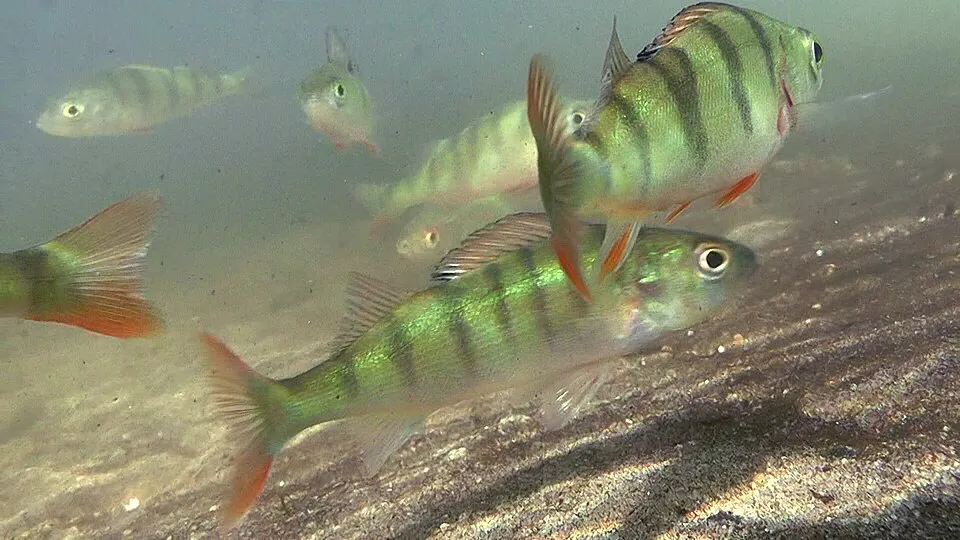 19.7 in (50 cm)119 gal (450 L)50–72°F (10–22°C)
European perch
Perca fluviatilis
19.7 in (50 cm) · 119 gal (450 L)
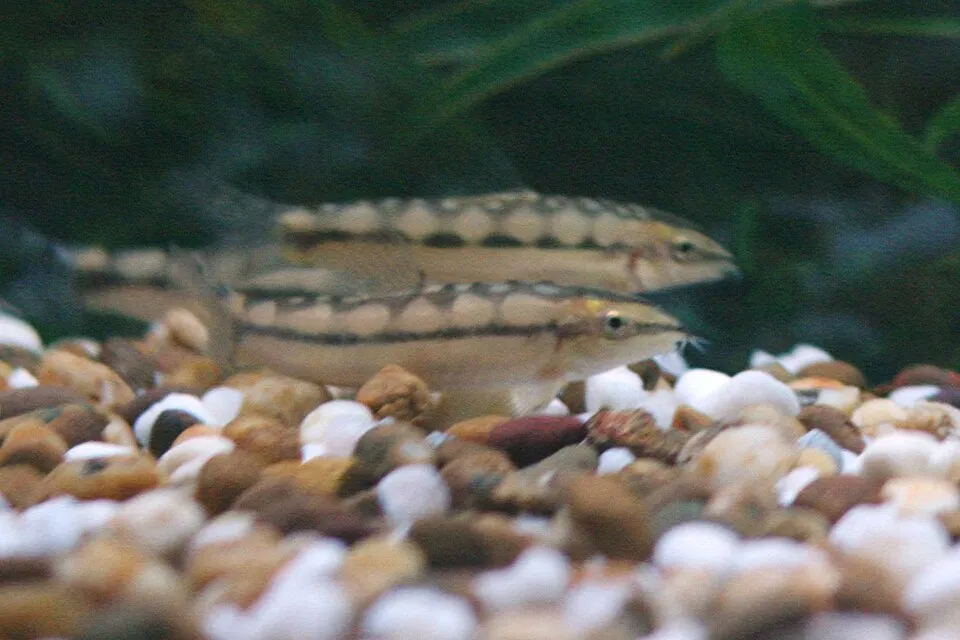 2.4 in (6 cm)20 gal (75 L)68–86°F (20–30°C)
Dwarf botia
Ambastaia sidthimunki
2.4 in (6 cm) · 20 gal (75 L)
 2.2 in (5.5 cm)12 gal (45 L)70–81°F (21–27°C)
Violet cory
Hoplisoma simile
2.2 in (5.5 cm) · 12 gal (45 L)