Orangethroat darter
Etheostoma spectabile
FreshwaterFish
Care at a glance
- Temperature
- 59–68°F
- 15–20°C
- pH
- 6.0–8.0
- Adult size
- 2.8 in
- 7 cm
- Minimum tank
- 25 gal
- 95 L
- Temperament
- Peaceful
- Social behavior
- Solitary
- Tankmates
- With caution
- Swim level
- Bottom
- Difficulty
- Difficult
- Breeding
- No record
- Rarity
- Very rare
- Family
- Percidae
- Origin
- United States
Overview
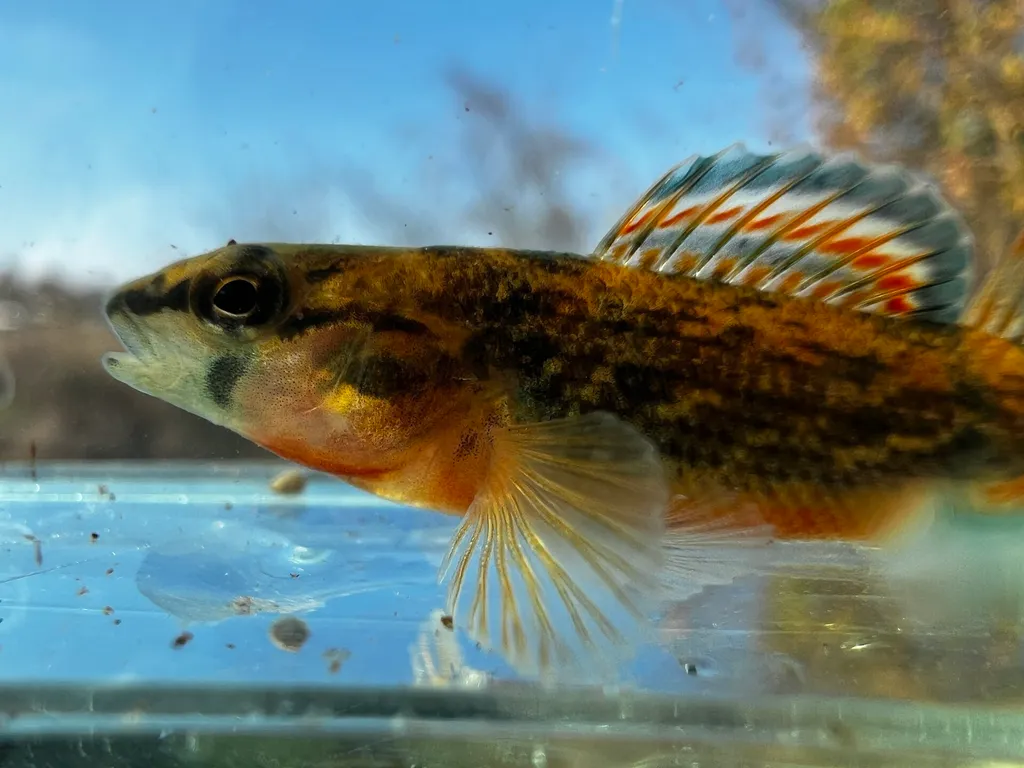
The orangethroat darter is a small, peaceful bottom-dweller that keeps to itself and needs cool, clean, well oxygenated water. Give each fish its own space on a gravel and stone floor, as they perch and dart rather than swim in open water. They are fussy feeders that want live and frozen foods such as bloodworms, blackworms, daphnia and small crustaceans, and they seldom learn to take flake. A gentle to moderate current and cool temperatures keep them healthy. A tank of 95 liters or larger with a long floor gives a few darters enough separate territory along the bottom.
In the wild
Orangethroat darters live in shallow gravel riffles and rocky runs of cool creeks and small rivers across the central United States. They favor clear, briskly moving headwater streams with plenty of oxygen. To recreate this, use a coarse gravel and cobble bottom, steady flow and cool water, ideally around 15 to 20 C, and avoid warm, still tanks. They accept a fairly wide pH from about 6 to 8. Strong surface movement and clean water are the keys to keeping them in good condition.
Good to know
The orangethroat darter is a member of the perch family Percidae and grows to about 7 cm. Males in breeding dress are boldly colored, with blue and orange banding and the orange throat that gives the fish its name. It spawns in spring, the female burying part of her body in gravel while she deposits small clutches of eggs that are left without care. Formal aquarium breeding records are scarce, though the wild spawning behavior is well studied.
Did you know
Male orangethroat darters put on some of the brightest color of any North American stream fish at spawning time, flushing with blue and orange as rival males spar in the gravel riffles for the chance to breed.
Common questions
What size tank does an Orangethroat darter need?
An Orangethroat darter needs at least 25 gal (95 L). It spends most of its time in the bottom.
What temperature and pH does an Orangethroat darter need?
An Orangethroat darter is comfortable at 59–68°F (15–20°C) with a pH of 6.0–8.0.
How big does an Orangethroat darter get?
An adult Orangethroat darter reaches about 2.8 in (7 cm).
Related species
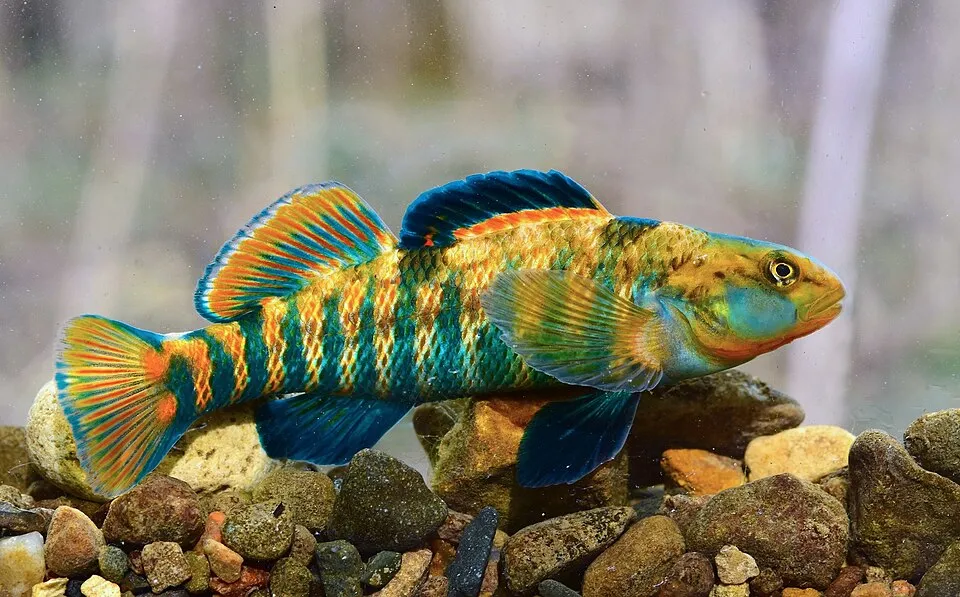 2.8 in (7 cm)25 gal (95 L)50–64°F (10–18°C)
Rainbow darter
Etheostoma caeruleum
2.8 in (7 cm) · 25 gal (95 L)
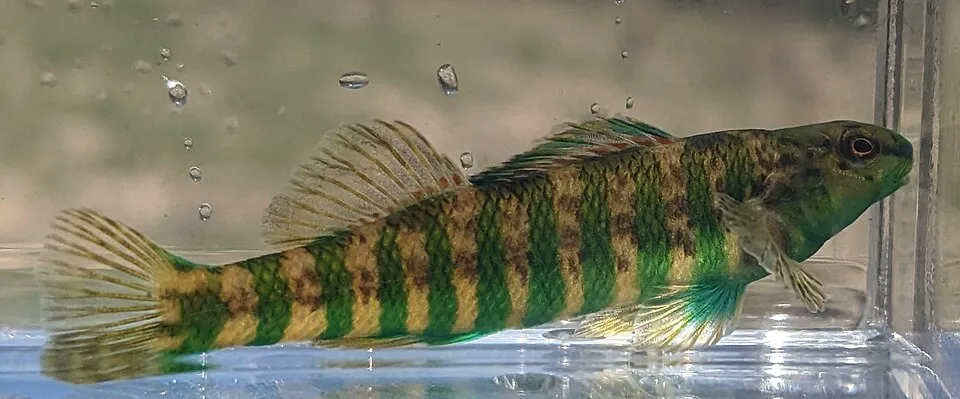 3.1 in (7.8 cm)26 gal (100 L)59–70°F (15–21°C)
Banded darter
Etheostoma zonale
3.1 in (7.8 cm) · 26 gal (100 L)
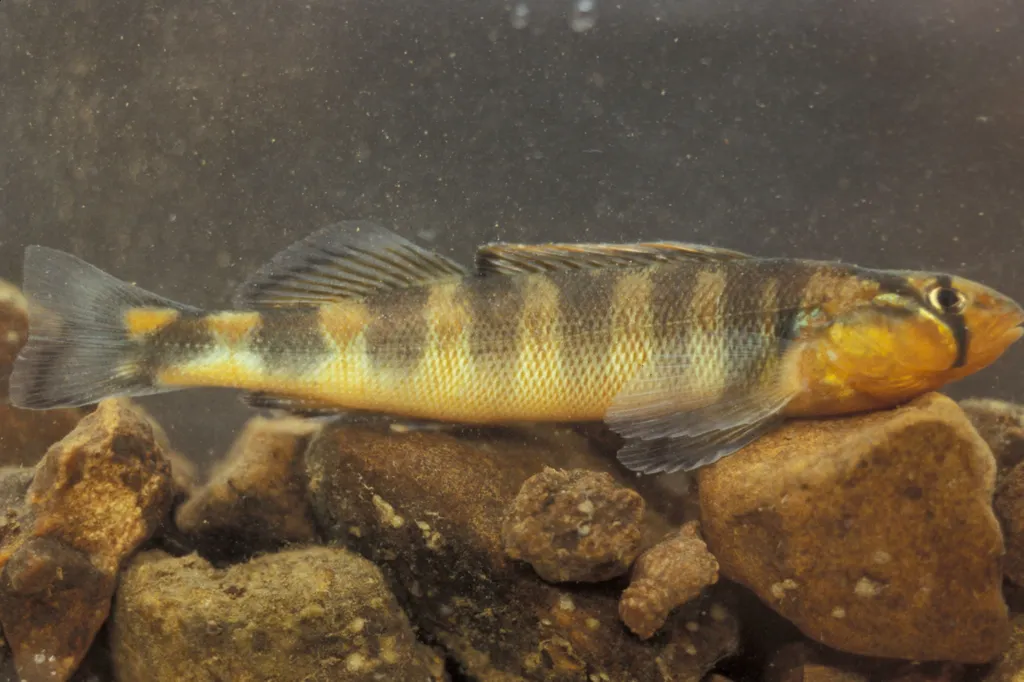 3.5 in (9 cm)29 gal (110 L)59–70°F (15–21°C)
Gilt darter
Percina evides
3.5 in (9 cm) · 29 gal (110 L)
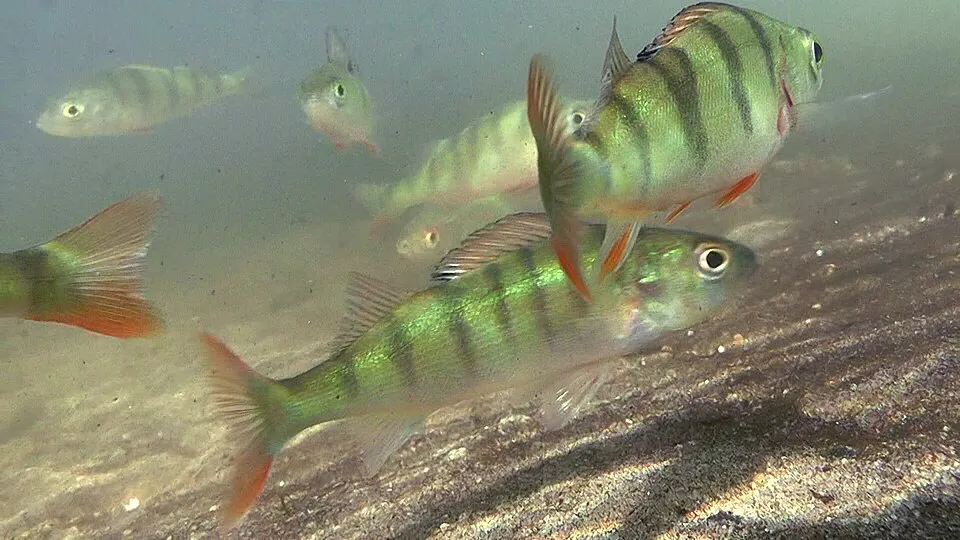 19.7 in (50 cm)119 gal (450 L)50–72°F (10–22°C)
European perch
Perca fluviatilis
19.7 in (50 cm) · 119 gal (450 L)
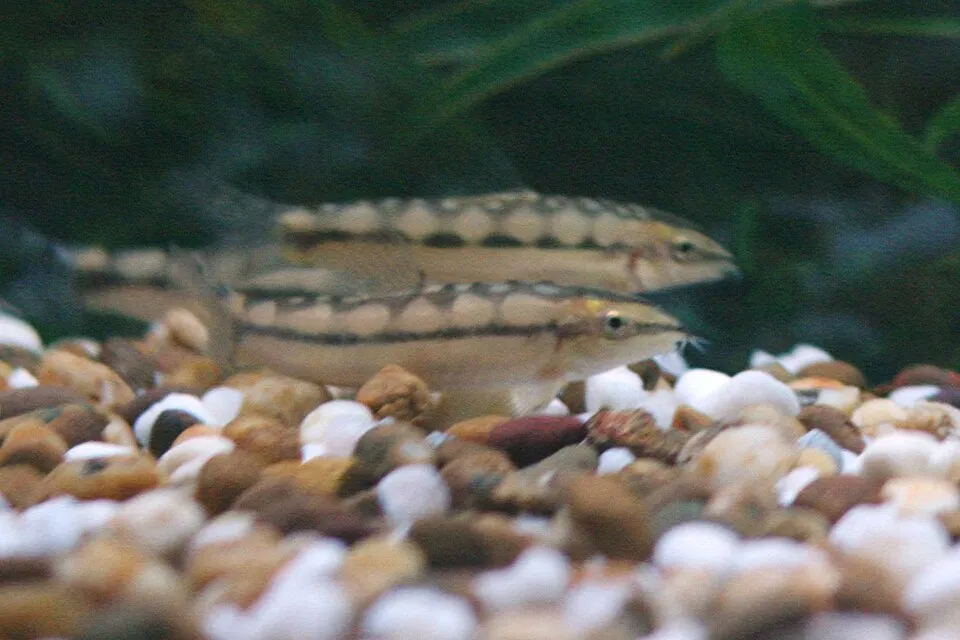 2.4 in (6 cm)20 gal (75 L)68–86°F (20–30°C)
Dwarf botia
Ambastaia sidthimunki
2.4 in (6 cm) · 20 gal (75 L)
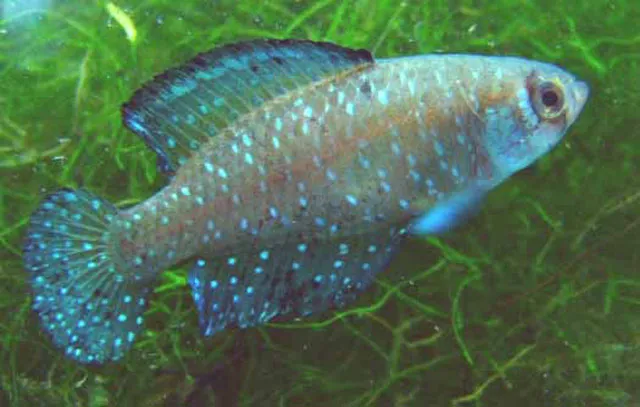 2.8 in (7 cm)18 gal (70 L)64–75°F (18–24°C)
Argentine pearl killifish
Austrolebias nigripinnis
2.8 in (7 cm) · 18 gal (70 L)