Persian toothcarp
Paraphanius mento
Also known as Persian killifish, Turkish killifish, Iridescent toothcarp, Aphanius mento, Aphaniops mento
FreshwaterFish
Care at a glance
- Temperature
- 59–86°F
- 15–30°C
- pH
- 7.5–9.0
- Adult size
- 2.6 in
- 6.5 cm
- Minimum tank
- 29 gal
- 110 L
- Temperament
- Aggressive
- Social behavior
- Social
- Tankmates
- With caution
- Swim level
- Middle
- Diet
- Omnivore
- Difficulty
- Medium
- Breeding
- Egg depositor · Medium
- Rarity
- Rare
- Family
- Cyprinodontidae
- Origin
- Native to springs, streams, and brackish coastal waters of the eastern Mediterranean, from Turkey and the Levant east into Iran.
Overview
The Persian toothcarp is a territorial killifish for a hard-water tank with plenty of cover. It is best with a little experience.
Did you know
The Persian toothcarp is one of the few killifish that wants hard, alkaline water. Most killifish prefer the opposite, soft and acidic conditions.
Caring for the Persian toothcarp
Keep Persian toothcarps as a harem of one male to several females, since males are territorial. A tank of 29 gal (110 L) or larger suits them, with dense plants or rockwork as cover to break up sight lines.
Give them hard, alkaline water at a pH of 7.5 to 9.0. They take a wide temperature range of 59 to 86°F (15 to 30°C). A cool winter rest that matches the seasons of their home range benefits them, so let the water drop cooler in winter.
Feed a varied diet of live and frozen foods, plus some vegetable matter and algae, since they graze as well as hunt. Persian toothcarps can be aggressive, so choose tank mates with caution.
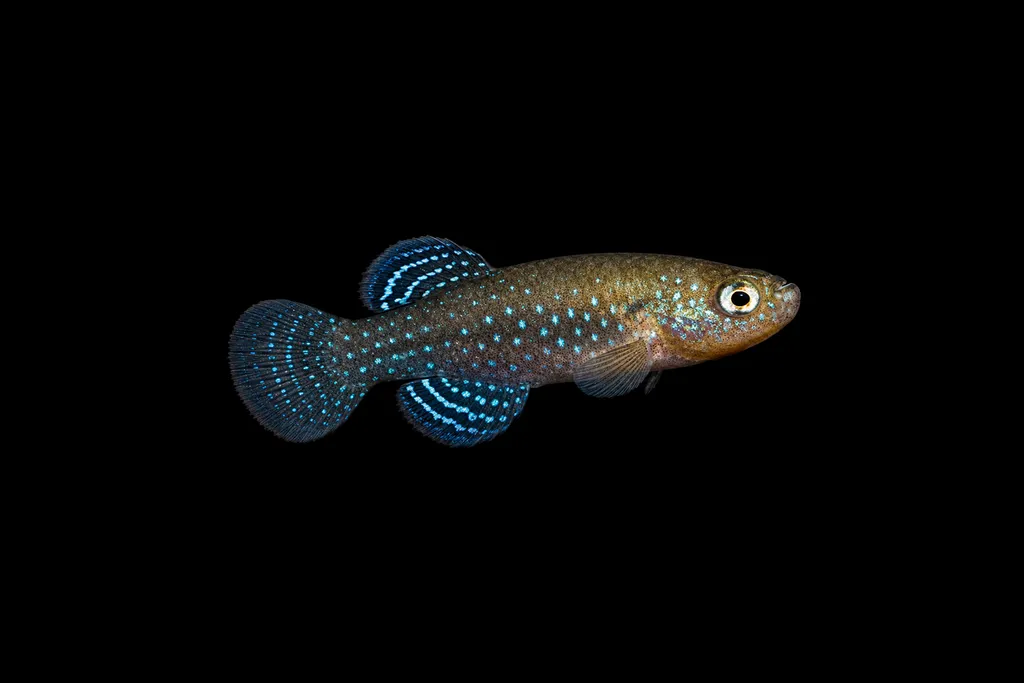
Males are boldly marked with iridescent blue and dark bars, while females are plain silver. Persian toothcarps are non-annual killifish. Spawn them on mops or fine plants during the warm months, and expect breeding to be moderately difficult.
Good to know
The Persian toothcarp, Paraphanius mento, was long known as Aphanius mento and has also been placed in the genus Aphaniops. It is a stocky, hard-water toothcarp in the family Cyprinodontidae.
In the wild
The Persian toothcarp lives around the eastern Mediterranean, from Turkey and the Levant east into Iran. It is adapted to hard, mineral-rich water in warm springs, spring-fed streams and brackish coastal pools.
Common questions
What size tank does a Persian toothcarp need?
A Persian toothcarp needs at least 29 gal (110 L). It spends most of its time in the middle.
What temperature and pH does a Persian toothcarp need?
A Persian toothcarp is comfortable at 59–86°F (15–30°C) with a pH of 7.5–9.0.
What does a Persian toothcarp eat?
A Persian toothcarp eats a varied diet of live and frozen foods. Add some vegetable matter and algae, since it grazes as well as hunts.
How big does a Persian toothcarp get?
An adult Persian toothcarp reaches about 2.6 in (6.5 cm).
How can you tell a male Persian toothcarp from a female?
Males are boldly marked with iridescent blue and dark bars. Females are plain silver.
How does a Persian toothcarp breed?
Persian toothcarps spawn on mops or fine plants during the warm months. They are non-annual killifish that benefit from a cool winter rest, and breeding them is moderately difficult.
Related species
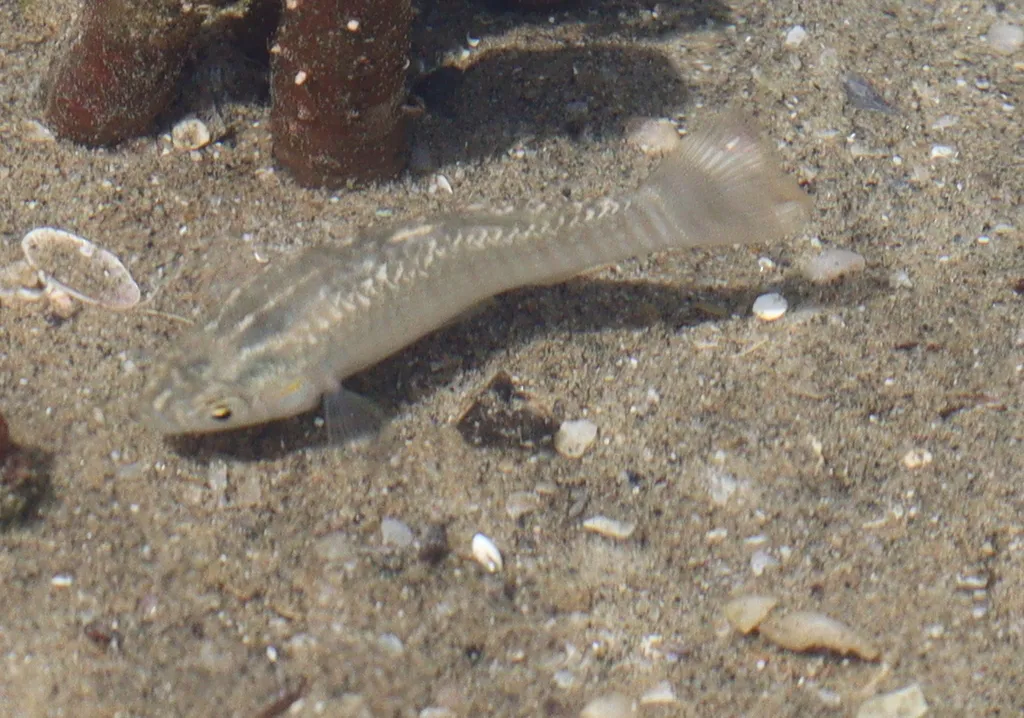 2.8 in (7 cm)30 gal (115 L)59–86°F (15–30°C)
Arabian toothcarp
Aphanius dispar
2.8 in (7 cm) · 30 gal (115 L)
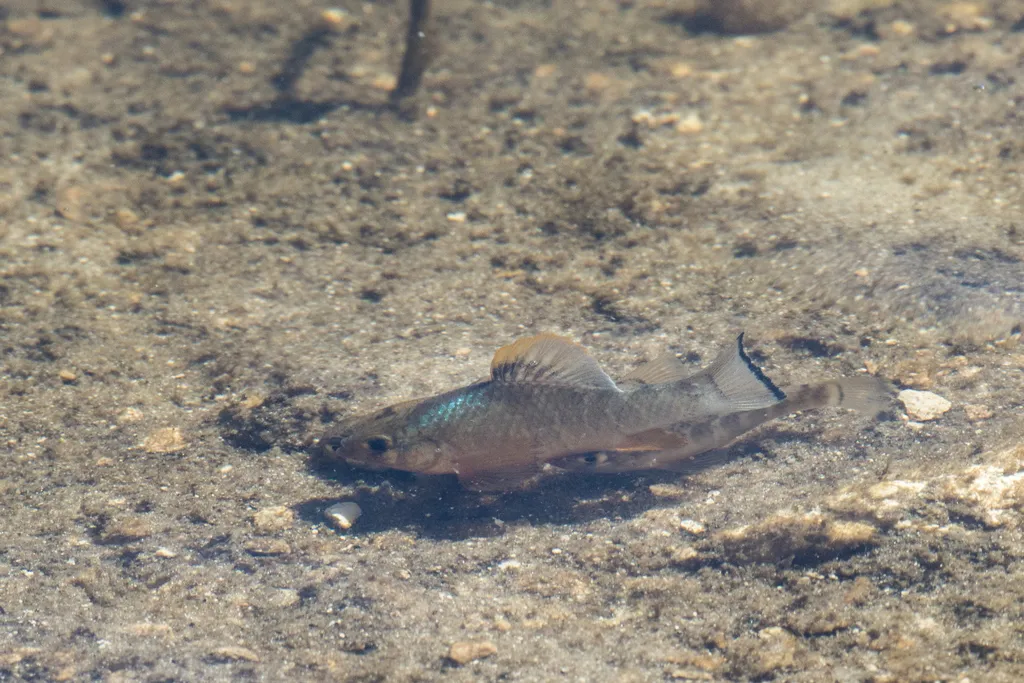 2.8 in (7 cm)26 gal (100 L)68–81°F (20–27°C)
Sheepshead minnow
Cyprinodon variegatus
2.8 in (7 cm) · 26 gal (100 L)
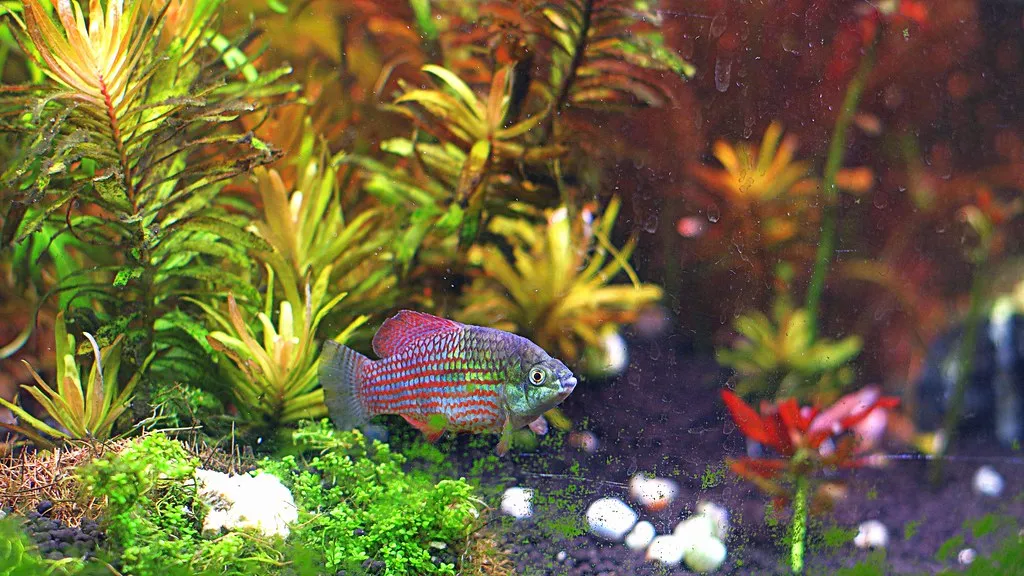 2.2 in (5.5 cm)18 gal (70 L)63–73°F (17–23°C)
American flagfish
Jordanella floridae
2.2 in (5.5 cm) · 18 gal (70 L)
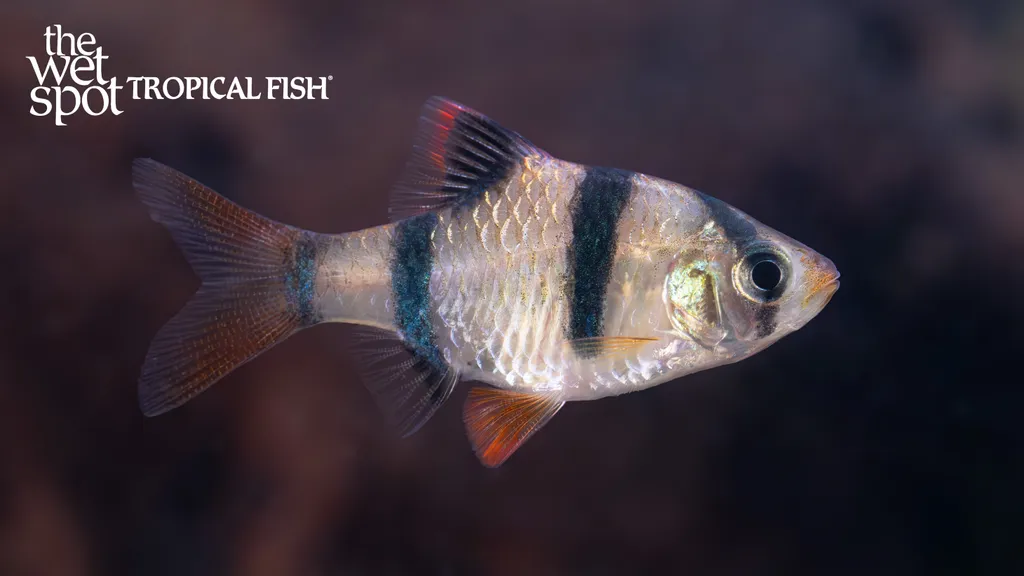 2.8 in (7 cm)20 gal (75 L)68–79°F (20–26°C)
Tiger barb
Puntigrus tetrazona
2.8 in (7 cm) · 20 gal (75 L)
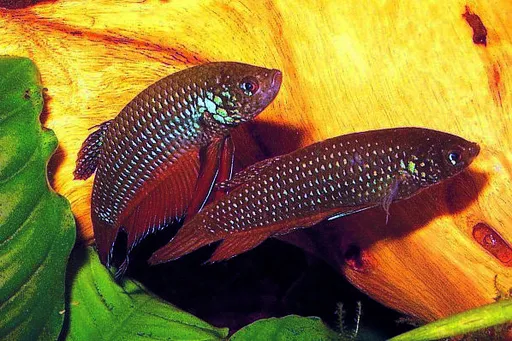 2.4 in (6 cm)11 gal (40 L)72–82°F (22–28°C)
Emerald betta
Betta smaragdina
2.4 in (6 cm) · 11 gal (40 L)
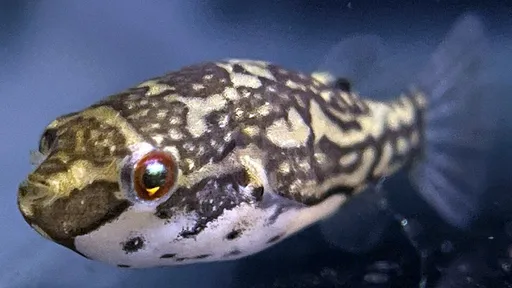 2.4 in (6 cm)14 gal (54 L)75–82°F (24–28°C)
Redeye puffer
Carinotetraodon lorteti
2.4 in (6 cm) · 14 gal (54 L)