American flagfish
Jordanella floridae
Also known as Florida flagfish, Florida flag fish
FreshwaterFish
Care at a glance
- Temperature
- 63–73°F
- 17–23°C
- pH
- 7.0–8.0
- Adult size
- 2.2 in
- 5.5 cm
- Minimum tank
- 18 gal
- 70 L
- Temperament
- Mostly peaceful
- Social behavior
- Social
- Tankmates
- With caution
- Swim level
- Middle
- Difficulty
- Easy
- Breeding
- Hard
- Rarity
- Rare
- Family
- Cyprinodontidae
- Origin
- Florida
Overview
Keep a small group in a well planted tank with plenty of algae to graze, since this is one of the few killifish that leans strongly herbivorous. Males set up small territories and can chase each other, so give them room and floating cover to break up sight lines. Their diet should focus on algae, biofilm and blanched vegetables, topped up with occasional daphnia, bloodworms or brine shrimp. They spend most of their time grazing across the lower and middle levels. A cooler tank suits them, and they do well unheated in most homes. A tank of 70 liters or larger gives a group the space to spread out.
In the wild
In the wild American flagfish live in warm, slow, heavily vegetated waters across Florida, from ponds and ditches to the quiet margins of marshes and canals. The water is often soft to moderately hard and close to neutral or slightly alkaline. To recreate this, use a densely planted tank with a soft substrate, some leaf litter or spawning mops, and gentle flow. As a subtropical native it prefers cooler conditions than most killifish, sitting comfortably between 17 and 23 C, and it can be kept without a heater in a typical room. Keep the pH between about 7 and 8.
Good to know
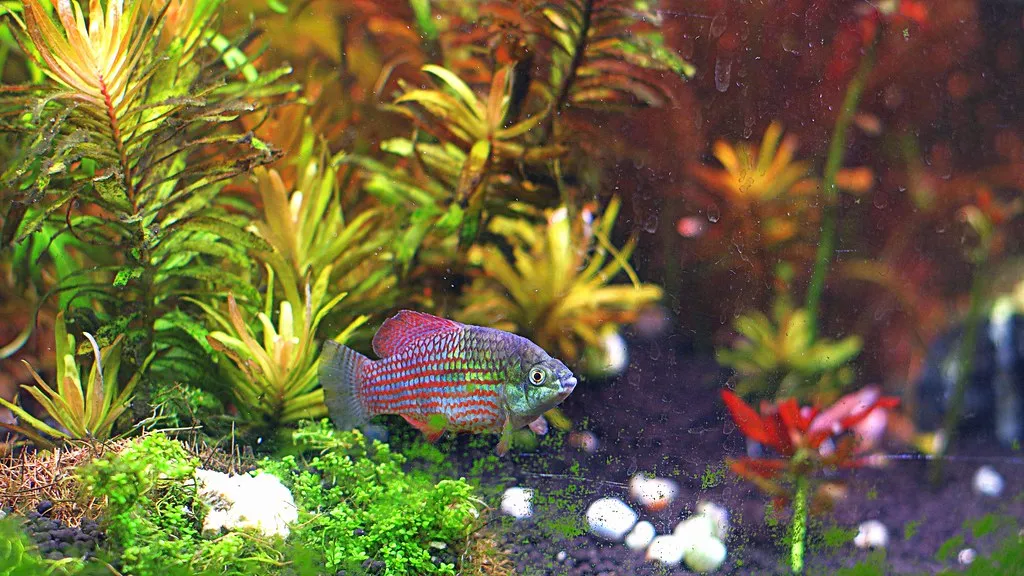
American flagfish belong to the pupfish family Cyprinodontidae and reach about 5.5 cm, with stocky males showing the red and blue barring that gives the fish its flag-like name. Unlike the annual killifish, this is a fractional spawner that breeds over an extended warm spell rather than through drought-resistant eggs. Females scatter eggs into plants or a shallow substrate pit, and the male guards and fans the clutch until the fry emerge after about a week. Rearing the fry and managing the male's territorial streak make consistent breeding a genuine challenge.
Did you know
The male American flagfish takes on guard duty after spawning, hovering over the eggs and fanning them with his fins to keep them clean and oxygenated until they hatch. This kind of paternal care is unusual among the egg-scattering killifish.
Common questions
What size tank does an American flagfish need?
An American flagfish needs at least 18 gal (70 L). It spends most of its time in the middle.
What temperature and pH does an American flagfish need?
An American flagfish is comfortable at 63–73°F (17–23°C) with a pH of 7.0–8.0.
How big does an American flagfish get?
An adult American flagfish reaches about 2.2 in (5.5 cm).
Related species
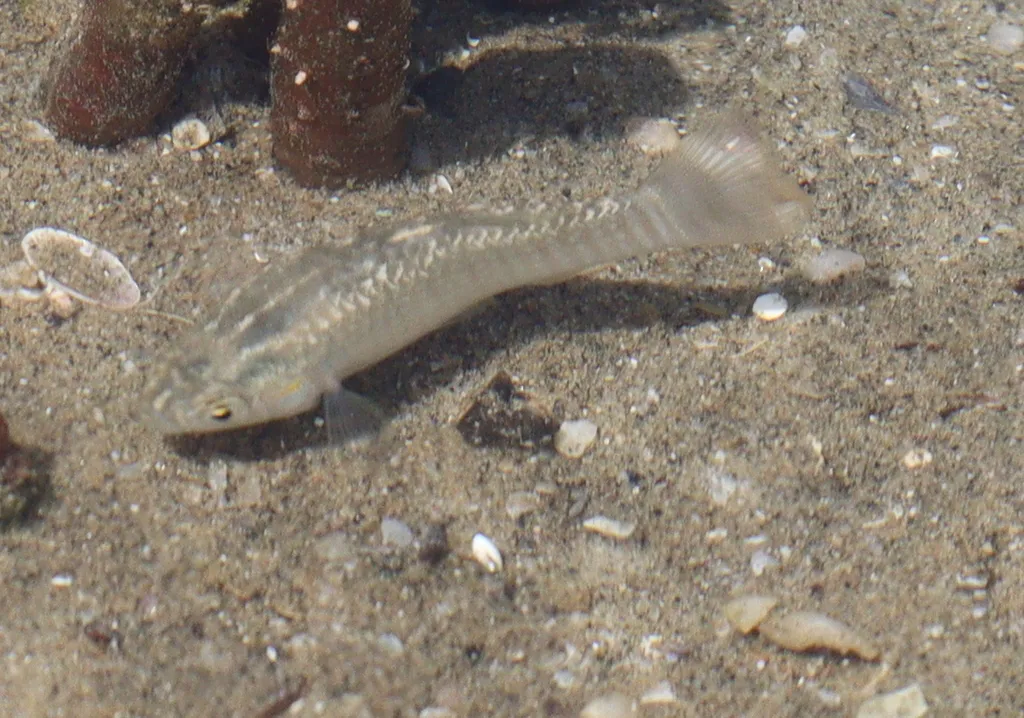 2.8 in (7 cm)30 gal (115 L)59–86°F (15–30°C)
Arabian toothcarp
Aphanius dispar
2.8 in (7 cm) · 30 gal (115 L)
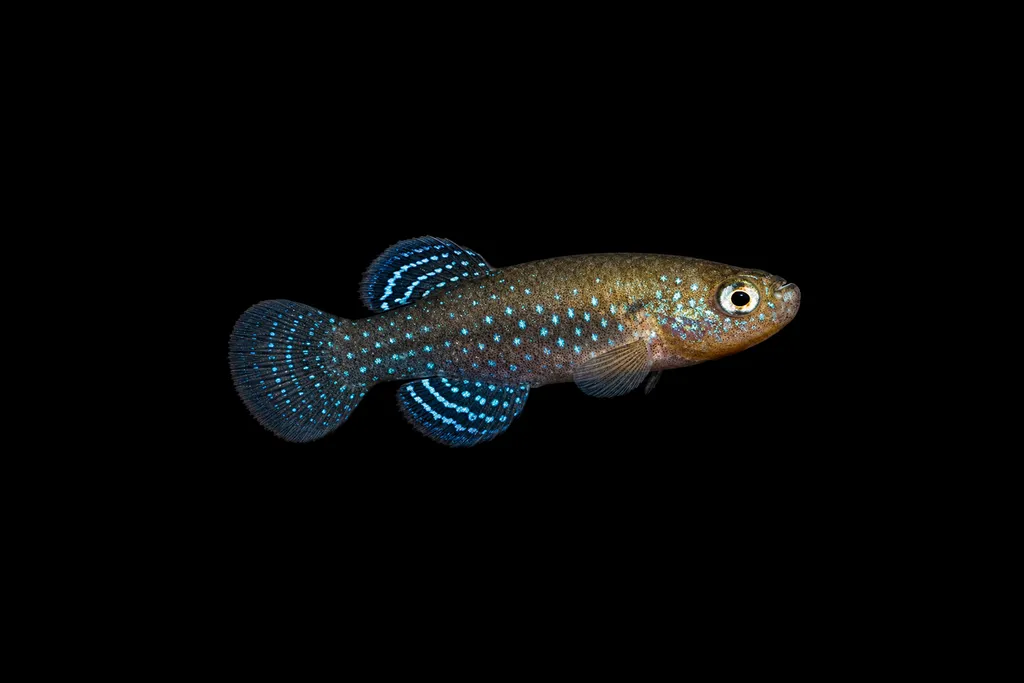 2.6 in (6.5 cm)29 gal (110 L)59–86°F (15–30°C)
Persian toothcarp
Paraphanius mento
2.6 in (6.5 cm) · 29 gal (110 L)
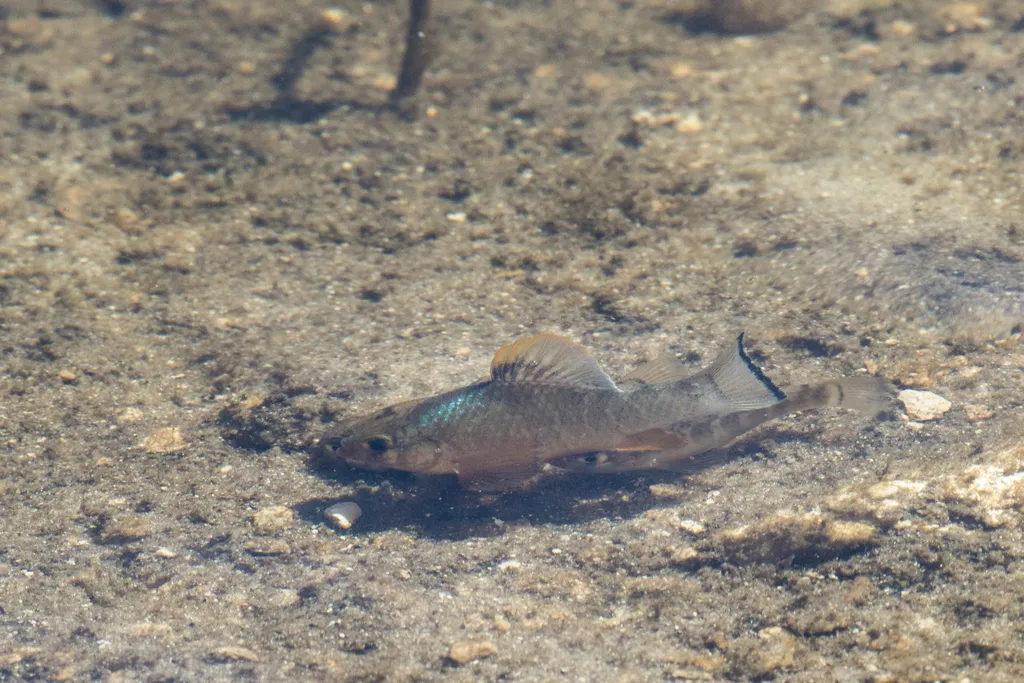 2.8 in (7 cm)26 gal (100 L)68–81°F (20–27°C)
Sheepshead minnow
Cyprinodon variegatus
2.8 in (7 cm) · 26 gal (100 L)
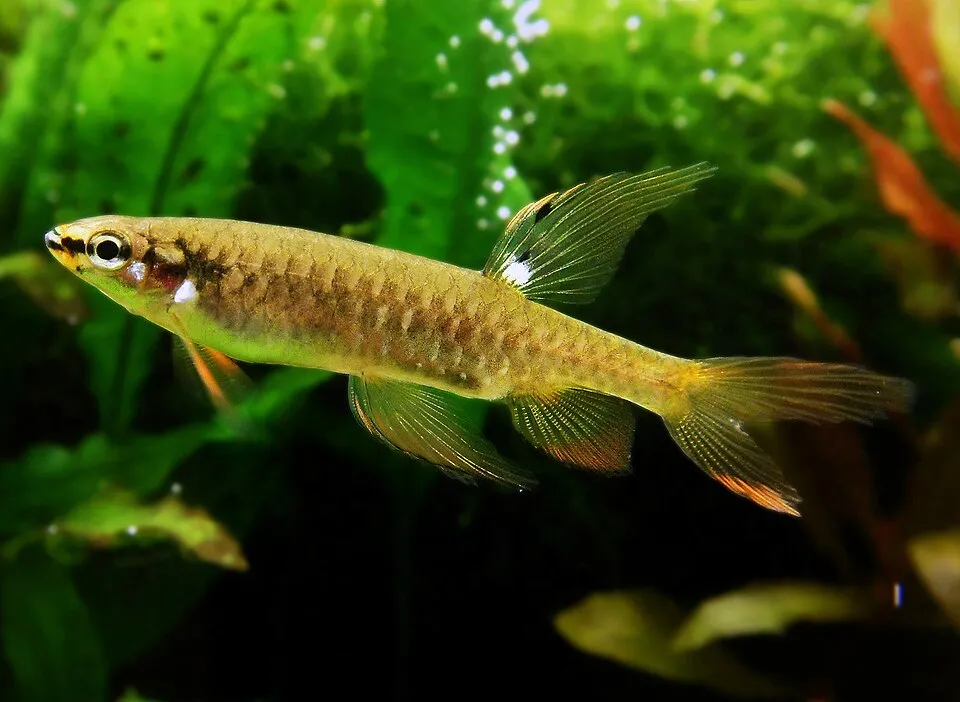 2.2 in (5.5 cm)18 gal (70 L)68–82°F (20–28°C)
Splash tetra
Copella arnoldi
2.2 in (5.5 cm) · 18 gal (70 L)
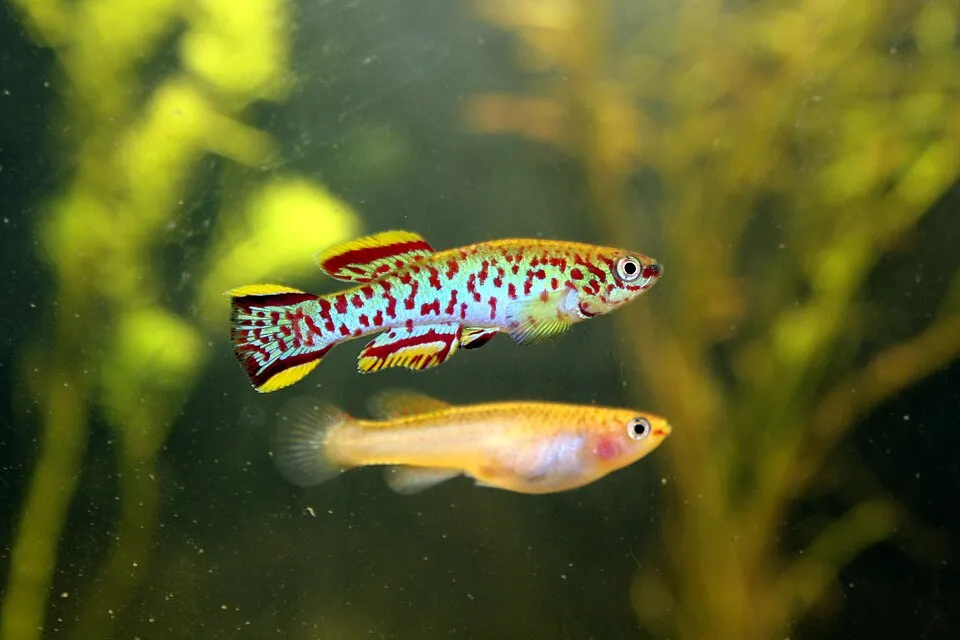 2.2 in (5.5 cm)21 gal (80 L)70–79°F (21–26°C)
Steel blue killifish
Fundulopanchax gardneri
2.2 in (5.5 cm) · 21 gal (80 L)
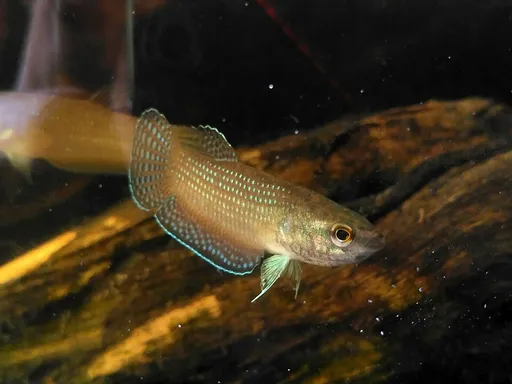 2.4 in (6 cm)20 gal (75 L)72–81°F (22–27°C)
Edith's betta
Betta edithae
2.4 in (6 cm) · 20 gal (75 L)