Palythoa
Also known as Palys, Palythoas, Sea Mat
SaltwaterCoral
Care at a glance
- Temperature
- 75–81°F
- 24–27°C
- pH
- 8.1–8.4
- Adult size
- 7.1 in
- 18 cm
- Minimum tank
- 11 gal
- 40 L
- Temperament
- Peaceful
- Social behavior
- Solitary
- Swim level
- Bottom
- Difficulty
- Beginner
- Breeding
- Medium
- Rarity
- Very common
- Reef safe
- Reef safe
- Family
- Sphenopidae
- Origin
- Indo-Pacific and Caribbean reefs
Overview
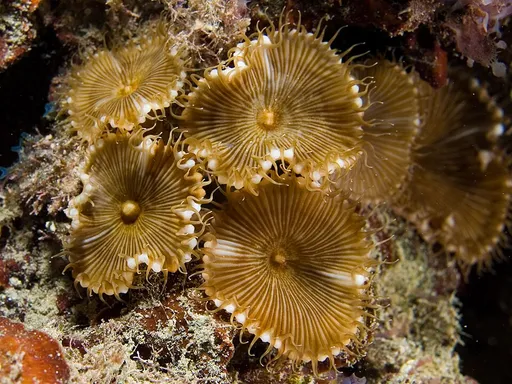
Palythoa is a sessile, mat-forming coral, and it is reef safe. It is easy to keep and a good first coral.
Did you know
Palythoa is behind several documented cases of palytoxin poisoning in hobbyists, from boiling or scrubbing its rock indoors. Both aerosolize the toxin, which can cause serious respiratory illness.
Caring for the Palythoa
Give Palythoa moderate light, around 50 to 150 PAR, and moderate flow that keeps debris from settling between the polyps. Place colonies low to mid on the rockwork, where their spread can be managed. A tank of at least 11 gal (40 L) is enough.
Keep the water at 75 to 81°F (24 to 27°C) with a pH of 8.1 to 8.4. Palythoa reproduces by budding and can overgrow rock quickly. It does not sting its neighbors aggressively, but it competes for space by encrusting. Keep it on its own rock, or leave a clear border between it and slower corals.
Palytoxin can be released when a colony is cut, scrubbed or boiled. Wear gloves and eye protection, and work with good ventilation when fragging. Avoid hot water treatment of Palythoa rock.
Good to know
Palythoa is a colonial zoanthid in the family Sphenopidae, and its polyps run larger than those of other zoanthids. The polyps share a thick common tissue and often bind large amounts of sediment into their bodies for support. It is the genus most associated with palytoxin, one of the most potent marine toxins known.
In the wild
Palythoa forms fleshy mats on rock across the reefs of the Indo-Pacific and the Caribbean. It often grows in areas with brighter light and some current.
Common questions
Related species
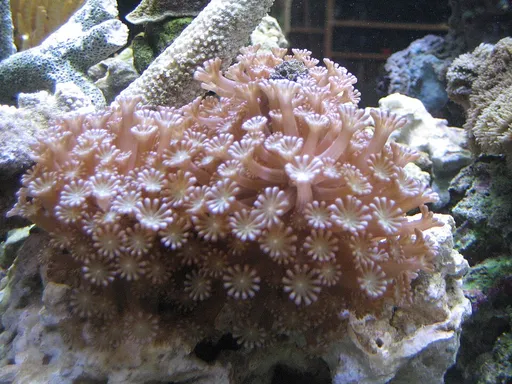 7.9 in (20 cm)11 gal (40 L)75–81°F (24–27°C)
Alveopora coral
Alveopora
7.9 in (20 cm) · 11 gal (40 L)
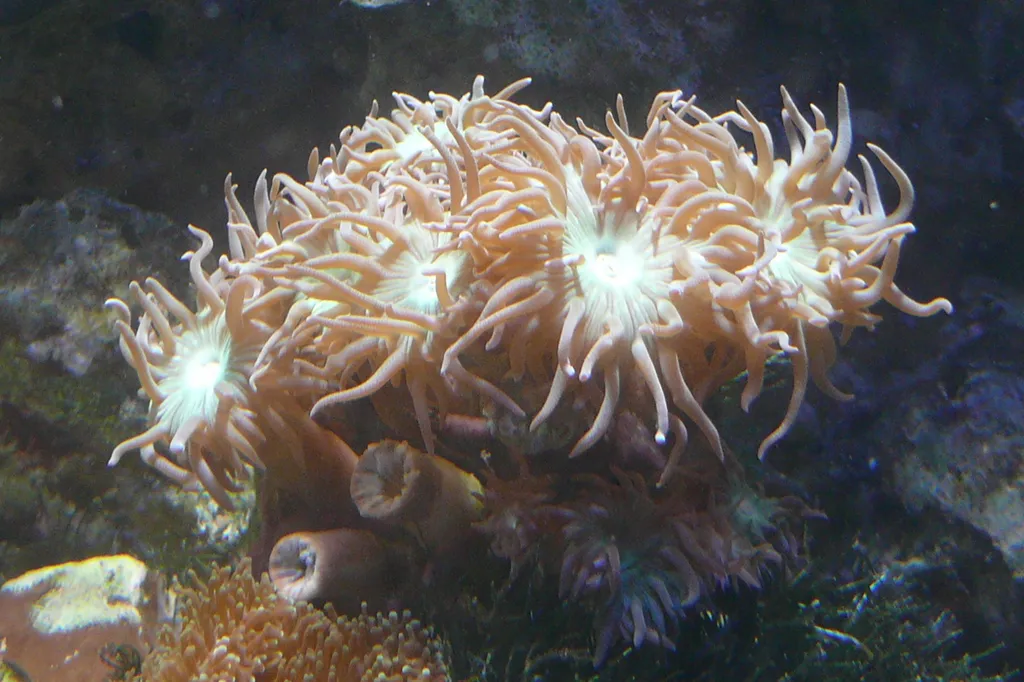 7.9 in (20 cm)11 gal (40 L)75–81°F (24–27°C)
Duncan coral
Duncanopsammia axifuga
7.9 in (20 cm) · 11 gal (40 L)
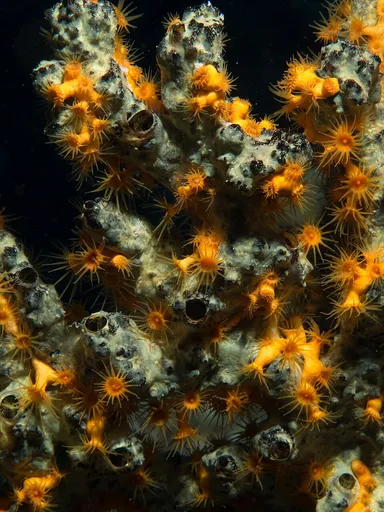 7.9 in (20 cm)20 gal (75 L)73–81°F (23–27°C)
Gold polyps
Parazoanthus swiftii
7.9 in (20 cm) · 20 gal (75 L)
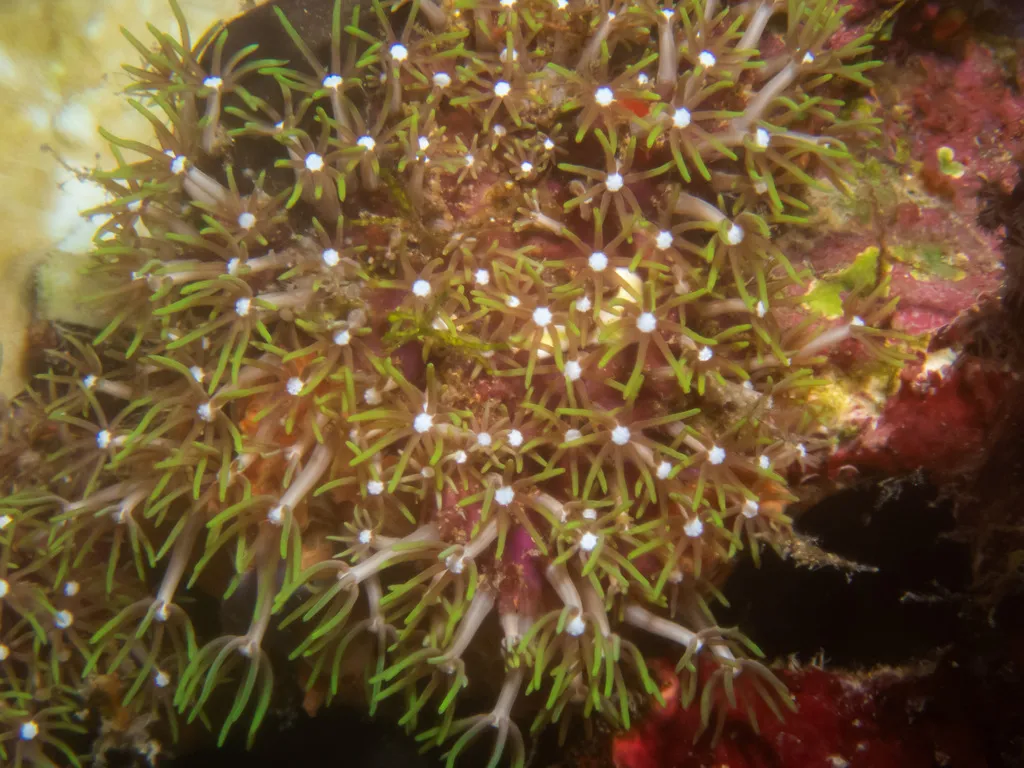 7.9 in (20 cm)11 gal (40 L)75–81°F (24–27°C)
Green star polyps
Pachyclavularia violacea
7.9 in (20 cm) · 11 gal (40 L)
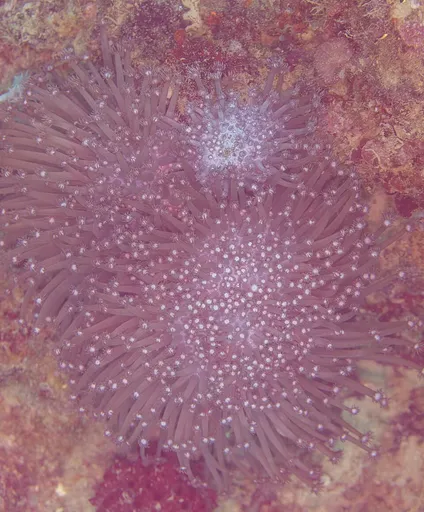 7.9 in (20 cm)26 gal (100 L)75–81°F (24–27°C)
Long-polyp flowerpot coral
Goniopora stokesi
7.9 in (20 cm) · 26 gal (100 L)
 7.9 in (20 cm)20 gal (75 L)75–81°F (24–27°C)
Montipora digitata (finger coral)
Montipora digitata
7.9 in (20 cm) · 20 gal (75 L)