Painted ctenopharynx
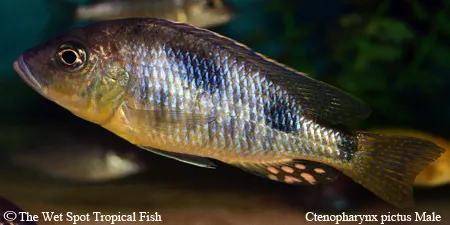
Ctenopharynx pictus
Also known as Pictus hap
FreshwaterFish
Care at a glance
- Temperature
- 75–81°F
- 24–27°C
- pH
- 7.5–8.5
- Adult size
- 4.9 in
- 12.5 cm
- Minimum tank
- 79 gal
- 300 L
- Temperament
- Mostly peaceful
- Social behavior
- Social
- Swim level
- Bottom
- Difficulty
- Medium
- Breeding
- Mouthbrooder · Medium
- Rarity
- Rare
- Family
- Cichlidae
- Origin
- Lake Malawi
Overview
The painted ctenopharynx is a modest Malawi cichlid that sifts sand for its food. It is a fair step up from beginner fish.
Did you know
The painted ctenopharynx has one of the finest, most crowded sets of gill rakers of any Malawi cichlid. They let it strain food particles from the sand that are far too small for most of its neighbors to bother with.
Caring for the painted ctenopharynx
The painted ctenopharynx is social, so keep a small group in at least 79 gal (300 L). Give the group a floor of soft, fine sand to sift, with an open sandy area and some rock around the edges for structure.
Keep the water hard and alkaline, at 75 to 81°F (24 to 27°C) and a pH of 7.5 to 8.5. Feed small foods it can sort from the sand, such as quality granules, frozen cyclops, brine shrimp and finely chopped items.
It is mostly peaceful and mixes well with other calm Malawi cichlids. Let it do its slow work over the substrate rather than competing with fast, greedy feeders. It is a maternal mouthbrooder, and breeding it is of medium difficulty.
Good to know
Ctenopharynx pictus belongs to the cichlid family, Cichlidae. It feeds by sucking up fine sediment and passing it over its gill rakers, 32 to 38 on the lower arch alone. These sieve out tiny invertebrates such as benthic copepods.
In the wild
The painted ctenopharynx lives in sheltered parts of Lake Malawi, over rocky areas dusted with fine sediment and on soft bottoms. The lake water is hard and alkaline.
Weekly picks
Tank mates
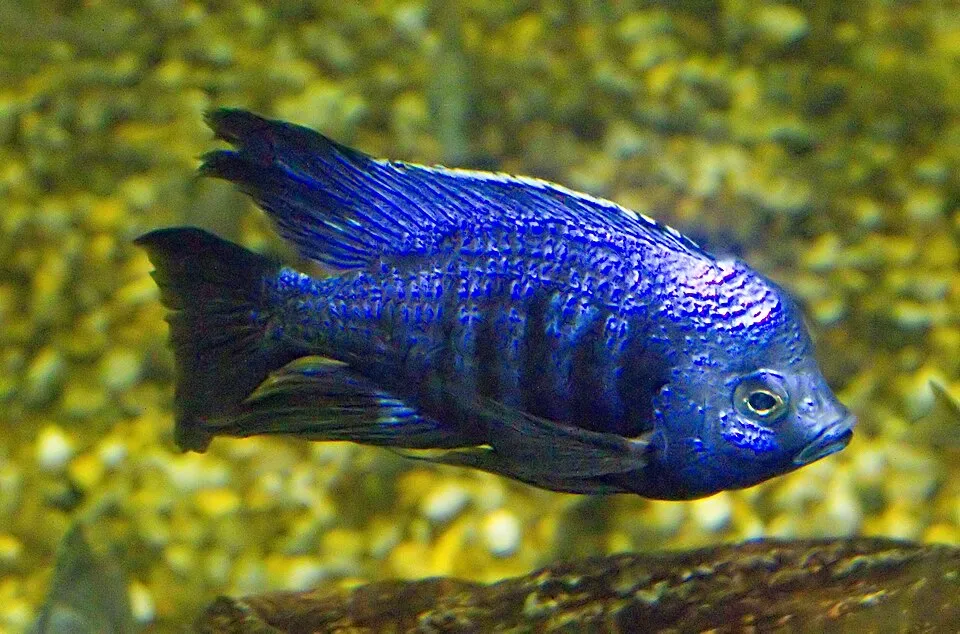
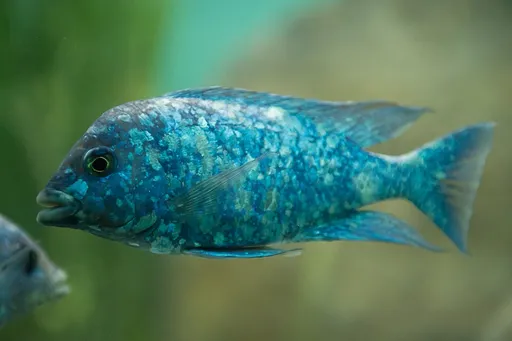
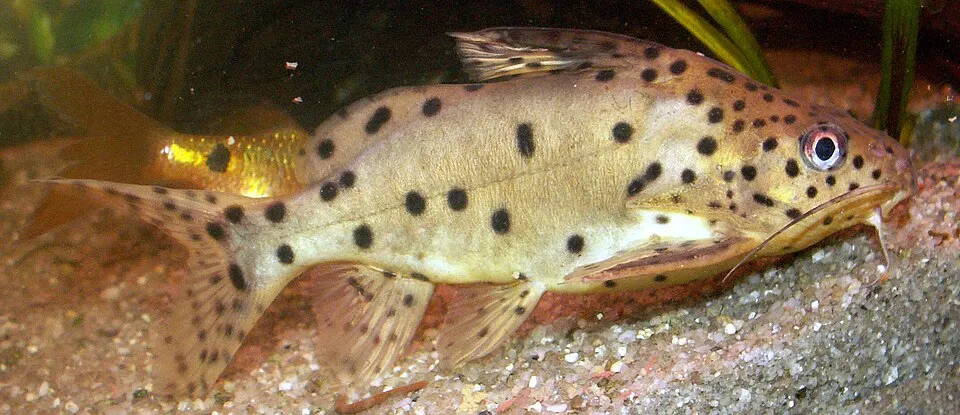
The painted ctenopharynx is a mostly peaceful, social species that keeps to the bottom. These picks share a community profile with it, are safe together in both directions, and overlap on water type, temperature and pH.
Common questions
What size tank does a painted ctenopharynx need?
A painted ctenopharynx needs at least 79 gal (300 L). It spends most of its time in the bottom.
What temperature and pH does a painted ctenopharynx need?
A painted ctenopharynx is comfortable at 75–81°F (24–27°C) with a pH of 7.5–8.5.
What does a painted ctenopharynx eat?
A painted ctenopharynx eats small foods it sorts from the sand, such as granules, frozen cyclops, brine shrimp and finely chopped items.
How big does a painted ctenopharynx get?
An adult painted ctenopharynx reaches about 4.9 in (12.5 cm).
How does a painted ctenopharynx breed?
The painted ctenopharynx is a maternal mouthbrooder. Breeding it is a moderate challenge.
Related species
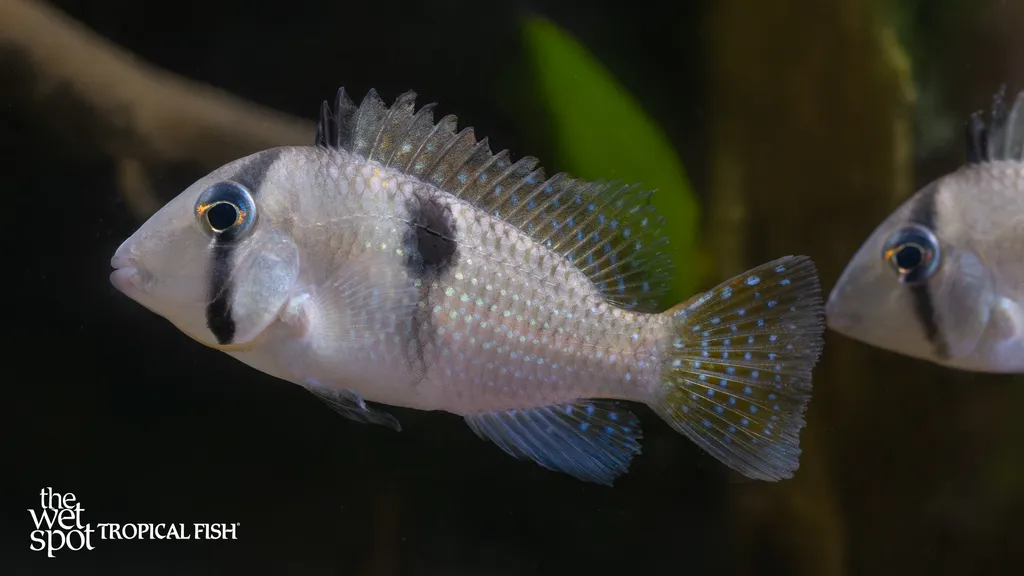 5.1 in (13 cm)40 gal (150 L)75–82°F (24–28°C)
Bandit cichlid
Guianacara geayi
5.1 in (13 cm) · 40 gal (150 L)
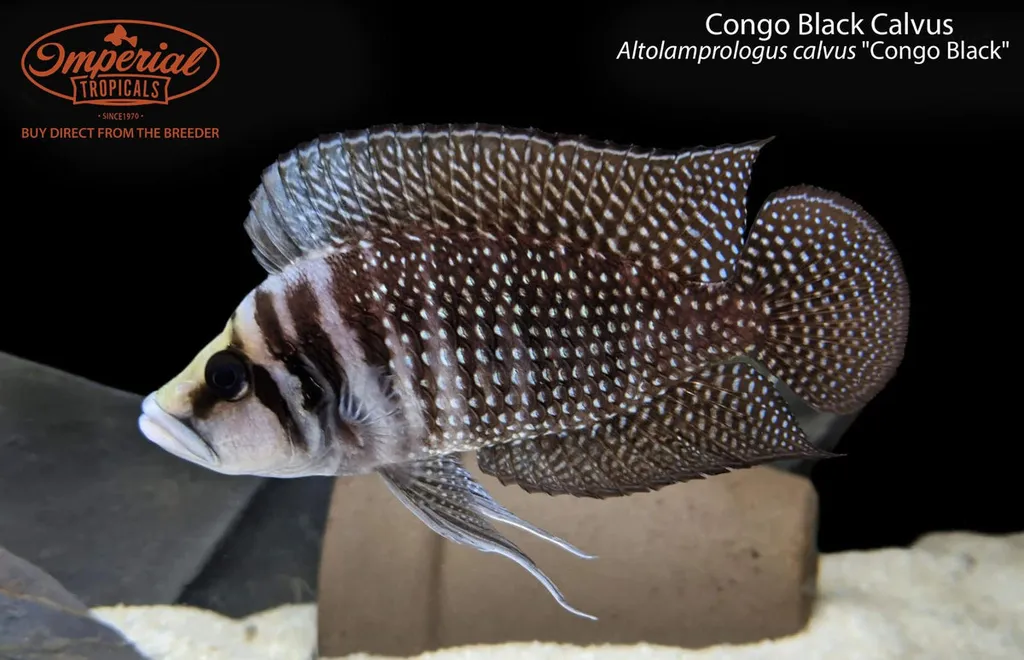 5.1 in (13 cm)53 gal (200 L)75–81°F (24–27°C)
Black calvus
Altolamprologus calvus
5.1 in (13 cm) · 53 gal (200 L)
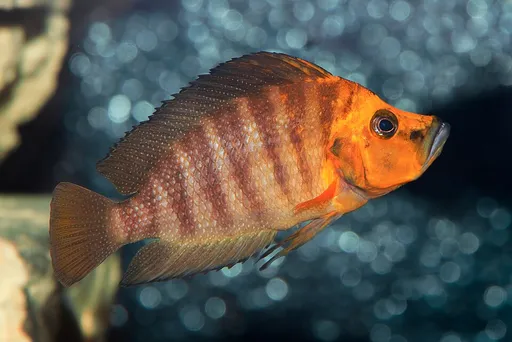 5.1 in (13 cm)53 gal (200 L)75–81°F (24–27°C)
Compressiceps
Altolamprologus compressiceps
5.1 in (13 cm) · 53 gal (200 L)
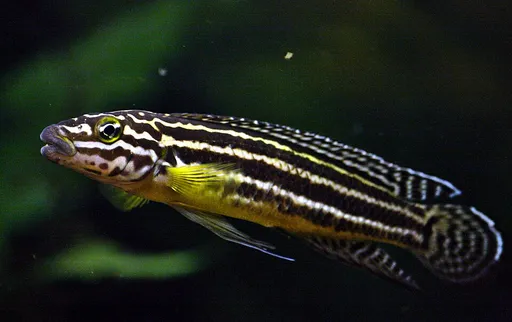 5.1 in (13 cm)29 gal (110 L)75–81°F (24–27°C)
Convict julie
Julidochromis regani
5.1 in (13 cm) · 29 gal (110 L)
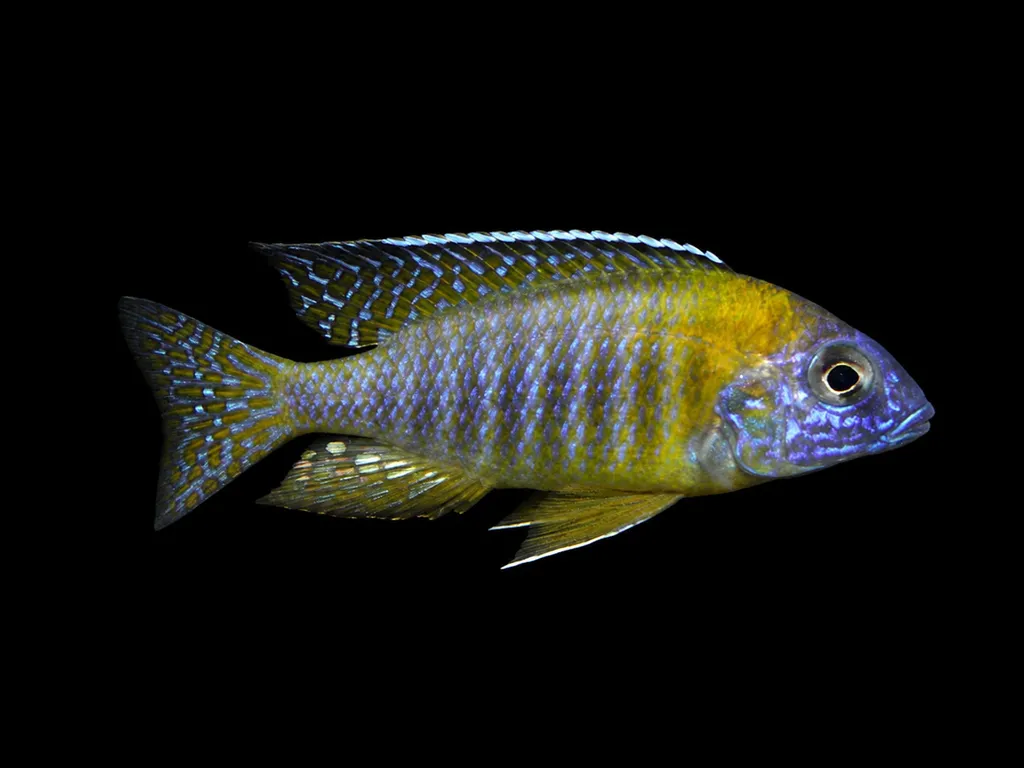 5.1 in (13 cm)74 gal (280 L)75–81°F (24–27°C)
Gertrude's peacock
Aulonocara gertrudae
5.1 in (13 cm) · 74 gal (280 L)
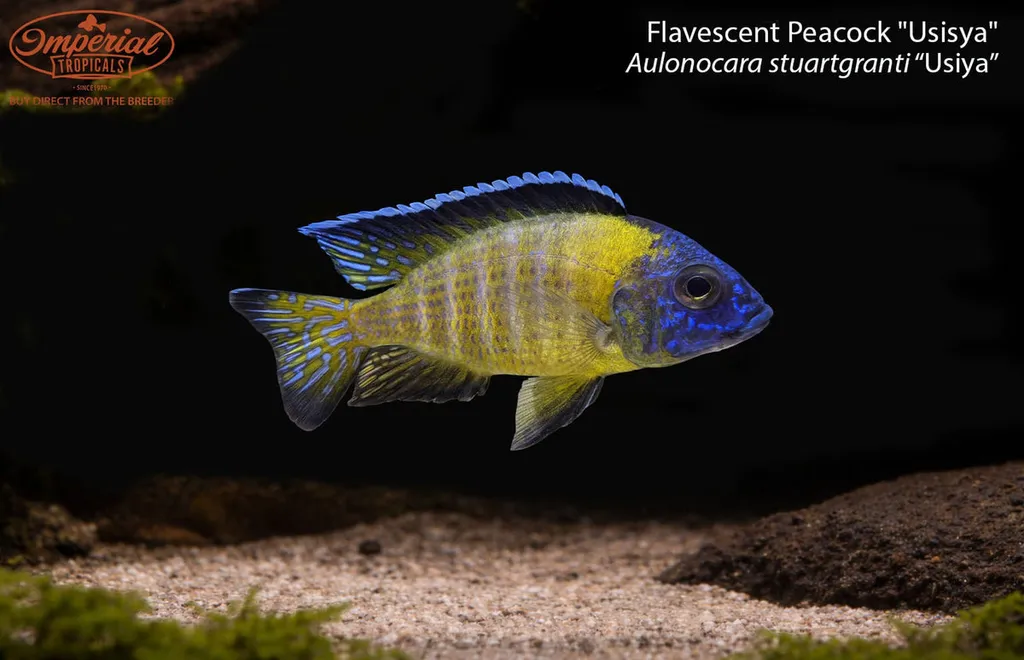 5.1 in (13 cm)74 gal (280 L)75–82°F (24–28°C)
Grant's peacock
Aulonocara stuartgranti
5.1 in (13 cm) · 74 gal (280 L)