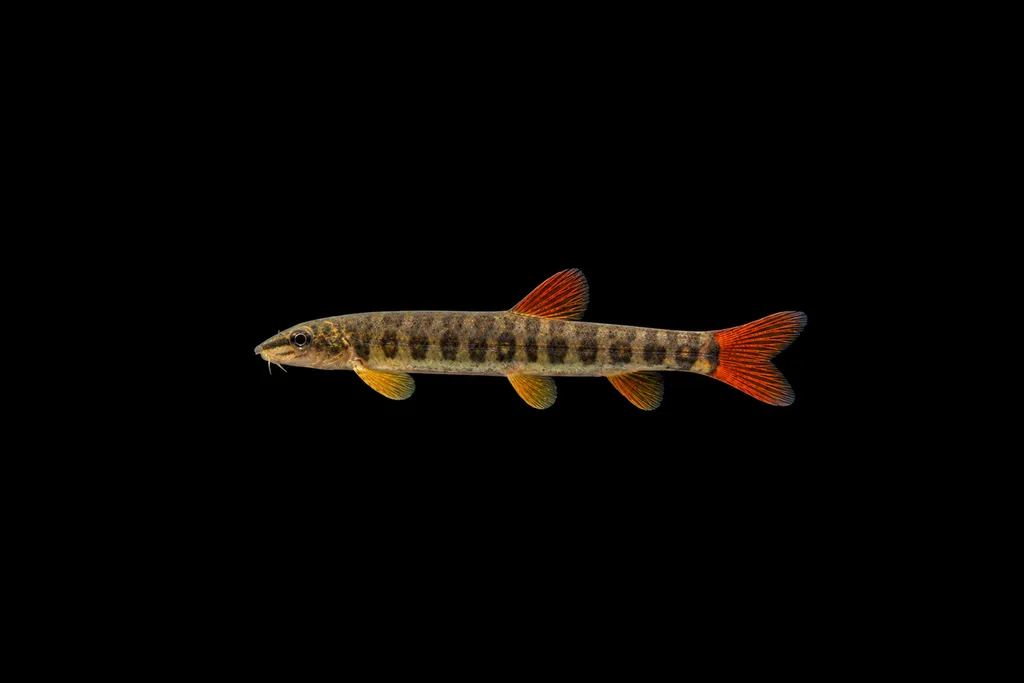
Nilgiri loach
Schistura nilgiriensis
Also known as Nilgiri stone loach
FreshwaterFish
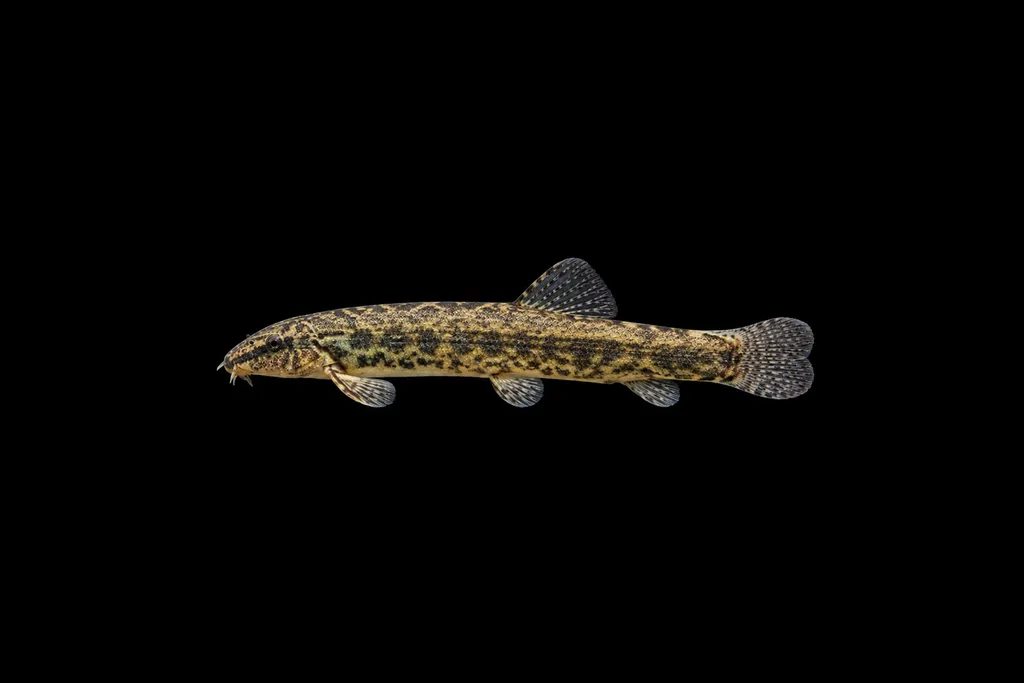
Care at a glance
- Temperature
- 64–75°F
- 18–24°C
- pH
- 6.5–7.5
- Adult size
- 2.4 in
- 6 cm
- Minimum tank
- 20 gal
- 75 L
- Temperament
- Mostly peaceful
- Social behavior
- Social
- Swim level
- Bottom
- Difficulty
- Medium
- Breeding
- No record
- Rarity
- Rare
- Family
- Nemacheilidae
- Origin
- Nilgiri hills, Tamil Nadu, India
Overview
The Nilgiri loach is a coolwater stone loach for the bottom of a temperate, well-oxygenated tank. It is a step past the easiest beginner fish.
Did you know
Nilgiri means blue mountains. Once every twelve years, the kurinji shrubs of these hills bloom together and wash the slopes in violet-blue, high above the Nilgiri loach's streams.
Caring for the Nilgiri loach
Keep a few Nilgiri loaches together in a tank of 20 gal (75 L) or more. Build a stony floor of rounded rock, pebbles and clean gravel, broken into territories. They hold their patches without much fuss, and a small group stays settled on the floor.
Keep the water cool, at 64 to 75°F (18 to 24°C) and a pH of 6.5 to 7.5. The Nilgiri loach works the bottom near fast water, so provide brisk, strong flow and high oxygen. A cool, current-swept river-tank layout suits it best.
Feed small sinking foods, frozen bloodworm and daphnia. It is mostly peaceful and best matched with hill-stream barbs and danios that share its need for current and oxygen. Its aquarium breeding has not been recorded.
Good to know
Schistura nilgiriensis was described by A. G. K. Menon in 1987, and it belongs to the family Nemacheilidae. Its home lies in a biodiversity hotspot, where many hill fishes are confined to single plateaus or river systems.
In the wild
The Nilgiri loach is endemic to cool plateau streams of the Nilgiri hills and nearby Western Ghats, in southern India. It lives in fast water near rapids and small falls, often above a thousand meters.
Weekly picks
Tank mates
The Nilgiri loach is a mostly peaceful, social species that keeps to the bottom. These picks share a community profile with it, are safe together in both directions, and overlap on water type, temperature and pH.
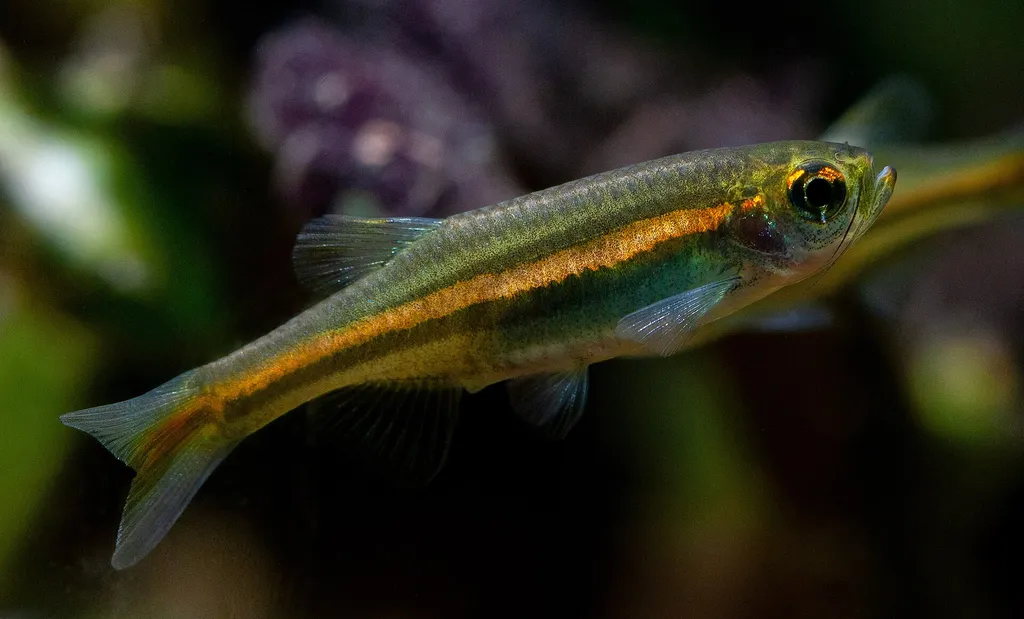
Jaintia danio
Danio jaintianensis
Freshwater2 in (5 cm) · 20 gal (75 L)64–75°F (18–24°C)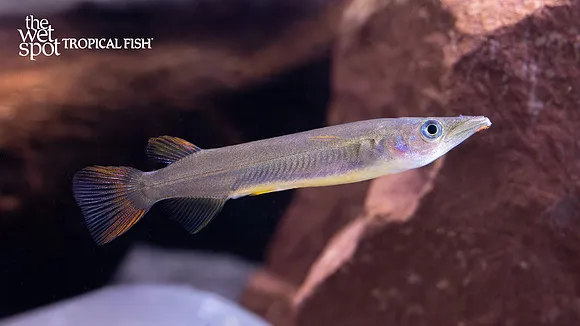
Rex halfbeak
Nomorhamphus rex
Freshwater2.2 in (5.5 cm) · 20 gal (75 L)72–79°F (22–26°C)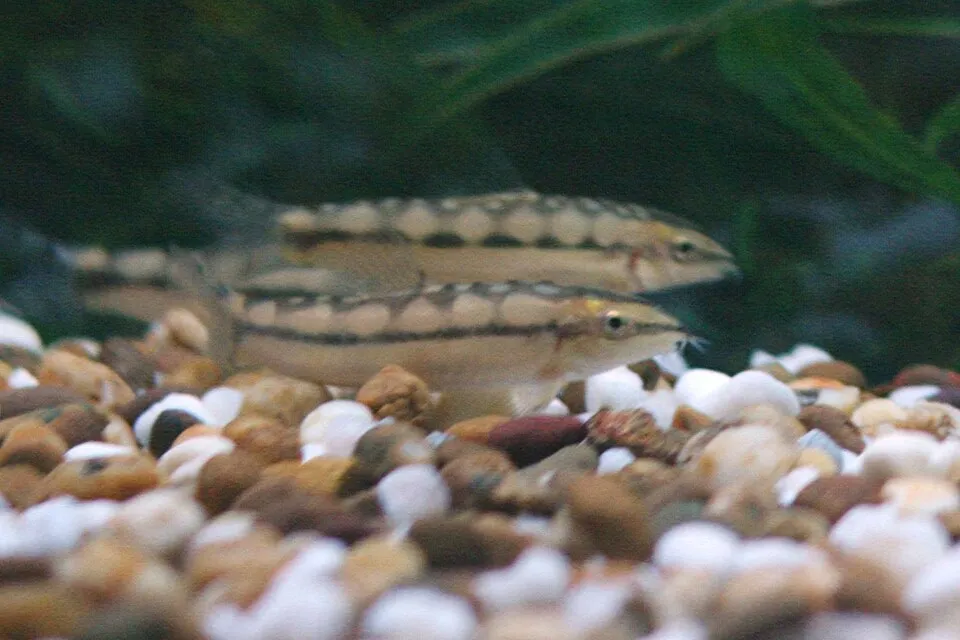
Dwarf botia
Ambastaia sidthimunki
Freshwater2.4 in (6 cm) · 20 gal (75 L)68–86°F (20–30°C)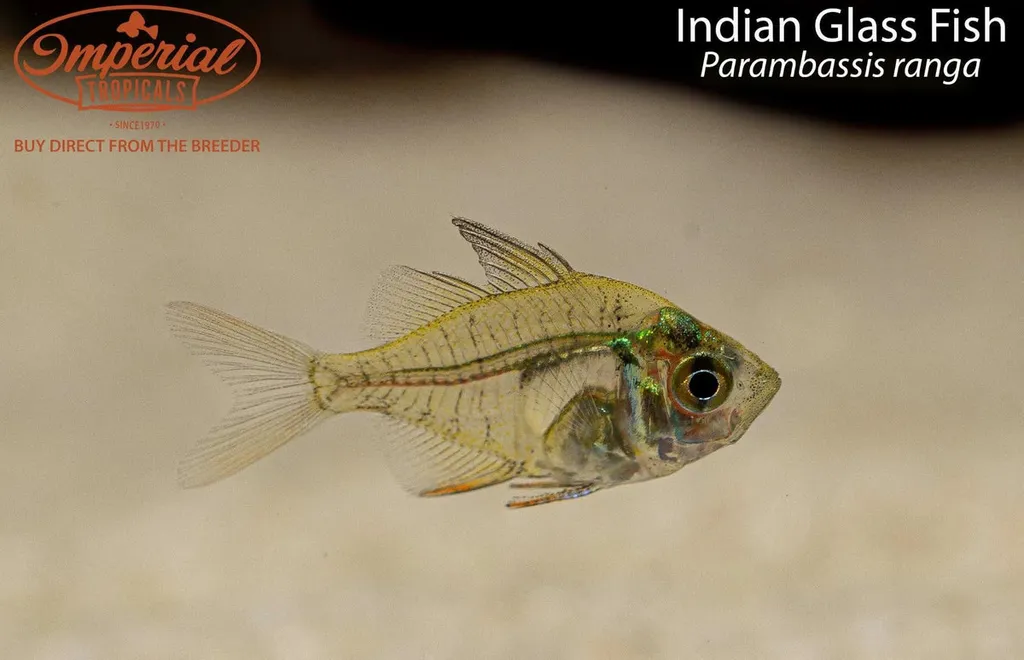
Indian glassy fish
Parambassis ranga
Freshwater3.1 in (8 cm) · 20 gal (75 L)68–86°F (20–30°C)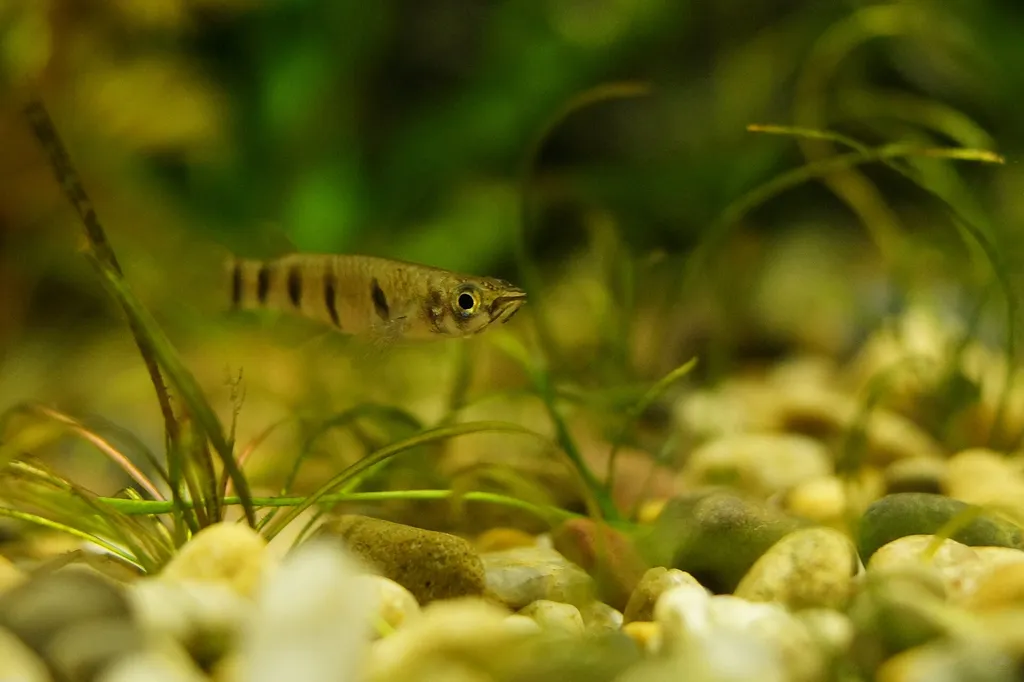
Red-chinned panchax
Epiplatys dageti
Freshwater1.8 in (4.5 cm) · 20 gal (75 L)70–75°F (21–24°C)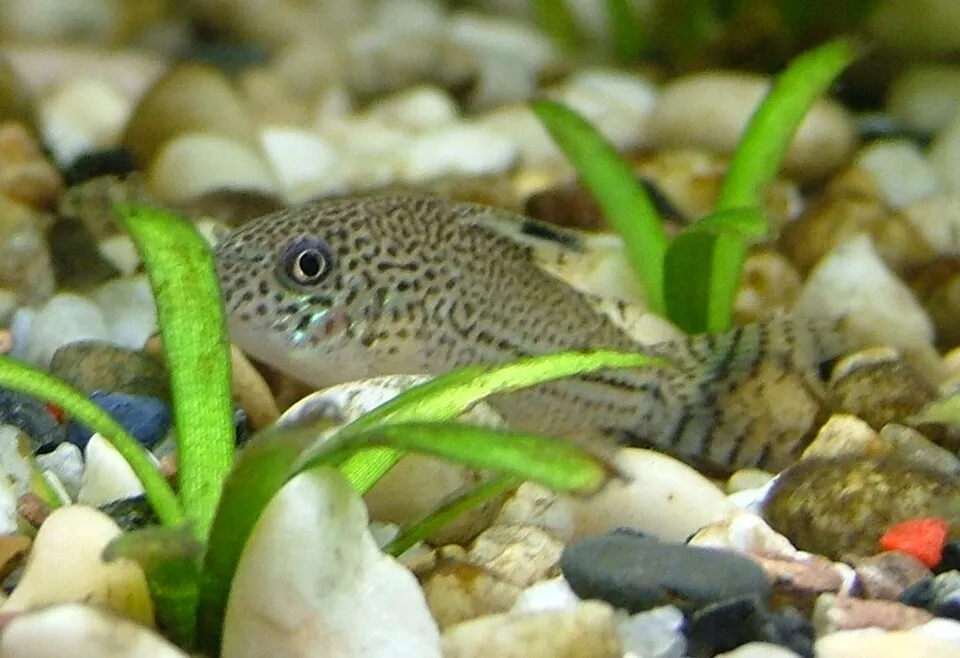
Julii cory
Hoplisoma julii
Freshwater2.2 in (5.5 cm) · 20 gal (75 L)68–79°F (20–26°C)
Common questions
What size tank does a Nilgiri loach need?
A Nilgiri loach needs at least 20 gal (75 L). It spends most of its time in the bottom.
What temperature and pH does a Nilgiri loach need?
A Nilgiri loach is comfortable at 64–75°F (18–24°C) with a pH of 6.5–7.5.
What does a Nilgiri loach eat?
A Nilgiri loach eats small sinking foods, frozen bloodworm and daphnia.
How big does a Nilgiri loach get?
An adult Nilgiri loach reaches about 2.4 in (6 cm).
Related species
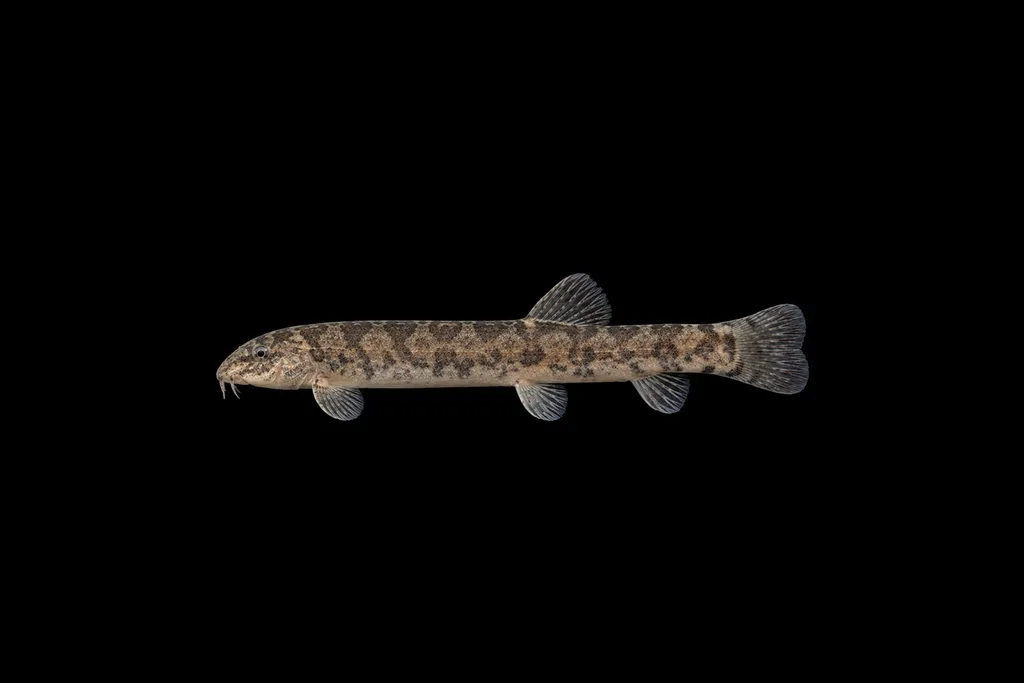
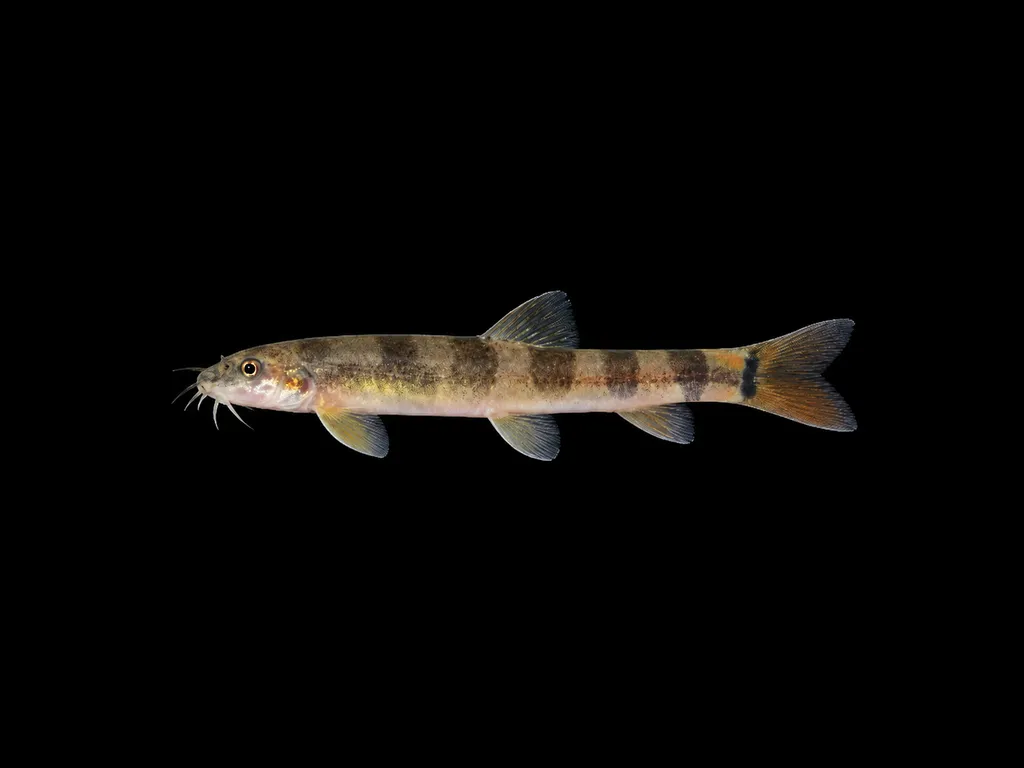 2.4 in (6 cm)20 gal (75 L)68–79°F (20–26°C)
Aizawl loach
Schistura aizawlensis
2.4 in (6 cm) · 20 gal (75 L)
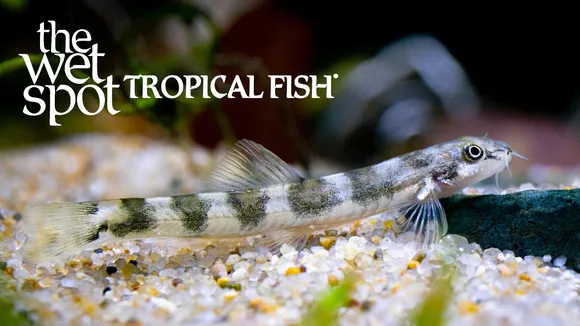
 2 in (5 cm)20 gal (75 L)64–75°F (18–24°C)
Cloud loach
Schistura nubigena
2 in (5 cm) · 20 gal (75 L)
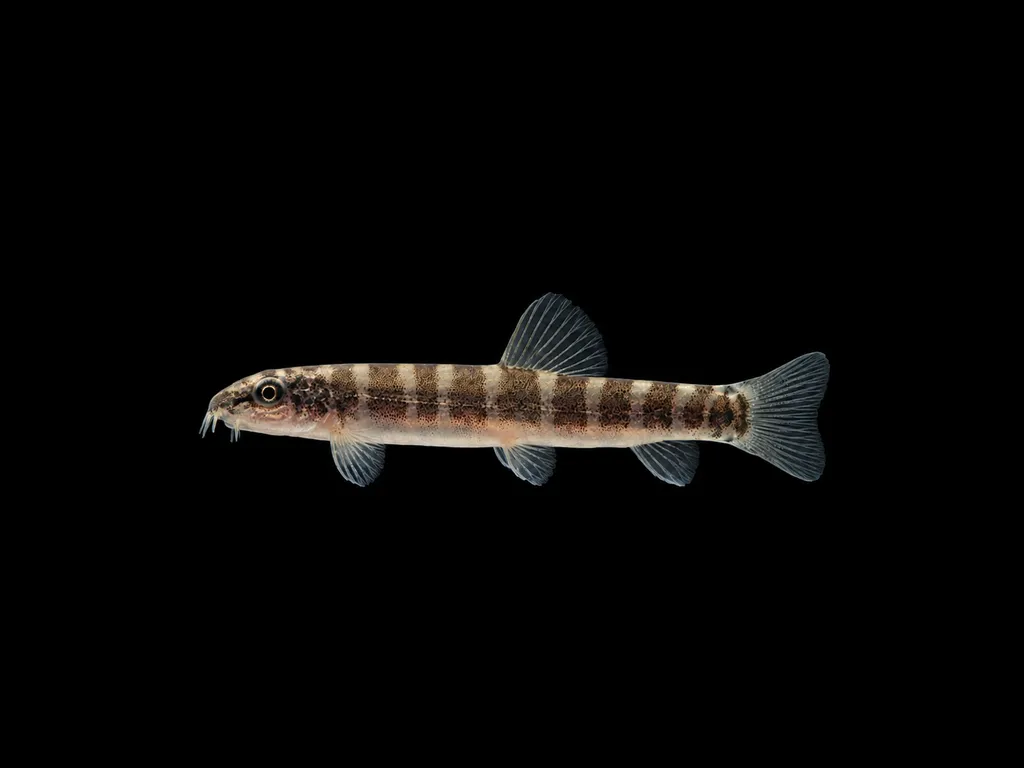
 2 in (5 cm)20 gal (75 L)64–75°F (18–24°C)
Devdevi loach
Schistura devdevi
2 in (5 cm) · 20 gal (75 L)
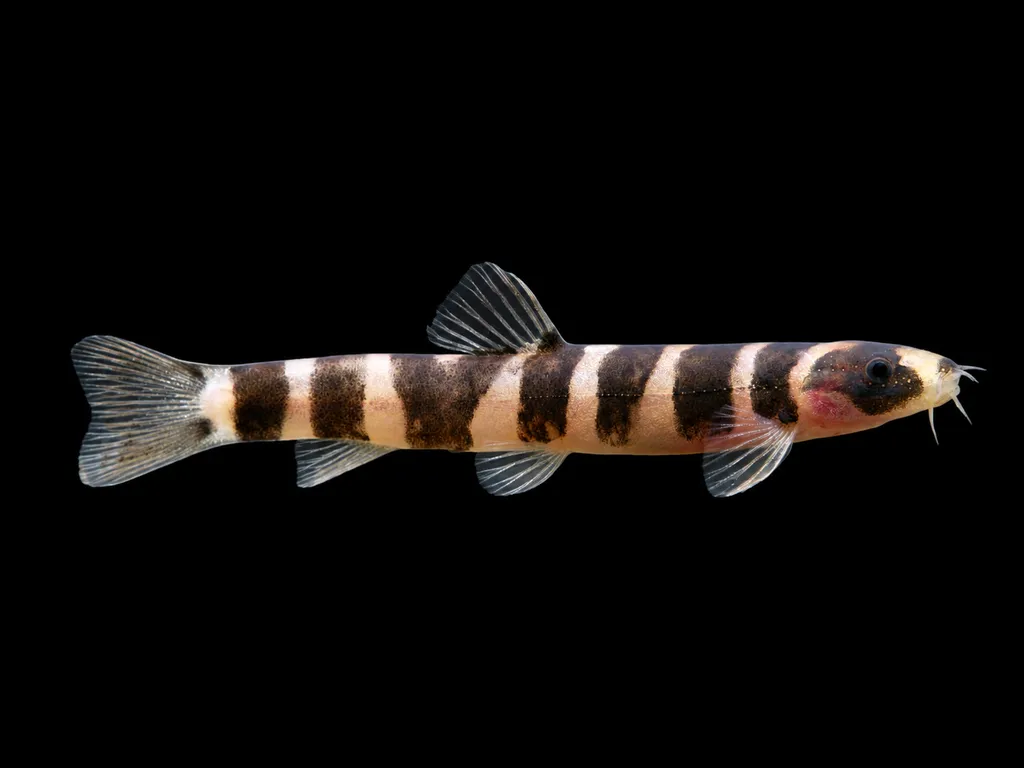
 2 in (5 cm)20 gal (75 L)64–77°F (18–25°C)
Savona loach
Schistura savona
2 in (5 cm) · 20 gal (75 L)
 1.8 in (4.5 cm)14 gal (54 L)68–77°F (20–25°C)
Pridi loach
Schistura pridii
1.8 in (4.5 cm) · 14 gal (54 L)
 3.1 in (8 cm)24 gal (90 L)68–77°F (20–25°C)
Sparkling loach
Schistura coruscans
3.1 in (8 cm) · 24 gal (90 L)