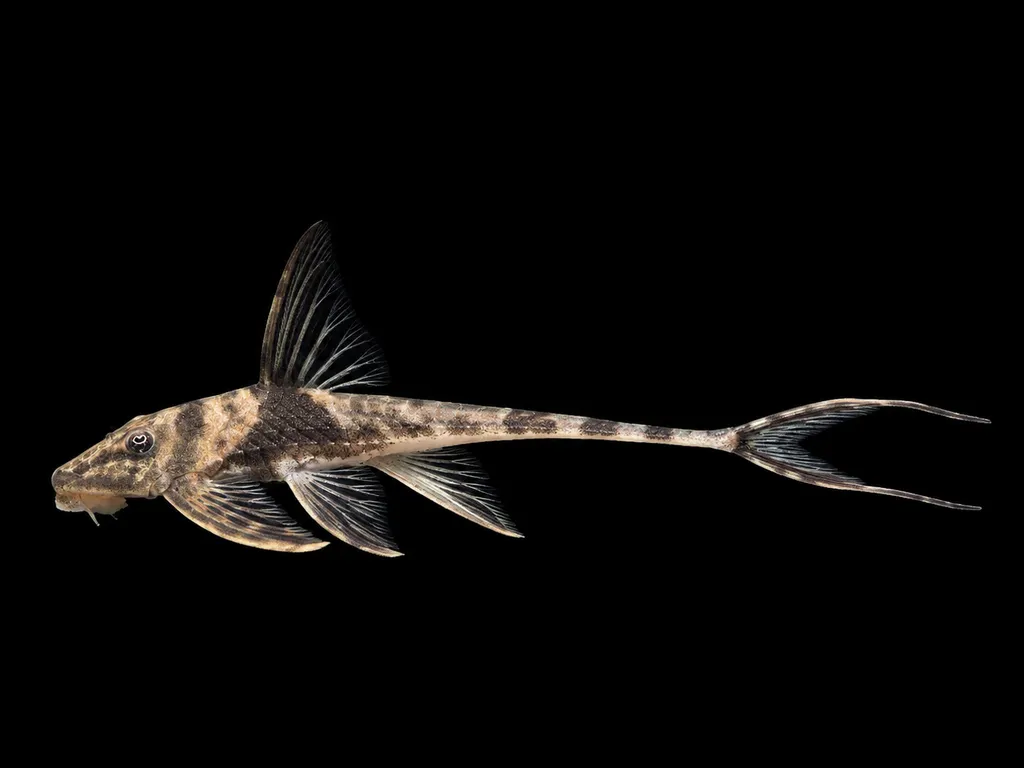
Marble whiptail
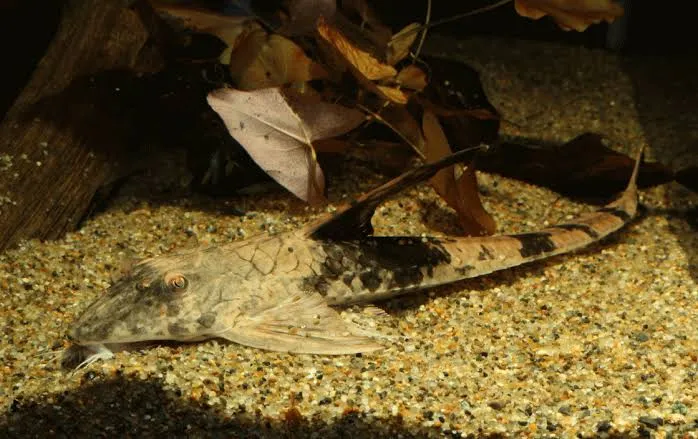
Loricaria simillima
Also known as Simillima whiptail
FreshwaterFish
Care at a glance
- Temperature
- 75–82°F
- 24–28°C
- pH
- 6.0–7.4
- Adult size
- 10.2 in
- 26 cm
- Minimum tank
- 66 gal
- 250 L
- Temperament
- Peaceful
- Social behavior
- Social
- Swim level
- Bottom
- Difficulty
- Medium
- Breeding
- Egg carrier · Medium
- Rarity
- Rare
- Family
- Loricariidae
- Origin
- Amazon and Orinoco lowlands
Overview
The marble whiptail is a peaceful, sand-loving catfish for the bottom of a calm tank. It is a moderate challenge to keep.
Did you know
A brooding male marble whiptail still buries himself in the sand with the eggs attached. He also cleans the clutch several times a day.
Caring for the marble whiptail
Give marble whiptails at least 66 gal (250 L), with a wide, open bed of fine sand. Above all they need that sand, which they burrow into until only their eyes show. Add driftwood and a few shaded caves or hides.
Keep the water soft and slightly acidic to neutral, at 75 to 82°F (24 to 28°C) and a pH of 6.0 to 7.4. Keep the flow gentle. They sift sand and graze biofilm and small foods. Offer sinking pellets, wafers and frozen foods such as bloodworm, and make sure enough reaches the bottom.
Marble whiptails are social and peaceful. They are fine alone, but a small group suits them better. Keep them with calm, gentle tank mates that will not compete at the floor.
The marble whiptail is a paternal lip-brooder. After spawning, the male carries the egg mass tucked against his enlarged lower lip and barbels for about two weeks. Breeding it is of moderate difficulty.
Good to know
Loricaria simillima is a slim, flattened whiptail catfish in the family Loricariidae. Its marbled coloring helps it blend in with sand.
In the wild
The marble whiptail is widespread across the lowlands of the Amazon and Orinoco. It lies on soft sand in calm and slow-flowing reaches.
Weekly picks
Tank mates
The marble whiptail is a peaceful, social species that keeps to the bottom. These picks share a community profile with it, are safe together in both directions, and overlap on water type, temperature and pH.
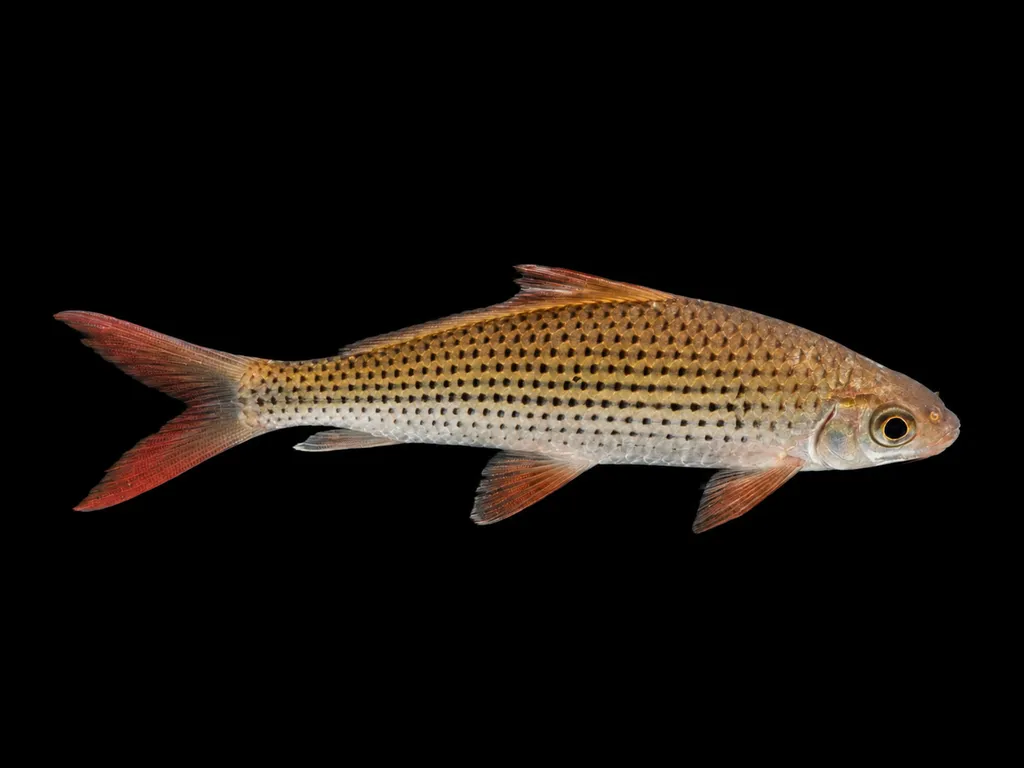
Festive sharkminnow barb
Labiobarbus festivus
Freshwater7.9 in (20 cm) · 66 gal (250 L)73–82°F (23–28°C)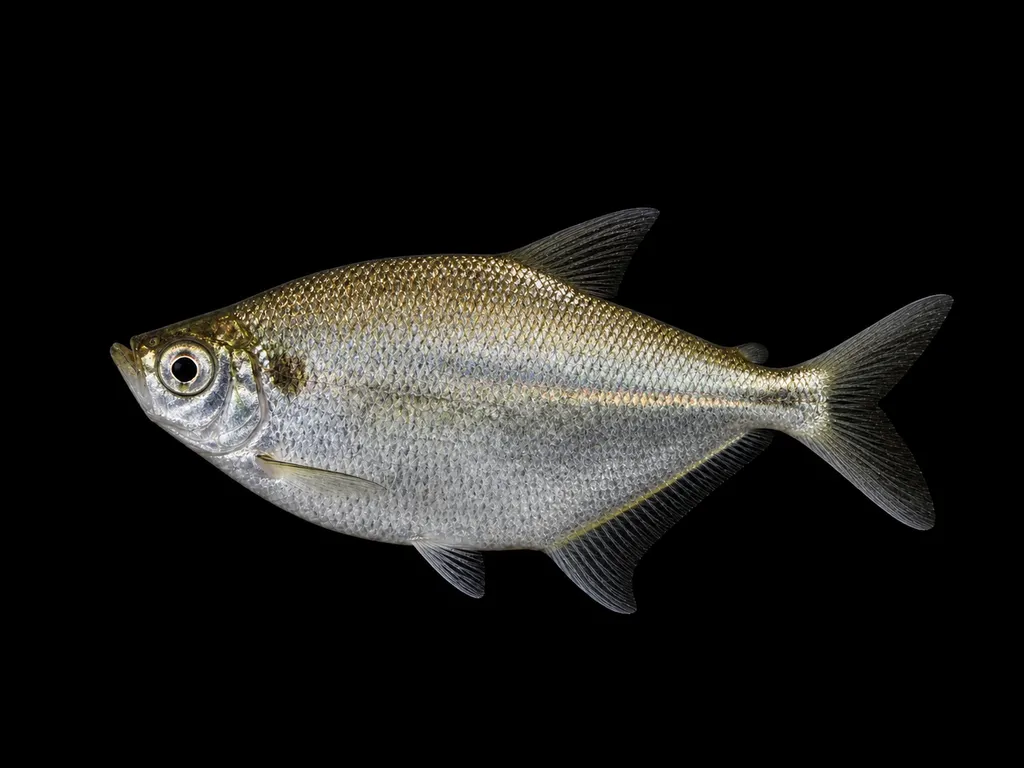
Giant river hatchetfish
Triportheus rotundatus
Freshwater9.8 in (25 cm) · 79 gal (300 L)73–82°F (23–28°C)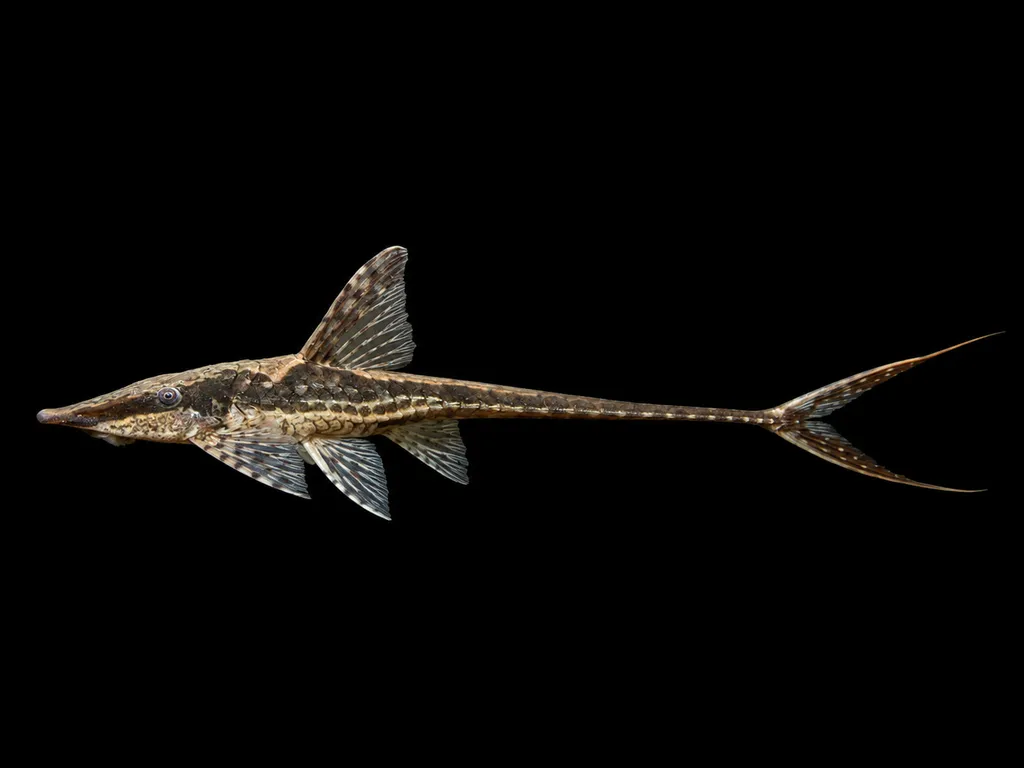
Peruvian royal whiptail
Sturisoma nigrirostrum
Freshwater8.7 in (22 cm) · 66 gal (250 L)75–82°F (24–28°C)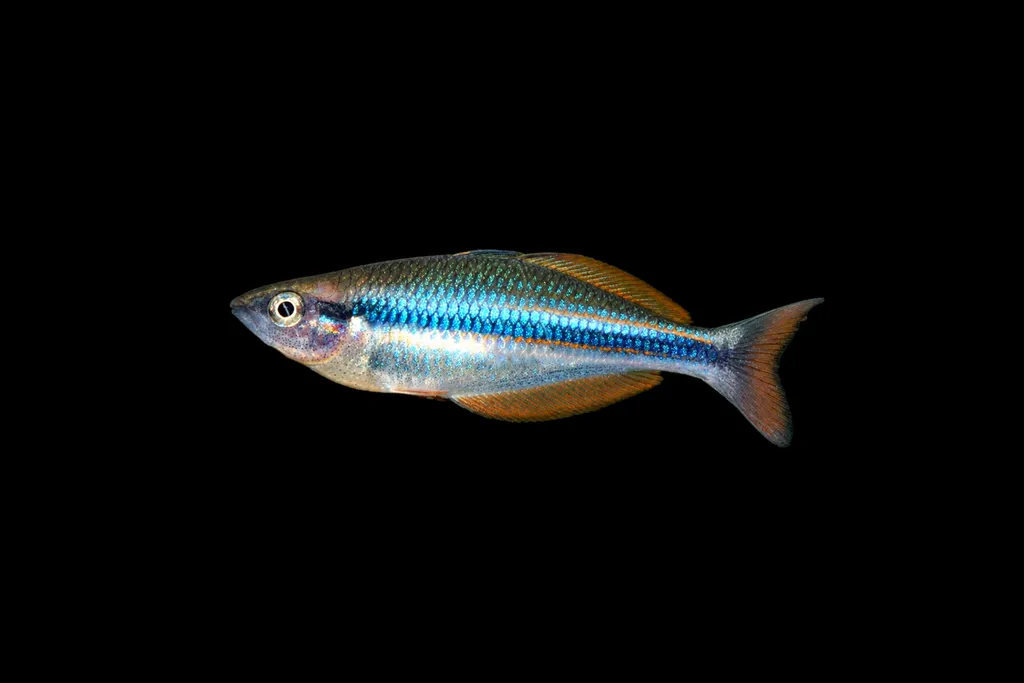
Van Heurn's rainbowfish
Melanotaenia vanheurni
Freshwater7.3 in (18.5 cm) · 66 gal (250 L)73–82°F (23–28°C)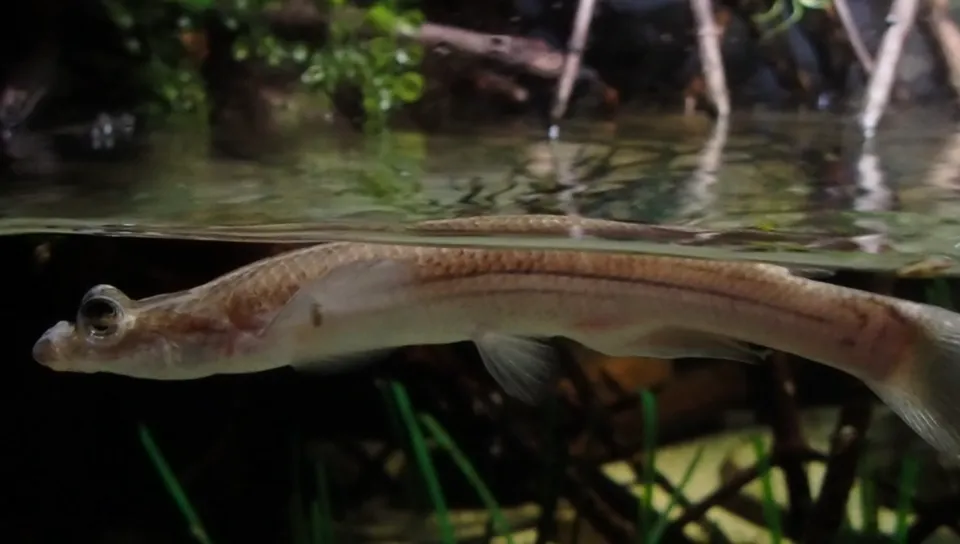
Largescale four-eyed fish
Anableps anableps
FreshwaterBrackish11.8 in (30 cm) · 70 gal (265 L)77–88°F (25–31°C)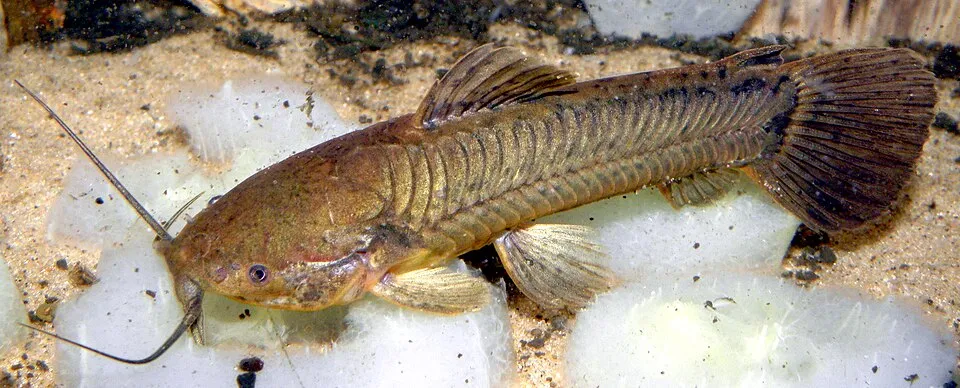
Cascarudo
Callichthys callichthys
Freshwater7.9 in (20 cm) · 63 gal (240 L)66–81°F (19–27°C)
Common questions
What size tank does a marble whiptail need?
A marble whiptail needs at least 66 gal (250 L). It spends most of its time in the bottom.
What temperature and pH does a marble whiptail need?
A marble whiptail is comfortable at 75–82°F (24–28°C) with a pH of 6.0–7.4.
What does a marble whiptail eat?
A marble whiptail sifts sand and grazes biofilm and small foods. Feed it sinking pellets, wafers and frozen foods such as bloodworm, and make sure enough reaches the bottom.
How big does a marble whiptail get?
An adult marble whiptail reaches about 10.2 in (26 cm).
How does a marble whiptail breed?
Marble whiptails are paternal lip-brooders. The male carries the egg mass against his enlarged lower lip and barbels for about two weeks. Breeding them is of moderate difficulty.
Related species
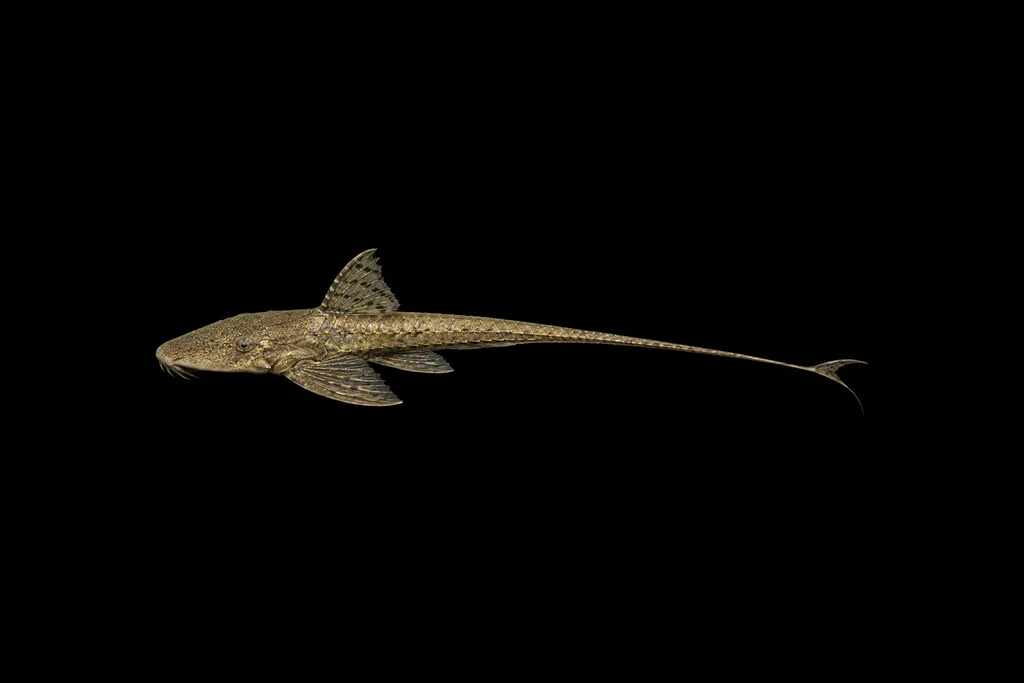 9.8 in (25 cm)53 gal (200 L)73–82°F (23–28°C)
Parnahyba whiptail
Loricaria parnahybae
9.8 in (25 cm) · 53 gal (200 L)
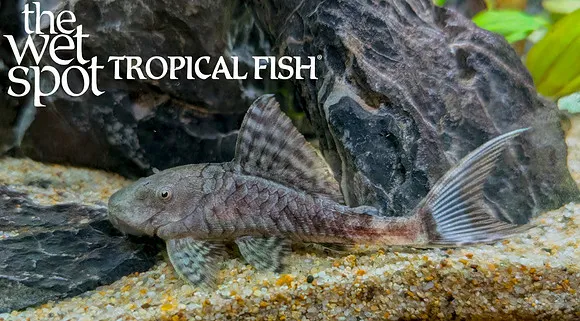
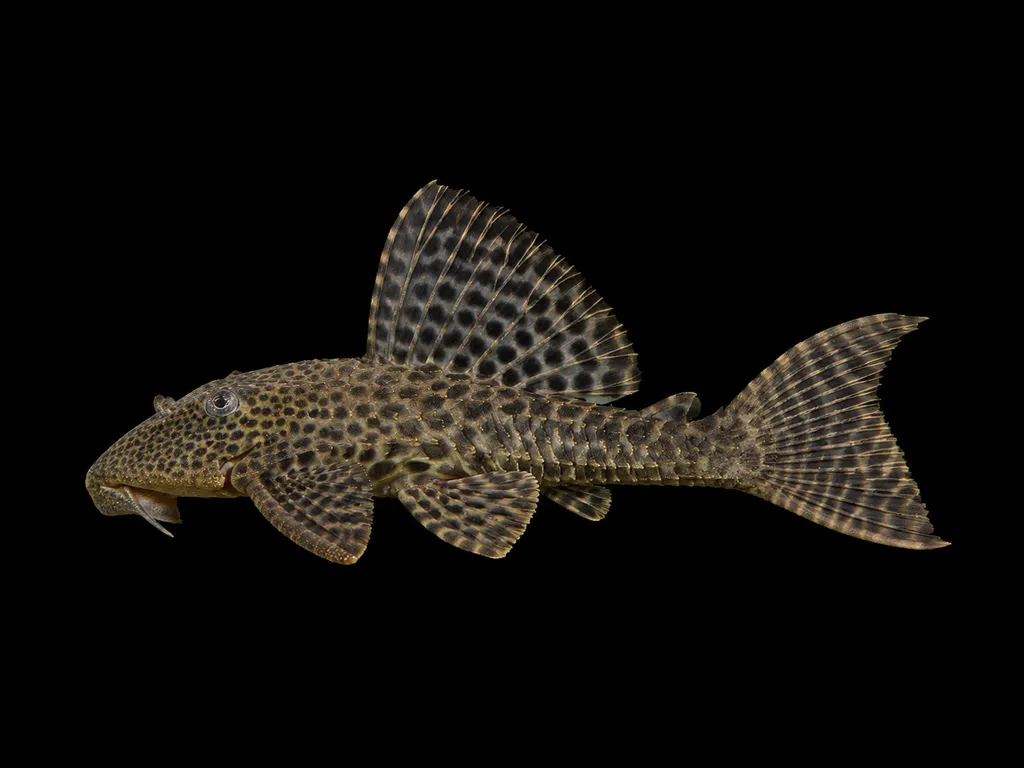 10.2 in (26 cm)79 gal (300 L)77–84°F (25–29°C)
Brown pleco
Hypostomus plecostomoides
10.2 in (26 cm) · 79 gal (300 L)
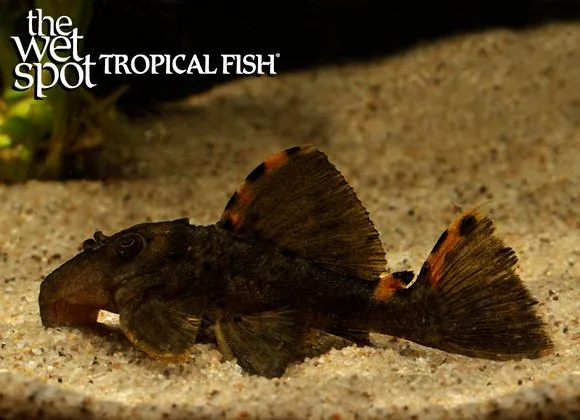
 9.8 in (25 cm)79 gal (300 L)77–84°F (25–29°C)
Papa panaque
Panaque bathyphilus
9.8 in (25 cm) · 79 gal (300 L)
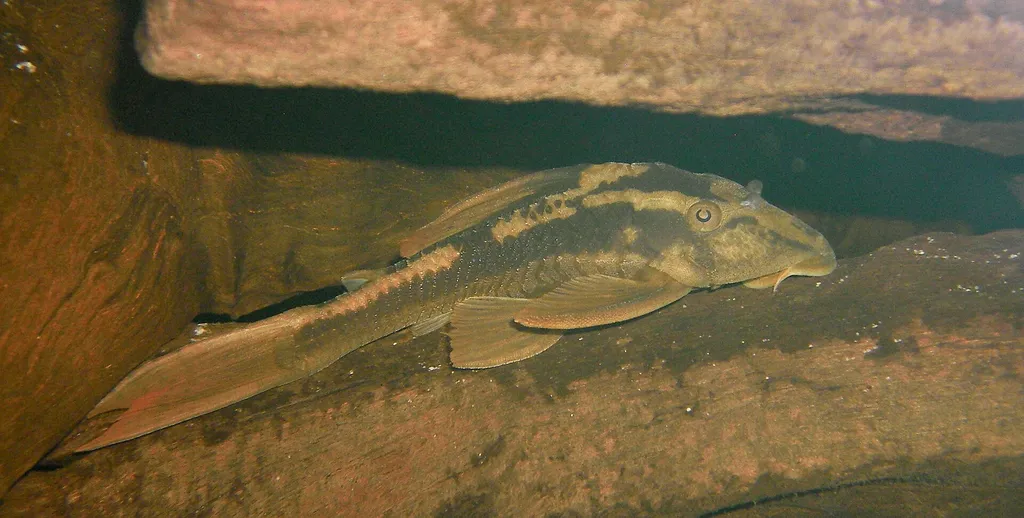
 11 in (28 cm)106 gal (400 L)79–86°F (26–30°C)
Three beacon pleco
Leporacanthicus triactis
11 in (28 cm) · 106 gal (400 L)
 9.4 in (24 cm)79 gal (300 L)77–84°F (25–29°C)
Basilisk pleco
Hypostomus basilisko
9.4 in (24 cm) · 79 gal (300 L)
 9.1 in (23 cm)79 gal (300 L)75–82°F (24–28°C)
Llanero whiptail
Lamontichthys llanero
9.1 in (23 cm) · 79 gal (300 L)