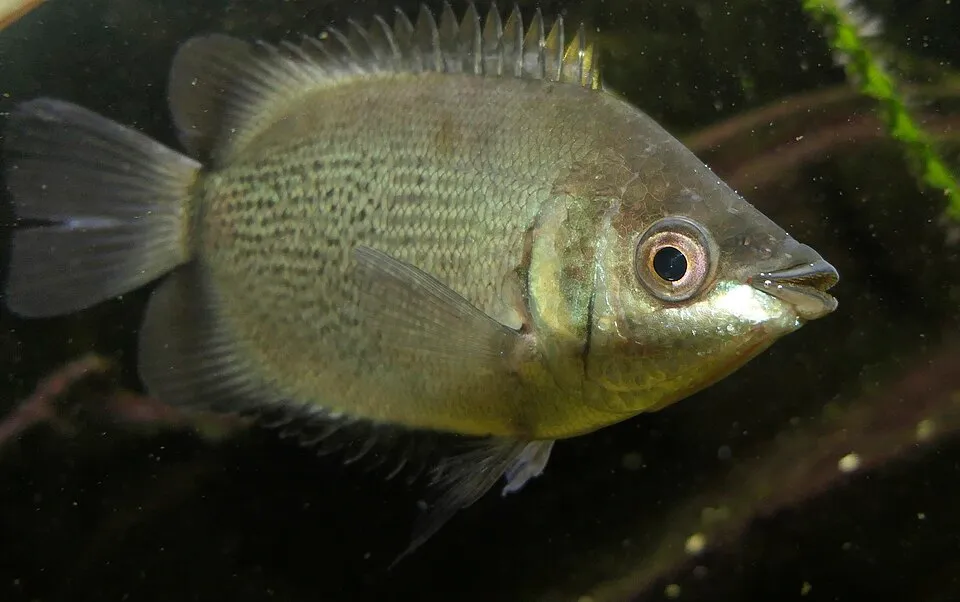
Kissing gourami
Helostoma temminckii
FreshwaterFish
Care at a glance
- Temperature
- 72–86°F
- 22–30°C
- pH
- 6.0–7.5
- Adult size
- 9.8 in
- 25 cm
- Minimum tank
- 36 gal
- 135 L
- Temperament
- Mostly peaceful
- Social behavior
- Social
- Tankmates
- With caution
- Swim level
- Middle
- Difficulty
- Medium
- Breeding
- No record
- Rarity
- Common
- Family
- Helostomatidae
- Origin
- Java, Sumatra, Borneo
Overview
Despite the cute name, these are big, semi-aggressive fish that push other tankmates around once grown. They spend a lot of time grazing across glass, plants, and decor at all levels. Feed a varied diet heavy on vegetable matter, such as spirulina, algae wafers, blanched greens, plus some flake and pellet. They are constant eaters, so a strong filter and regular water changes keep up with the mess.
In the wild
Kissing gouramis come from the sluggish, vegetation-choked waters of Java, Sumatra, and Borneo. These are warm, slow, often murky habitats where the fish graze constantly on surfaces. In the tank that means warm water (low to high 20s C), gentle flow, and room to roam. They get big, so plan on at least 135 liters and realistically more as they grow.
Good to know
Helostoma temminckii is the only member of the family Helostomatidae. It is a large gourami, reaching about 25 cm. Like other gouramis it is an air-breather with a labyrinth organ, so it gulps air from the surface. The pink and silver-green forms seen in the trade are both this one species.
Did you know
The famous "kiss" is not affection. Two fish lock their thick, everted lips together and shove, which is a contest over status or territory. The same protruding mouth they use for sparring is built for rasping algae and biofilm off surfaces.
Common questions
What size tank does a Kissing gourami need?
A Kissing gourami needs at least 36 gal (135 L). It spends most of its time in the middle.
What temperature and pH does a Kissing gourami need?
A Kissing gourami is comfortable at 72–86°F (22–30°C) with a pH of 6.0–7.5.
How big does a Kissing gourami get?
An adult Kissing gourami reaches about 9.8 in (25 cm).
Related species
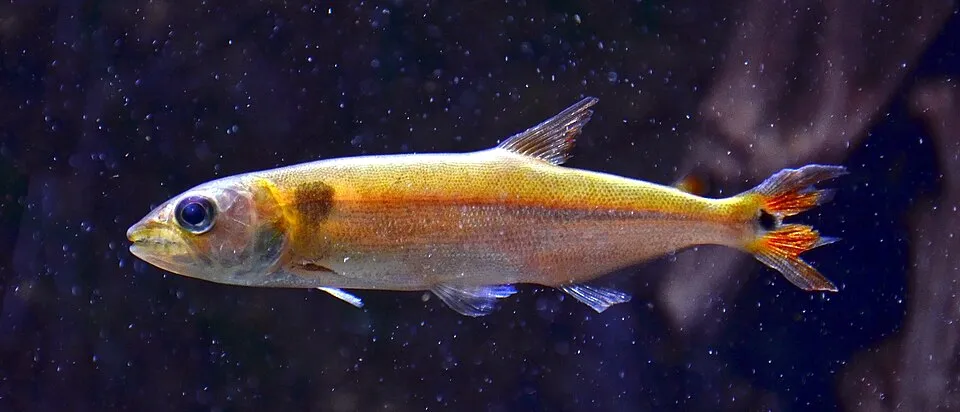 11.8 in (30 cm)100 gal (380 L)72–82°F (22–28°C)
Red tail barracuda
Acestrorhynchus falcatus
11.8 in (30 cm) · 100 gal (380 L)
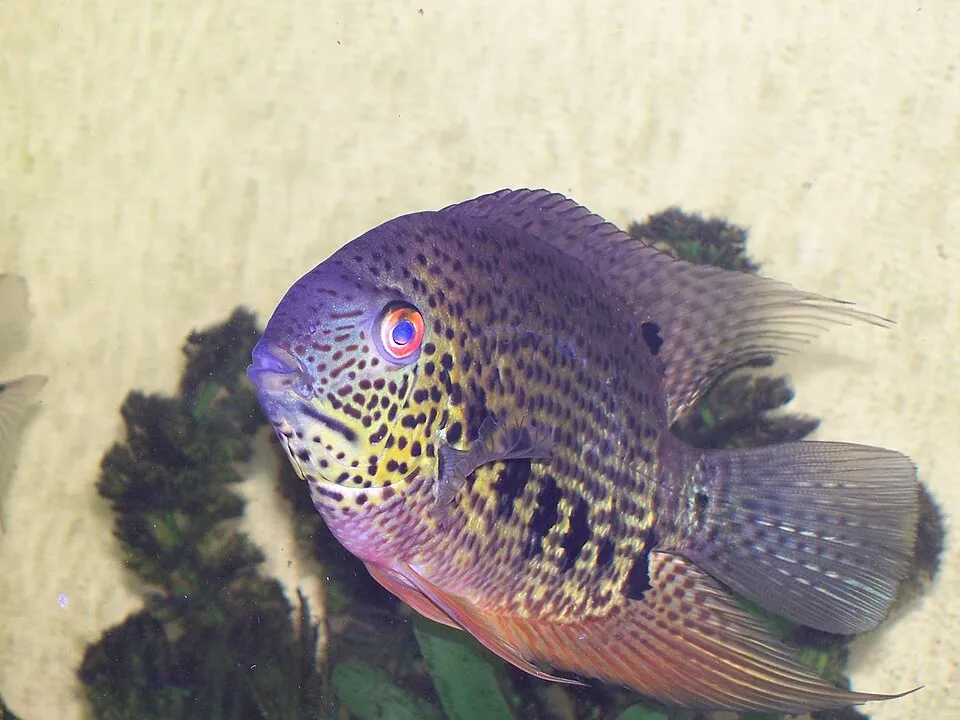 11.8 in (30 cm)58 gal (220 L)72–84°F (22–29°C)
Spotted severum
Heros notatus
11.8 in (30 cm) · 58 gal (220 L)
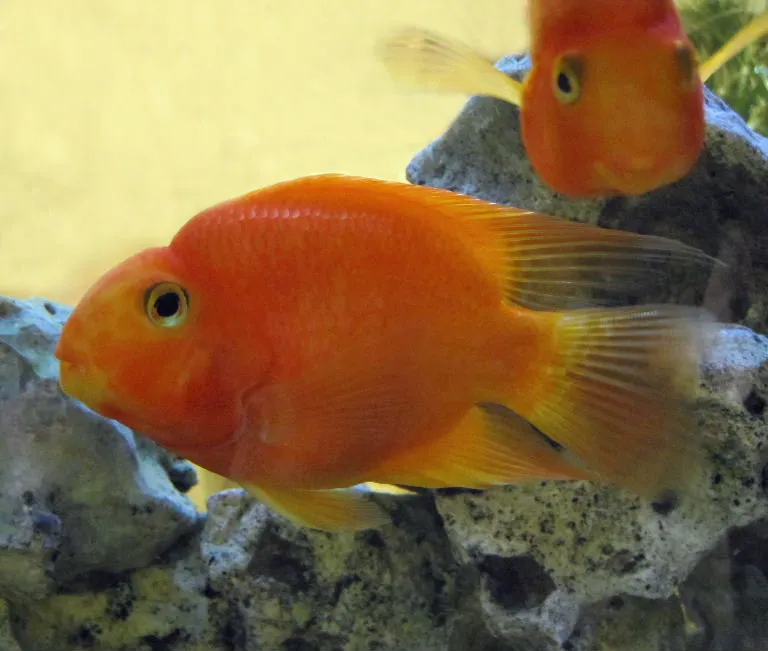 7.9 in (20 cm)32 gal (120 L)72–82°F (22–28°C)
Blood parrot cichlid
A. citrinellus x V. synspilum
7.9 in (20 cm) · 32 gal (120 L)
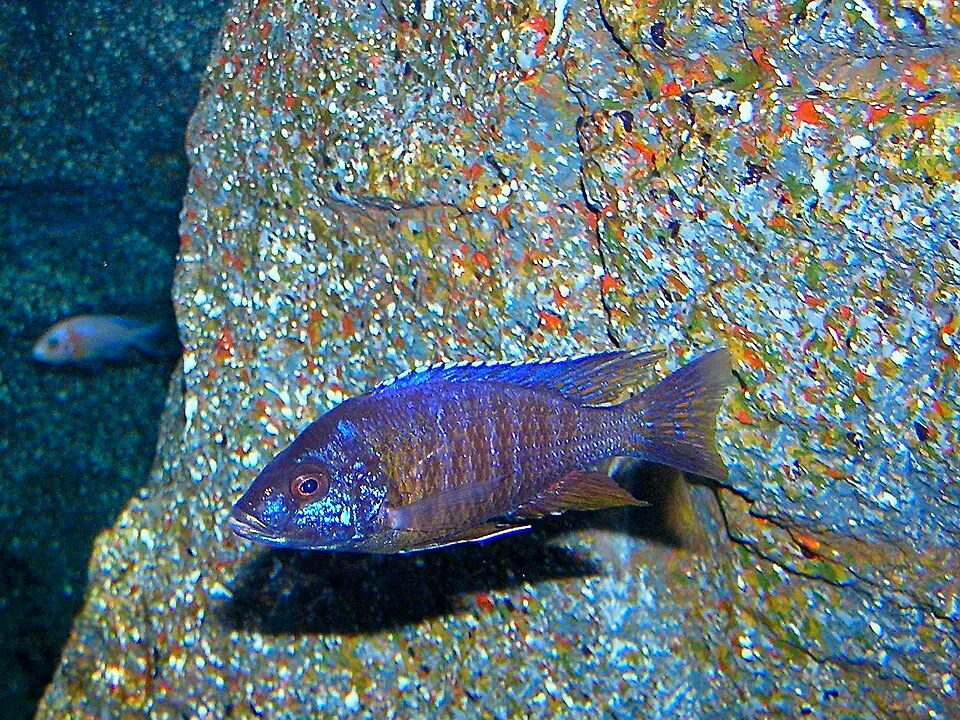 7.1 in (18 cm)66 gal (250 L)75–82°F (24–28°C)
Electric blue hap
Sciaenochromis fryeri
7.1 in (18 cm) · 66 gal (250 L)
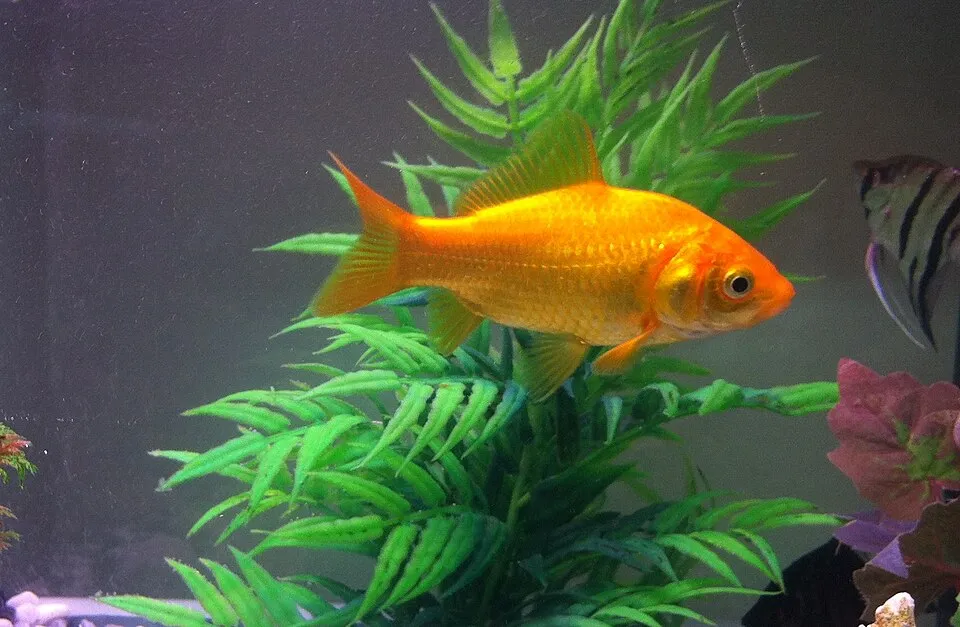 9.8 in (25 cm)50 gal (190 L)39–75°F (4–24°C)
Common goldfish
Carassius auratus
9.8 in (25 cm) · 50 gal (190 L)
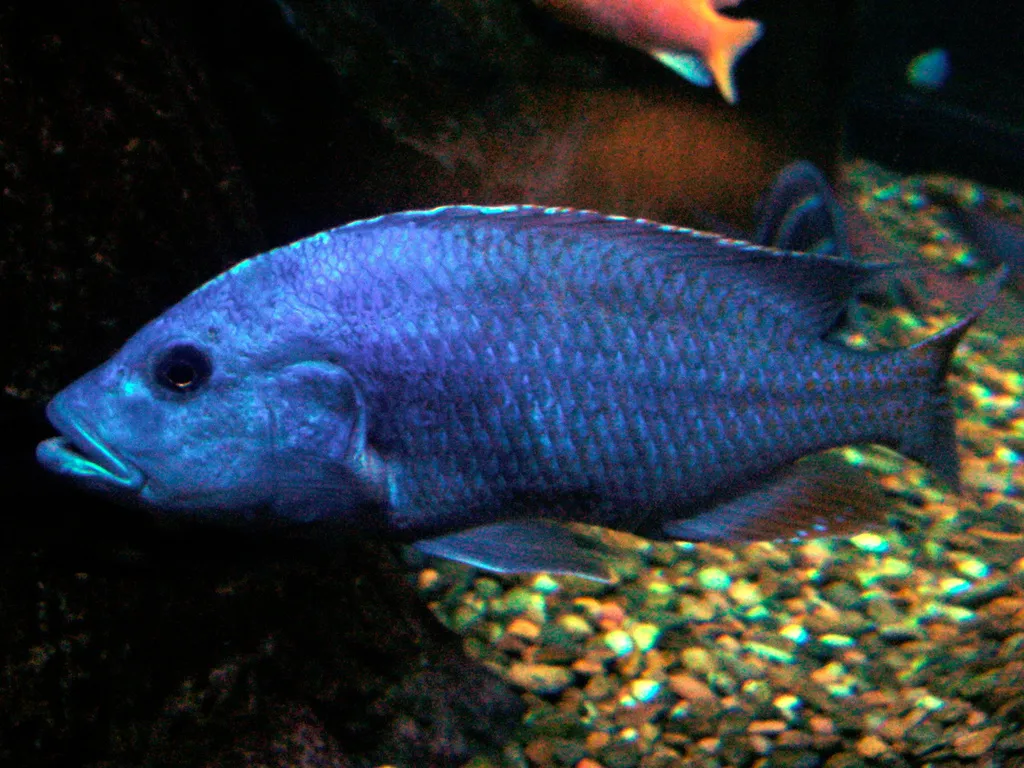 9.8 in (25 cm)74 gal (280 L)75–82°F (24–28°C)
Fusco hap
Nimbochromis fuscotaeniatus
9.8 in (25 cm) · 74 gal (280 L)