Horseshoe crab
Limulus polyphemus
Also known as Atlantic horseshoe crab, American horseshoe crab
SaltwaterInvertebrate
Care at a glance
- Temperature
- 68–79°F
- 20–26°C
- pH
- 8.1–8.4
- Adult size
- 23.6 in
- 60 cm
- Minimum tank
- 185 gal
- 700 L
- Temperament
- Peaceful
- Social behavior
- Solitary
- Tankmates
- With caution
- Swim level
- Bottom
- Difficulty
- Difficult
- Breeding
- Hard
- Rarity
- Common
- Reef safe
- Not reef safe
- Family
- Limulidae
- Origin
- Atlantic coast of North America, Maine to Florida, the Gulf of Mexico, and the Yucatan
Overview
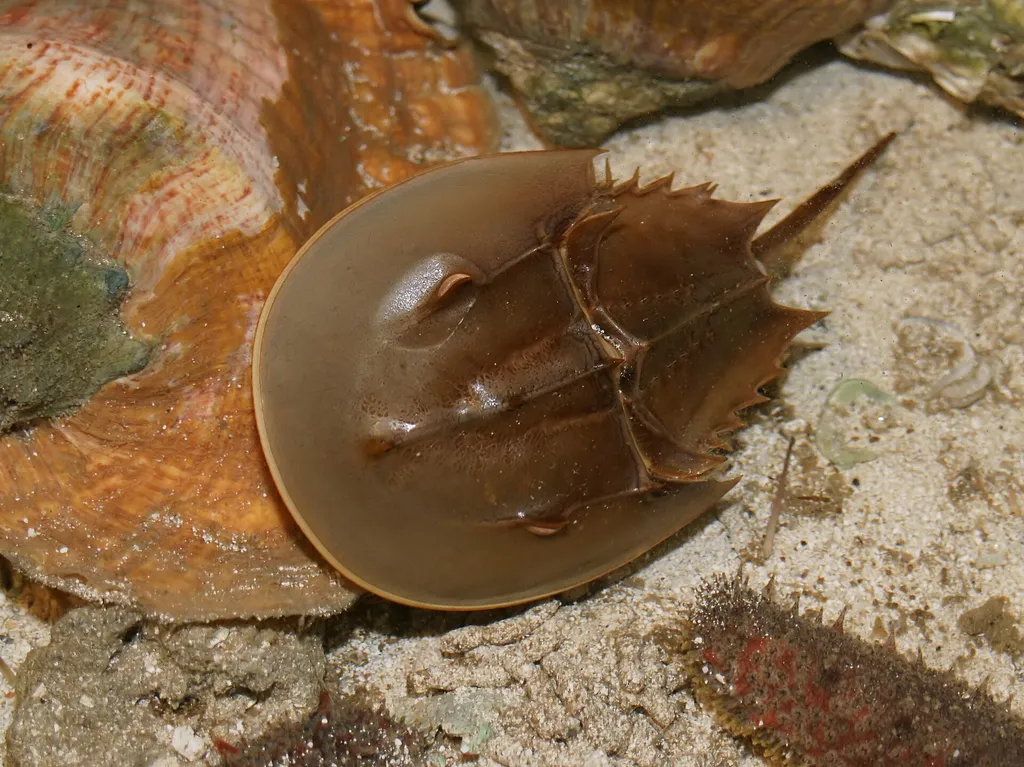
A peaceful sand dweller that plows through the bed looking for worms, clams, and other small animals, grinding food with the bases of its legs because it has no jaws. In a home tank it usually starves. A juvenile soon strips a sand bed of worms, does not compete well for sinking food, and grows too large for home tanks, so nearly all of them waste away over a few months. It is not reef safe: it bulldozes sand, topples rock, and eats the clams and worms a reef relies on. If you keep one anyway, give it a very large tank with a deep open sand bed, target feed pieces of squid, shrimp, and clam every day, and never pick it up by the tail.
In the wild
Horseshoe crabs live on sand and mud bottoms along the Atlantic coast of North America, from Maine to Florida and around the Gulf of Mexico to the Yucatan, from tidal flats out to the edge of the continental shelf. Adults come ashore in spring to spawn on sheltered beaches. The ones in the trade are small juveniles of 3 to 10 cm collected on the US coast. An honest setup is a public aquarium exhibit: a very large tank of at least 700 liters with a deep, wide, mature sand bed and almost no rock, since rockwork blocks the animal and scrapes it up. Water at 20 to 26 C and pH 8.1 to 8.4 suits the stock sold, though the species handles much colder water in the wild.
Good to know
Limulus polyphemus is not a crab. It is a chelicerate in the family Limulidae, closer to spiders and scorpions than to any crustacean, and the only horseshoe crab in the Americas. Females reach about 30 cm across the shell and 60 cm long with the tail, and they molt around 17 times over roughly nine years before they mature. Wild animals live 20 years or more. The species is listed as Vulnerable by the IUCN because of harvest for bait and biomedical bleeding, plus the loss of spawning beaches.
Did you know
Horseshoe crab blood is blue, because it carries oxygen with copper based hemocyanin instead of iron based hemoglobin, and it clots the instant it touches bacterial toxins. Drug companies harvest that blood to make Limulus amebocyte lysate, the standard test for endotoxin contamination in vaccines, injectable drugs, and implants. The crabs are bled and returned to the sea, but an estimated 10 to 30 percent die afterwards, one reason the species is listed as Vulnerable.
Common questions
What size tank does a Horseshoe crab need?
A Horseshoe crab needs at least 185 gal (700 L). It spends most of its time in the bottom.
What temperature and pH does a Horseshoe crab need?
A Horseshoe crab is comfortable at 68–79°F (20–26°C) with a pH of 8.1–8.4.
How big does a Horseshoe crab get?
An adult Horseshoe crab reaches about 23.6 in (60 cm).
Related species
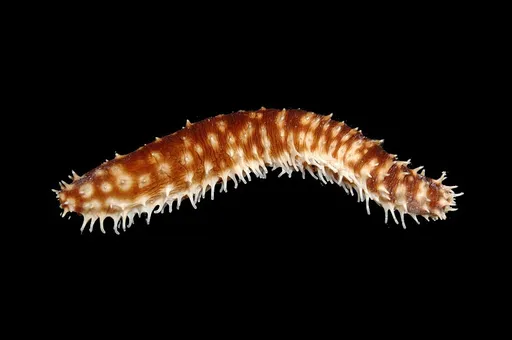 17.7 in (45 cm)50 gal (190 L)72–79°F (22–26°C)
Tiger tail sea cucumber
Holothuria hilla
17.7 in (45 cm) · 50 gal (190 L)
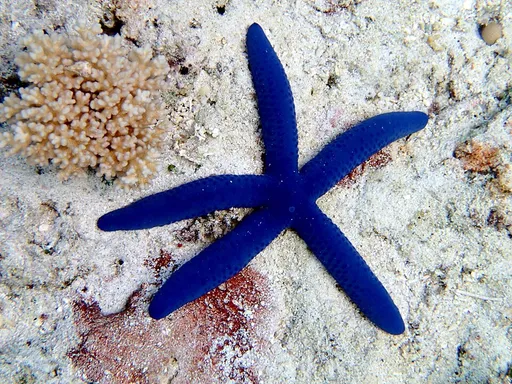 11.8 in (30 cm)53 gal (200 L)75–81°F (24–27°C)
Blue linckia star
Linckia laevigata
11.8 in (30 cm) · 53 gal (200 L)
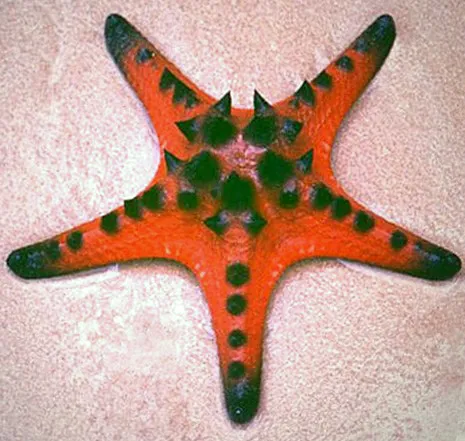 11.8 in (30 cm)53 gal (200 L)75–81°F (24–27°C)
Chocolate chip star
Protoreaster nodosus
11.8 in (30 cm) · 53 gal (200 L)
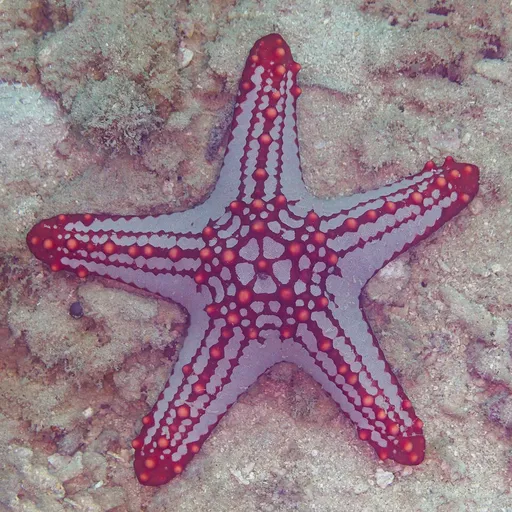 11.8 in (30 cm)53 gal (200 L)75–81°F (24–27°C)
Red knob sea star
Protoreaster linckii
11.8 in (30 cm) · 53 gal (200 L)
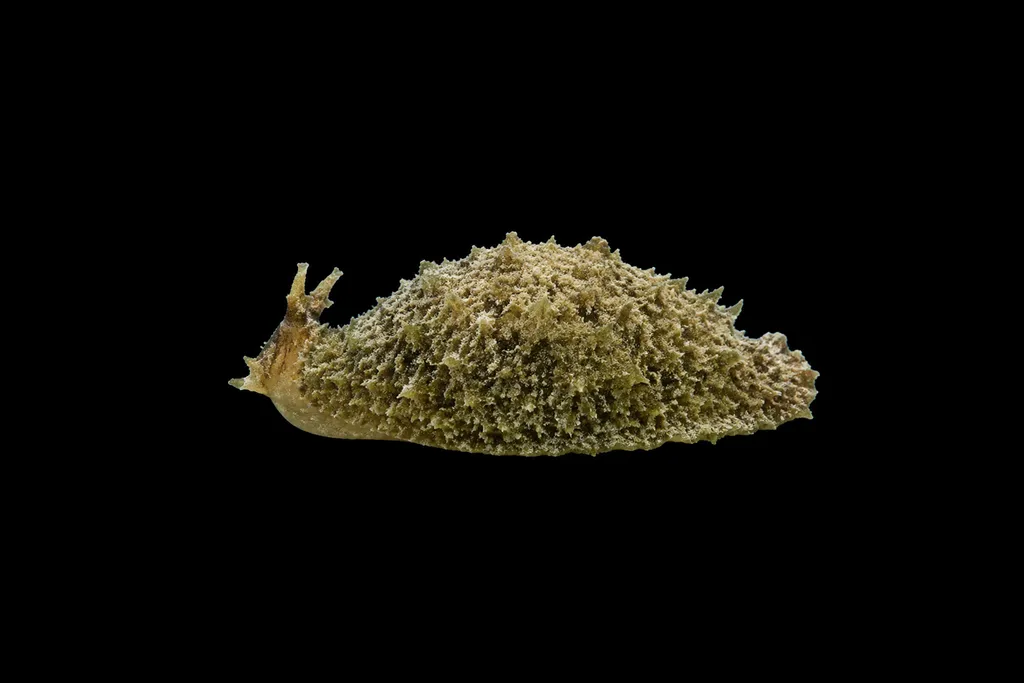 11.8 in (30 cm)50 gal (190 L)75–81°F (24–27°C)
Wedge sea hare
Dolabella auricularia
11.8 in (30 cm) · 50 gal (190 L)
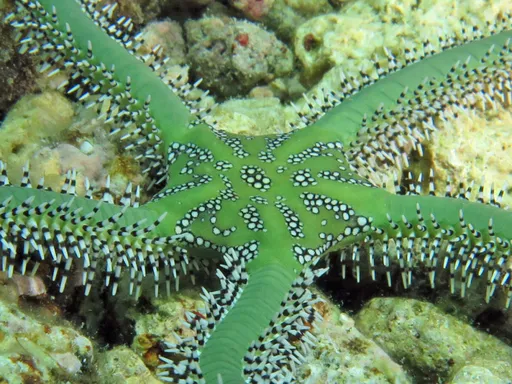 15.7 in (40 cm)79 gal (300 L)75–81°F (24–27°C)
Green brittle star
Ophiarachna incrassata
15.7 in (40 cm) · 79 gal (300 L)