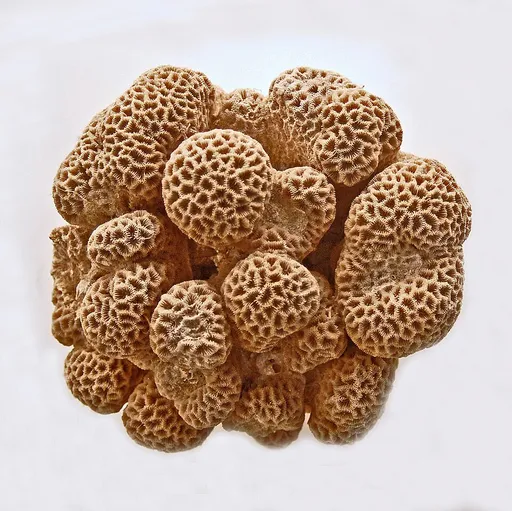
Honeycomb coral
Goniastrea
Also known as Brain Coral, Prism Coral, Bright Eyes Coral
SaltwaterCoral
Care at a glance
- Temperature
- 75–81°F
- 24–27°C
- pH
- 8.1–8.4
- Adult size
- 7.9 in
- 20 cm
- Minimum tank
- 20 gal
- 75 L
- Temperament
- Mostly peaceful
- Social behavior
- Solitary
- Swim level
- Bottom
- Difficulty
- Medium
- Breeding
- Medium
- Rarity
- Common
- Reef safe
- Reef safe
- Family
- Merulinidae
- Origin
- Indo-Pacific reefs, common on shallow reef flats
Overview
Goniastrea is a moderately aggressive brain coral, extending sweeper tentacles at night much like its close relative Favia, so keep several inches of clearance from any coral placed nearby. Feeding mysis, brine shrimp or reef roids two to three times a week, aimed at the polyps once they extend after dark, supports steady growth and better color. It is one of the hardier, more forgiving corals in this group and tolerates the kind of parameter swings that would stress a more delicate SPS. It frags well by cutting the skeleton between heads or lobes once a colony is large enough to divide.
In the wild
Goniastrea is common on shallow Indo-Pacific reef flats, where some species tolerate serious heat and exposure at low tide better than almost any other stony coral. In the aquarium it wants moderate light, roughly 75 to 150 PAR, and moderate indirect flow that reaches into the valleys between polyps without blasting them. Place it low to mid on stable rockwork where it can encrust outward over time. Keep temperature 24 to 27 C and pH 8.1 to 8.4.
Good to know
Goniastrea is a large polyp stony coral in the family Merulinidae, forming massive rounded or encrusting colonies with a honeycomb pattern of raised, well developed lobes inside each corallite wall. It is closely related to Favia and Favites and is sometimes confused with both, though its more uniform, tightly packed hexagonal cups usually give it away. Some reef-flat species in this genus are among the most heat and stress tolerant corals studied, able to survive the temperature swings and air exposure of a low tide pool.
Did you know
Certain Goniastrea species growing on exposed reef flats can survive being left high and dry at low tide in blazing sun for part of the day, a level of heat and desiccation tolerance that makes them some of the toughest reef-building corals on the planet.
Common questions
What size tank does a Honeycomb coral need?
A Honeycomb coral needs at least 20 gal (75 L). It spends most of its time in the bottom.
What temperature and pH does a Honeycomb coral need?
A Honeycomb coral is comfortable at 75–81°F (24–27°C) with a pH of 8.1–8.4.
How big does a Honeycomb coral get?
An adult Honeycomb coral reaches about 7.9 in (20 cm).
Related species
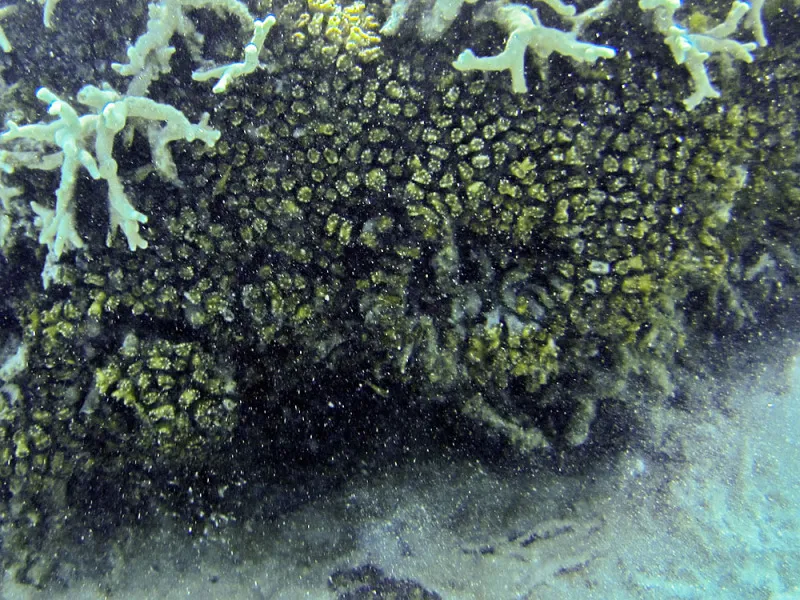 7.9 in (20 cm)11 gal (40 L)75–81°F (24–27°C)
Candy cane coral
Caulastraea furcata
7.9 in (20 cm) · 11 gal (40 L)
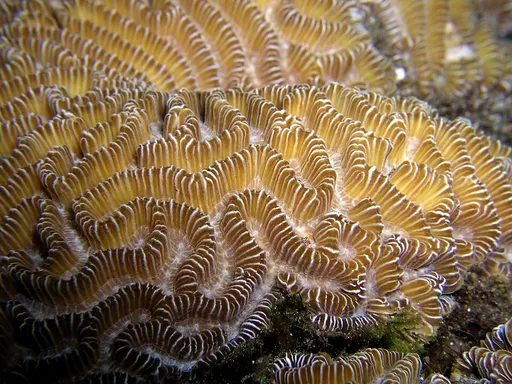 9.8 in (25 cm)20 gal (75 L)75–81°F (24–27°C)
Maze brain coral
Platygyra
9.8 in (25 cm) · 20 gal (75 L)
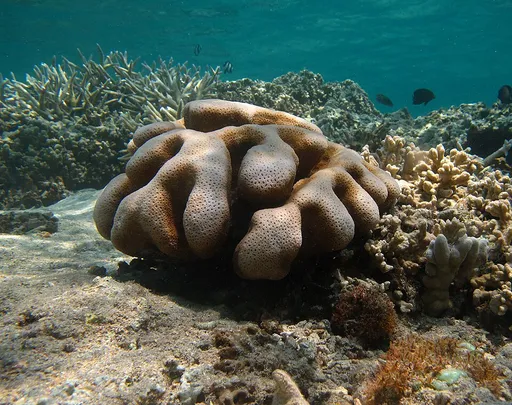 9.8 in (25 cm)20 gal (75 L)75–81°F (24–27°C)
Meteor shower coral
Cyphastrea serailia
9.8 in (25 cm) · 20 gal (75 L)
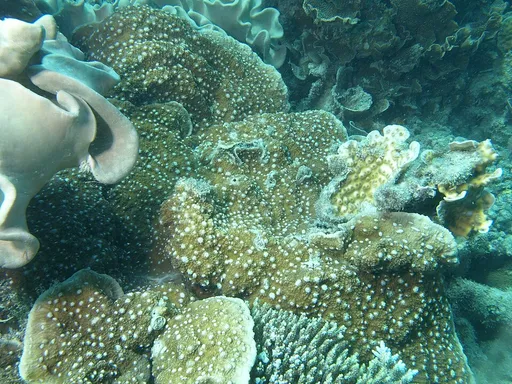 9.8 in (25 cm)26 gal (100 L)75–81°F (24–27°C)
Oxypora chalice coral
Oxypora lacera
9.8 in (25 cm) · 26 gal (100 L)
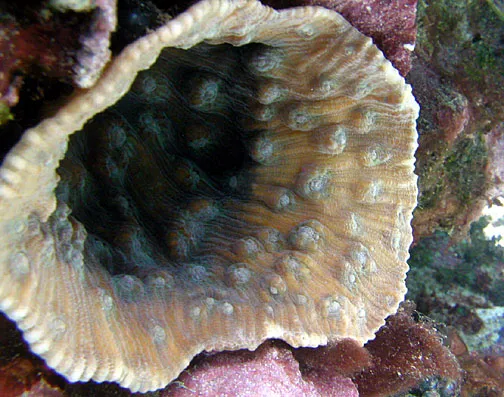 9.8 in (25 cm)26 gal (100 L)75–81°F (24–27°C)
Peacock chalice coral
Mycedium elephantotus
9.8 in (25 cm) · 26 gal (100 L)
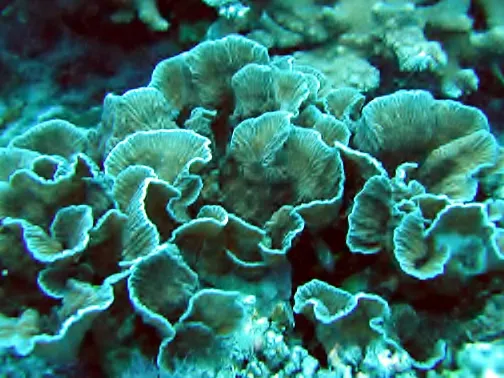 9.8 in (25 cm)26 gal (100 L)75–81°F (24–27°C)
Ruffled coral
Merulina ampliata
9.8 in (25 cm) · 26 gal (100 L)