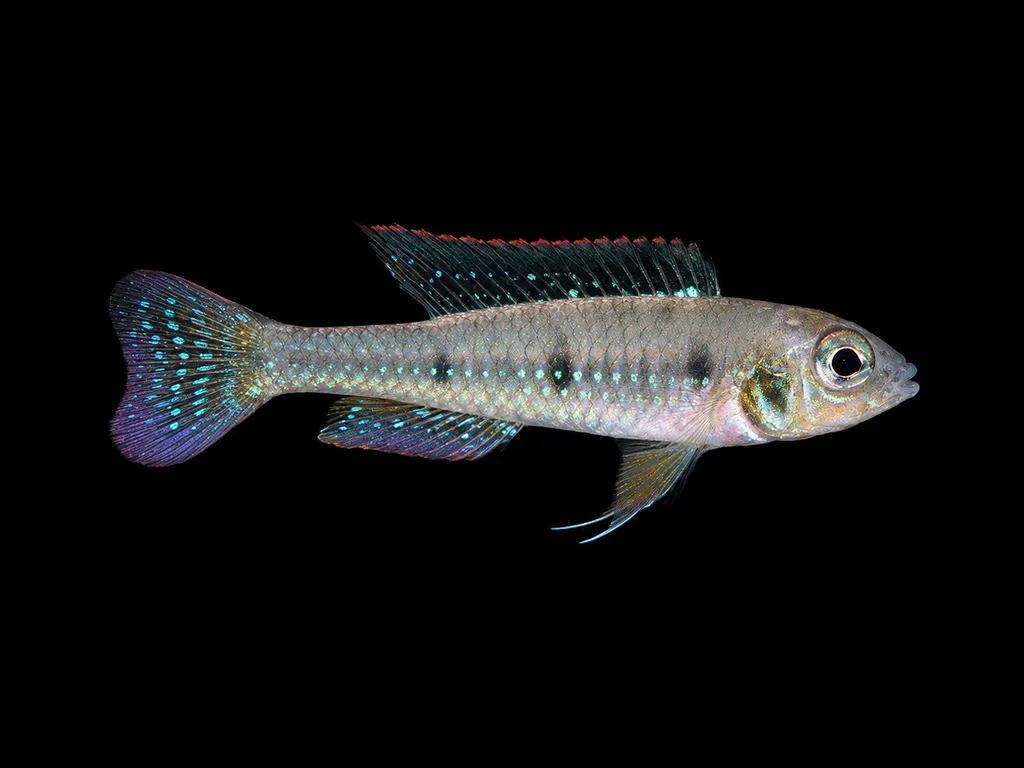
Fairy dwarf cichlid
Biotoecus opercularis
Also known as Fairy cichlid, Rio Negro dwarf cichlid
FreshwaterFish
Care at a glance
- Temperature
- 77–86°F
- 25–30°C
- pH
- 4.0–6.5
- Adult size
- 1.6 in
- 4 cm
- Minimum tank
- 20 gal
- 75 L
- Temperament
- Peaceful
- Social behavior
- Solitary
- Swim level
- Bottom
- Diet
- Carnivore
- Difficulty
- Difficult
- Breeding
- Hard
- Rarity
- Rare
- Family
- Cichlidae
- Origin
- Middle and lower Amazon basin of Brazil, in shallow sandy blackwater with leaf litter and submerged wood.
Overview
The fairy dwarf cichlid is a tiny, delicate cichlid for the bottom of a mature, soft-water tank. It is best left to experienced keepers.
Did you know
The fairy dwarf cichlid is extremely sensitive to declining water quality. That makes it one of the harder dwarf cichlids to keep alive, let alone breed.
Caring for the fairy dwarf cichlid
A pair of fairy dwarf cichlids needs at least 20 gal (75 L), in a mature, stable tank and never a new setup. Provide fine sand, leaf litter and small caves.
Keep the water very soft, acidic and clean, at 77 to 86°F (25 to 30°C) and a pH of 4.0 to 6.5. Feed tiny live and frozen foods such as baby brine shrimp and micro worms.
The fairy dwarf cichlid is peaceful and shy, so it must not share space with boisterous fish. Unusually for a small South American cichlid, both parents share care of the brood. Breeding it is hard.
Good to know
The fairy dwarf cichlid, Biotoecus opercularis, was described by Steindachner in 1875. It is one of the smallest New World cichlids.
In the wild
The fairy dwarf cichlid lives in the middle and lower Amazon basin of Brazil, including the Rio Negro and several clearwater tributaries. It occupies shallow sandy blackwater with leaf litter and submerged wood.
Weekly picks
Tank mates
The fairy dwarf cichlid is a peaceful, solitary species that keeps to the bottom. These picks share a community profile with it, are safe together in both directions, and overlap on water type, temperature and pH.

Neon tetra
Paracheirodon innesi
Freshwater1.5 in (3.8 cm) · 11 gal (40 L)70–77°F (21–25°C)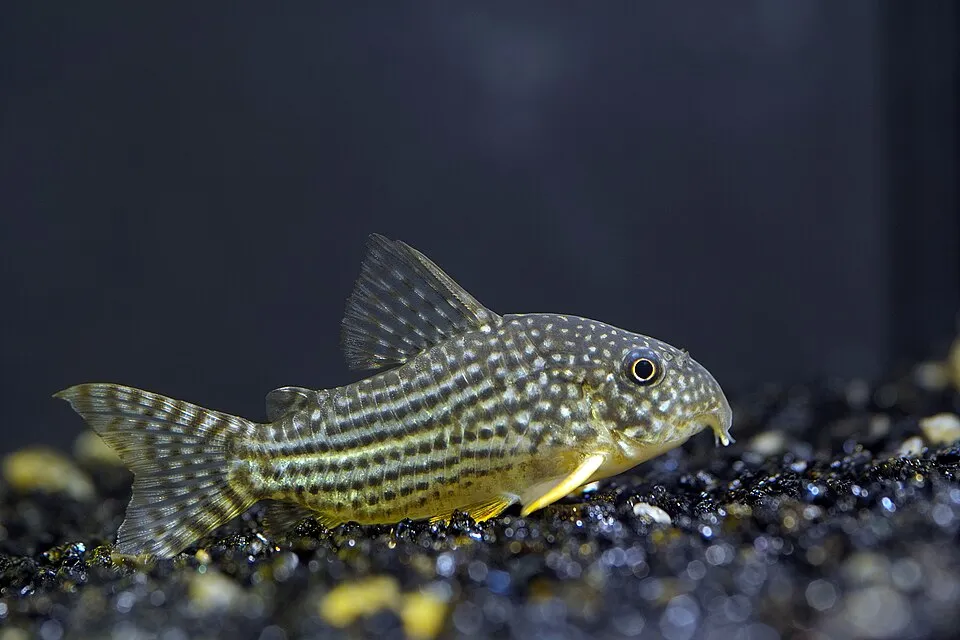
Sterba's cory
Hoplisoma sterbai
Freshwater2.6 in (6.5 cm) · 20 gal (75 L)75–82°F (24–28°C)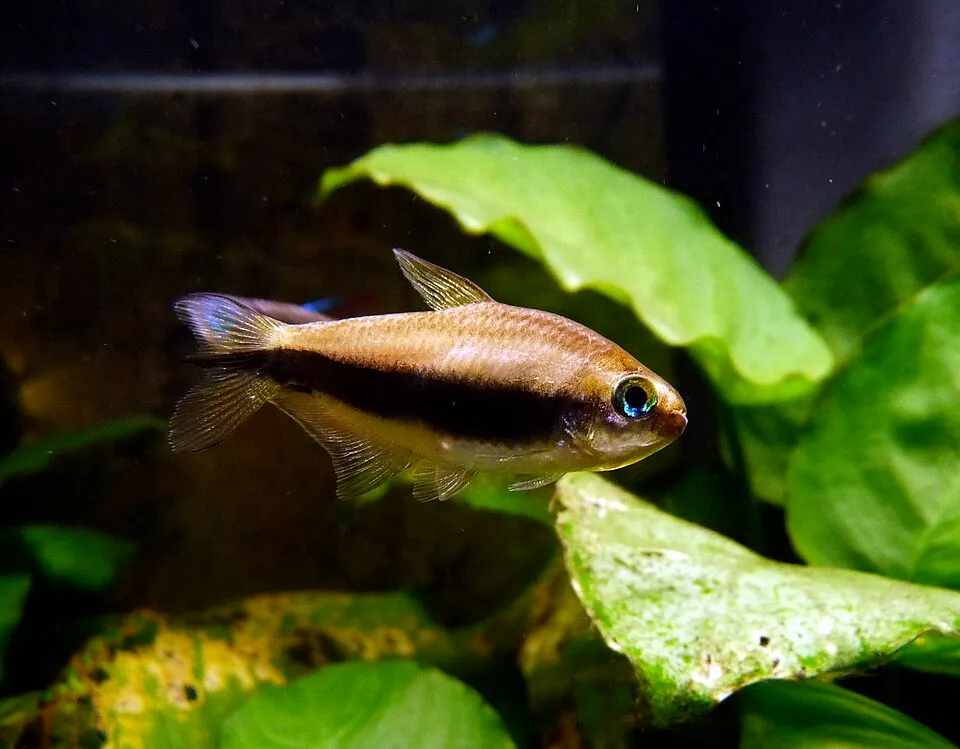
Emperor tetra
Nematobrycon palmeri
Freshwater2 in (5 cm) · 20 gal (75 L)73–81°F (23–27°C)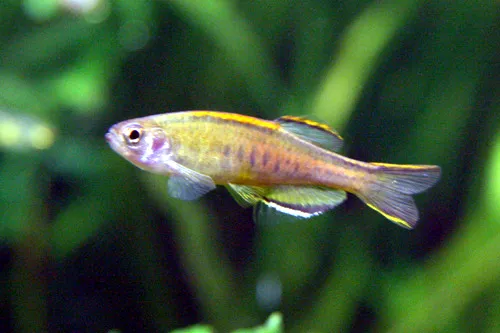
Glowlight danio
Danio choprae
Freshwater1.2 in (3 cm) · 20 gal (75 L)72–79°F (22–26°C)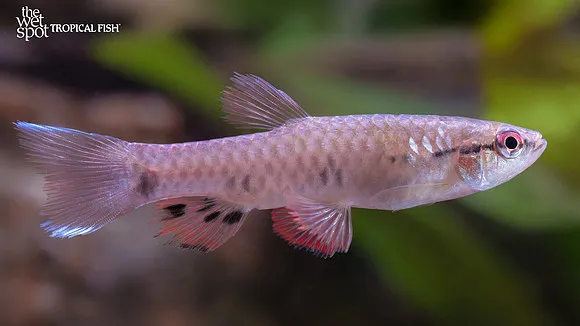
Spotted pyrrhulina
Pyrrhulina spilota
Freshwater2.8 in (7 cm) · 20 gal (75 L)73–81°F (23–27°C)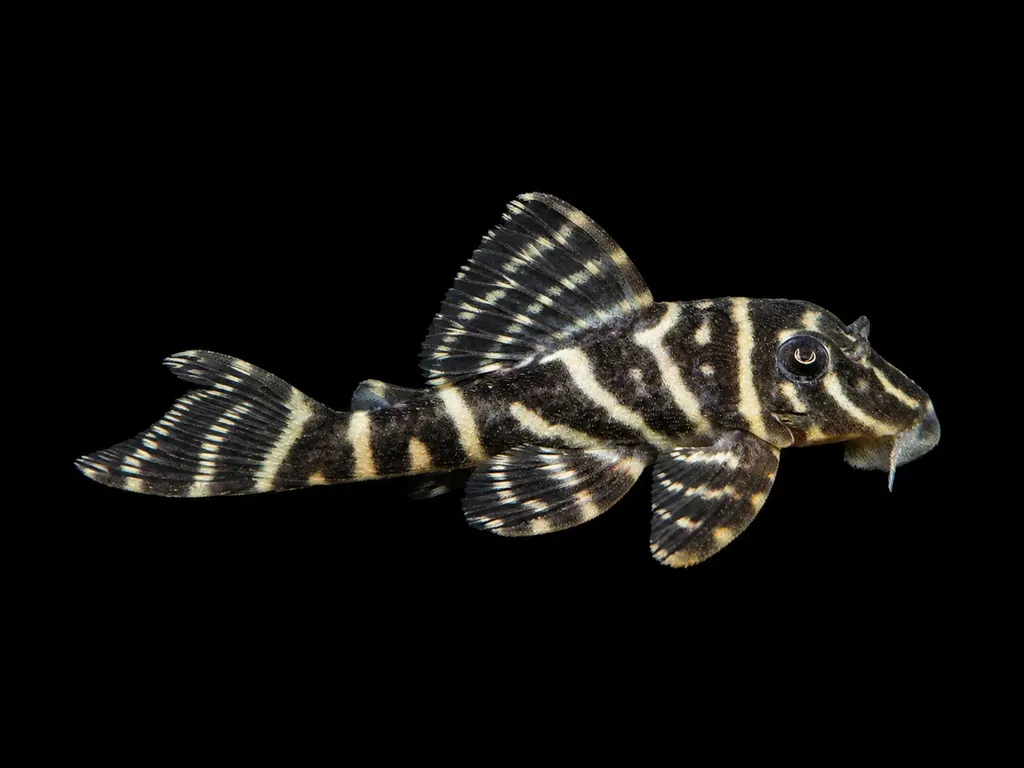
Mega clown pleco (L340)
Hypancistrus sp. L340
Freshwater3.5 in (9 cm) · 20 gal (75 L)79–86°F (26–30°C)
Common questions
What size tank does a fairy dwarf cichlid need?
A fairy dwarf cichlid needs at least 20 gal (75 L). It spends most of its time in the bottom.
What temperature and pH does a fairy dwarf cichlid need?
A fairy dwarf cichlid is comfortable at 77–86°F (25–30°C) with a pH of 4.0–6.5.
What does a fairy dwarf cichlid eat?
A fairy dwarf cichlid eats tiny live and frozen foods, such as baby brine shrimp and micro worms.
How big does a fairy dwarf cichlid get?
An adult fairy dwarf cichlid reaches about 1.6 in (4 cm).
How does a fairy dwarf cichlid breed?
Fairy dwarf cichlids pair up, and both parents share care of the brood, which is unusual for a small South American cichlid. Breeding them is hard.
Related species
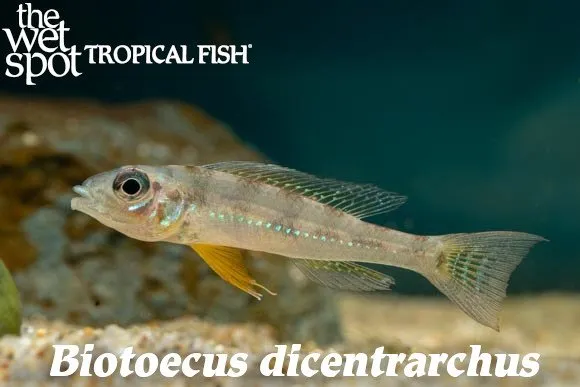 2 in (5 cm)14 gal (54 L)75–82°F (24–28°C)
Branco dwarf cichlid
Biotoecus dicentrarchus
2 in (5 cm) · 14 gal (54 L)
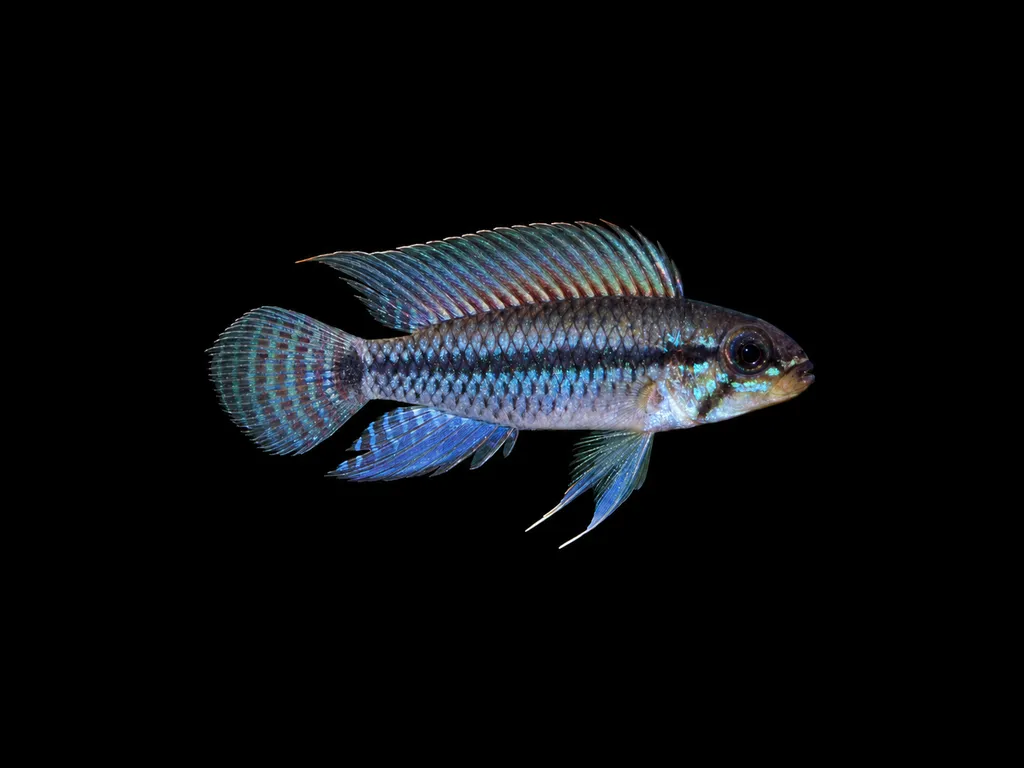 2 in (5 cm)15 gal (55 L)77–84°F (25–29°C)
Amazon sail-fin dwarf cichlid
Apistogramma pertensis
2 in (5 cm) · 15 gal (55 L)
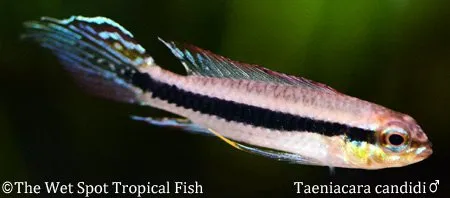 1.6 in (4 cm)11 gal (40 L)75–82°F (24–28°C)
Blackstripe dwarf cichlid
Taeniacara candidi
1.6 in (4 cm) · 11 gal (40 L)
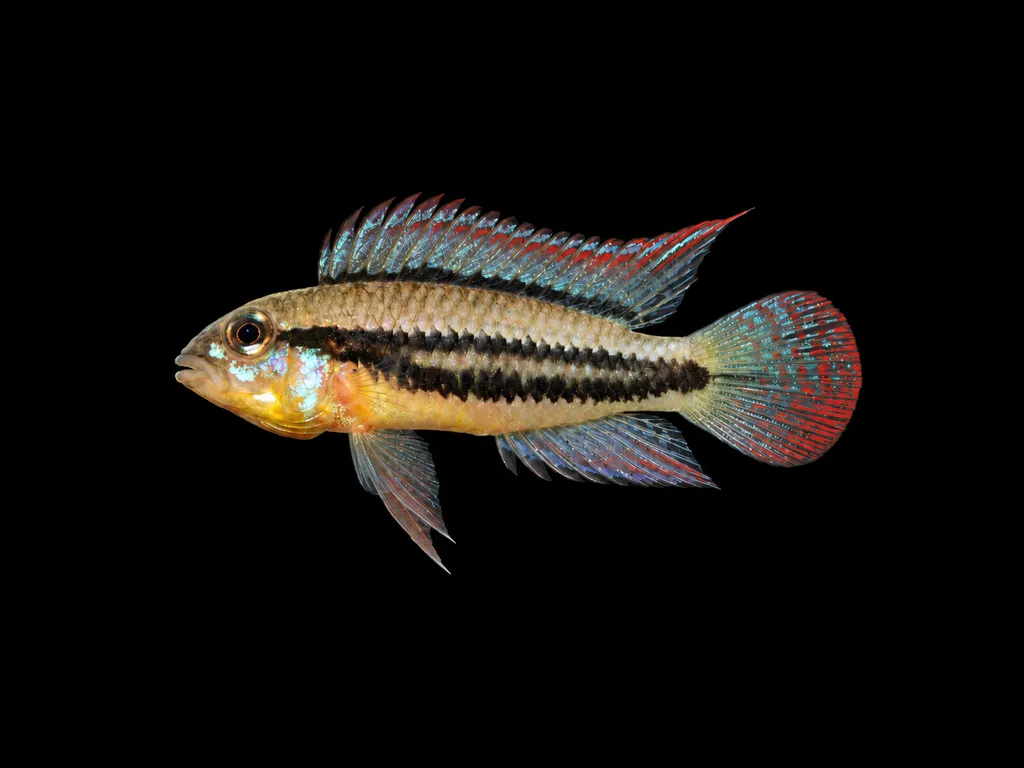 1.6 in (4 cm)15 gal (55 L)79–86°F (26–30°C)
Double-stripe dwarf cichlid
Apistogramma diplotaenia
1.6 in (4 cm) · 15 gal (55 L)
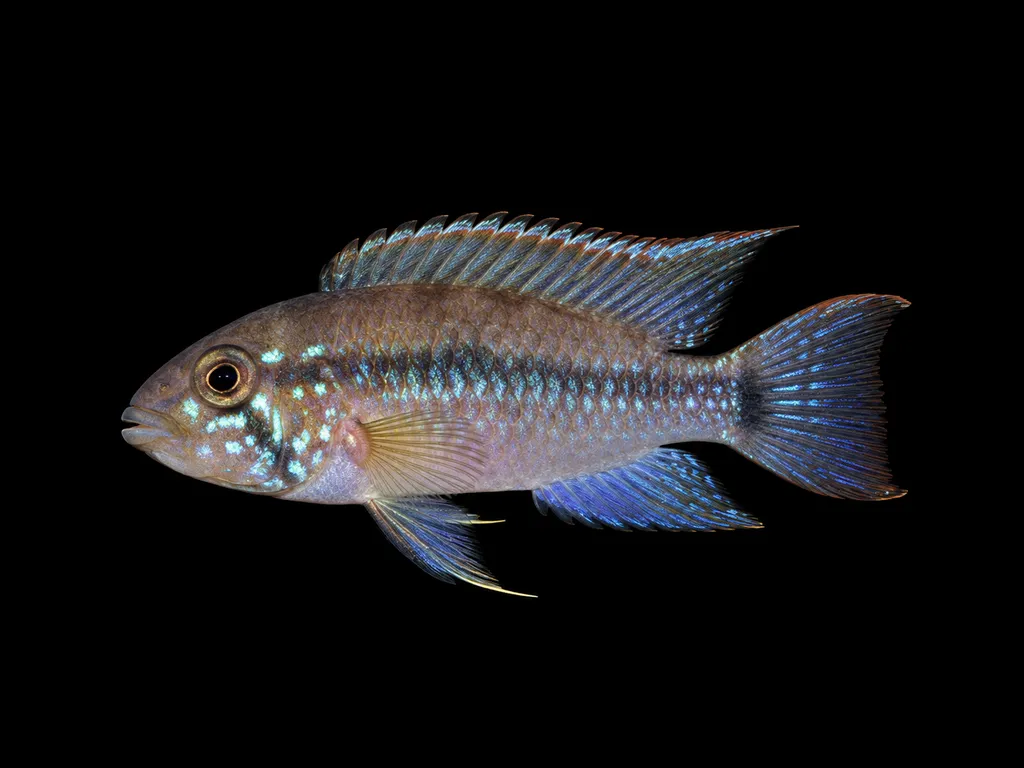 1.6 in (4 cm)15 gal (55 L)73–81°F (23–27°C)
Martin's dwarf cichlid
Apistogramma martini
1.6 in (4 cm) · 15 gal (55 L)
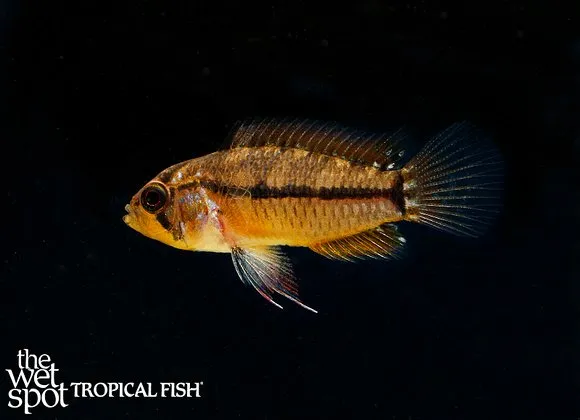 1.6 in (4 cm)11 gal (40 L)75–82°F (24–28°C)
T-bar dwarf cichlid
Apistogrammoides pucallpaensis
1.6 in (4 cm) · 11 gal (40 L)