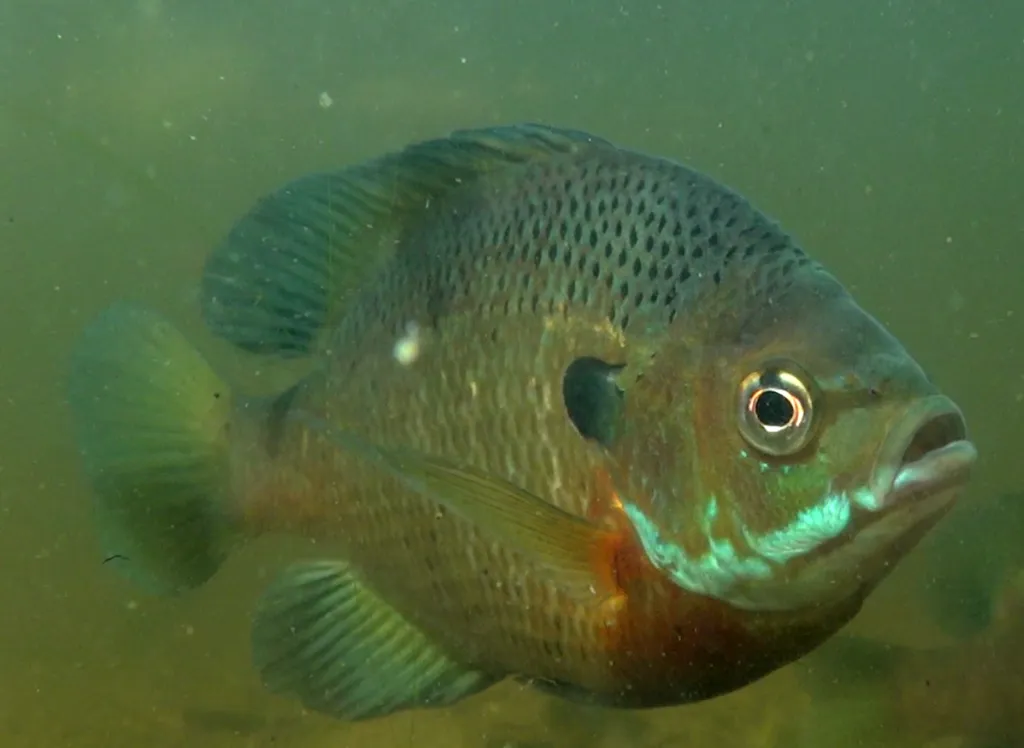
Bluegill sunfish
Lepomis macrochirus
FreshwaterFish
Care at a glance
- Temperature
- 41–73°F
- 5–23°C
- pH
- 6.5–8.5
- Adult size
- 13.8 in
- 35 cm
- Minimum tank
- 70 gal
- 265 L
- Temperament
- Aggressive
- Social behavior
- Solitary
- Tankmates
- With caution
- Swim level
- Middle
- Difficulty
- Easy
- Breeding
- No record
- Rarity
- Rare
- Family
- Centrarchidae
- Origin
- United States, Canada
Overview
The bluegill is a large, bold North American sunfish best kept singly or in a big cold-water setup with tough tankmates of similar size, as it is aggressive and territorial. It will eat almost anything meaty, including bloodworms, earthworms, crickets, prawn and larger frozen and pellet foods, and small fish are treated as prey. It uses the middle and lower water and needs strong filtration to handle its heavy waste. Because it grows large and stays feisty, a tank of at least 265 liters is the practical minimum, and more is better. It also needs cool, seasonal water rather than tropical warmth.
In the wild
Bluegill live across much of the United States and Canada in lakes, ponds, slow rivers and backwaters with plenty of submerged cover. They handle a broad sweep of conditions, from near-freezing winter water up to warm summer shallows, so an aquarium should track the seasons and stay cool for much of the year, roughly 5 to 23 C. Give them open swimming space, a few rocks or logs for shelter and clean, well filtered water with a pH from about 6.5 to 8.5. They are hardy but messy, so heavy filtration matters.
Good to know
Bluegill belong to the sunfish family Centrarchidae and can reach around 35 cm, though most stay smaller. Adults are deep-bodied with a dark ear flap and a small mouth suited to picking off insects and other small prey. Like other sunfish, males excavate a shallow, saucer-shaped nest in the substrate, spawn over it and then guard the eggs and fry aggressively. Home breeding is barely documented because of the fish's size and space needs, though it spawns readily in ponds.
Did you know
Male bluegill fan out saucer-shaped nests in the shallows, often packed side by side in colonies, and then stand guard over the eggs. A guarding male will charge fish many times his size to drive them away from the clutch.
Common questions
What size tank does a Bluegill sunfish need?
A Bluegill sunfish needs at least 70 gal (265 L). It spends most of its time in the middle.
What temperature and pH does a Bluegill sunfish need?
A Bluegill sunfish is comfortable at 41–73°F (5–23°C) with a pH of 6.5–8.5.
How big does a Bluegill sunfish get?
An adult Bluegill sunfish reaches about 13.8 in (35 cm).
Related species
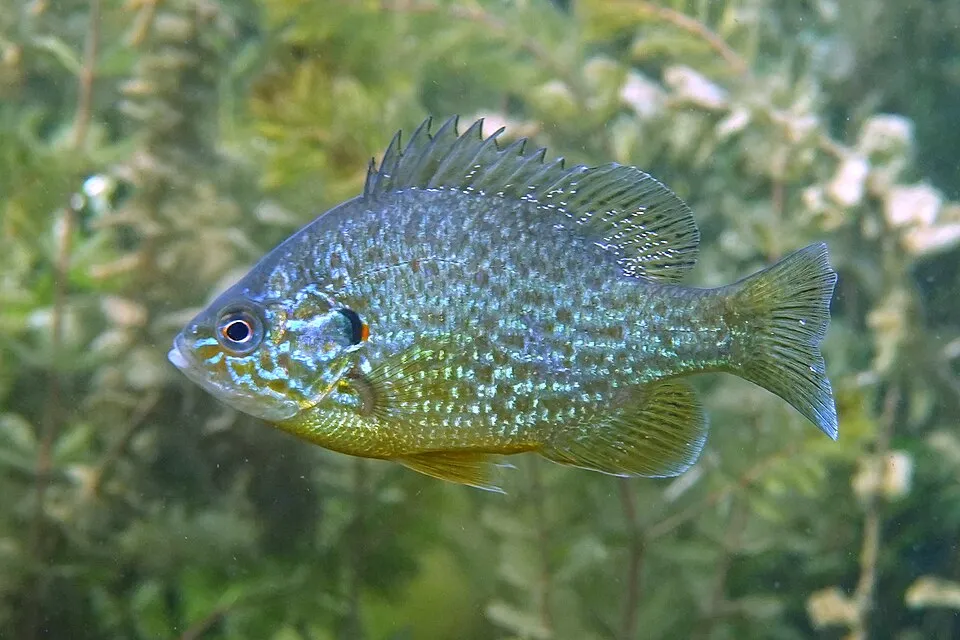 9.8 in (25 cm)70 gal (265 L)41–73°F (5–23°C)
Pumpkinseed sunfish
Lepomis gibbosus
9.8 in (25 cm) · 70 gal (265 L)
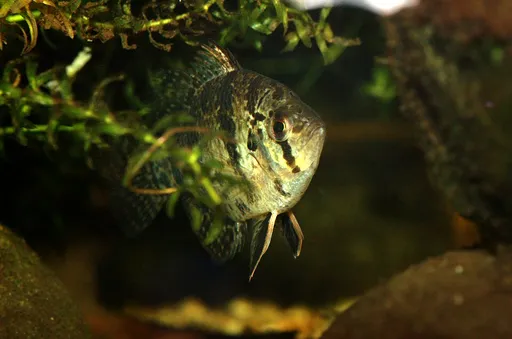 3.9 in (10 cm)20 gal (75 L)39–75°F (4–24°C)
Blackbanded sunfish
Enneacanthus chaetodon
3.9 in (10 cm) · 20 gal (75 L)
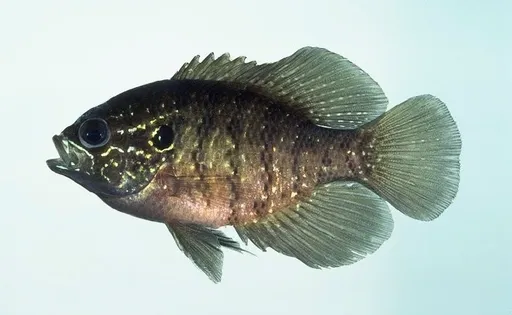 3.5 in (9 cm)20 gal (75 L)64–72°F (18–22°C)
Banded sunfish
Enneacanthus obesus
3.5 in (9 cm) · 20 gal (75 L)
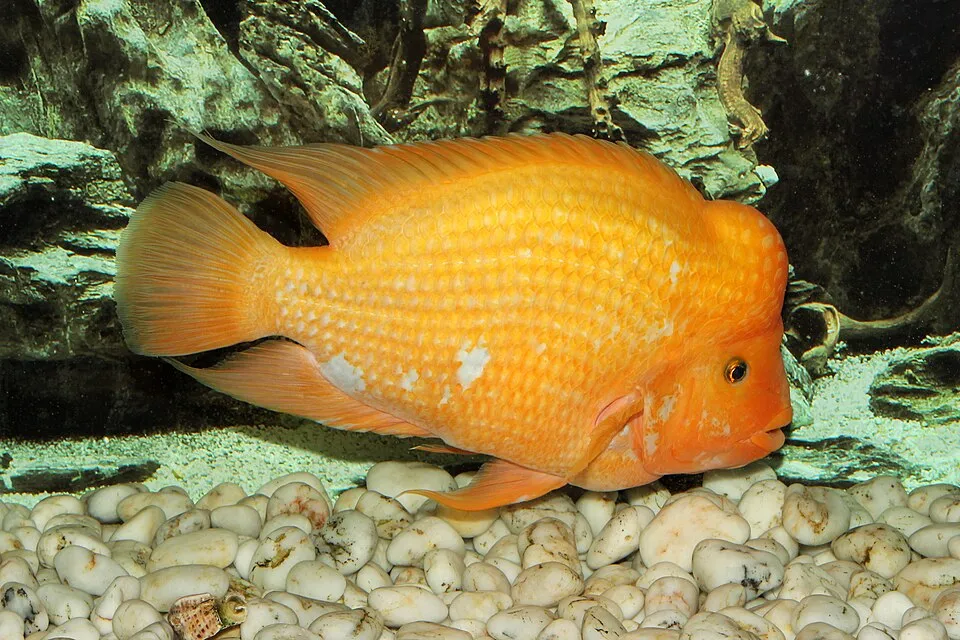 13.8 in (35 cm)79 gal (300 L)70–79°F (21–26°C)
Midas cichlid
Amphilophus citrinellus
13.8 in (35 cm) · 79 gal (300 L)
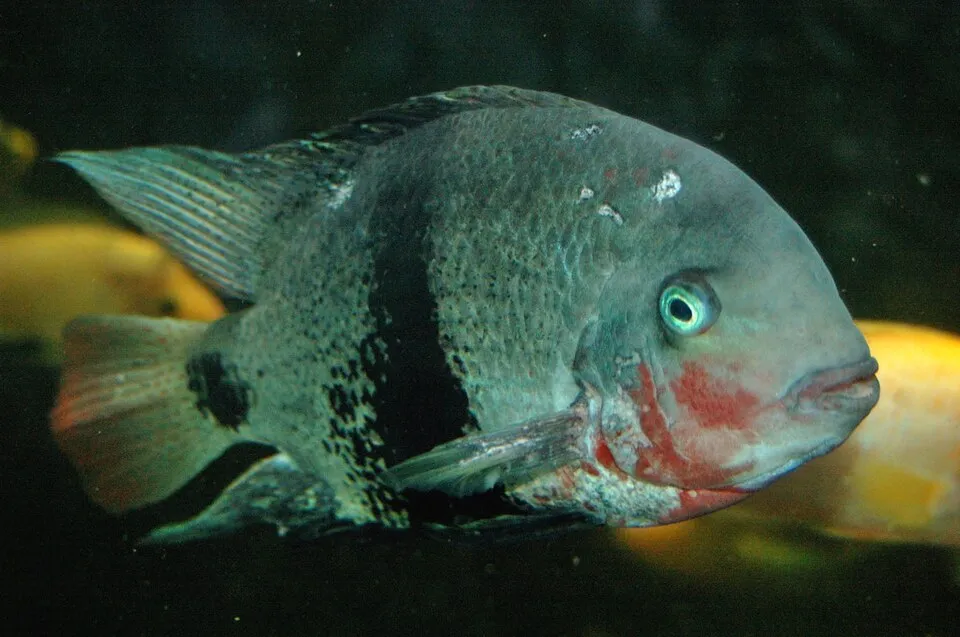 12.6 in (32 cm)66 gal (250 L)72–82°F (22–28°C)
Blackbelt cichlid
Vieja maculicauda
12.6 in (32 cm) · 66 gal (250 L)
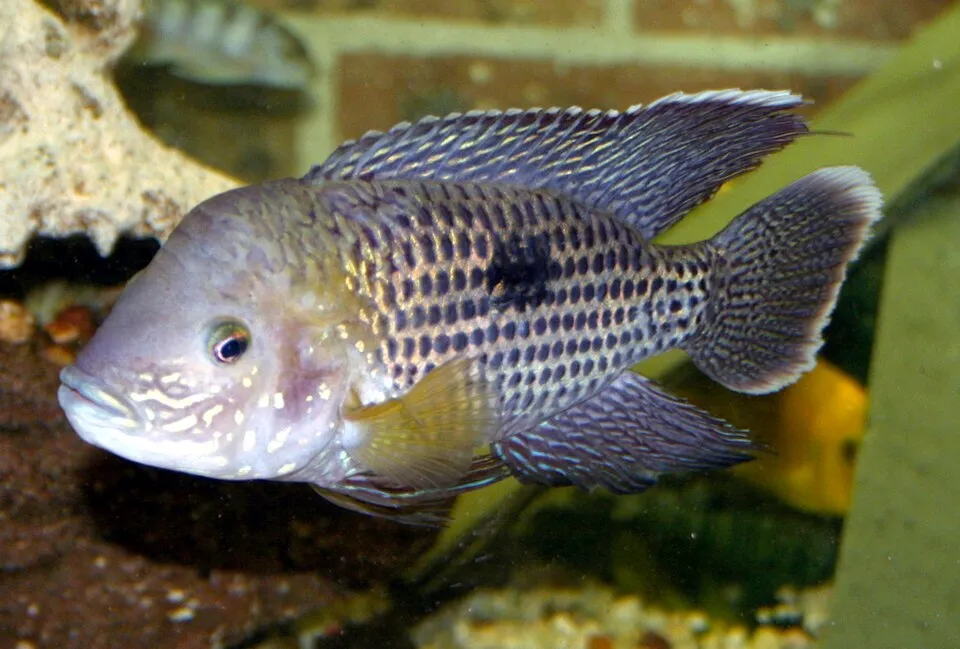 11.8 in (30 cm)75 gal (285 L)68–75°F (20–24°C)
Gold saum
Andinoacara rivulatus
11.8 in (30 cm) · 75 gal (285 L)