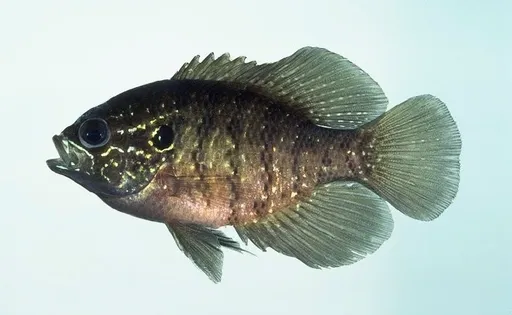
Banded sunfish
Enneacanthus obesus
FreshwaterFish
Care at a glance
- Temperature
- 64–72°F
- 18–22°C
- pH
- 6.0–7.5
- Adult size
- 3.5 in
- 9 cm
- Minimum tank
- 20 gal
- 75 L
- Temperament
- Mostly peaceful
- Social behavior
- Social
- Tankmates
- With caution
- Swim level
- Middle
- Difficulty
- Medium
- Breeding
- Medium
- Rarity
- Common
- Family
- Centrarchidae
- Origin
- Eastern USA, Atlantic and Gulf Slope drainages (New Hampshire to Florida)
Overview
A single fish fits a 38 liter tank, but for a pair, trio, or small group use 75 liters or more so territories can form, and add everyone at the same time. They sit in the middle of the water column and stay mostly peaceful toward similarly sized cool-water tankmates, though males squabble and turn territorial at spawning time. Keep them at 18 to 22 C, soft and acidic to neutral around pH 6 to 7.5, with a winter drop toward 10 to 15 C if you can manage it. They are sensitive to poor water, so stay on top of changes. Do not mix them with other sunfish or larger aggressive centrarchids, since they will fight. Feed live or frozen foods like daphnia, bloodworms, and brine shrimp, as they often refuse flake. This is a North American native, so never release one into local waters and check your state rules before keeping it.
In the wild
Banded sunfish are a cool-water native of the eastern United States, found in slow, heavily vegetated waters across the Atlantic and Gulf Slope drainages from New Hampshire down to Florida. These are soft, acidic blackwater habitats, stained with tannins from leaf litter and packed with plants. To match that, give them a densely planted tank with leaf litter, driftwood, and broken sight lines, water on the soft and acidic side around pH 6 to 7.5, and a temperature of 18 to 22 C. This is not a tropical fish, so skip the heater in most rooms and let it run cool.
Good to know
This is a true sunfish in the family Centrarchidae, reaching about 9 cm at most and usually staying smaller at 6 to 8 cm. It is a micropredator that hunts small live prey rather than grazing. The male digs a small nest depression and guards it, and a seasonal cool-down into the low teens C over winter helps condition both sexes for spawning.
Did you know
The winter chill that would stress a tropical fish is something these actually need. A seasonal cool-down toward 10 to 15 C mimics their wild winter and is often what triggers them to spawn once the water warms again, so a cold spell in an unheated tank can be the thing that finally gets a pair breeding.
Common questions
What size tank does a Banded sunfish need?
A Banded sunfish needs at least 20 gal (75 L). It spends most of its time in the middle.
What temperature and pH does a Banded sunfish need?
A Banded sunfish is comfortable at 64–72°F (18–22°C) with a pH of 6.0–7.5.
How big does a Banded sunfish get?
An adult Banded sunfish reaches about 3.5 in (9 cm).
Related species
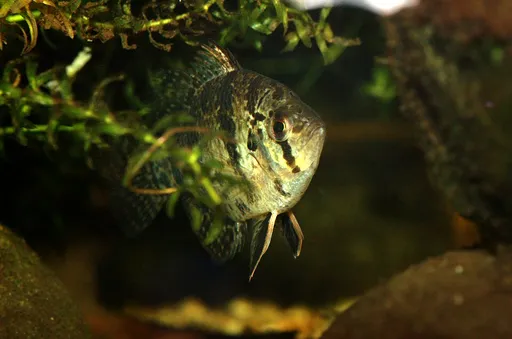 3.9 in (10 cm)20 gal (75 L)39–75°F (4–24°C)
Blackbanded sunfish
Enneacanthus chaetodon
3.9 in (10 cm) · 20 gal (75 L)
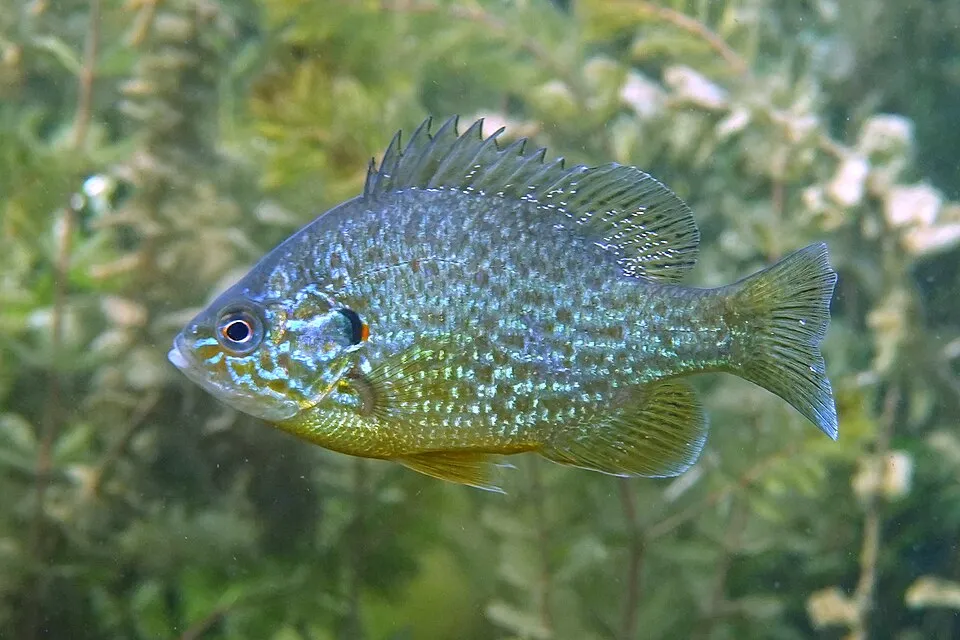 9.8 in (25 cm)70 gal (265 L)41–73°F (5–23°C)
Pumpkinseed sunfish
Lepomis gibbosus
9.8 in (25 cm) · 70 gal (265 L)
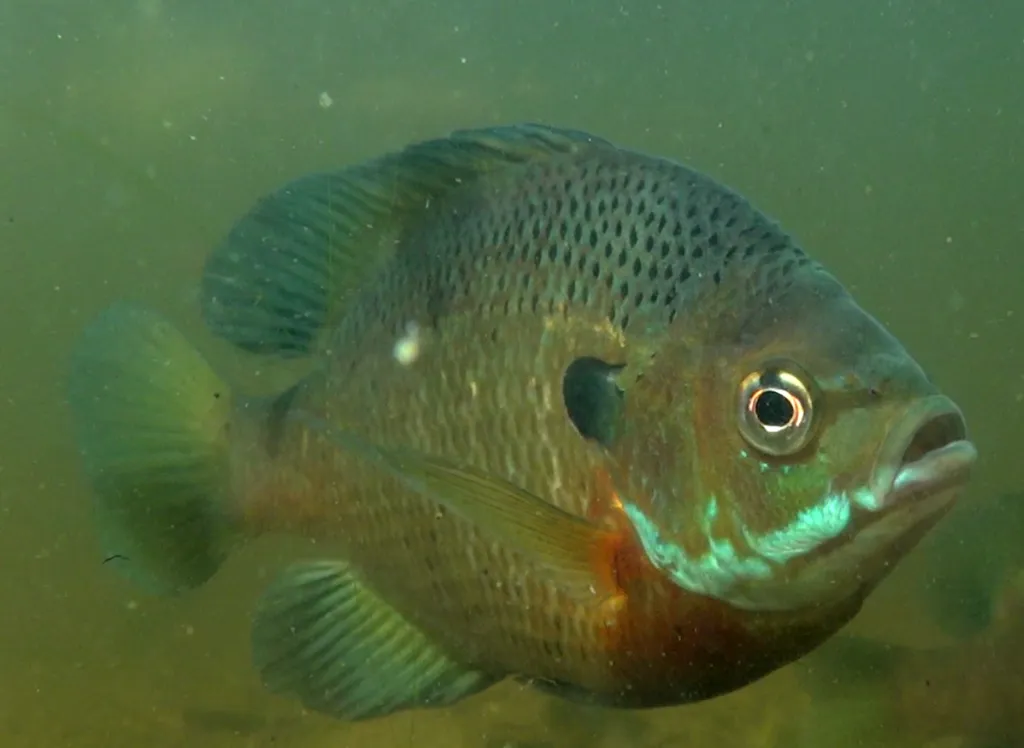 13.8 in (35 cm)70 gal (265 L)41–73°F (5–23°C)
Bluegill sunfish
Lepomis macrochirus
13.8 in (35 cm) · 70 gal (265 L)
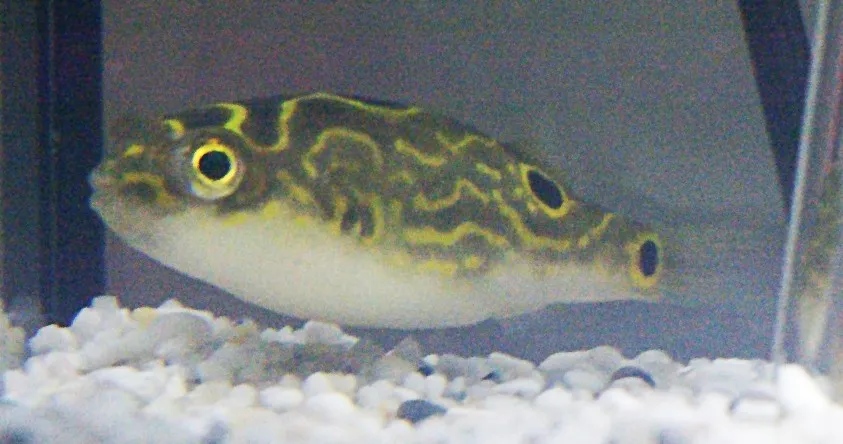 3.1 in (8 cm)20 gal (75 L)72–79°F (22–26°C)
Figure eight puffer
Tetraodon biocellatus
3.1 in (8 cm) · 20 gal (75 L)
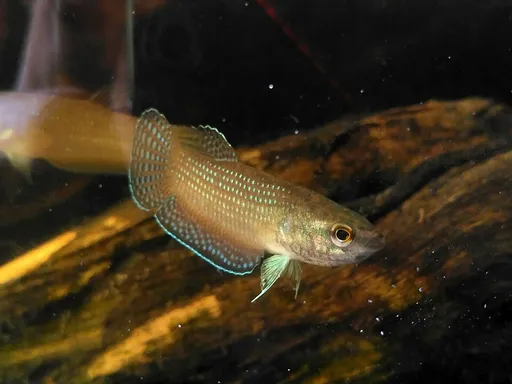 2.4 in (6 cm)20 gal (75 L)72–81°F (22–27°C)
Edith's betta
Betta edithae
2.4 in (6 cm) · 20 gal (75 L)
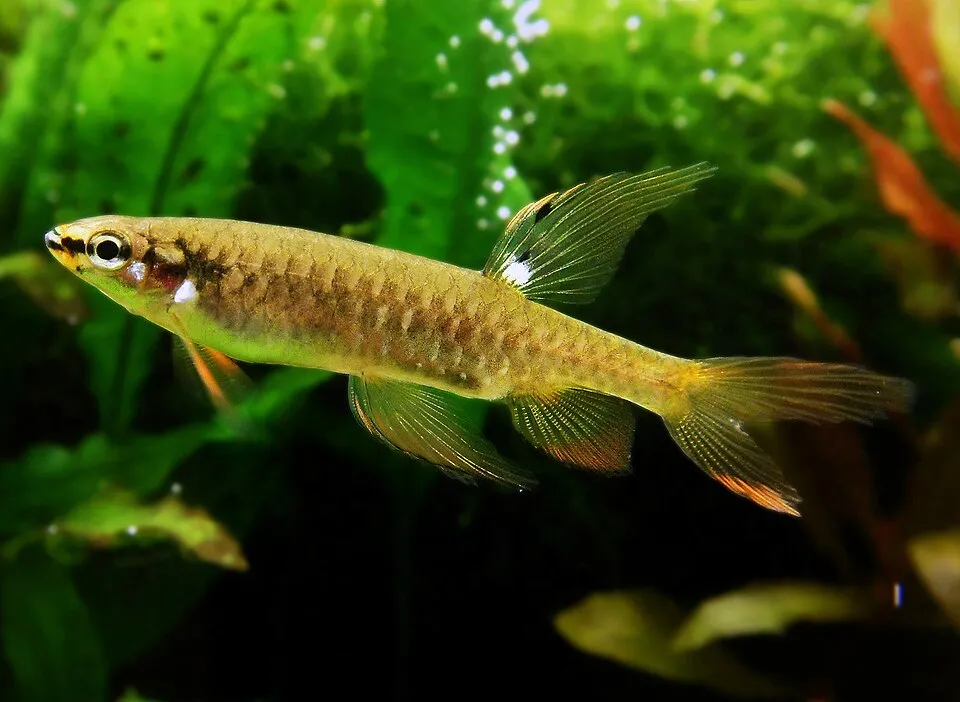 2.2 in (5.5 cm)18 gal (70 L)68–82°F (20–28°C)
Splash tetra
Copella arnoldi
2.2 in (5.5 cm) · 18 gal (70 L)