Amazon leaf fish
Monocirrhus polyacanthus
Also known as South American leaf fish
FreshwaterFish
Care at a glance
- Temperature
- 73–84°F
- 23–29°C
- pH
- 5.0–6.5
- Adult size
- 3.5 in
- 9 cm
- Minimum tank
- 30 gal
- 115 L
- Temperament
- Mostly peaceful
- Social behavior
- Solitary
- Tankmates
- With caution
- Swim level
- Middle
- Difficulty
- Medium
- Breeding
- No record
- Rarity
- Very rare
- Family
- Polycentridae
- Origin
- South America
Overview
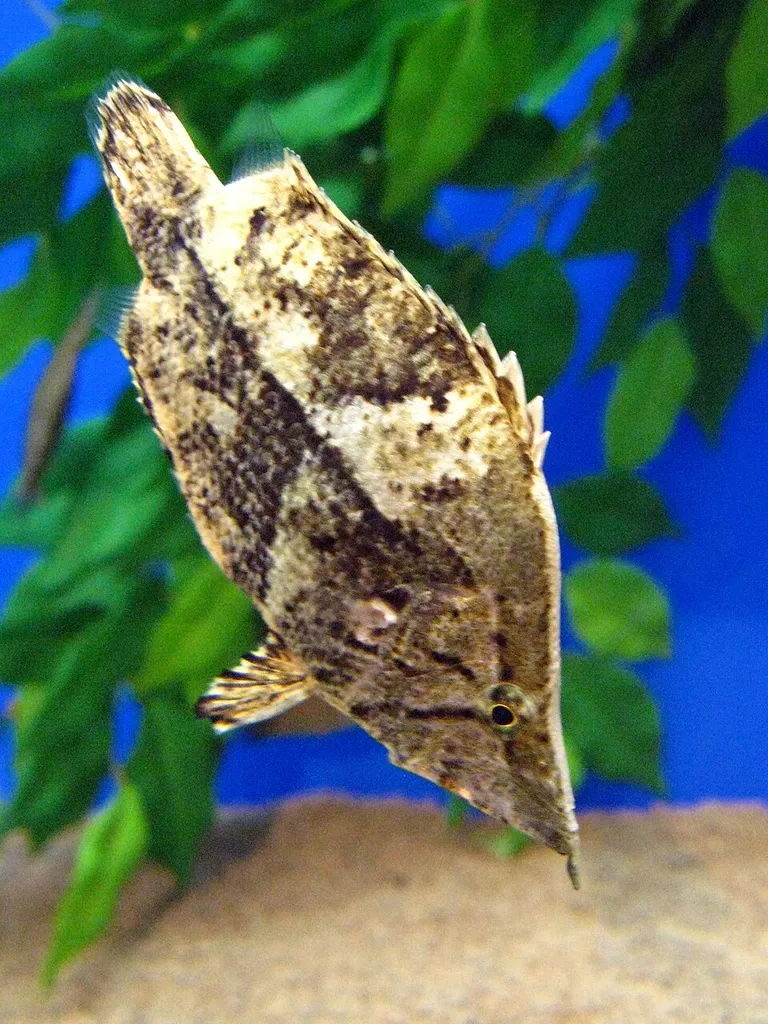
The Amazon leaf fish is a solitary, slow-moving ambush hunter that spends its day imitating a dead leaf until prey drifts near. It ignores fish too large to eat but will inhale small tankmates, so house it alone or with peaceful fish that are clearly too big to swallow, and never with fin-nippers. It wants quiet, dimly lit water with plenty of cover to lurk in. Expect to feed live foods at first, such as shrimp and small feeder fish, since many refuse anything that does not move, then coax it onto frozen foods over time. A single fish needs a calm, shaded tank of around 115 liters or larger.
In the wild
In the wild this fish lives in the still, shaded blackwater creeks and flooded forest margins of the Amazon Basin, where tannins stain the water the color of weak tea and dead leaves carpet the bottom. It drifts among that leaf litter and submerged roots, well camouflaged. Recreate the setting with soft, acidic water, a pH between 5 and 6.5, gentle flow, and low light. Add driftwood, leaf litter, and tall plants so it has shade and cover, and keep the temperature warm, from 23 to 29 C.
Good to know
The Amazon leaf fish is the only species in its genus, part of the New World leaf fish family Polycentridae. Adults reach about 9 cm and have a deep, laterally flattened body, a chin barbel that looks like a leaf stalk, and a mouth that opens very wide. Its camouflage even includes a dark line mimicking the central vein of a leaf. Aquarium breeding is seldom recorded. In nature it lays eggs on a firm surface such as a leaf or stone, and the male guards the clutch.
Did you know
Few fish disguise themselves as well as the Amazon leaf fish. It even carries a dark stripe that imitates the midrib of a leaf and a chin barbel that looks like the stalk. When prey drifts close, it strikes in about two tenths of a second, making it one of the fastest feeders in fresh water.
Common questions
What size tank does an Amazon leaf fish need?
An Amazon leaf fish needs at least 30 gal (115 L). It spends most of its time in the middle.
What temperature and pH does an Amazon leaf fish need?
An Amazon leaf fish is comfortable at 73–84°F (23–29°C) with a pH of 5.0–6.5.
How big does an Amazon leaf fish get?
An adult Amazon leaf fish reaches about 3.5 in (9 cm).
Related species
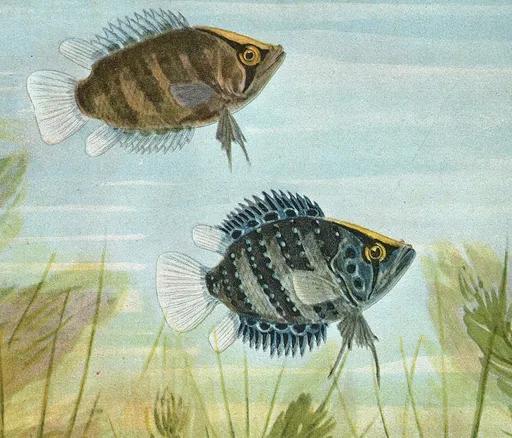 3.9 in (10 cm)20 gal (75 L)72–82°F (22–28°C)
Schomburgk's leaffish
Polycentrus schomburgkii
3.9 in (10 cm) · 20 gal (75 L)
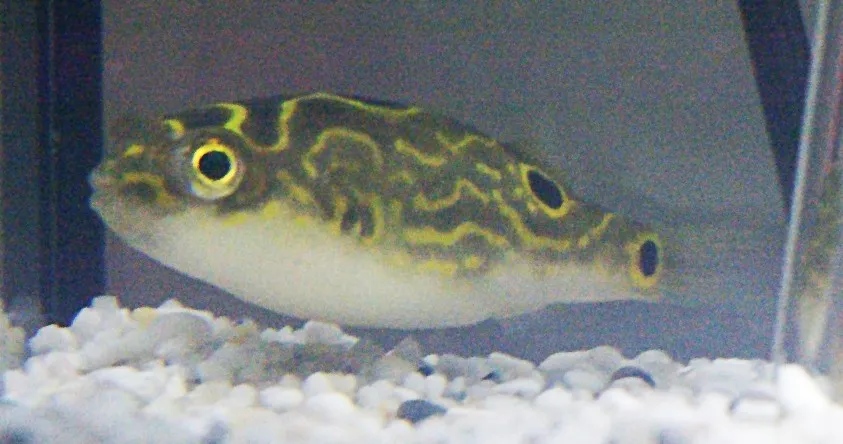 3.1 in (8 cm)20 gal (75 L)72–79°F (22–26°C)
Figure eight puffer
Tetraodon biocellatus
3.1 in (8 cm) · 20 gal (75 L)
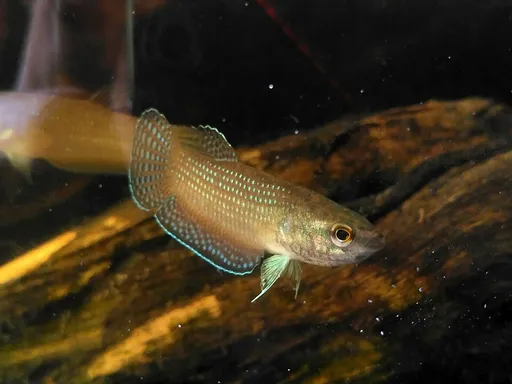 2.4 in (6 cm)20 gal (75 L)72–81°F (22–27°C)
Edith's betta
Betta edithae
2.4 in (6 cm) · 20 gal (75 L)
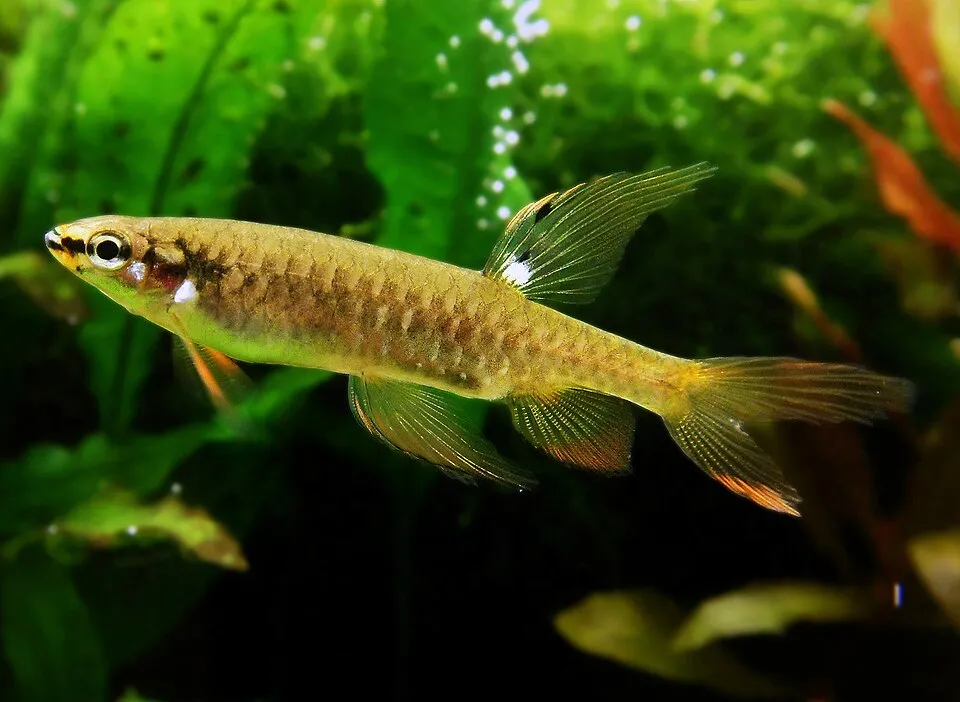 2.2 in (5.5 cm)18 gal (70 L)68–82°F (20–28°C)
Splash tetra
Copella arnoldi
2.2 in (5.5 cm) · 18 gal (70 L)
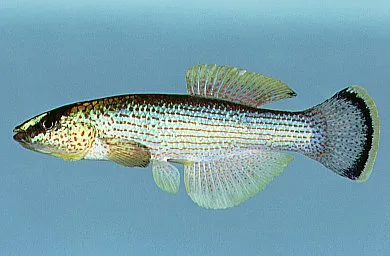 5.9 in (15 cm)37 gal (140 L)59–77°F (15–25°C)
Northern studfish
Fundulus catenatus
5.9 in (15 cm) · 37 gal (140 L)
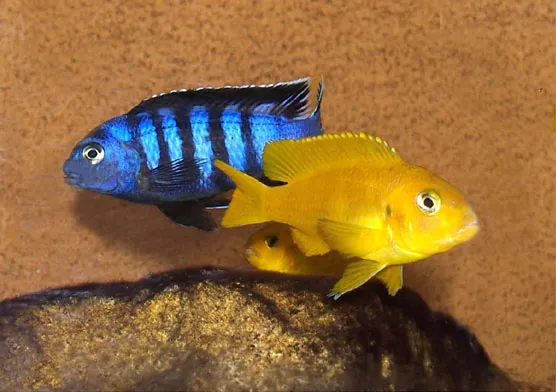 3.9 in (10 cm)42 gal (160 L)73–81°F (23–27°C)
Saulosi mbuna
Chindongo saulosi
3.9 in (10 cm) · 42 gal (160 L)