Redtail splitfin
Xenotoca eiseni
Also known as Redtail goodeid, Orangetail goodeid, Red tail goodeid
FreshwaterFish
Care at a glance
- Temperature
- 64–82°F
- 18–28°C
- pH
- 7.0–8.0
- Adult size
- 2.8 in
- 7 cm
- Minimum tank
- 20 gal
- 75 L
- Temperament
- Mostly peaceful
- Social behavior
- Social
- Tankmates
- With caution
- Swim level
- Middle
- Difficulty
- Easy
- Breeding
- Easy
- Rarity
- Rare
- Family
- Goodeidae
- Origin
- Native to the Rio Grande de Santiago drainage and waters near Compostela, Nayarit, in west central Mexico, in springs, pools, and slow streams.
Overview
Keep six or more in a tank of 75 liters or larger at 18 to 28 C, pH 7.0 to 8.0, in medium hard to hard water. They are notorious fin nippers, so keep them away from guppies, angelfish, and other slow, long finned fish, and keep a decent sized group to spread out the nipping. Feed a varied diet with plenty of vegetable matter. Males reach about 6 cm, females about 7 cm.
In the wild
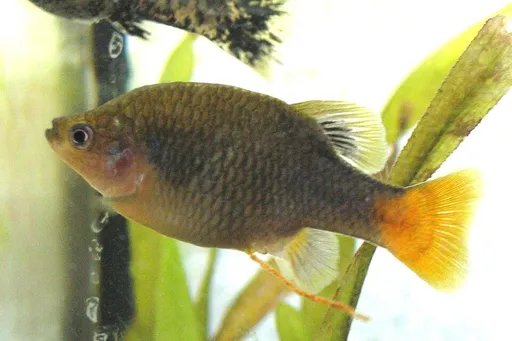
A stocky, hardy goodeid that does best in a group in a roomy tank with hard, alkaline water and steady filtration. Dominant males show a brilliant orange to red band across the rear body with a blue green sheen ahead of it. They graze algae and appreciate some plant cover plus open water to cruise. Temperatures from the high teens to high twenties C are all tolerated.
Good to know
In 2016 the redtail splitfin complex was revised, and the bright San Marcos form was split off as a separate species, Xenotoca doadrioi, with other populations reassigned to Xenotoca lyonsi, leaving true X. eiseni for the Santiago basin fish. Like all goodeids the females feed developing embryos internally through trophotaeniae. Broods run from 10 to 40 large fry.
Did you know
The red tail band on a dominant male can flush brighter or fade within minutes depending on his mood and status in the group.
Common questions
What size tank does a Redtail splitfin need?
A Redtail splitfin needs at least 20 gal (75 L). It spends most of its time in the middle.
What temperature and pH does a Redtail splitfin need?
A Redtail splitfin is comfortable at 64–82°F (18–28°C) with a pH of 7.0–8.0.
How big does a Redtail splitfin get?
An adult Redtail splitfin reaches about 2.8 in (7 cm).
Related species
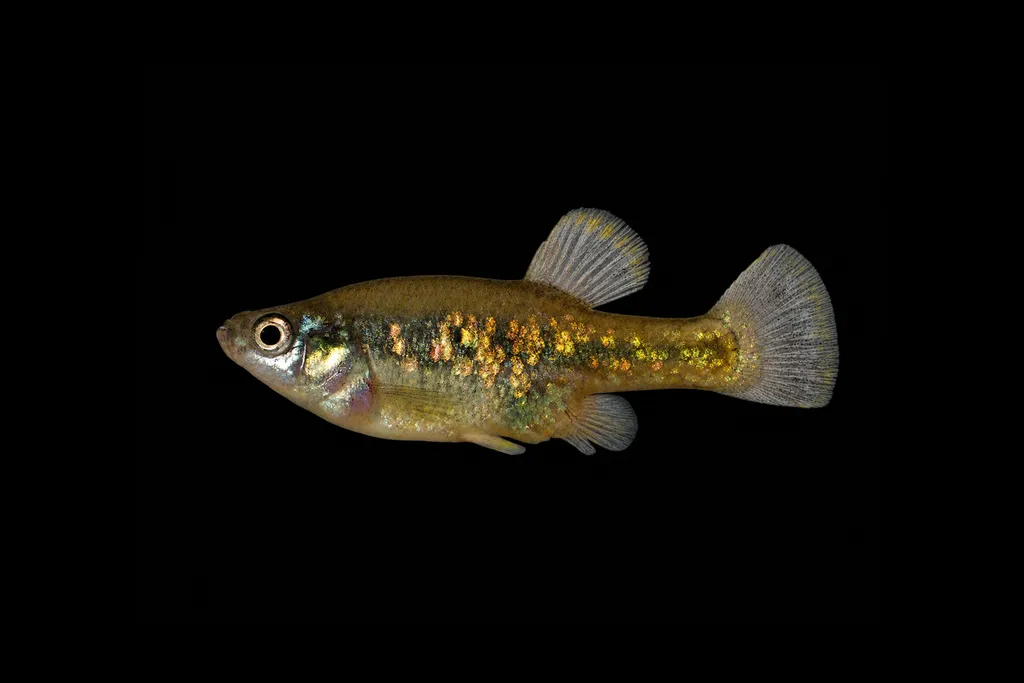 2.8 in (7 cm)20 gal (75 L)64–81°F (18–27°C)
Jeweled splitfin
Xenotoca variata
2.8 in (7 cm) · 20 gal (75 L)
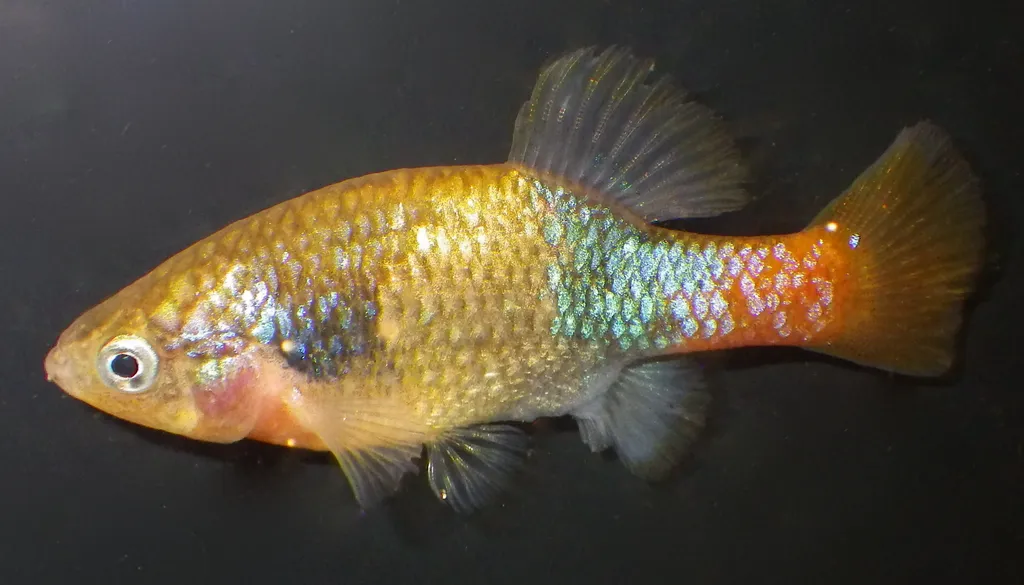 2 in (5 cm)20 gal (75 L)64–79°F (18–26°C)
San Marcos goodeid
Xenotoca doadrioi
2 in (5 cm) · 20 gal (75 L)
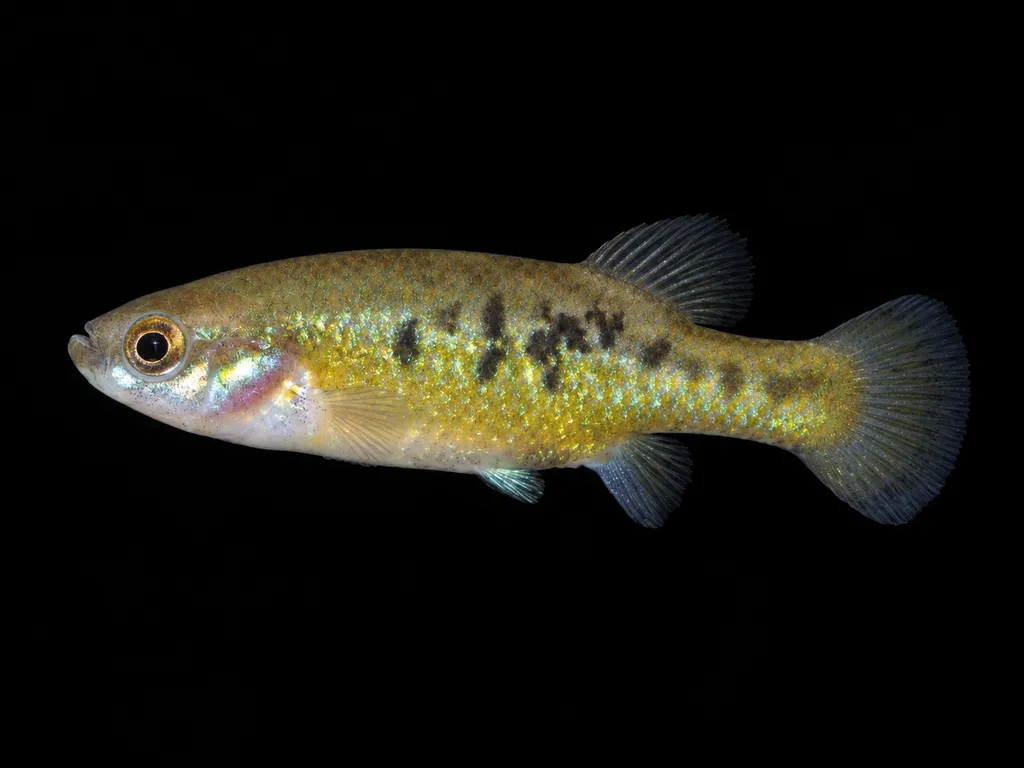 2.8 in (7 cm)20 gal (75 L)64–79°F (18–26°C)
Bumblebee goodeid
Allotoca dugesii
2.8 in (7 cm) · 20 gal (75 L)
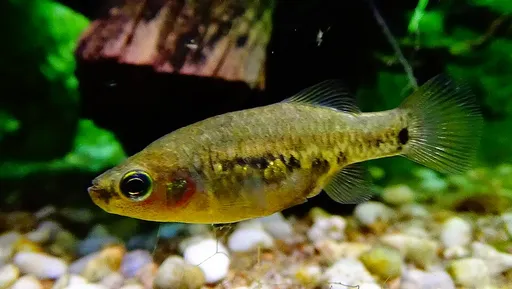 2.6 in (6.5 cm)20 gal (75 L)68–79°F (20–26°C)
Tequila splitfin
Zoogoneticus tequila
2.6 in (6.5 cm) · 20 gal (75 L)
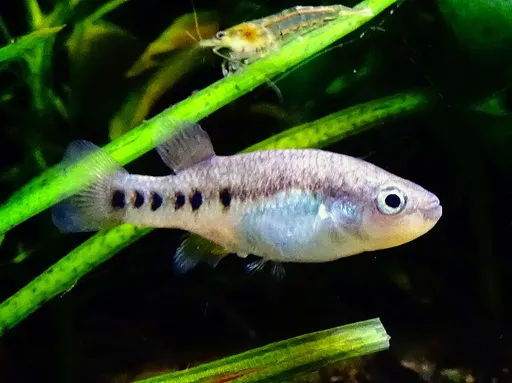 2.4 in (6 cm)15 gal (57 L)61–75°F (16–24°C)
Rainbow goodeid
Characodon lateralis
2.4 in (6 cm) · 15 gal (57 L)
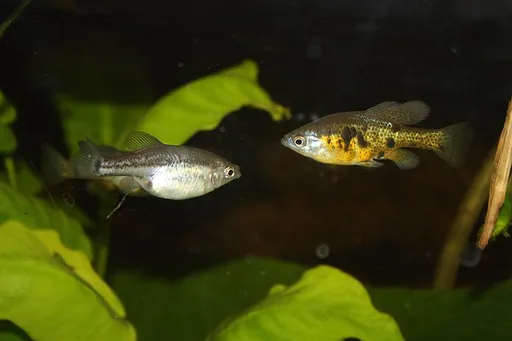 2.4 in (6 cm)16 gal (60 L)68–79°F (20–26°C)
Spotted skiffia
Skiffia multipunctata
2.4 in (6 cm) · 16 gal (60 L)