Rainbow goodeid
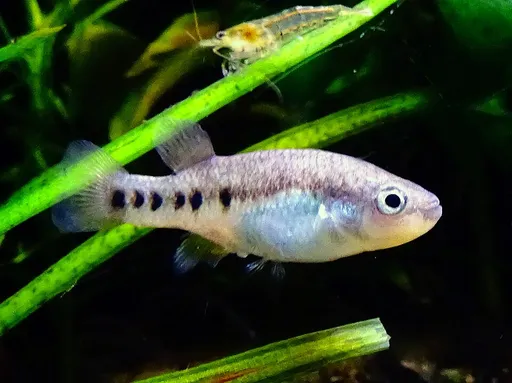
Characodon lateralis
Also known as Rainbow characodon, Rainbow splitfin
FreshwaterFish
Care at a glance
- Temperature
- 61–75°F
- 16–24°C
- pH
- 7.0–8.2
- Adult size
- 2.4 in
- 6 cm
- Minimum tank
- 15 gal
- 57 L
- Temperament
- Mostly peaceful
- Social behavior
- Social
- Tankmates
- With caution
- Swim level
- Middle
- Diet
- Omnivore
- Difficulty
- Medium
- Breeding
- Livebearer · Medium
- Rarity
- Rare
- Family
- Goodeidae
- Origin
- Endemic to springs and small streams of the upper Rio Mezquital system in Durango, Mexico, in cool, clear, hard water.
Overview
The rainbow goodeid is a small, jewel-colored livebearer for a cool, planted tank. It is best with a little experience.
Did you know
Rainbow goodeids from different Durango spring populations vary in color. Hobbyists keep them as separate location forms to preserve that local variation.
Caring for the rainbow goodeid
Keep six or more rainbow goodeids, with extra females, in 15 gal (57 L) or larger. Plant the tank and give it cover and floor space, since rival males spar and display.
They like cooler and cleaner water than most tropical fish. Keep it hard, with gentle flow, at 61 to 75°F (16 to 24°C) and a pH of 7.0 to 8.2. Stay on the cool side of that range, and make frequent water changes to keep them healthy.
Feed small frozen and live foods such as daphnia, cyclops and brine shrimp, plus some vegetable flake. Rainbow goodeids are mostly peaceful, but choose tank mates with caution and avoid warm-water community tanks.
Males glow with blue to green flanks, red or orange fin edges and a dark bar on the side. They stay smaller than females, at about 4 to 5 cm, and court with an andropodium rather than a gonopodium. Females carry their young for around 55 days and give birth to roughly 5 to 20 large fry. Breeding is of medium difficulty.
Good to know
The rainbow goodeid, Characodon lateralis, is one of the northernmost goodeids. It is considered endangered as its spring habitats in Durango shrink. The female feeds her developing young internally through trophotaeniae.
In the wild
The rainbow goodeid is endemic to springs and small streams of the upper Rio Mezquital system in Durango, Mexico. Its home waters are cool, clear and hard.
Common questions
What size tank does a rainbow goodeid need?
A rainbow goodeid needs at least 15 gal (57 L). It spends most of its time in the middle.
What temperature and pH does a rainbow goodeid need?
A rainbow goodeid is comfortable at 61–75°F (16–24°C) with a pH of 7.0–8.2.
What does a rainbow goodeid eat?
A rainbow goodeid eats small frozen and live foods such as daphnia, cyclops and brine shrimp. Add some vegetable flake as well.
How big does a rainbow goodeid get?
An adult rainbow goodeid reaches about 2.4 in (6 cm).
How can you tell a male rainbow goodeid from a female?
Males glow with blue to green flanks, red or orange fin edges and a dark side bar. They are also smaller than females, at about 4 to 5 cm.
How does a rainbow goodeid breed?
Rainbow goodeids are livebearers. A female carries her young for around 55 days, then gives birth to roughly 5 to 20 large fry. Breeding them is of medium difficulty.
Related species
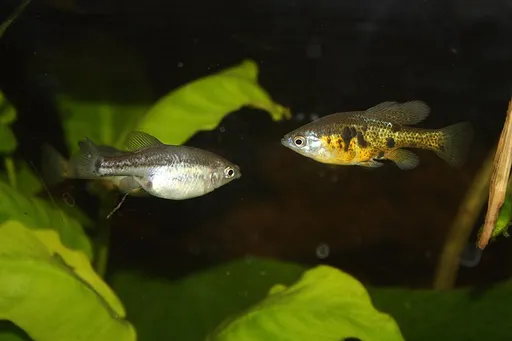 2.4 in (6 cm)16 gal (60 L)68–79°F (20–26°C)
Spotted skiffia
Skiffia multipunctata
2.4 in (6 cm) · 16 gal (60 L)
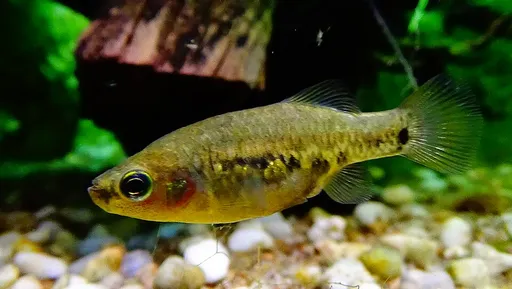 2.6 in (6.5 cm)20 gal (75 L)68–79°F (20–26°C)
Tequila splitfin
Zoogoneticus tequila
2.6 in (6.5 cm) · 20 gal (75 L)
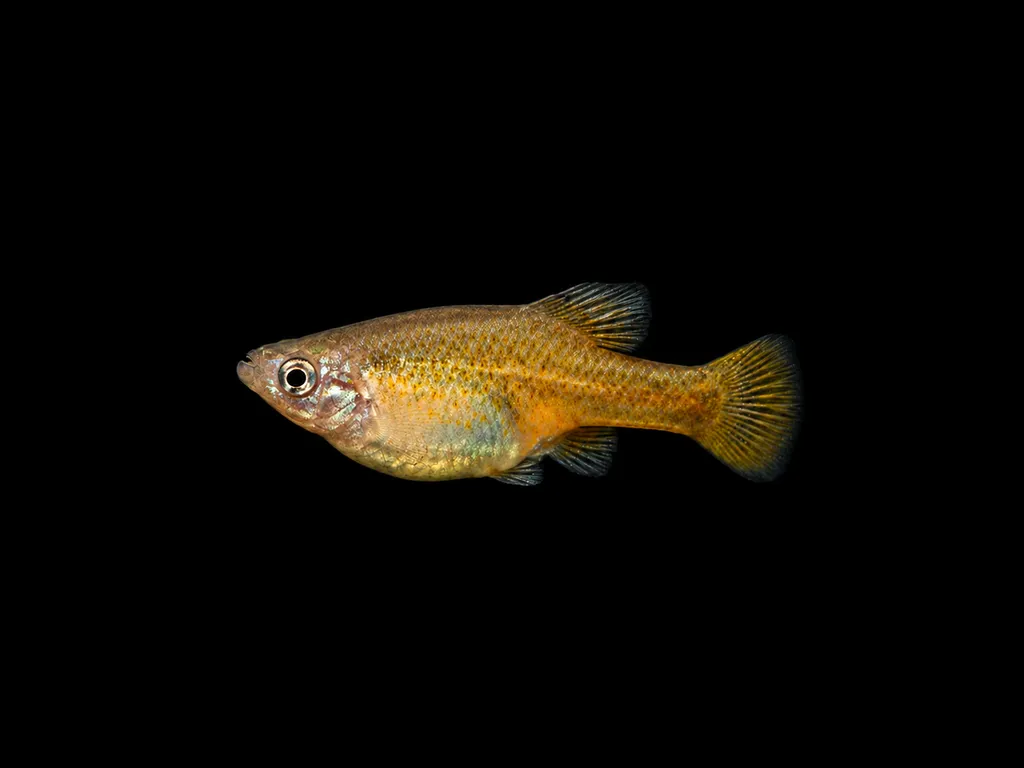 2.2 in (5.5 cm)16 gal (60 L)68–79°F (20–26°C)
Golden skiffia
Skiffia francesae
2.2 in (5.5 cm) · 16 gal (60 L)
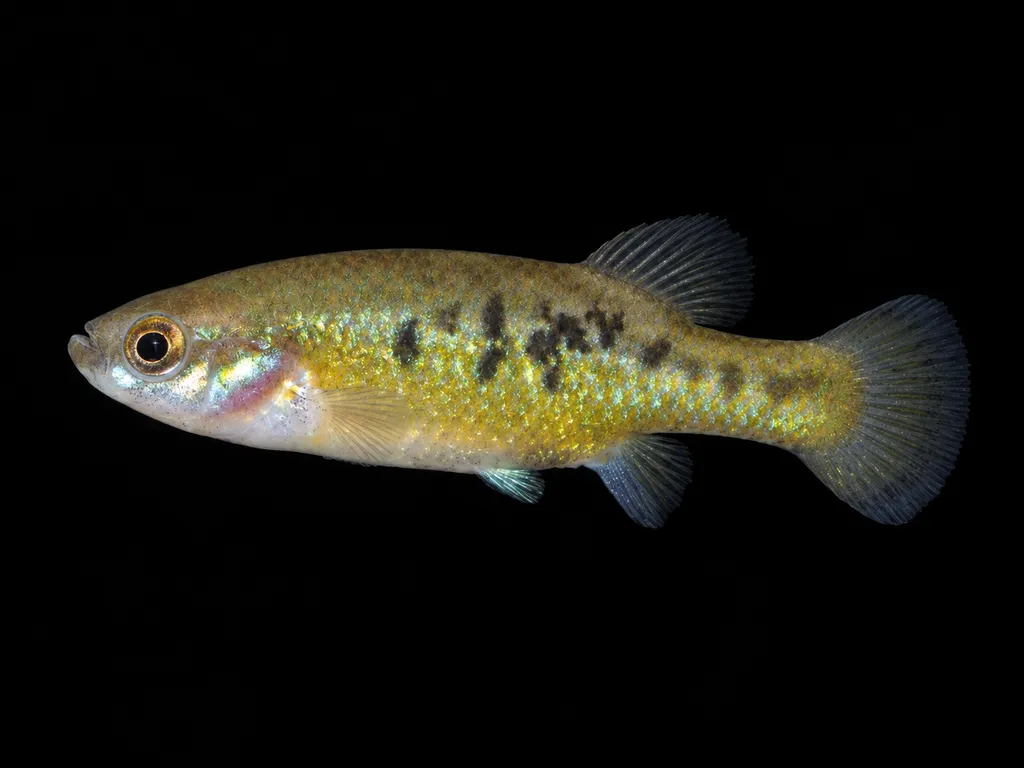 2.8 in (7 cm)20 gal (75 L)64–79°F (18–26°C)
Bumblebee goodeid
Allotoca dugesii
2.8 in (7 cm) · 20 gal (75 L)
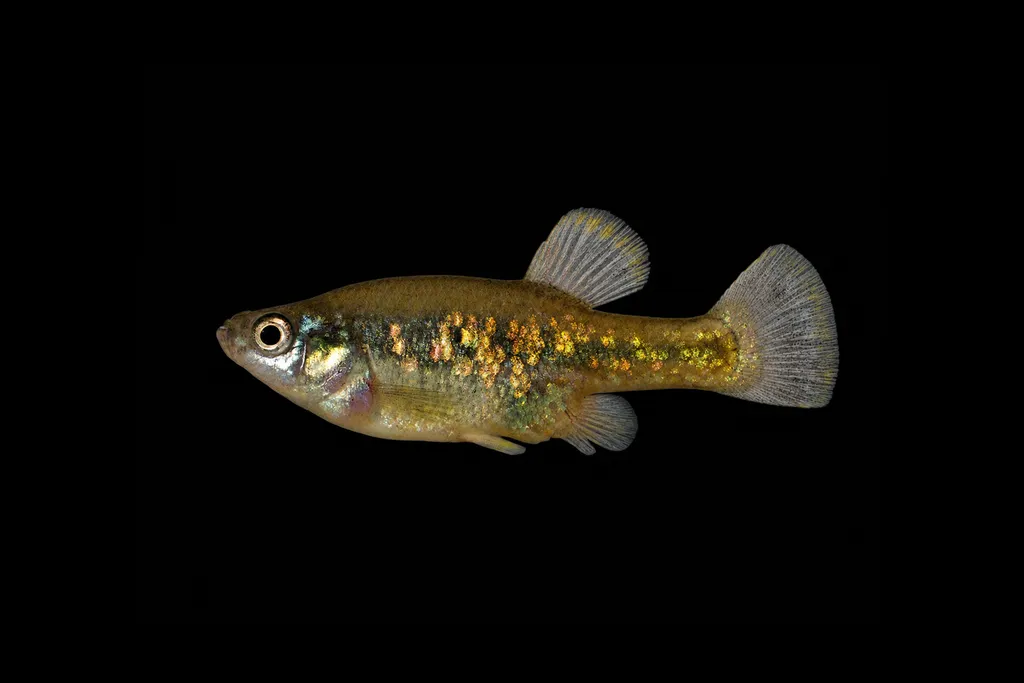 2.8 in (7 cm)20 gal (75 L)64–81°F (18–27°C)
Jeweled splitfin
Xenotoca variata
2.8 in (7 cm) · 20 gal (75 L)
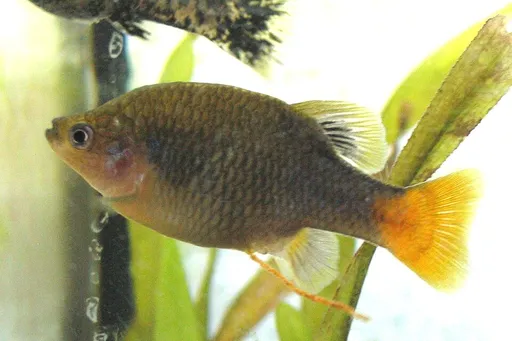 2.8 in (7 cm)20 gal (75 L)64–82°F (18–28°C)
Redtail splitfin
Xenotoca eiseni
2.8 in (7 cm) · 20 gal (75 L)