San Marcos goodeid
Xenotoca doadrioi
Also known as Doadrio's splitfin, Redtail goodeid San Marcos
FreshwaterFish
Care at a glance
- Temperature
- 64–79°F
- 18–26°C
- pH
- 7.0–8.2
- Adult size
- 2 in
- 5 cm
- Minimum tank
- 20 gal
- 75 L
- Temperament
- Peaceful
- Social behavior
- Social
- Tankmates
- With caution
- Swim level
- Middle
- Difficulty
- Medium
- Breeding
- Livebearer · Medium
- Rarity
- Rare
- Family
- Goodeidae
- Origin
- San Marcos springs, Jalisco, Mexico
Overview
The San Marcos goodeid is a hardy, active livebearer for the middle of a cool, unheated tank. It suits a keeper with a little experience.
Did you know
Like other goodeids, the San Marcos goodeid feeds its unborn young through trophotaeniae, ribbon-like cords that work like a placenta. The cords trail from the belly at birth. It is a mammal-style connection, built independently by a small Mexican fish.
Caring for the San Marcos goodeid
Keep San Marcos goodeids as a colony, with a good share of females to spread out the males' attention. A tank of 20 gal (75 L) or more suits the colony. They swim in the middle of the tank.
Give them clean, moderately hard and alkaline water, moving with good current and filtration. Hold it at 64 to 79°F (18 to 26°C) and a pH of 7.0 to 8.2, stable and on the cooler side. This fish does not need heat or want tropical warmth. Generous water changes keep it in condition.
It grazes plant matter in the wild, so include vegetable and spirulina foods alongside regular flake and small frozen foods. San Marcos goodeids are generally peaceful, but males can be nippy and pushy. Keep them in a species tank, or pick robust companions with short fins.
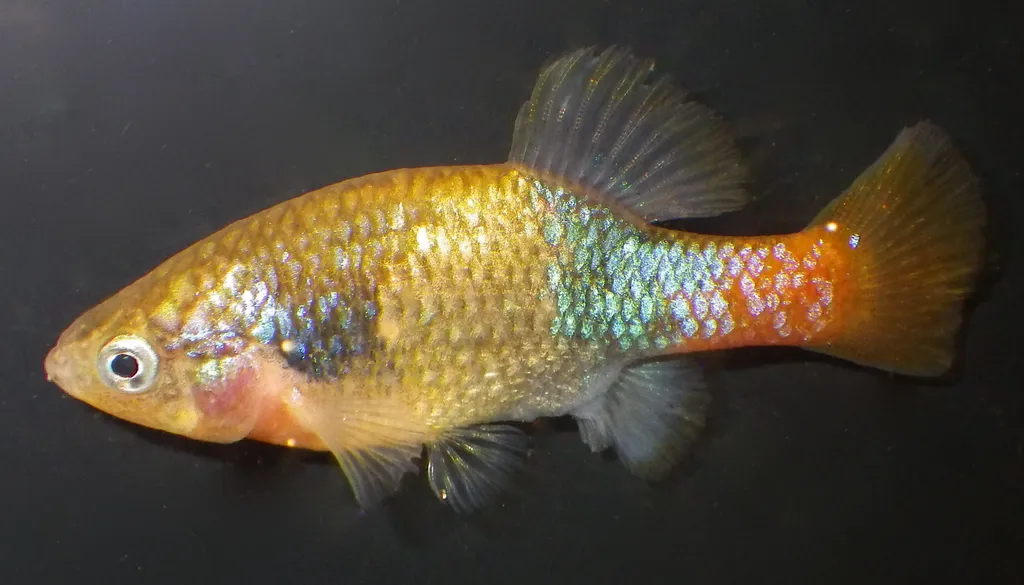
Males are slate-bodied with an orange tail band. The San Marcos goodeid is a livebearer with a gestation of roughly seven to eight weeks. Females give birth to a modest brood of well-developed young, and breeding is of moderate difficulty.
Good to know
The San Marcos goodeid, Xenotoca doadrioi, is a splitfin in the family Goodeidae. It was split from Xenotoca eiseni as its own species in 2016. It is now critically endangered in its shrinking Jalisco springs.
In the wild
The San Marcos goodeid comes from a small spring-fed system at San Marcos, in Jalisco, Mexico. Its home water is cool, hard and moving.
Common questions
What size tank does a San Marcos goodeid need?
A San Marcos goodeid needs at least 20 gal (75 L). It spends most of its time in the middle.
What temperature and pH does a San Marcos goodeid need?
A San Marcos goodeid is comfortable at 64–79°F (18–26°C) with a pH of 7.0–8.2.
What does a San Marcos goodeid eat?
A San Marcos goodeid eats regular flake and small frozen foods, plus vegetable and spirulina foods. It grazes plant matter in the wild.
How big does a San Marcos goodeid get?
An adult San Marcos goodeid reaches about 2 in (5 cm).
How can you tell a male San Marcos goodeid from a female?
Males are slate-bodied with an orange tail band.
How does a San Marcos goodeid breed?
San Marcos goodeids are livebearers with a gestation of roughly seven to eight weeks. A female gives birth to a modest brood of well-developed young, and breeding is of moderate difficulty.
Related species
 2.8 in (7 cm)20 gal (75 L)64–81°F (18–27°C)
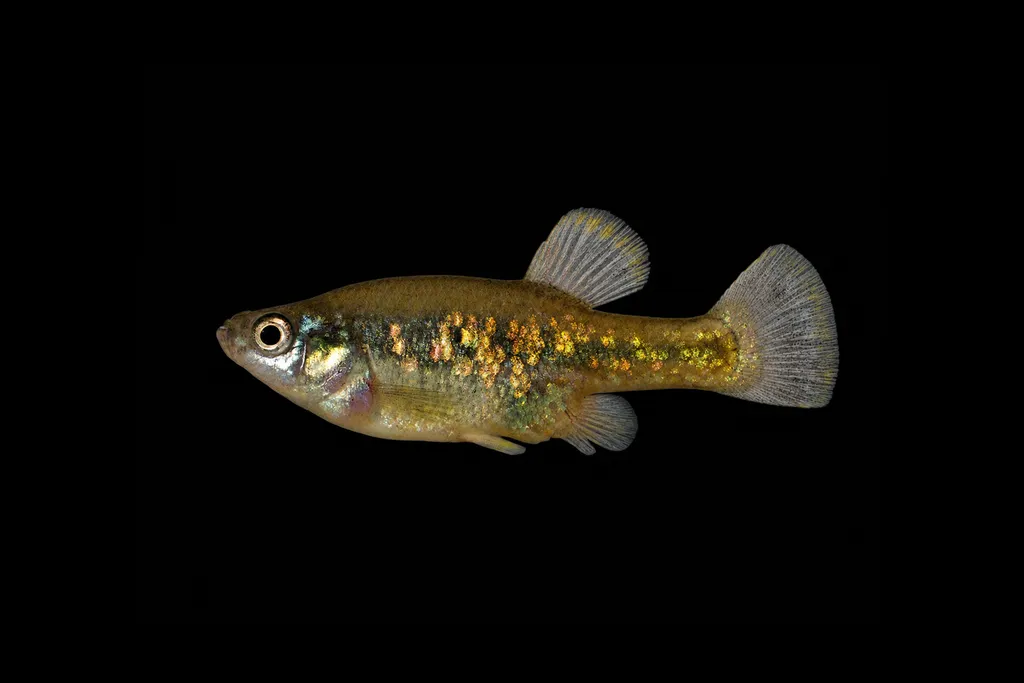
Jeweled splitfin
Xenotoca variata
2.8 in (7 cm) · 20 gal (75 L)
 2.8 in (7 cm)20 gal (75 L)64–82°F (18–28°C)
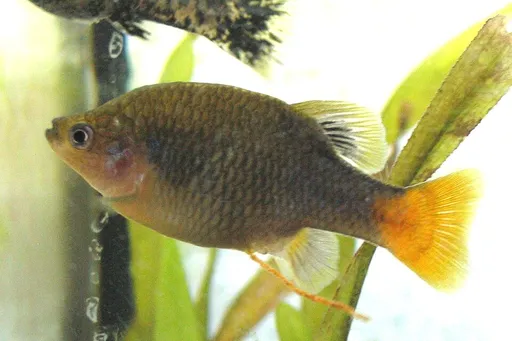
Redtail splitfin
Xenotoca eiseni
2.8 in (7 cm) · 20 gal (75 L)
 2.4 in (6 cm)16 gal (60 L)61–79°F (16–26°C)
Relict splitfin
Xenoophorus captivus
2.4 in (6 cm) · 16 gal (60 L)
 2.2 in (5.5 cm)16 gal (60 L)68–79°F (20–26°C)
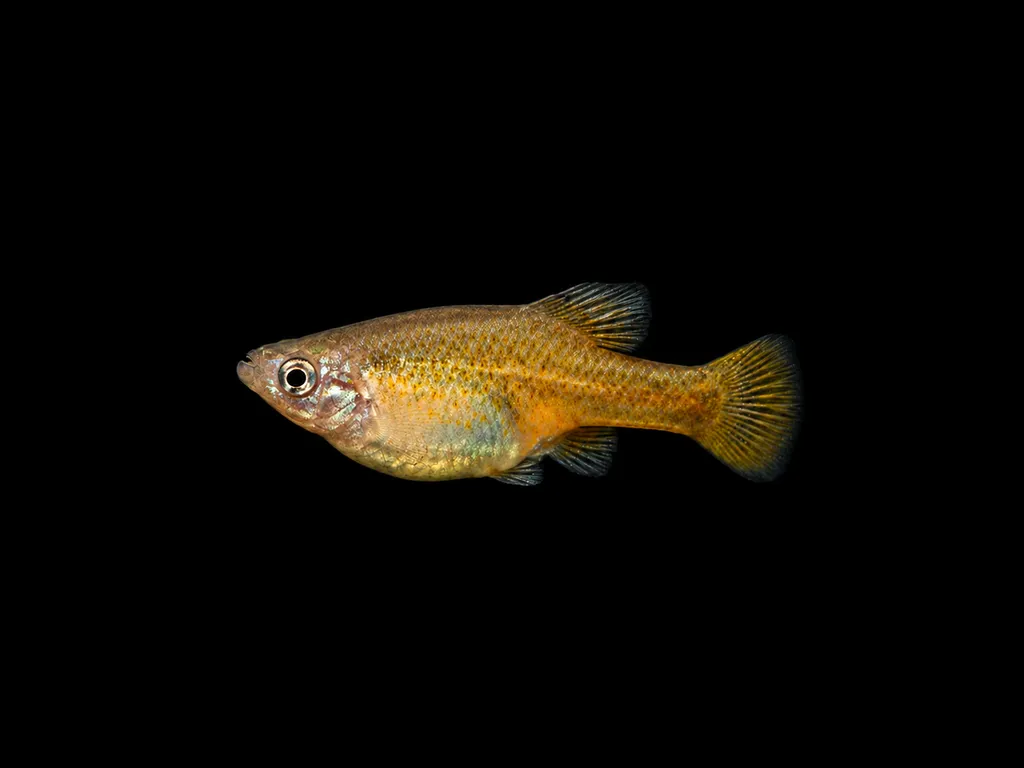
Golden skiffia
Skiffia francesae
2.2 in (5.5 cm) · 16 gal (60 L)
 2.4 in (6 cm)15 gal (57 L)61–75°F (16–24°C)
Rainbow goodeid
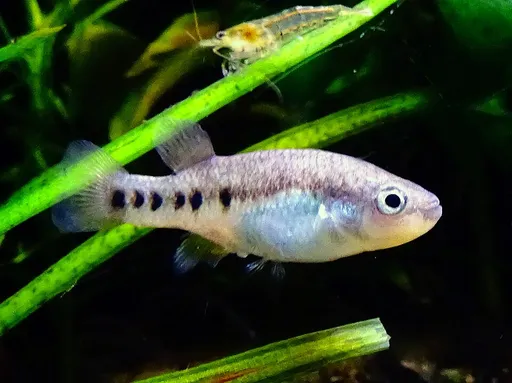
Characodon lateralis
2.4 in (6 cm) · 15 gal (57 L)
 2.4 in (6 cm)16 gal (60 L)68–79°F (20–26°C)
Spotted skiffia
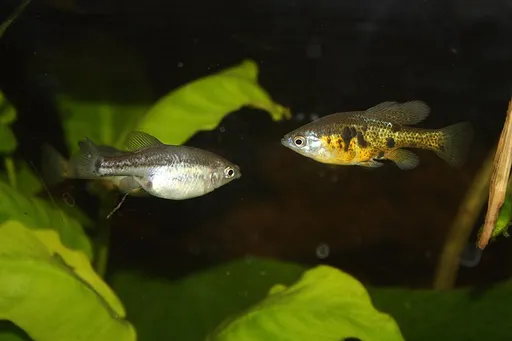
Skiffia multipunctata
2.4 in (6 cm) · 16 gal (60 L)