Wolf cichlid
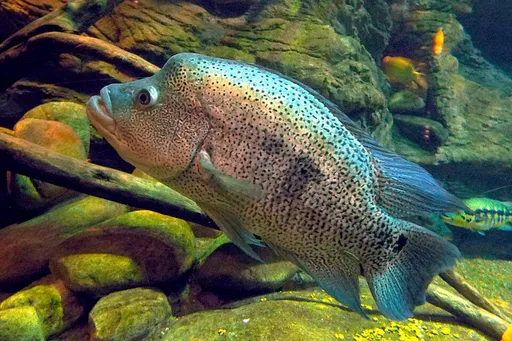
Parachromis dovii
Also known as Dovii, Guapote
FreshwaterFish
Care at a glance
- Temperature
- 75–82°F
- 24–28°C
- pH
- 6.8–7.6
- Adult size
- 27.6 in
- 70 cm
- Minimum tank
- 250 gal
- 946 L
- Temperament
- Aggressive
- Social behavior
- Solitary
- Tankmates
- With caution
- Swim level
- Middle
- Difficulty
- Difficult
- Breeding
- Hard
- Rarity
- Common
- Family
- Cichlidae
- Origin
- Central America (Atlantic and Pacific slopes, Honduras to Costa Rica)
Overview
Keep this one alone. It is an aggressive, solitary fish that patrols the whole tank from the middle and lower water, and it will eat any tankmate small enough to fit in its mouth and harass the rest. The only realistic grouping is a single bonded breeding pair, and even then pairing is risky since males often kill an unreceptive female, so a breeding setup needs 1500 liters or more with sight breaks and an escape route. Hold the water at 24 to 28 C and a pH of 6.8 to 7.6, and feed meaty foods like quality pellets, prawns, and earthworms rather than feeder fish. Use secure equipment and watch your hands during maintenance, since adults will bite. Never release one into local waters; as a large invasive predator it can wreck native fish, so rehome it instead and check your local rules.
In the wild
Wolf cichlids come from rivers and lakes across Central America, on both the Atlantic and Pacific slopes from Honduras down to Costa Rica. These are warm, open waterways with rock and structure where a big predator can hold territory. Give a single adult a tank of at least 946 liters with heavy rockwork or wood that is braced so it cannot be toppled, since this fish will rearrange anything loose. Sand or gravel both work for substrate. Keep the water tropical at 24 to 28 C, with a pH from 6.8 to 7.6, and run strong, oversized filtration to keep up with the heavy waste load.
Good to know
This is Parachromis dovii, a large predatory cichlid in the family Cichlidae and one of the biggest Central American cichlids kept in the hobby. Males reach about 70 cm, with FishBase listing a maximum near 72 cm total length, while females stay smaller at roughly 35 to 45 cm. It is an open-substrate spawner that lays eggs on a cleaned rock or surface, and both parents guard the brood. A healthy adult is long lived, often well over a decade.
Did you know
Big males develop a bright golden, spotted body with a turquoise sheen as they mature, which is why the fish is sometimes sold as the guapote. The color often deepens when a male is holding territory or guarding a spawn, so a settled adult in his own tank tends to look far better than a stressed youngster in a crowded one.
Common questions
What size tank does a Wolf cichlid need?
A Wolf cichlid needs at least 250 gal (946 L). It spends most of its time in the middle.
What temperature and pH does a Wolf cichlid need?
A Wolf cichlid is comfortable at 75–82°F (24–28°C) with a pH of 6.8–7.6.
How big does a Wolf cichlid get?
An adult Wolf cichlid reaches about 27.6 in (70 cm).
Related species
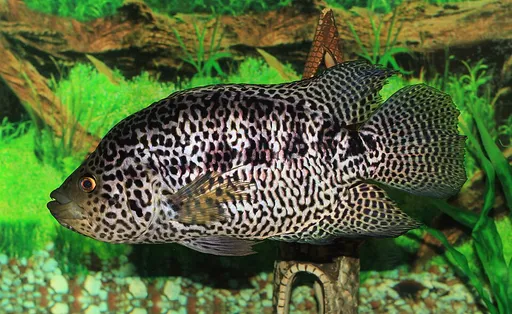 15.7 in (40 cm)119 gal (450 L)75–82°F (24–28°C)
Jaguar cichlid
Parachromis managuensis
15.7 in (40 cm) · 119 gal (450 L)
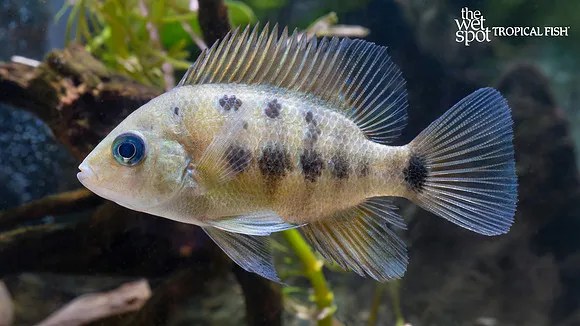 11.8 in (30 cm)100 gal (380 L)75–82°F (24–28°C)
Red tiger motaguense
Parachromis motaguensis
11.8 in (30 cm) · 100 gal (380 L)
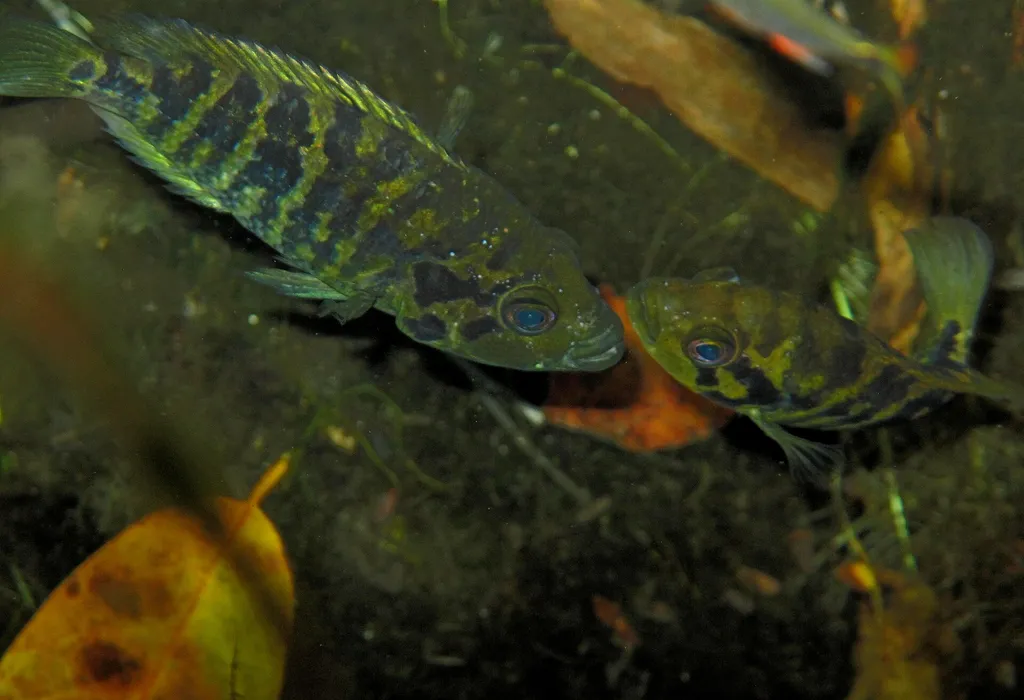 13 in (33 cm)132 gal (500 L)75–84°F (24–29°C)
Yellowjacket cichlid
Parachromis friedrichsthalii
13 in (33 cm) · 132 gal (500 L)
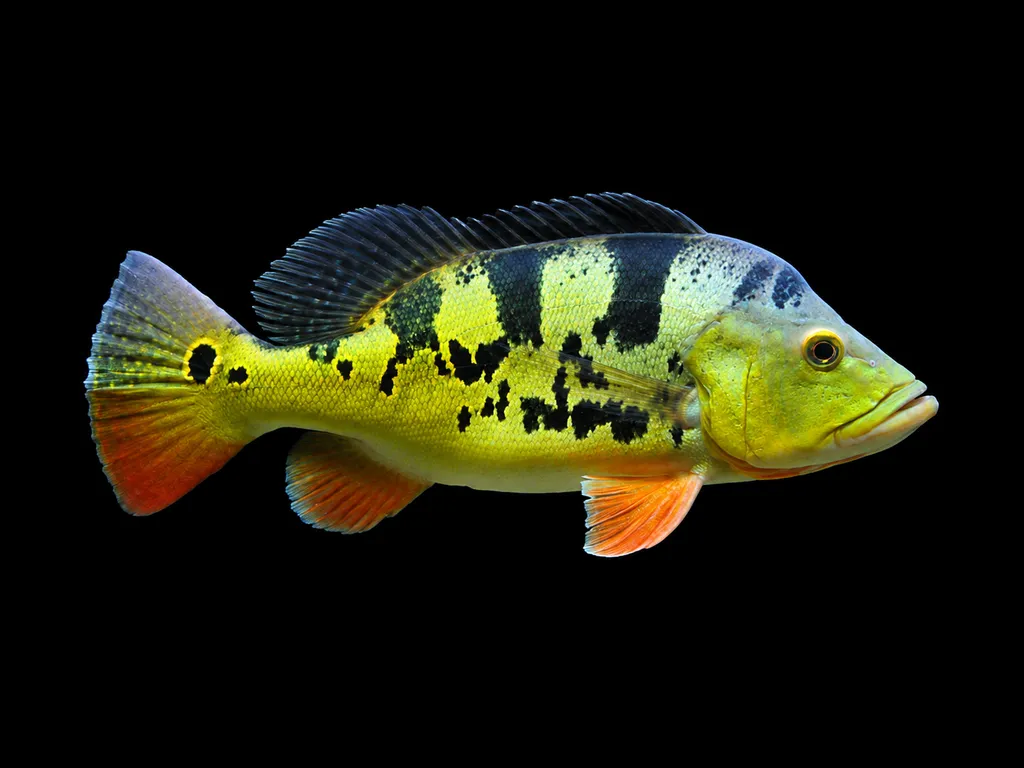 27.6 in (70 cm)528 gal (2,000 L)77–86°F (25–30°C)
Monoculus peacock bass
Cichla monoculus
27.6 in (70 cm) · 528 gal (2,000 L)
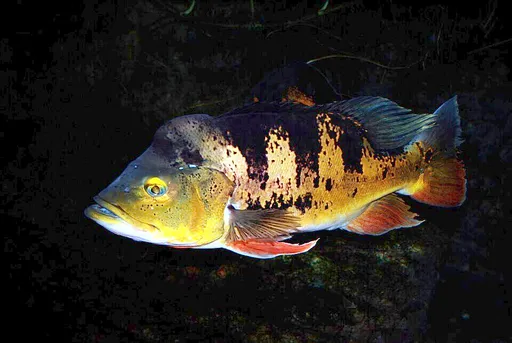 29.1 in (74 cm)211 gal (800 L)75–82°F (24–28°C)
Butterfly peacock bass
Cichla ocellaris
29.1 in (74 cm) · 211 gal (800 L)
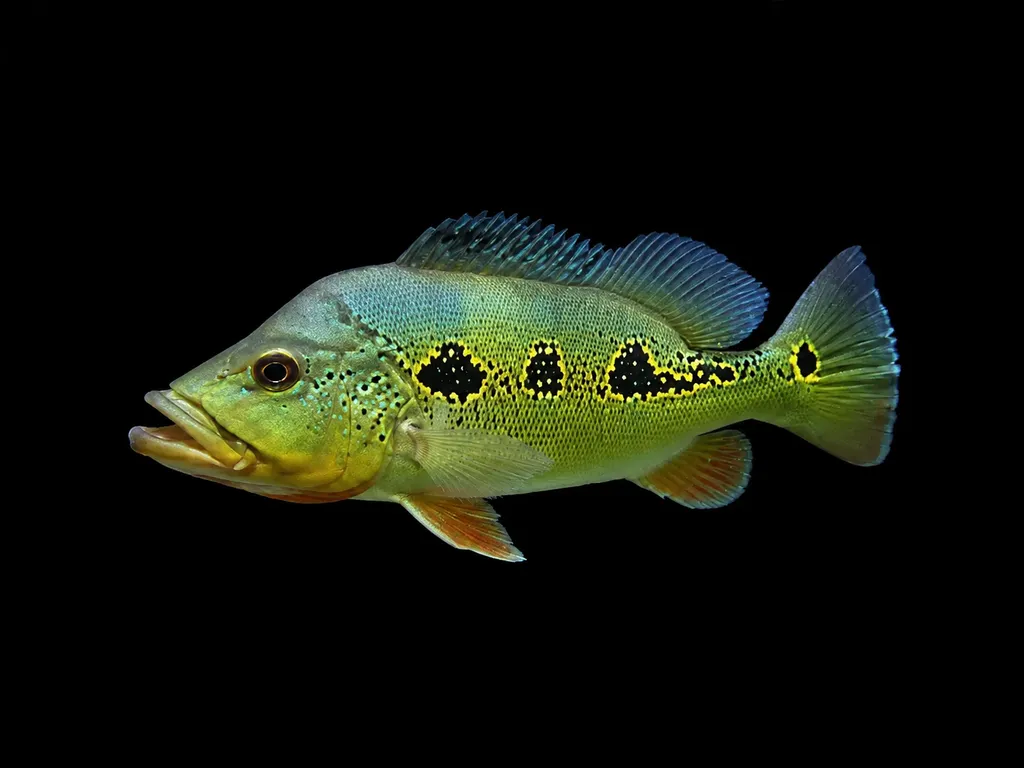 24.4 in (62 cm)528 gal (2,000 L)77–86°F (25–30°C)
Orinoco peacock bass
Cichla orinocensis
24.4 in (62 cm) · 528 gal (2,000 L)