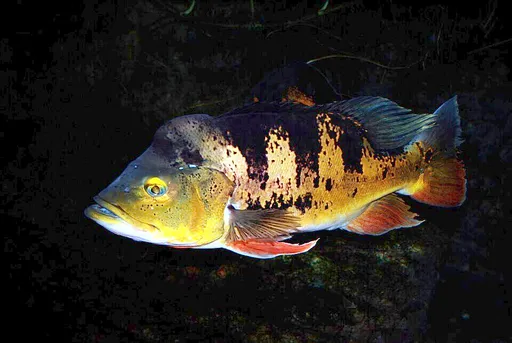
Butterfly peacock bass
Cichla ocellaris
Also known as Peacock bass, Peacock cichlid, Lukanani, Tucunare, Eyespot cichlid
FreshwaterFish
Care at a glance
- Temperature
- 75–82°F
- 24–28°C
- pH
- 6.0–7.5
- Adult size
- 29.1 in
- 74 cm
- Minimum tank
- 211 gal
- 800 L
- Temperament
- Aggressive
- Social behavior
- Social
- Tankmates
- With caution
- Swim level
- Middle
- Difficulty
- Difficult
- Breeding
- Hard
- Rarity
- Common
- Family
- Cichlidae
- Origin
- Coastal Guiana Shield rivers from the Marowijne in Suriname to the Essequibo in Guyana, plus the Branco River in Brazil, in warm rocky-bottomed reaches.
Overview
A single adult needs a tank of at least 800 liters at 24 to 28 C and pH 6.0 to 7.5, and juveniles are usually grown out in groups. Provide strong filtration, since these fish are large and messy eaters. Feed meaty foods and pellets built for predators, and avoid live feeder fish that carry disease. Tankmates must be large and robust, since anything small becomes prey.
In the wild
The butterfly peacock bass is native to coastal rivers of the Guiana Shield, from the Marowijne in Suriname to the Essequibo in Guyana, plus the Branco River in Brazil. It hunts in warm, rocky-bottomed river stretches and quiet pools. This is an open-water predator that grows very large. It needs a huge tank with long, open swimming lanes.
Good to know
Cichla ocellaris was described by Bloch and Schneider in 1801 and reaches about 74 cm. The name was long applied across the whole genus, so many aquarium fish sold as ocellaris are actually Cichla monoculus or Cichla kelberi. Adults carry three dark bars and a caudal eyespot.
Did you know
It is a prized sport fish and has been introduced to warm waters worldwide, including Florida, Hawaii, and Singapore.
Common questions
What size tank does a Butterfly peacock bass need?
A Butterfly peacock bass needs at least 211 gal (800 L). It spends most of its time in the middle.
What temperature and pH does a Butterfly peacock bass need?
A Butterfly peacock bass is comfortable at 75–82°F (24–28°C) with a pH of 6.0–7.5.
How big does a Butterfly peacock bass get?
An adult Butterfly peacock bass reaches about 29.1 in (74 cm).
Related species
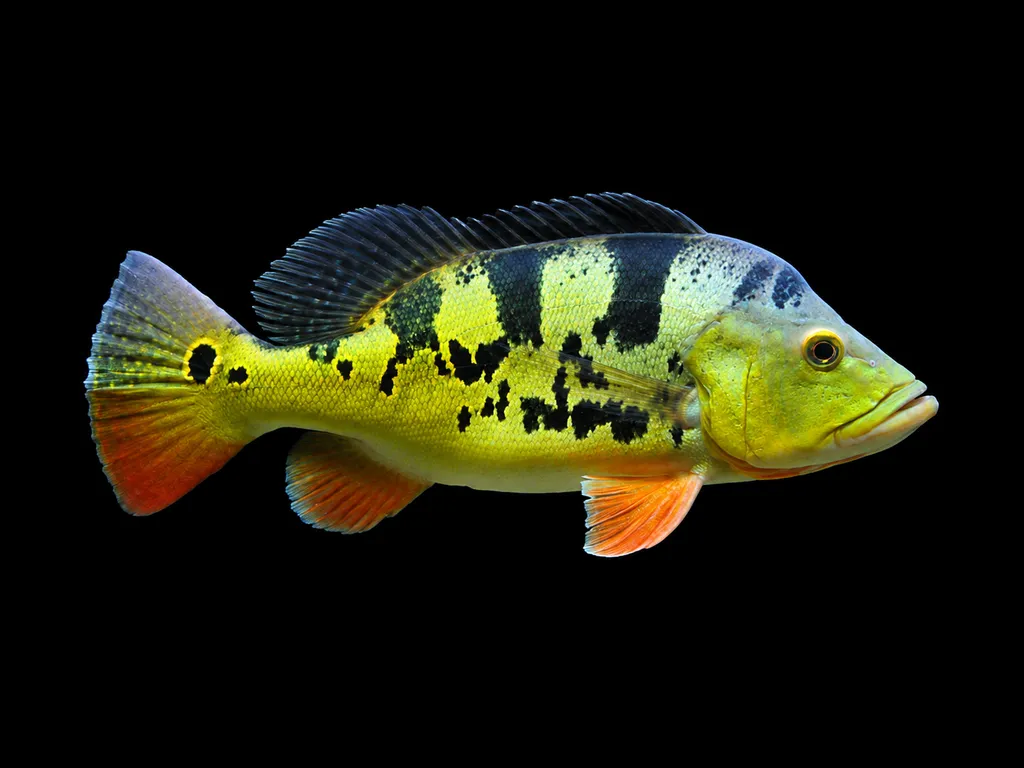 27.6 in (70 cm)528 gal (2,000 L)77–86°F (25–30°C)
Monoculus peacock bass
Cichla monoculus
27.6 in (70 cm) · 528 gal (2,000 L)
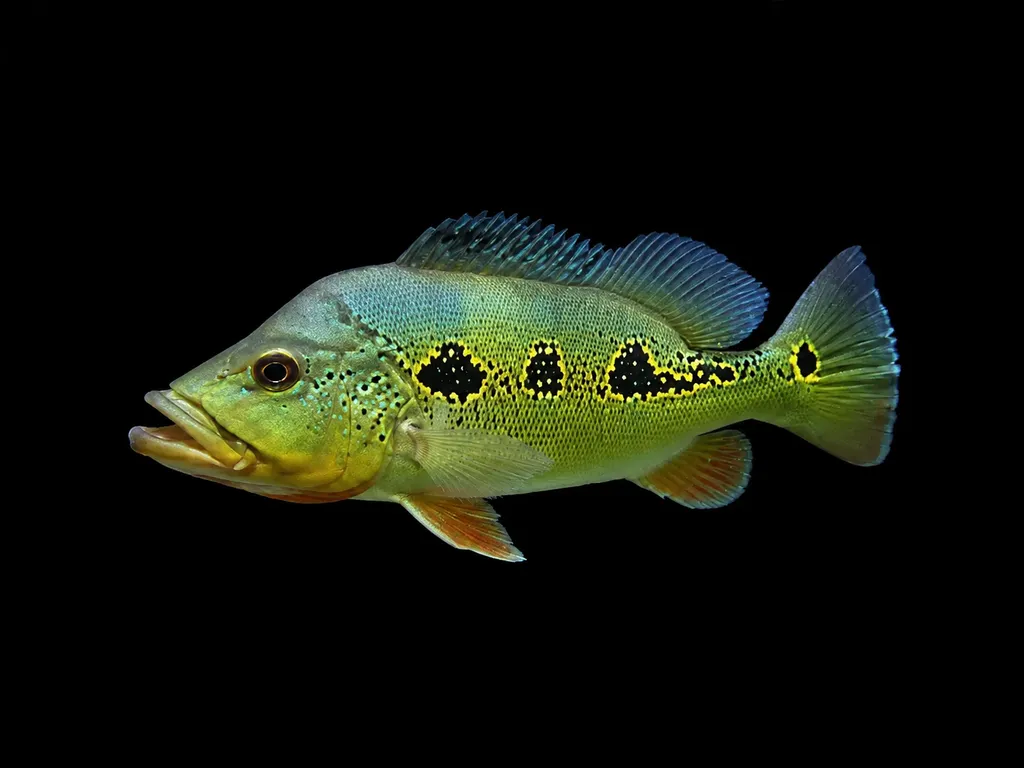 24.4 in (62 cm)528 gal (2,000 L)77–86°F (25–30°C)
Orinoco peacock bass
Cichla orinocensis
24.4 in (62 cm) · 528 gal (2,000 L)
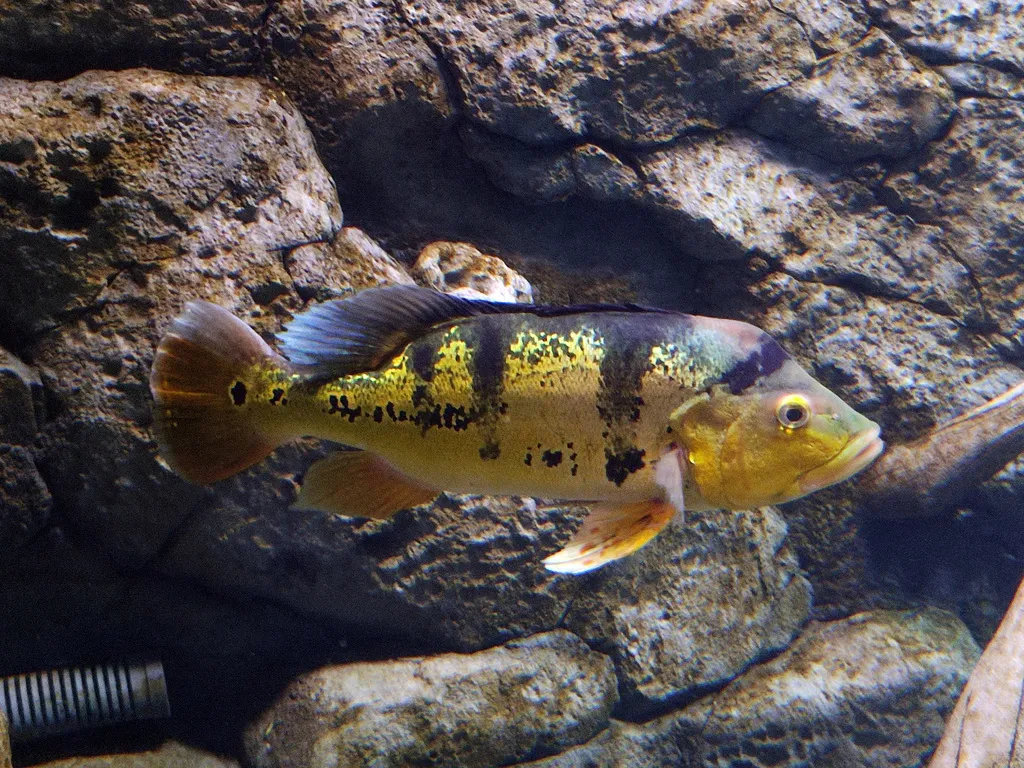 23.6 in (60 cm)396 gal (1,500 L)77–86°F (25–30°C)
Kelberi peacock bass
Cichla kelberi
23.6 in (60 cm) · 396 gal (1,500 L)
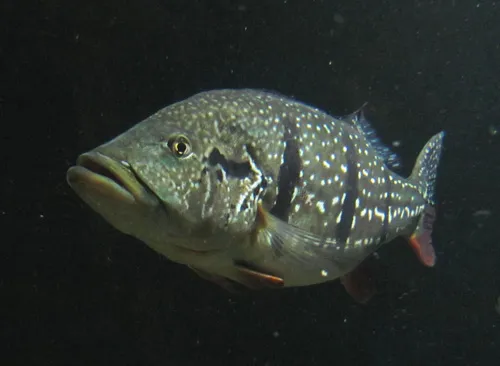 39 in (99 cm)396 gal (1,500 L)79–84°F (26–29°C)
Speckled peacock bass
Cichla temensis
39 in (99 cm) · 396 gal (1,500 L)
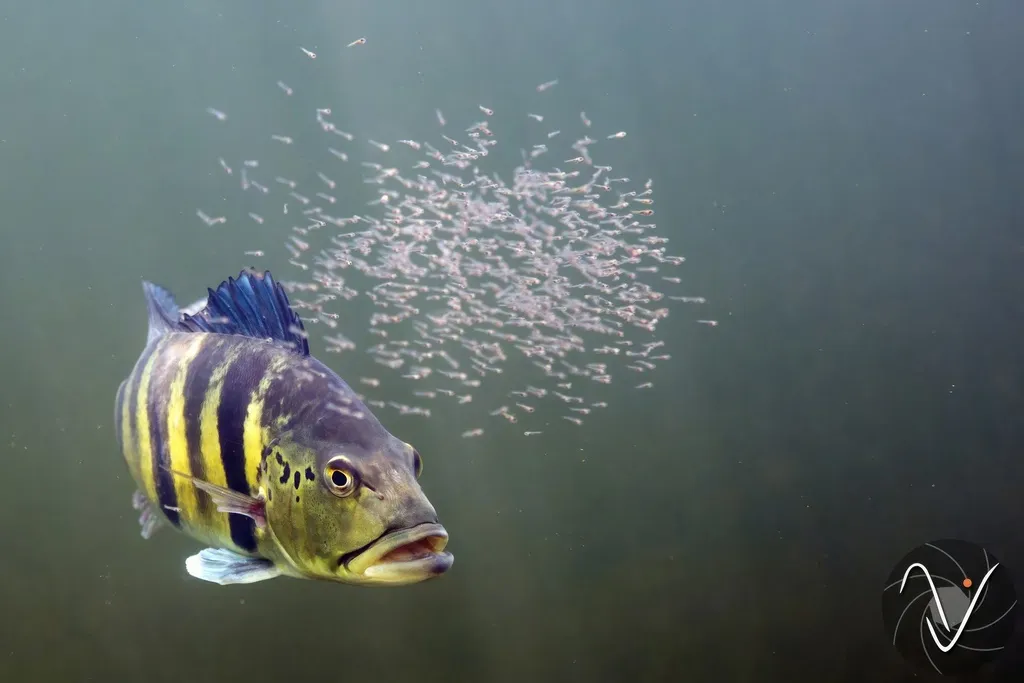 18.9 in (48 cm)396 gal (1,500 L)77–86°F (25–30°C)
Blue peacock bass
Cichla piquiti
18.9 in (48 cm) · 396 gal (1,500 L)
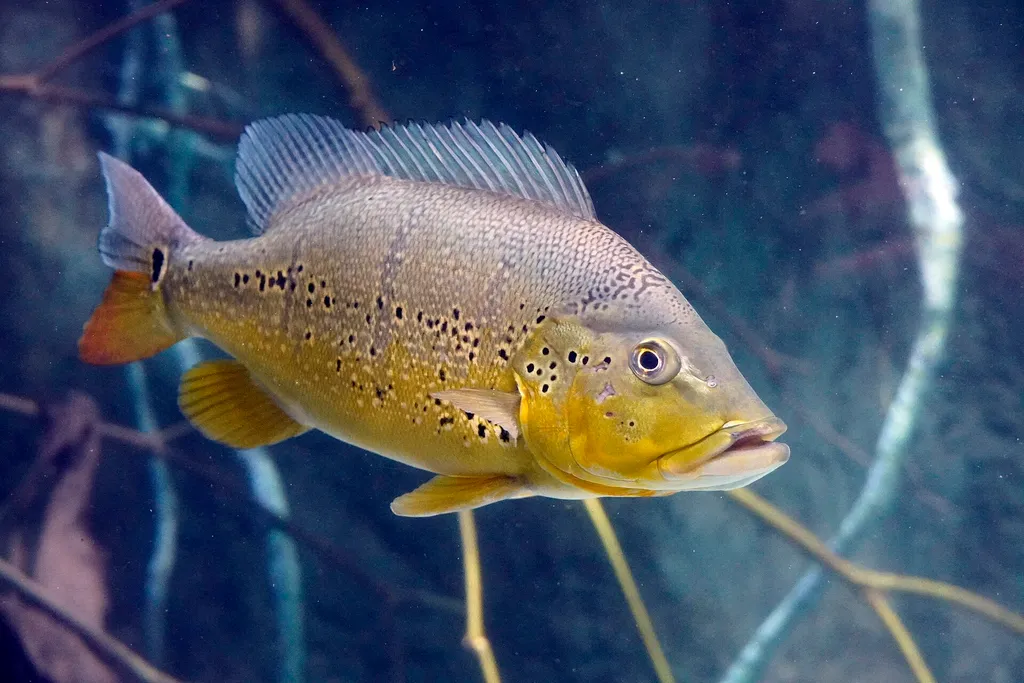 14.2 in (36 cm)317 gal (1,200 L)77–86°F (25–30°C)
Xingu peacock bass
Cichla melaniae
14.2 in (36 cm) · 317 gal (1,200 L)