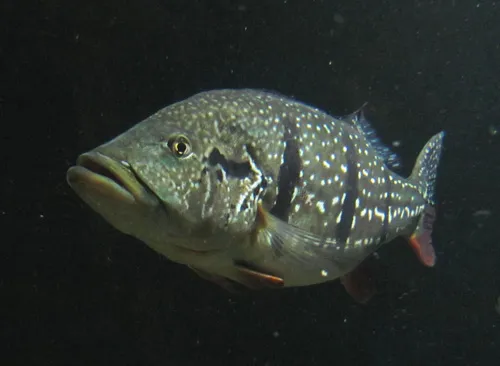
Speckled peacock bass
Cichla temensis
Also known as Speckled pavon, Painted peacock bass, Tucunare acu, Three-barred peacock bass, Spot line peacock bass
FreshwaterFish
Care at a glance
- Temperature
- 79–84°F
- 26–29°C
- pH
- 5.0–7.0
- Adult size
- 39 in
- 99 cm
- Minimum tank
- 396 gal
- 1,500 L
- Temperament
- Aggressive
- Social behavior
- Social
- Tankmates
- With caution
- Swim level
- Middle
- Difficulty
- Difficult
- Breeding
- Hard
- Rarity
- Common
- Family
- Cichlidae
- Origin
- Rio Negro and Orinoco basins in Brazil, Venezuela, and Colombia, in slow, warm blackwater rivers, lagoons, and flooded forest.
Overview
A single adult needs a tank of at least 1500 liters at 26 to 29 C and pH 5.0 to 7.0, with heavy filtration. Provide long, open swimming lanes and robust equipment. Feed meaty predator foods and pellets, and never live feeder fish. Only very large, tough tankmates are safe, and most keepers house it alone.
In the wild
The speckled peacock bass lives in the Rio Negro and Orinoco basins in Brazil, Venezuela, and Colombia. It hunts in slow, warm blackwater rivers, lagoons, and flooded forest. This is the largest cichlid in the Americas and an open-water predator. It needs an enormous tank and is realistic only for the most dedicated keepers.
Good to know
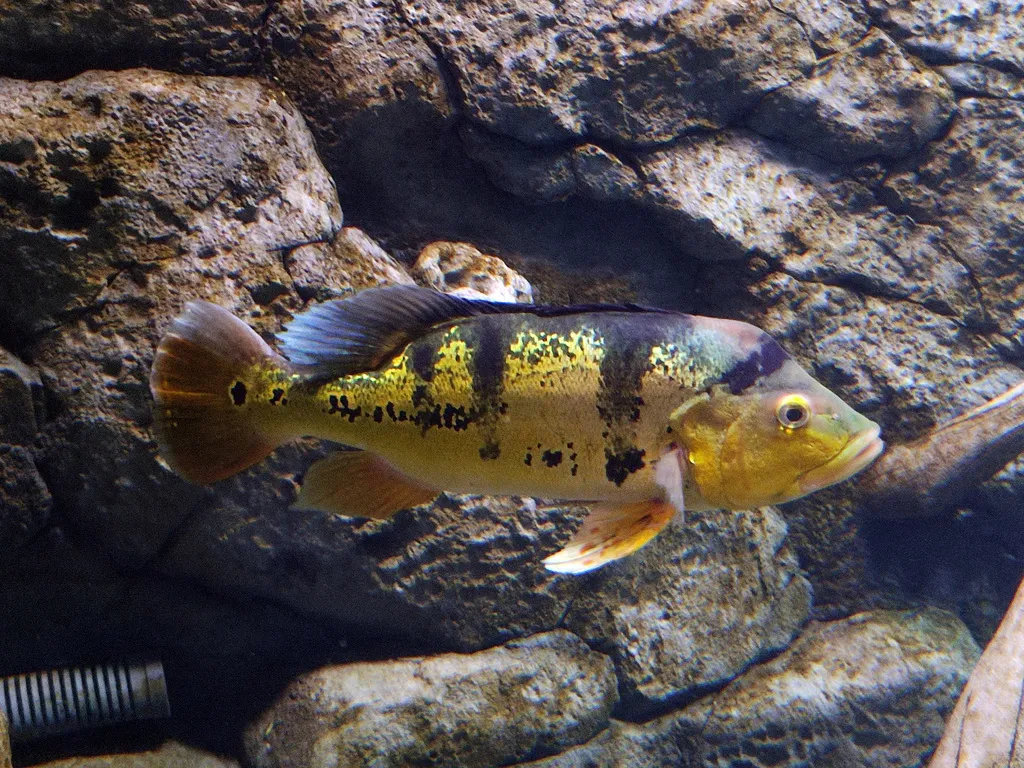
Cichla temensis was described by Humboldt in 1821 and reaches about 99 cm and over 12 kg, making it one of the largest cichlids in the world. It shifts seasonally between a pale-spotted phase and a dark, barred breeding phase. It is a premier Amazon sport fish.
Did you know
It holds the all-tackle angling record among peacock bass and can change its color pattern dramatically with the seasons.
Common questions
What size tank does a Speckled peacock bass need?
A Speckled peacock bass needs at least 396 gal (1,500 L). It spends most of its time in the middle.
What temperature and pH does a Speckled peacock bass need?
A Speckled peacock bass is comfortable at 79–84°F (26–29°C) with a pH of 5.0–7.0.
How big does a Speckled peacock bass get?
An adult Speckled peacock bass reaches about 39 in (99 cm).
Related species
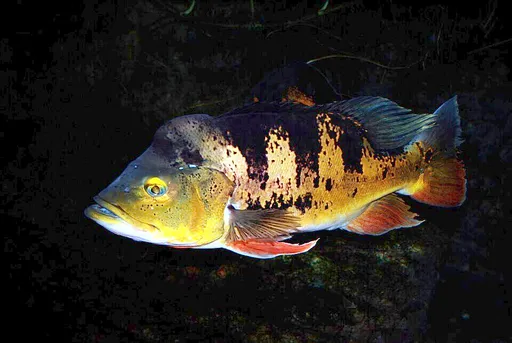 29.1 in (74 cm)211 gal (800 L)75–82°F (24–28°C)
Butterfly peacock bass
Cichla ocellaris
29.1 in (74 cm) · 211 gal (800 L)
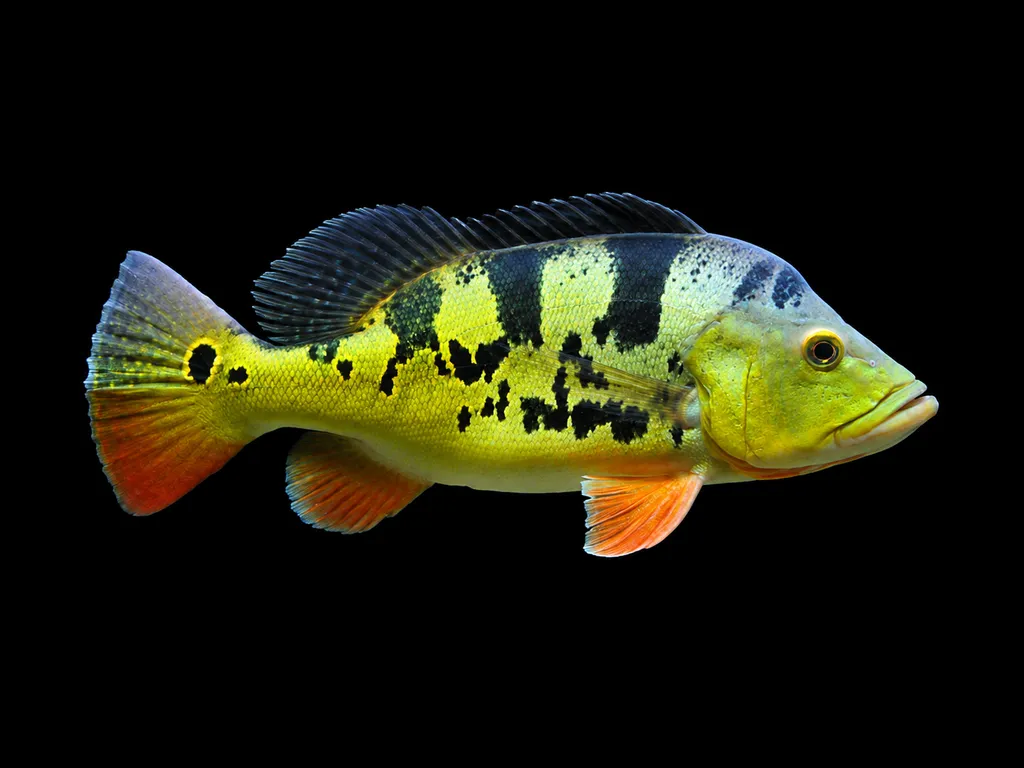 27.6 in (70 cm)528 gal (2,000 L)77–86°F (25–30°C)
Monoculus peacock bass
Cichla monoculus
27.6 in (70 cm) · 528 gal (2,000 L)
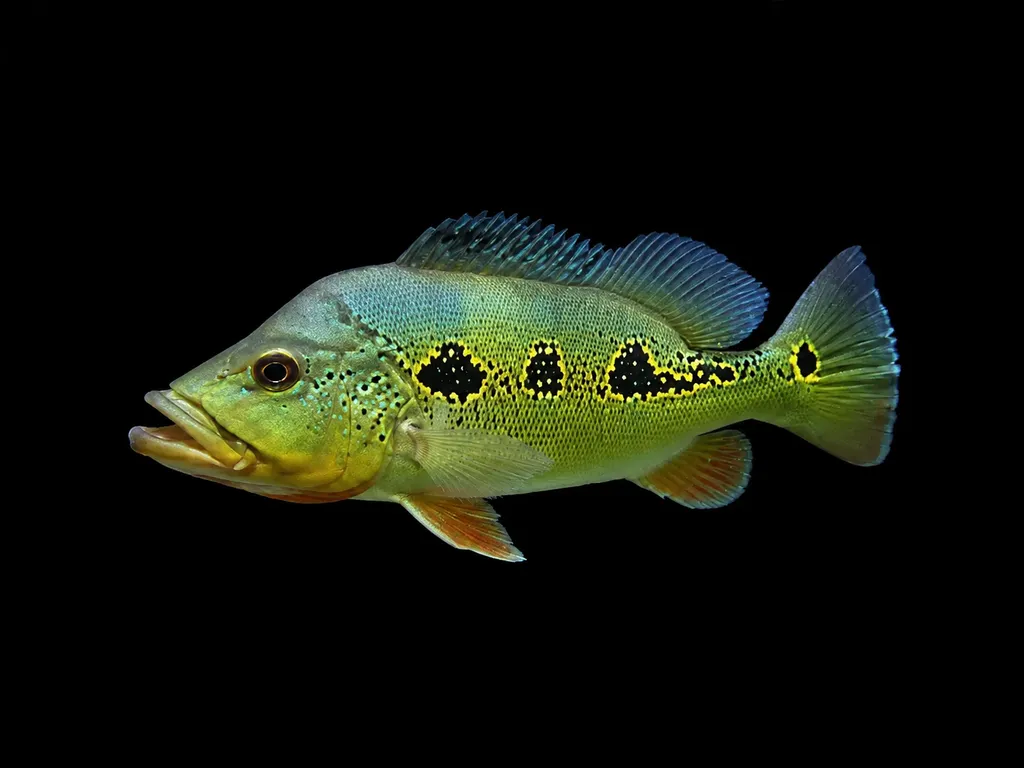 24.4 in (62 cm)528 gal (2,000 L)77–86°F (25–30°C)
Orinoco peacock bass
Cichla orinocensis
24.4 in (62 cm) · 528 gal (2,000 L)
 23.6 in (60 cm)396 gal (1,500 L)77–86°F (25–30°C)
Kelberi peacock bass
Cichla kelberi
23.6 in (60 cm) · 396 gal (1,500 L)
 18.9 in (48 cm)396 gal (1,500 L)77–86°F (25–30°C)
Blue peacock bass
Cichla piquiti
18.9 in (48 cm) · 396 gal (1,500 L)
 14.2 in (36 cm)317 gal (1,200 L)77–86°F (25–30°C)
Xingu peacock bass
Cichla melaniae
14.2 in (36 cm) · 317 gal (1,200 L)