Monoculus peacock bass
Cichla monoculus
Also known as Popoca peacock bass, Mono peacock bass
FreshwaterFish
Care at a glance
- Temperature
- 77–86°F
- 25–30°C
- pH
- 6.0–7.5
- Adult size
- 27.6 in
- 70 cm
- Minimum tank
- 898 gal
- 3,400 L
- Temperament
- Aggressive
- Social behavior
- Solitary
- Tankmates
- With caution
- Swim level
- Middle
- Diet
- Carnivore
- Difficulty
- Difficult
- Breeding
- Substrate spawner · Hard
- Rarity
- Rare
- Family
- Cichlidae
- Origin
- Amazon lowlands
Overview
The Monoculus peacock bass is a pond-scale predator that outgrows almost every home aquarium. It is a fish for experienced keepers, and a decades-long commitment.
Did you know
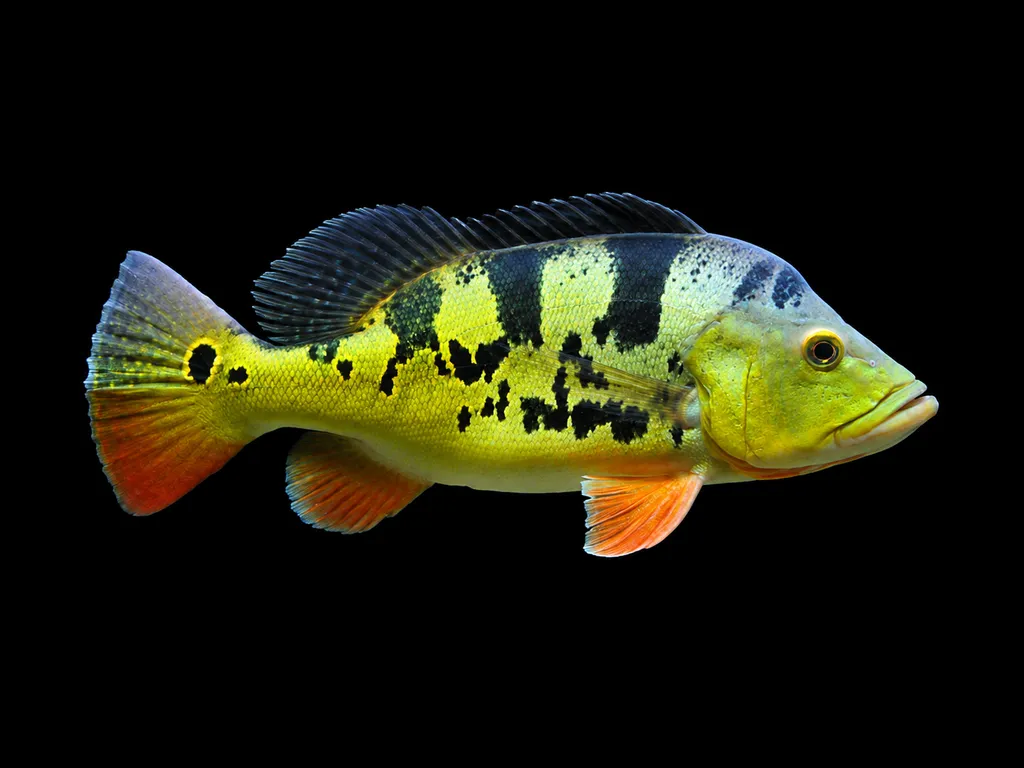
The dark eyespot near the tail of the Monoculus peacock bass is thought to work as a decoy. It mimics the real eye and may draw fin-nipping attackers toward the tail end instead of the head.
Caring for the Monoculus peacock bass
Keep a single Monoculus peacock bass on its own, in at least 898 gal (3,400 L), which is really an indoor pond. Provide a large open swimming area over sand, with big pieces of wood for structure.
Give it warm, soft to neutral water at 77 to 86°F (25 to 30°C) and a pH of 6.0 to 7.5. It takes a lower pH well. Run heavy mechanical and biological filtration and current, since a fish this size produces a heavy load of waste.
Feed meaty foods such as whole fish, prawn and large sinking pellets. It is a strong, active swimmer that patrols the middle water and will eat any tank mate it can fit in its mouth. Companions have to be large, fast and chosen with great care, if you keep any at all.
Like other peacock bass, it is a biparental substrate spawner that cleans a site, lays a large clutch and guards the fry fiercely. Breeding one indoors is hard, simply because of the space a pair demands.
Good to know
Cichla monoculus belongs to the cichlid family and is a giant among aquarium fish. It was described by Agassiz in 1831, and its name means one-eyed, for the single large eyespot at the base of the tail.
In the wild
Cichla monoculus ranges through the warm lowland Amazon, hunting in lakes, lagoons and slow channels. Its natural water is often quite acidic.
Common questions
What size tank does a Monoculus peacock bass need?
A Monoculus peacock bass needs at least 898 gal (3,400 L). It spends most of its time in the middle.
What temperature and pH does a Monoculus peacock bass need?
A Monoculus peacock bass is comfortable at 77–86°F (25–30°C) with a pH of 6.0–7.5.
What does a Monoculus peacock bass eat?
A Monoculus peacock bass is a predator that eats meaty foods, such as whole fish, prawn and large sinking pellets.
How big does a Monoculus peacock bass get?
An adult Monoculus peacock bass reaches about 27.6 in (70 cm).
How does a Monoculus peacock bass breed?
Monoculus peacock bass are biparental substrate spawners that clean a site, lay a large clutch and guard the fry fiercely. Breeding them indoors is hard, simply because of the space a pair demands.
Related species
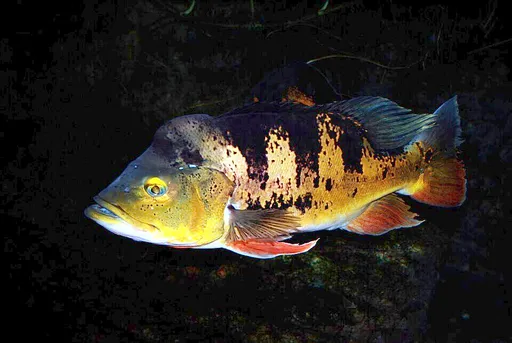 29.1 in (74 cm)898 gal (3,400 L)75–82°F (24–28°C)
Butterfly peacock bass
Cichla ocellaris
29.1 in (74 cm) · 898 gal (3,400 L)
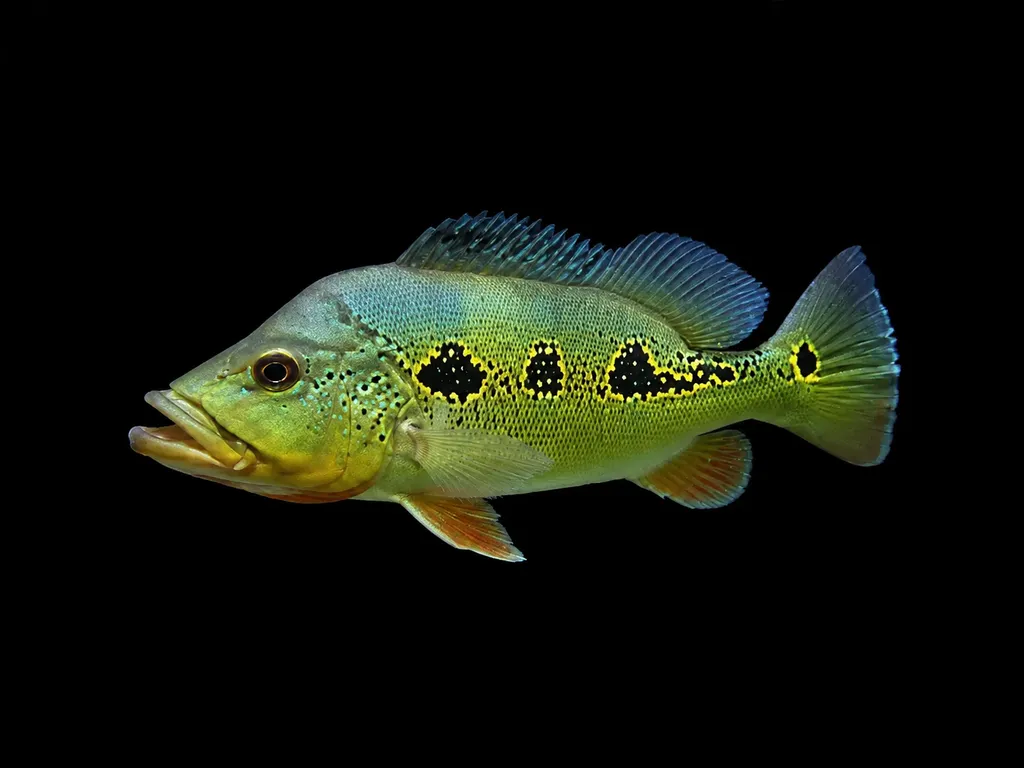 24.4 in (62 cm)528 gal (2,000 L)77–86°F (25–30°C)
Orinoco peacock bass
Cichla orinocensis
24.4 in (62 cm) · 528 gal (2,000 L)
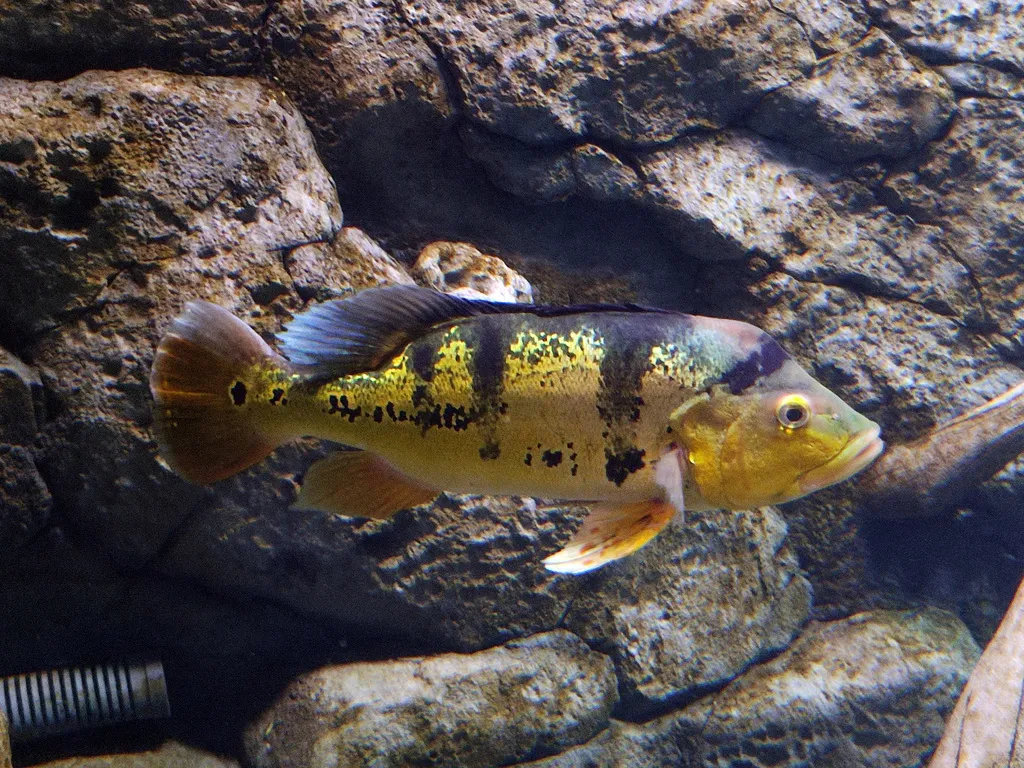 23.6 in (60 cm)396 gal (1,500 L)77–86°F (25–30°C)
Kelberi peacock bass
Cichla kelberi
23.6 in (60 cm) · 396 gal (1,500 L)
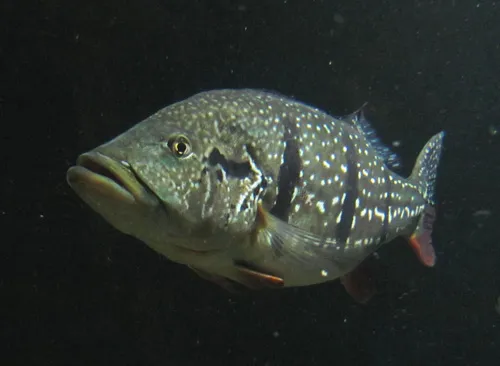 39 in (99 cm)898 gal (3,400 L)79–84°F (26–29°C)
Speckled peacock bass
Cichla temensis
39 in (99 cm) · 898 gal (3,400 L)
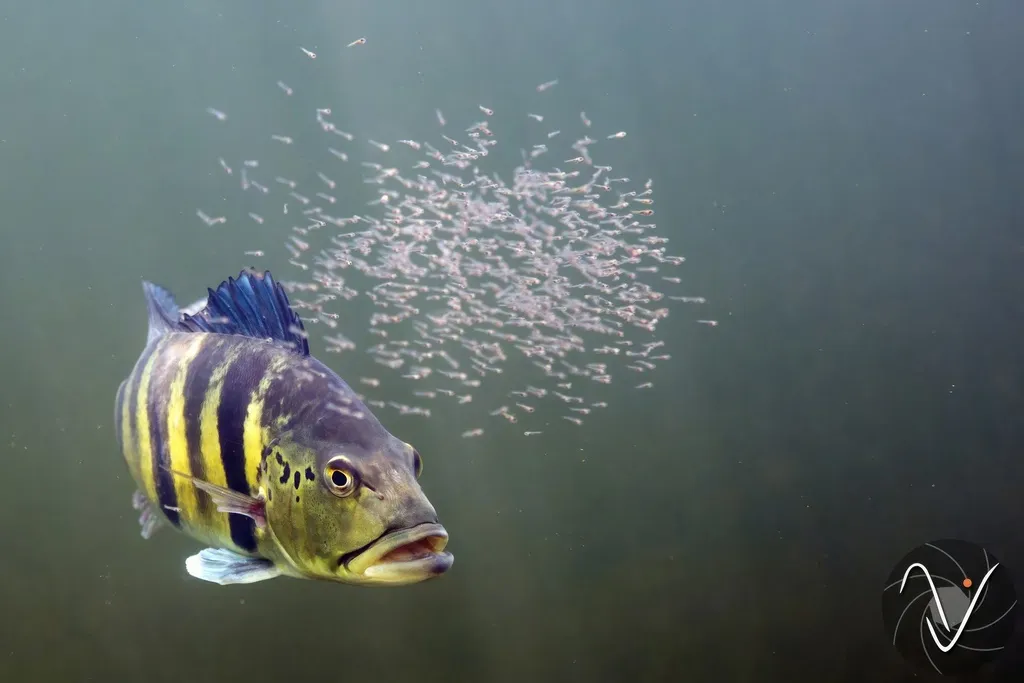 18.9 in (48 cm)396 gal (1,500 L)77–86°F (25–30°C)
Blue peacock bass
Cichla piquiti
18.9 in (48 cm) · 396 gal (1,500 L)
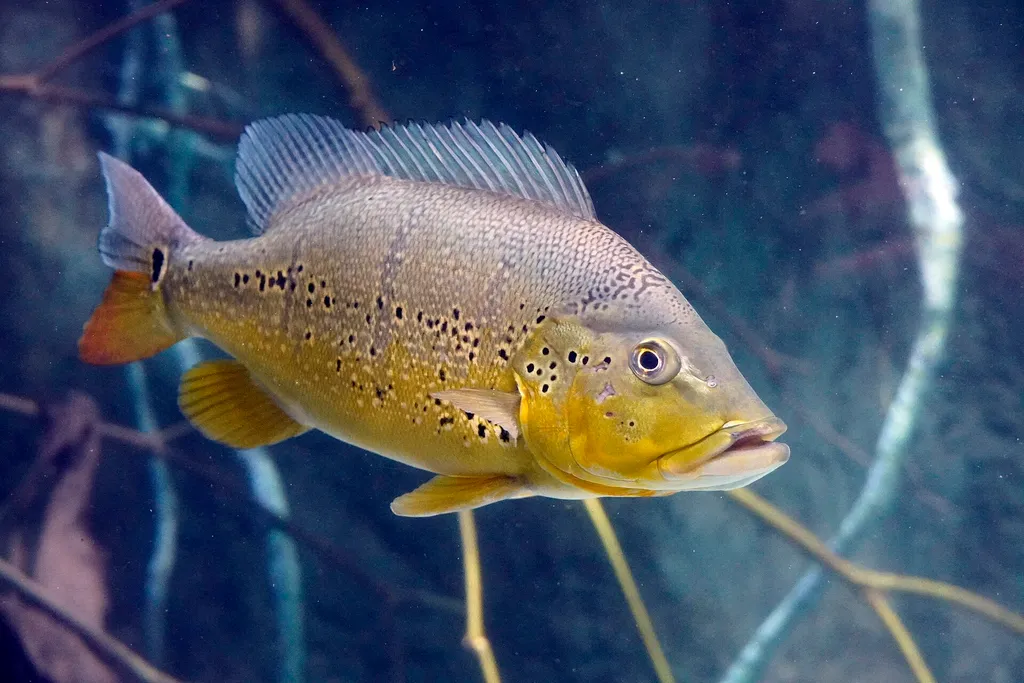 14.2 in (36 cm)317 gal (1,200 L)77–86°F (25–30°C)
Xingu peacock bass
Cichla melaniae
14.2 in (36 cm) · 317 gal (1,200 L)