Tuxedo urchin
Mespilia globulus
Also known as Sphere Urchin, Blue Tuxedo Urchin, Globe Urchin
SaltwaterInvertebrate
Care at a glance
- Temperature
- 72–79°F
- 22–26°C
- pH
- 8.1–8.4
- Adult size
- 3.1 in
- 8 cm
- Minimum tank
- 20 gal
- 75 L
- Temperament
- Peaceful
- Social behavior
- Solitary
- Swim level
- Bottom
- Difficulty
- Easy
- Breeding
- No record
- Rarity
- Common
- Reef safe
- Reef safe with caution
- Family
- Temnopleuridae
- Origin
- Indo-Pacific, common on rubble and reef flats from the Red Sea and East Africa through Indonesia and the western Pacific
Overview
A peaceful bottom-dwelling grazer that spends its time mowing algae off rock and glass. Keep one per tank as they need a lot of grazing surface. Slow drip acclimation is important because urchins react badly to sudden shifts in salinity, pH, or temperature.
In the wild
Found on shallow Indo-Pacific reef flats and rubble zones where it grazes film algae off rock and hard surfaces. In the aquarium it wanders the rockwork and glass day and night, often decorating itself with bits of shell, rubble, or coral frags it picks up. It needs a mature tank with a steady supply of algae to graze, plus dried seaweed if the film algae runs low.
Good to know
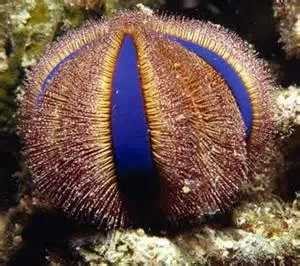
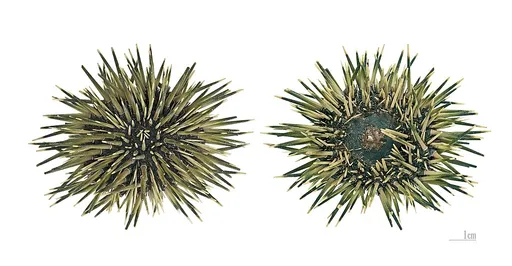
Mespilia globulus is a regular urchin in the family Temnopleuridae, recognizable by five broad bands of tightly packed short spines (usually blue or black) separating five bare test zones. Like other echinoids it moves on tube feet and grazes with a five-toothed Aristotle's lantern. It is highly sensitive to copper-based medications and elevated nitrate, and spine loss is an early sign of poor water quality or a stalled acclimation.
Did you know
It routinely piles shells, rubble, and stray coral frags onto its top as camouflage, so keepers often find their loose frags rearranged around the tank.
Common questions
What size tank does a Tuxedo urchin need?
A Tuxedo urchin needs at least 20 gal (75 L). It spends most of its time in the bottom.
What temperature and pH does a Tuxedo urchin need?
A Tuxedo urchin is comfortable at 72–79°F (22–26°C) with a pH of 8.1–8.4.
How big does a Tuxedo urchin get?
An adult Tuxedo urchin reaches about 3.1 in (8 cm).
Related species
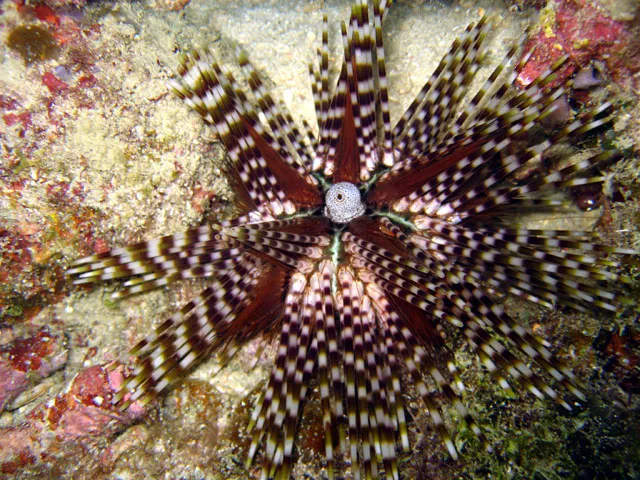 3.1 in (8 cm)50 gal (190 L)72–79°F (22–26°C)
Banded urchin
Echinothrix calamaris
3.1 in (8 cm) · 50 gal (190 L)
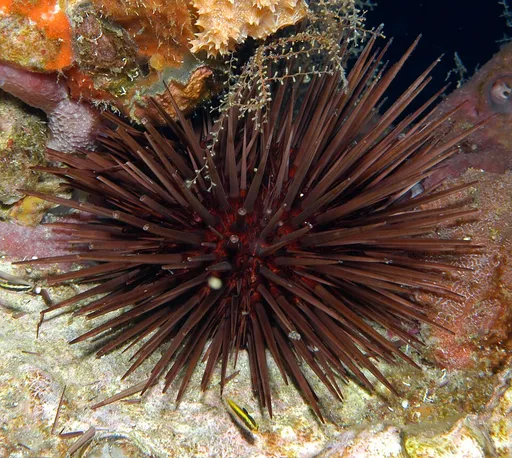 3.1 in (8 cm)20 gal (75 L)68–81°F (20–27°C)
Purple urchin
Arbacia punctulata
3.1 in (8 cm) · 20 gal (75 L)
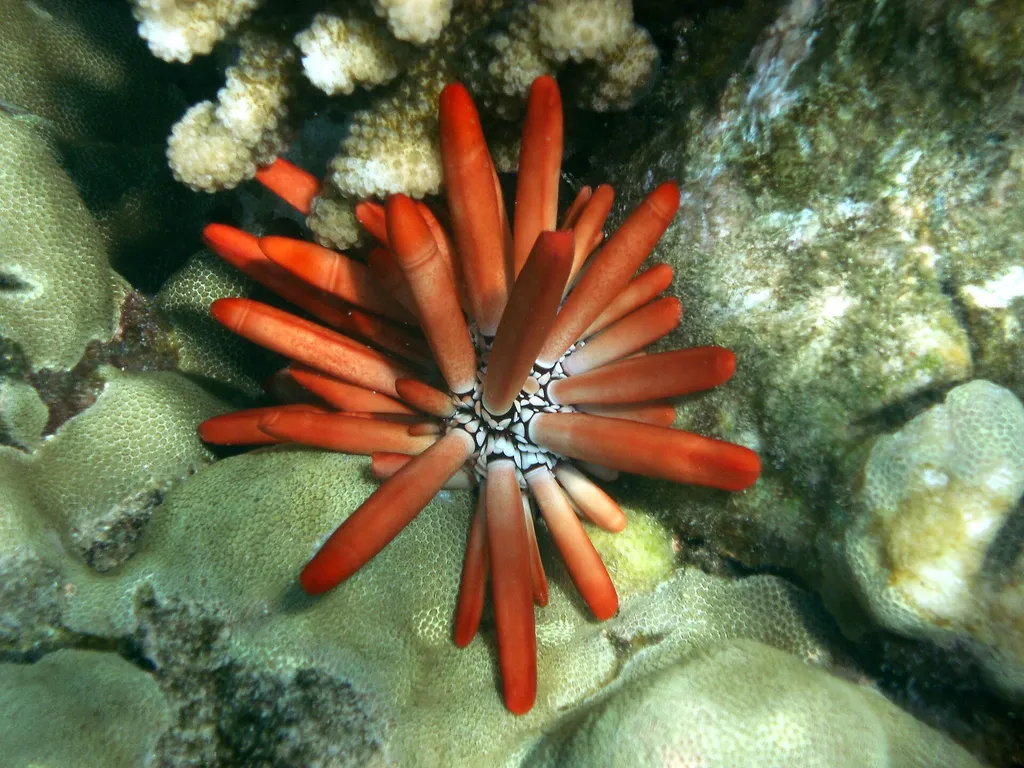 3.1 in (8 cm)50 gal (190 L)72–81°F (22–27°C)
Red slate pencil urchin
Heterocentrotus mamillatus
3.1 in (8 cm) · 50 gal (190 L)
 3.1 in (8 cm)20 gal (75 L)72–81°F (22–27°C)
Rock-boring urchin
Echinometra mathaei
3.1 in (8 cm) · 20 gal (75 L)
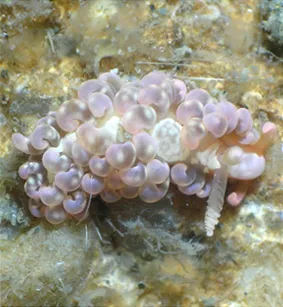 3 in (7.5 cm)11 gal (40 L)68–81°F (20–27°C)
Spurilla nudibranch
Spurilla neapolitana
3 in (7.5 cm) · 11 gal (40 L)
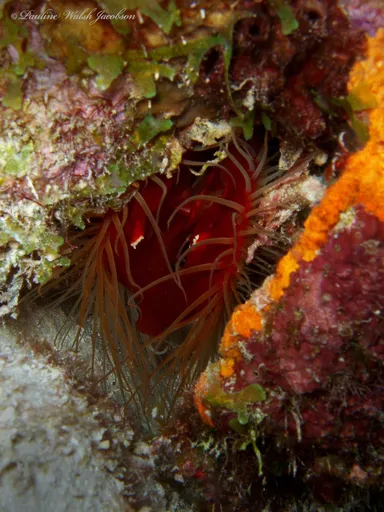 3.5 in (9 cm)30 gal (115 L)75–81°F (24–27°C)
Flame scallop
Ctenoides scaber
3.5 in (9 cm) · 30 gal (115 L)