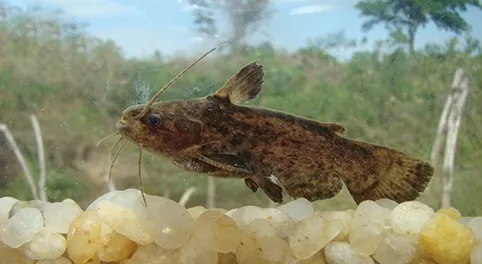
Common woodcat
Trachelyopterus galeatus
Also known as Driftwood catfish, Common driftwood catfish, Parauchenipterus galeatus
FreshwaterFish
Care at a glance
- Temperature
- 72–82°F
- 22–28°C
- pH
- 6.0–7.5
- Adult size
- 8.7 in
- 22 cm
- Minimum tank
- 50 gal
- 190 L
- Temperament
- Mostly peaceful
- Social behavior
- Social
- Tankmates
- With caution
- Swim level
- Bottom
- Difficulty
- Easy
- Breeding
- No record
- Rarity
- Common
- Family
- Auchenipteridae
- Origin
- Widespread across northern South America, including the Amazon and Orinoco basins.
Overview
The common woodcat is an easy, hardy catfish that stays a manageable size and does well in a group, spending the daylight hours packed into wood and emerging in the dark. It is mostly peaceful but will eat small fish and shrimp at night, so keep it with tankmates too big to swallow. Feed sinking pellets, frozen foods, and meaty items after lights out. Provide hollow driftwood in a tank of around 190 liters, and do not expect to see much of it during the day.
In the wild
The common woodcat is a widespread driftwood catfish of northern South America, jamming itself into hollow logs, wood crevices, and root tangles by day and coming out to forage at night. It is strongly nocturnal and shy of light. Give it plenty of driftwood with tight hollows, a soft floor, dim lighting, and soft to neutral water at 22 to 28 degrees C.
Good to know
Trachelyopterus galeatus reaches about 22 cm and belongs to the auchenipterid driftwood catfish, a group notable for internal fertilization. The male passes sperm to the female using a modified anal fin, and she can store it and spawn later, sometimes weeks after mating. It was long known under the name Parauchenipterus galeatus.
Did you know
Unlike most catfish, woodcats mate through internal fertilization, and a female can carry live sperm inside her for weeks before laying, so a lone female may suddenly produce fertile eggs long after any male is gone.
Common questions
What size tank does a Common woodcat need?
A Common woodcat needs at least 50 gal (190 L). It spends most of its time in the bottom.
What temperature and pH does a Common woodcat need?
A Common woodcat is comfortable at 72–82°F (22–28°C) with a pH of 6.0–7.5.
How big does a Common woodcat get?
An adult Common woodcat reaches about 8.7 in (22 cm).
Related species
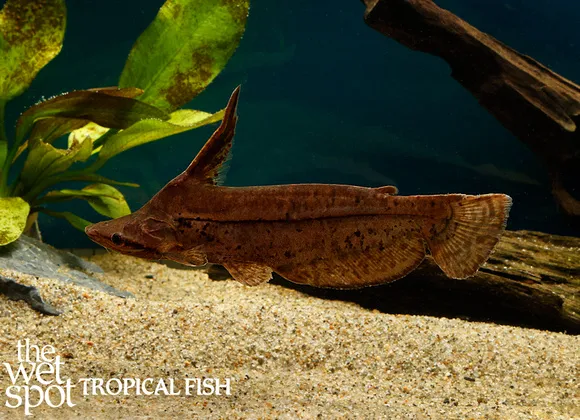 8.3 in (21 cm)79 gal (300 L)73–82°F (23–28°C)
Horseshoe catfish
Tetranematichthys wallacei
8.3 in (21 cm) · 79 gal (300 L)
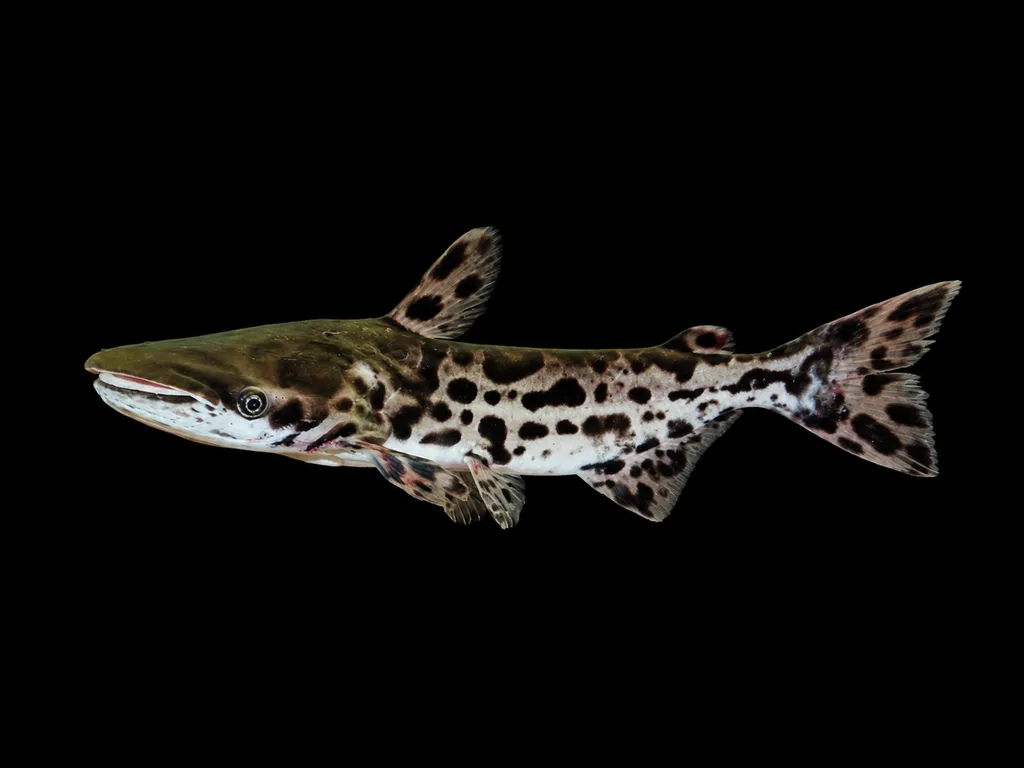 7.9 in (20 cm)95 gal (360 L)72–79°F (22–26°C)
Bottlenose catfish
Ageneiosus marmoratus
7.9 in (20 cm) · 95 gal (360 L)
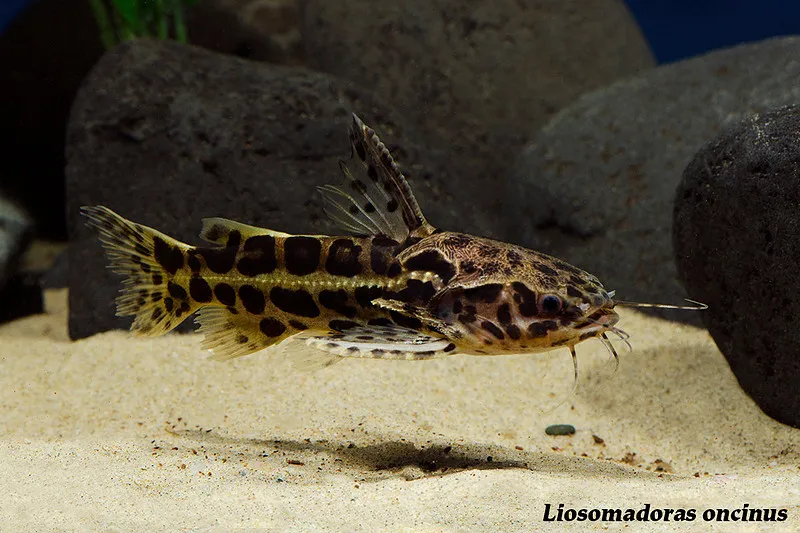 9.1 in (23 cm)65 gal (245 L)72–82°F (22–28°C)
Jaguar catfish
Liosomadoras oncinus
9.1 in (23 cm) · 65 gal (245 L)
 9.8 in (25 cm)95 gal (360 L)72–82°F (22–28°C)
Gulper catfish
Asterophysus batrachus
9.8 in (25 cm) · 95 gal (360 L)
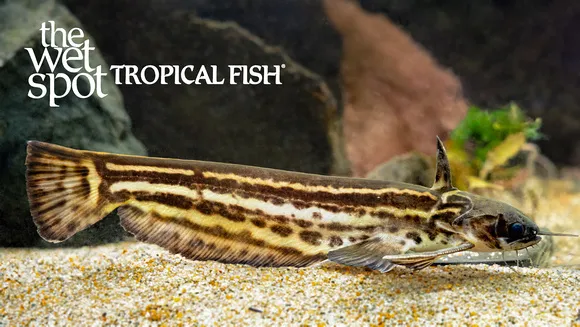 5.9 in (15 cm)53 gal (200 L)73–82°F (23–28°C)
Striped woodcat
Trachelyopterichthys taeniatus
5.9 in (15 cm) · 53 gal (200 L)
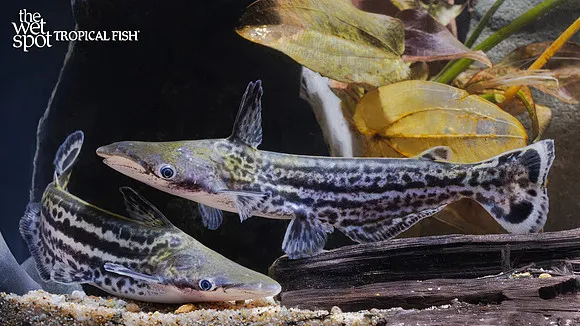 7.1 in (18 cm)106 gal (400 L)73–82°F (23–28°C)
Orinoco dolphin catfish
Ageneiosus magoi
7.1 in (18 cm) · 106 gal (400 L)