Horseshoe catfish
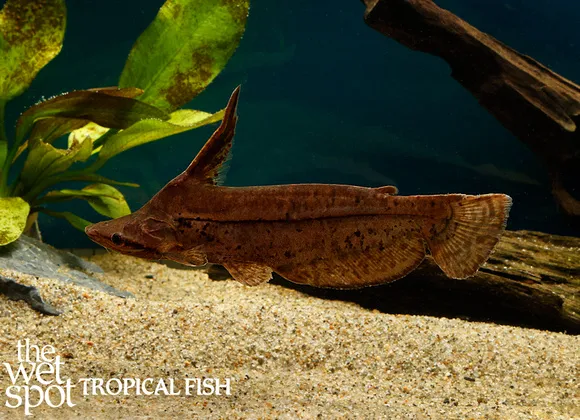
Tetranematichthys wallacei
Also known as Wallace's driftwood catfish
FreshwaterFish
Care at a glance
- Temperature
- 73–82°F
- 23–28°C
- pH
- 6.0–7.5
- Adult size
- 8.3 in
- 21 cm
- Minimum tank
- 79 gal
- 300 L
- Temperament
- Mostly peaceful
- Social behavior
- Solitary
- Tankmates
- With caution
- Swim level
- Bottom
- Diet
- Carnivore
- Difficulty
- Medium
- Breeding
- No record
- Rarity
- Rare
- Family
- Auchenipteridae
- Origin
- Upper Negro and Orinoco basins
Overview
The horseshoe catfish is a secretive, leaf-mimicking predator for a large, dim tank. It suits a keeper with some experience.
Did you know
The horseshoe catfish is named for Alfred Russel Wallace, who explored the Rio Negro in the 1850s. On his voyage home his ship caught fire and sank, taking most of his South American collection with it. He survived and went on to co-found the theory of natural selection.
Caring for the horseshoe catfish
Give the horseshoe catfish a dimly lit tank of at least 79 gal (300 L) with quiet corners to lie up in. Add a deep bed of leaf litter and plenty of driftwood. Tannin-stained water and low light help it settle in. By day it rests motionless in the litter, and it becomes active after dark.
Keep the water warm and soft at 73 to 82°F (23 to 28°C) and a pH of 6.0 to 7.5, with gentle flow. Feed meaty foods such as earthworm, prawn and chunks of fish or mussel.
Keep a single horseshoe catfish, since it is a solitary fish. It is calm toward fish too big to eat, but it will take any tank mate small enough to fit in its mouth. Choose companions with care and keep them well above swallowing size.
Breeding males grow a tall, thorny dorsal fin. They fertilize the female internally with a modified anal fin, but aquarium spawning is not recorded.
Good to know
The horseshoe catfish is a driftwood catfish in the family Auchenipteridae, also known as Wallace's driftwood catfish. Its body is built to mimic a dead leaf, and by day it does a convincing impression of one.
In the wild
The horseshoe catfish haunts blackwater in the upper Negro and Orinoco basins. There it hides among drifted leaves and submerged wood in soft, dark, acidic water, ready to ambush from cover.
Common questions
What size tank does a horseshoe catfish need?
A horseshoe catfish needs at least 79 gal (300 L). It spends most of its time in the bottom.
What temperature and pH does a horseshoe catfish need?
A horseshoe catfish is comfortable at 73–82°F (23–28°C) with a pH of 6.0–7.5.
What does a horseshoe catfish eat?
A horseshoe catfish eats meaty foods such as earthworm, prawn and chunks of fish or mussel.
How big does a horseshoe catfish get?
An adult horseshoe catfish reaches about 8.3 in (21 cm).
How can you tell a male horseshoe catfish from a female?
Males in breeding condition grow a tall, thorny dorsal fin.
Related species
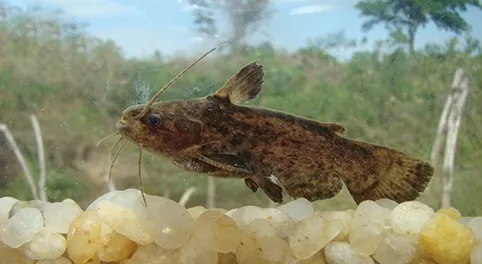 8.7 in (22 cm)50 gal (190 L)72–82°F (22–28°C)
Common woodcat
Trachelyopterus galeatus
8.7 in (22 cm) · 50 gal (190 L)
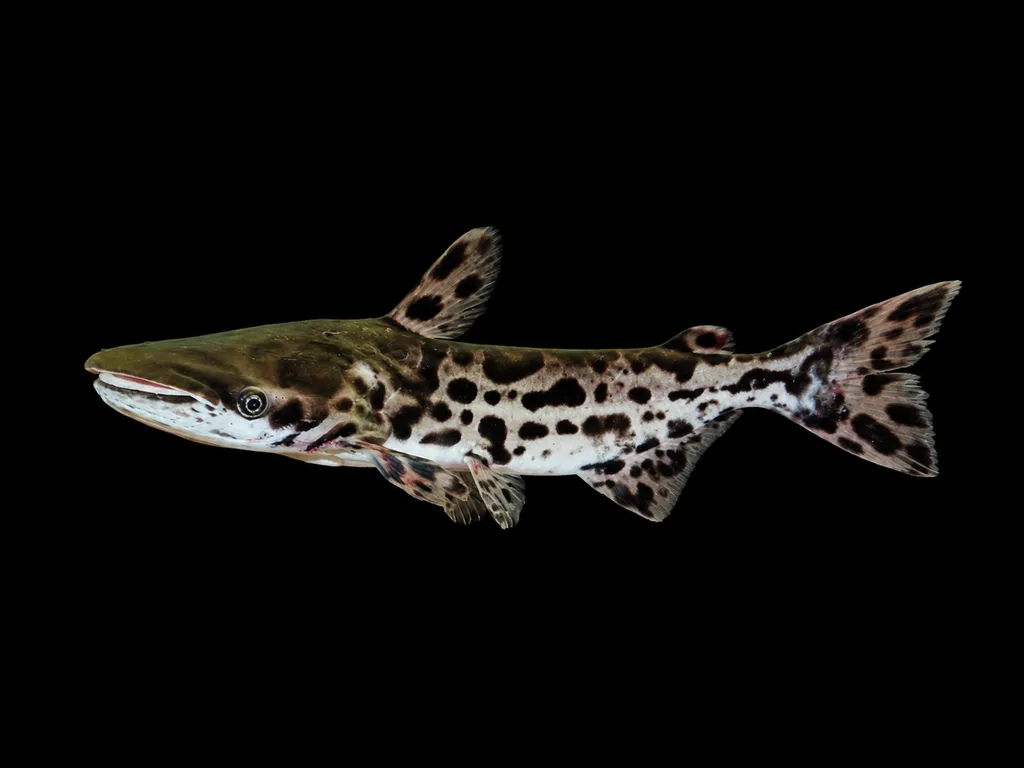 7.9 in (20 cm)95 gal (360 L)72–79°F (22–26°C)
Bottlenose catfish
Ageneiosus marmoratus
7.9 in (20 cm) · 95 gal (360 L)
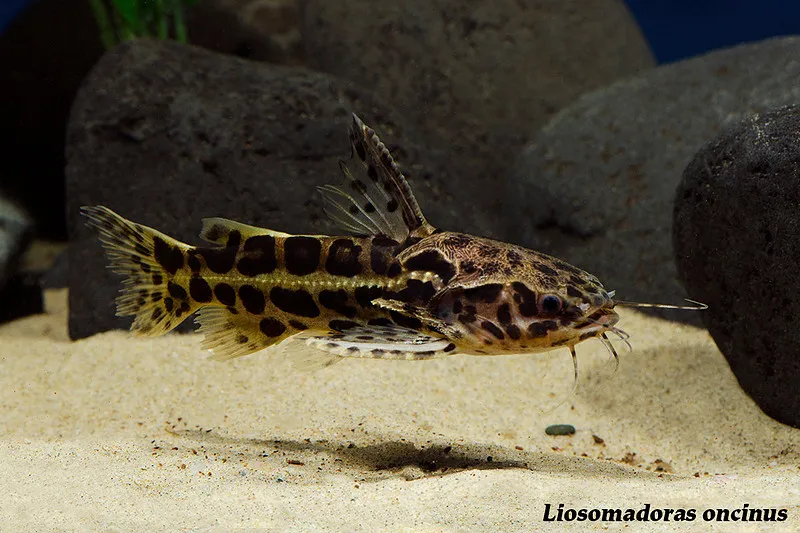 9.1 in (23 cm)65 gal (245 L)72–82°F (22–28°C)
Jaguar catfish
Liosomadoras oncinus
9.1 in (23 cm) · 65 gal (245 L)
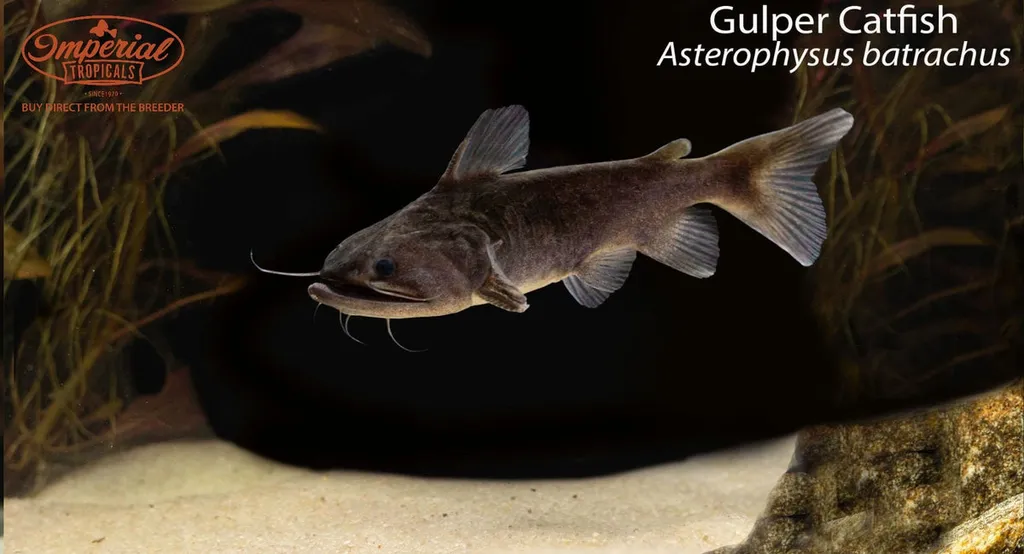 9.8 in (25 cm)95 gal (360 L)72–82°F (22–28°C)
Gulper catfish
Asterophysus batrachus
9.8 in (25 cm) · 95 gal (360 L)
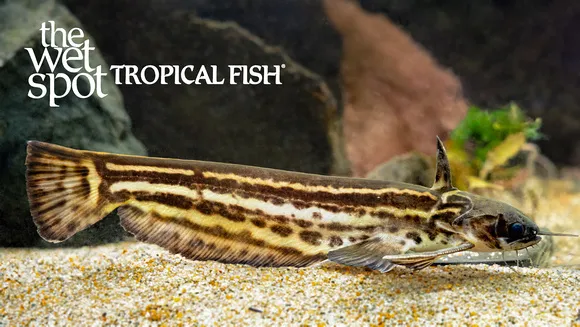 5.9 in (15 cm)53 gal (200 L)73–82°F (23–28°C)
Striped woodcat
Trachelyopterichthys taeniatus
5.9 in (15 cm) · 53 gal (200 L)
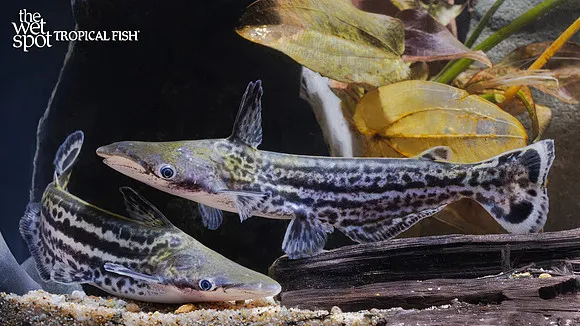 7.1 in (18 cm)106 gal (400 L)73–82°F (23–28°C)
Orinoco dolphin catfish
Ageneiosus magoi
7.1 in (18 cm) · 106 gal (400 L)