Three-stripe damsel
Dascyllus aruanus
Also known as Humbug Damsel, Whitetail Dascyllus
SaltwaterFish
Care at a glance
- Temperature
- 75–81°F
- 24–27°C
- pH
- 8.1–8.4
- Adult size
- 3.5 in
- 9 cm
- Minimum tank
- 29 gal
- 110 L
- Temperament
- Aggressive
- Social behavior
- Social
- Tankmates
- With caution
- Swim level
- Middle
- Diet
- Omnivore
- Difficulty
- Beginner
- Breeding
- Substrate spawner · Medium
- Rarity
- Very common
- Reef safe
- Reef safe
- Family
- Pomacentridae
- Origin
- Indo-Pacific reefs
Overview
The three-stripe damsel is a tough reef fish that acclimates fast and rarely gets sick. It is a good first fish, and that toughness is a big reason it shows up so often in beginner setups.
Did you know
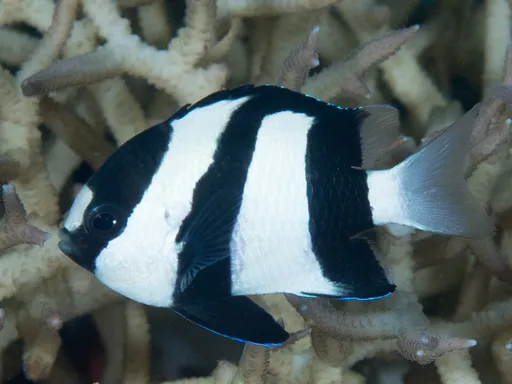
The bold black and white bands of the three-stripe damsel give it the nickname humbug damsel. The bands can wash out to a dull gray overnight or under stress, then brighten again by morning.
Caring for the three-stripe damsel
Give three-stripe damsels at least 29 gal (110 L), the accepted minimum for one fish or a small group. They rarely stray far from cover, so arrange the live rock with real branching structure or crevices rather than open swimming space.
Keep the water at 75 to 81°F (24 to 27°C) with a pH of 8.1 to 8.4. Feed a mix of frozen mysis or brine shrimp and marine flake, with some algae-based food to round out the diet.
Three-stripe damsels are aggressive. Juveniles are fairly tolerant of tank mates, but adults get noticeably bossier. They stake out a patch of rock and chase off anything that swims too close, including their own kind if the tank is too small.
Keep one fish on its own, or a group of at least four. They leave coral and sessile invertebrates alone, so they suit a reef tank as long as their tank mates can hold their own ground.
Females lay demersal eggs on cleared rock near the coral, and the male fans and guards the clutch. The eggs hatch a few days later, and breeding is moderately difficult.
Good to know
The three-stripe damsel, Dascyllus aruanus, is a damselfish in the family Pomacentridae, and it is also called the whitetail dascyllus. It is a protogynous hermaphrodite, so an individual can change from female to male. Each coral colony typically holds a harem built around one dominant male, with a size-based pecking order among its members.
In the wild
The three-stripe damsel lives on shallow Indo-Pacific reef flats and lagoons. Small groups shelter within the branches of a single Acropora or Pocillopora coral head. The group settles onto its coral head as larvae and defends it as shared territory for life.
Common questions
What size tank does a three-stripe damsel need?
A three-stripe damsel needs at least 29 gal (110 L). It spends most of its time in the middle.
What temperature and pH does a three-stripe damsel need?
A three-stripe damsel is comfortable at 75–81°F (24–27°C) with a pH of 8.1–8.4.
What does a three-stripe damsel eat?
A three-stripe damsel eats frozen mysis or brine shrimp and marine flake. Add some algae-based food to round out its diet.
How big does a three-stripe damsel get?
An adult three-stripe damsel reaches about 3.5 in (9 cm).
How does a three-stripe damsel breed?
Three-stripe damsels lay demersal eggs on cleared rock, and the male fans and guards the clutch. The eggs hatch a few days later, and breeding is moderately difficult.
Related species
 3.1 in (8 cm)29 gal (110 L)75–81°F (24–27°C)
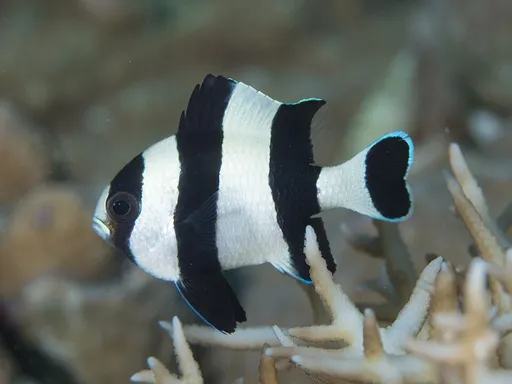
Four-stripe damsel
Dascyllus melanurus
3.1 in (8 cm) · 29 gal (110 L)
 5.5 in (14 cm)55 gal (210 L)75–81°F (24–27°C)
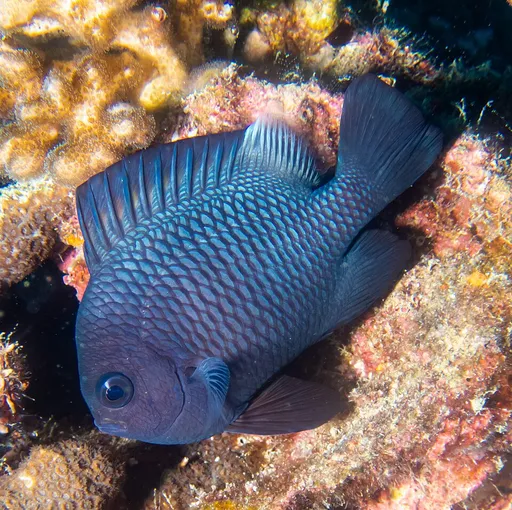
Domino damsel
Dascyllus trimaculatus
5.5 in (14 cm) · 55 gal (210 L)
 3.5 in (9 cm)29 gal (110 L)75–81°F (24–27°C)
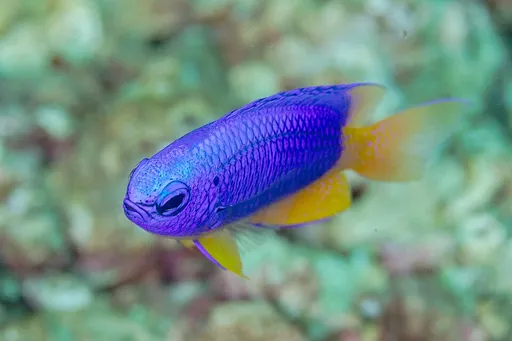
Neon damselfish
Pomacentrus coelestis
3.5 in (9 cm) · 29 gal (110 L)
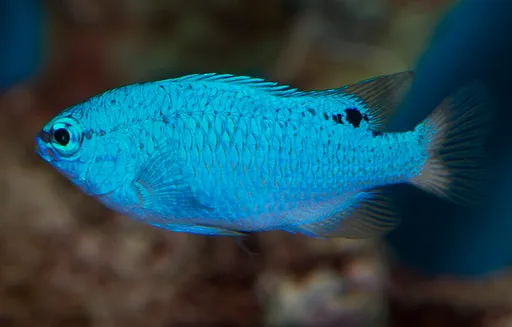 3.1 in (8 cm)29 gal (110 L)75–81°F (24–27°C)
Blue damsel
Chrysiptera cyanea
3.1 in (8 cm) · 29 gal (110 L)
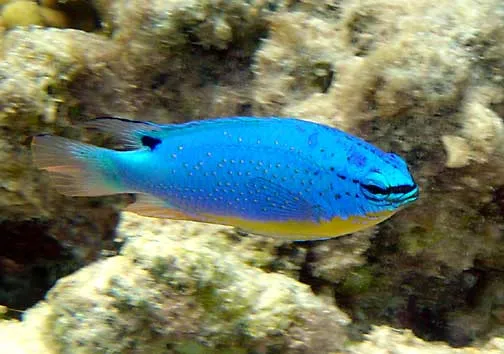 3.1 in (8 cm)29 gal (110 L)75–81°F (24–27°C)
Fiji blue devil damsel
Chrysiptera taupou
3.1 in (8 cm) · 29 gal (110 L)
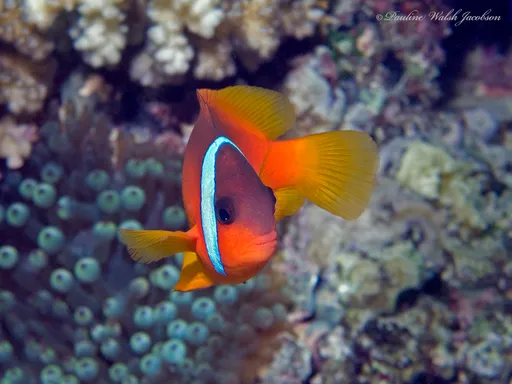 3.5 in (9 cm)30 gal (115 L)75–81°F (24–27°C)
Barberi clownfish
Amphiprion barberi
3.5 in (9 cm) · 30 gal (115 L)