Texas cichlid
Herichthys cyanoguttatus
FreshwaterFish
Care at a glance
- Temperature
- 68–90°F
- 20–32°C
- pH
- 6.0–7.5
- Adult size
- 11.8 in
- 30 cm
- Minimum tank
- 66 gal
- 250 L
- Temperament
- Aggressive
- Social behavior
- Solitary
- Tankmates
- With caution
- Swim level
- Middle
- Difficulty
- Medium
- Breeding
- Medium
- Rarity
- Rare
- Family
- Cichlidae
- Origin
- United States, Mexico
Overview
The Texas cichlid is a large, hardy and aggressive cichlid that is usually kept alone or as a single pair in a spacious tank. It is strongly territorial, and a spawning pair in particular will claim a wide area and attack intruders, so any tankmates must be large, tough and given room to keep clear. It is a keen digger that shifts sand and moves decor, so use a sandy floor with heavy, stable rockwork and leave rooted plants out. It tolerates a wide range of temperatures, which reflects its unusually northern, seasonal home. Feed a quality cichlid pellet with vegetable content plus frozen and fresh foods such as prawn and earthworm. Plan for a tank of at least 250 liters for one adult, and more for a pair.
In the wild
The Texas cichlid lives in the lower Rio Grande drainage of southern Texas and northeastern Mexico, the farthest north any cichlid occurs naturally. Because its home has real seasons, it handles a wide temperature range of 20 to 32 C and even cooler spells, along with a pH of 6.0 to 7.5 in neutral to slightly hard water. Set up a durable tank with a sandy floor, rounded rocks and sturdy driftwood arranged into stable structures, leaving open swimming space in the middle. Skip delicate rooted plants, since this enthusiastic digger will uproot them.
Good to know
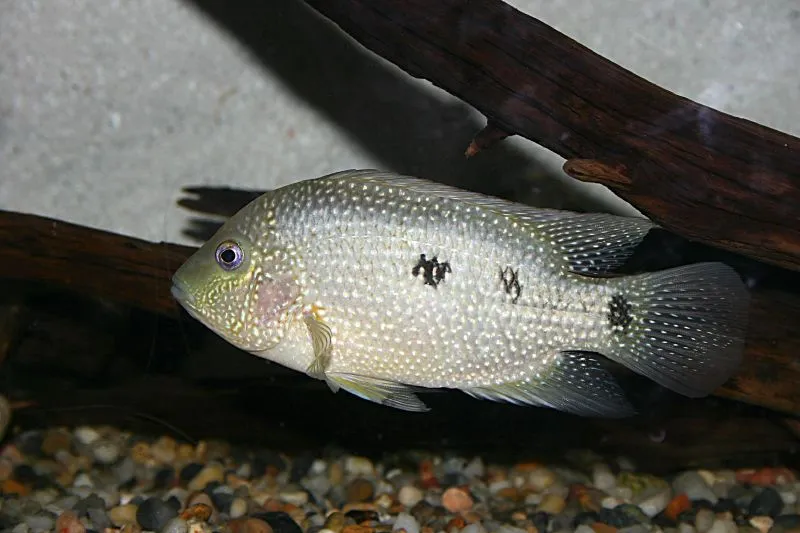
Herichthys cyanoguttatus is a member of the cichlid family, Cichlidae, and grows to around 30 cm. It is covered in fine, pearly blue-green spots on a darker body, and mature fish show a raised forehead and a bold pattern of dark bars toward the rear. It is a substrate spawner that cleans a flat rock and guards its eggs and fry as a pair, and it breeds fairly readily for such a large fish once a compatible pair is settled. Its species name cyanoguttatus means blue-spotted, a reference to the speckling that covers its body.
Did you know
The Texas cichlid is the only cichlid native to the United States, found in the Rio Grande in southern Texas. This gives it the distinction of being the northernmost naturally occurring member of the entire cichlid family.
Common questions
What size tank does a Texas cichlid need?
A Texas cichlid needs at least 66 gal (250 L). It spends most of its time in the middle.
What temperature and pH does a Texas cichlid need?
A Texas cichlid is comfortable at 68–90°F (20–32°C) with a pH of 6.0–7.5.
How big does a Texas cichlid get?
An adult Texas cichlid reaches about 11.8 in (30 cm).
Related species
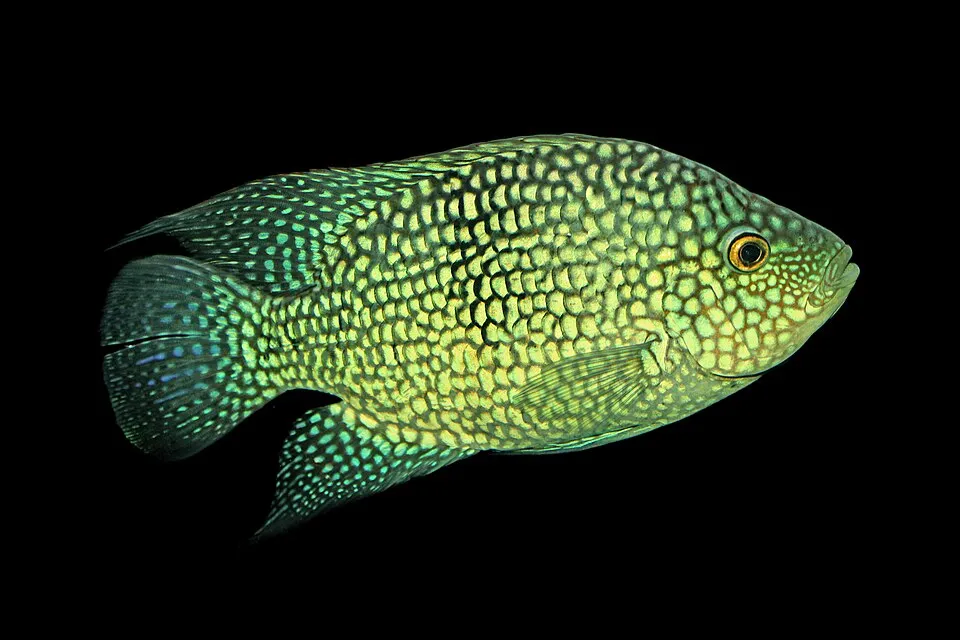 11.8 in (30 cm)55 gal (210 L)75–79°F (24–26°C)
Pearlscale cichlid
Herichthys carpintis
11.8 in (30 cm) · 55 gal (210 L)
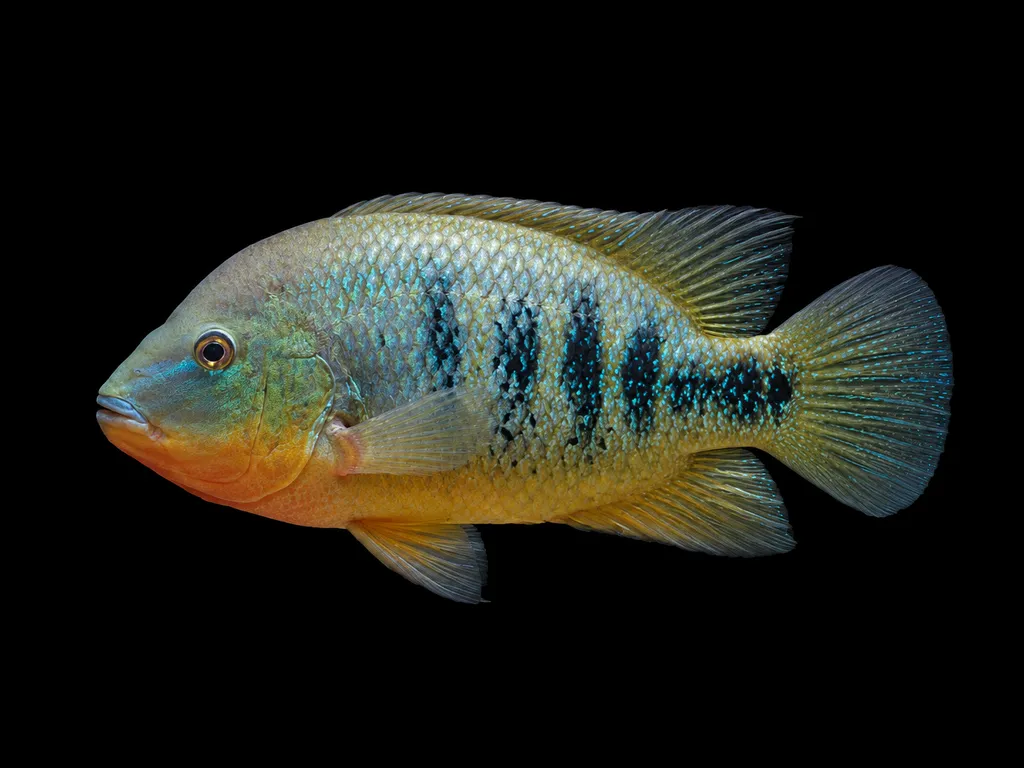 11.8 in (30 cm)106 gal (400 L)75–84°F (24–29°C)
Curve-bar cichlid
Herichthys labridens
11.8 in (30 cm) · 106 gal (400 L)
 8.7 in (22 cm)79 gal (300 L)75–84°F (24–29°C)
Barton's cichlid
Herichthys bartoni
8.7 in (22 cm) · 79 gal (300 L)
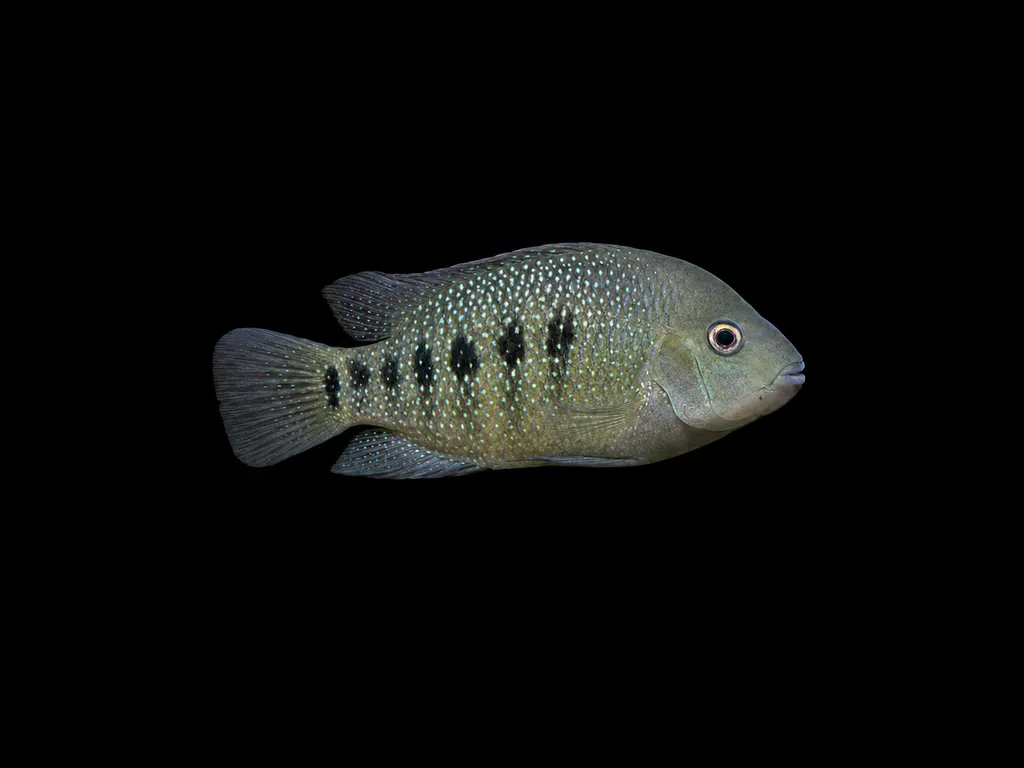 7.1 in (18 cm)79 gal (300 L)75–84°F (24–29°C)
Tamasopo cichlid
Herichthys tamasopoensis
7.1 in (18 cm) · 79 gal (300 L)
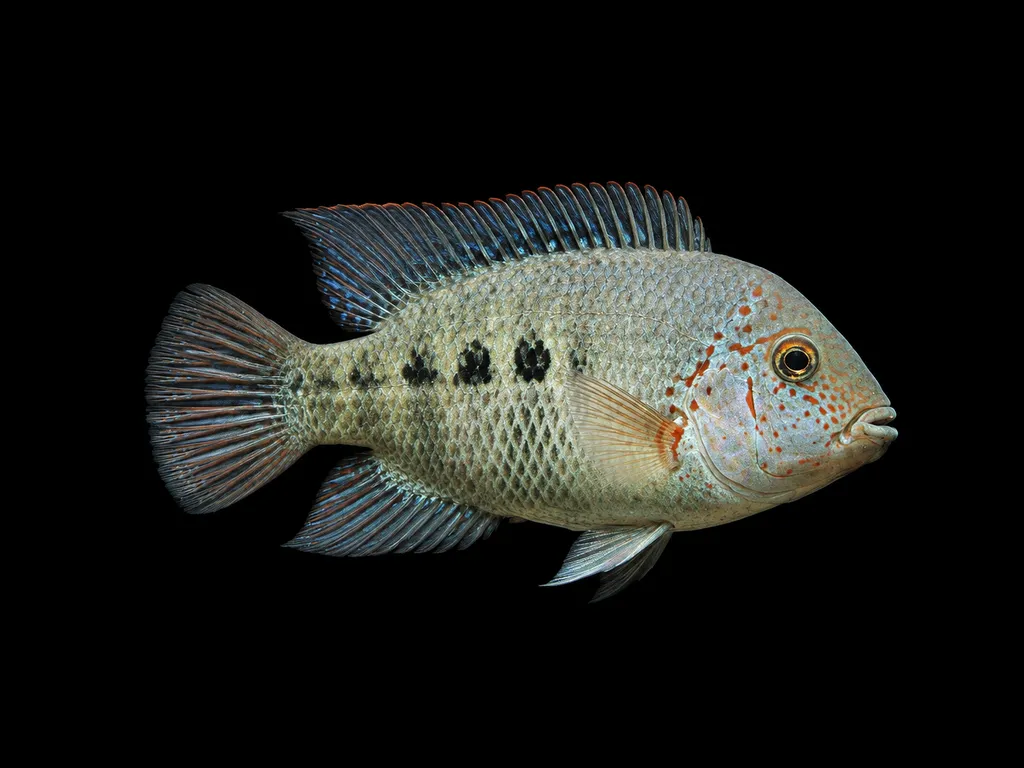 5.9 in (15 cm)66 gal (250 L)75–84°F (24–29°C)
Deppii cichlid
Herichthys deppii
5.9 in (15 cm) · 66 gal (250 L)
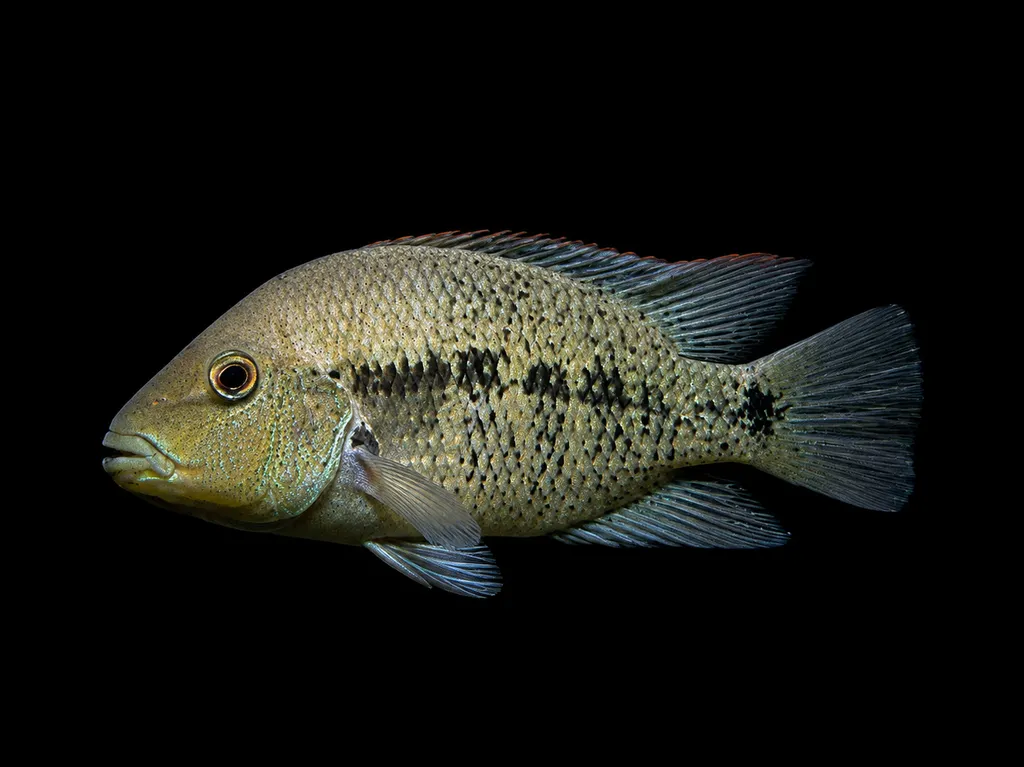 5.9 in (15 cm)79 gal (300 L)75–84°F (24–29°C)
Pantostictus cichlid
Herichthys pantostictus
5.9 in (15 cm) · 79 gal (300 L)