Curve-bar cichlid
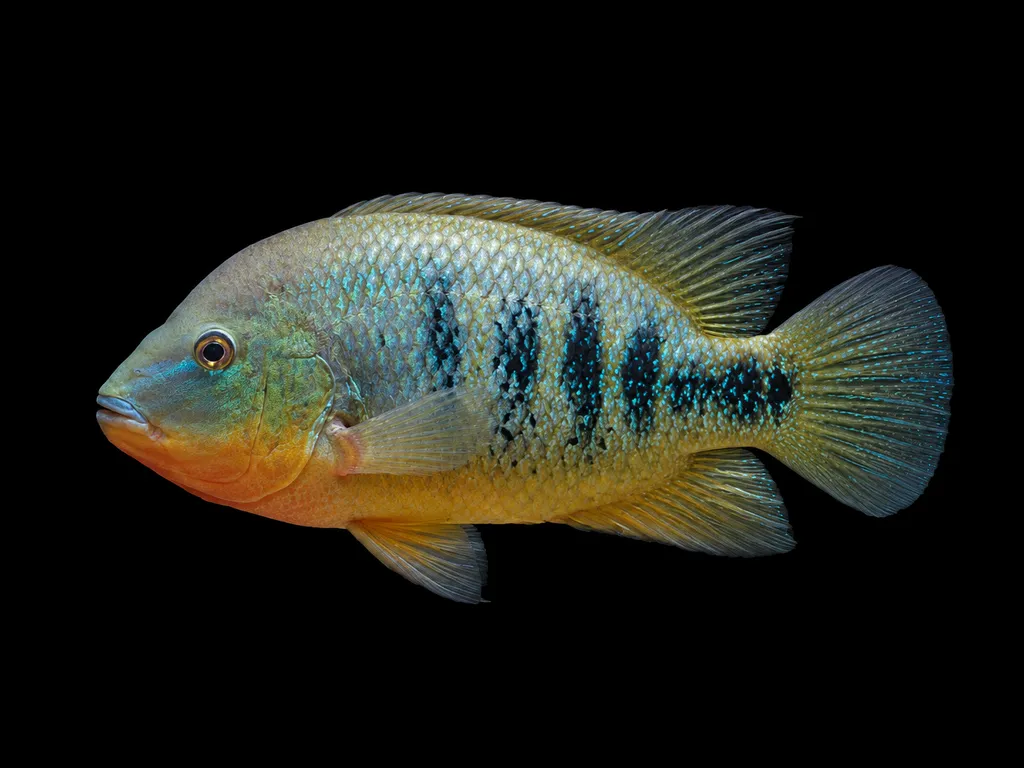
Herichthys labridens
Also known as Labridens cichlid, Yellow labridens
FreshwaterFish
Care at a glance
- Temperature
- 75–84°F
- 24–29°C
- pH
- 7.5–8.5
- Adult size
- 11.8 in
- 30 cm
- Minimum tank
- 106 gal
- 400 L
- Temperament
- Aggressive
- Social behavior
- Solitary
- Tankmates
- With caution
- Swim level
- Bottom
- Diet
- Omnivore
- Difficulty
- Medium
- Breeding
- Substrate spawner · Medium
- Rarity
- Rare
- Family
- Cichlidae
- Origin
- Pánuco basin springs, Mexico
Overview
The curve-bar cichlid is a big, muscular Mexican cichlid for a large hard-water tank. It suits a keeper with some experience.
Did you know
The curve-bar cichlid's home spring, the Laguna Media Luna, is so clear and blue that it is a well-known diving spot. It breeds in water that looks almost bottled, welling up from the ground over pale limestone.
Caring for the curve-bar cichlid
Keep a single curve-bar cichlid or a breeding pair in a long, heavy tank of at least 106 gal (400 L). Give it a floor of sand it can dig, with sturdy rockwork and plenty of rounded stone for cover and spawning sites. It works the bottom, digging in the sand and crunching snails.
Keep the water hard, alkaline and very clean, at 75 to 84°F (24 to 29°C) and a pH of 7.5 to 8.5. Feed a varied diet with snails, other meaty foods, pellets and some greens.
It becomes very aggressive and protective when it spawns, so choose tank mates with real care and leave room to retreat. It is a substrate spawner, and a pair guards its eggs and fry. Breeding is of medium difficulty.
Good to know
The curve-bar cichlid, Herichthys labridens, is a large Central American cichlid in the family Cichlidae. Its name means wrasse-toothed, for the specialized teeth it uses to crush snails, a favorite food. Breeding fish turn custard-yellow to gold, overlaid with bold black markings. It is threatened in the wild by habitat loss and introduced species.
In the wild
The curve-bar cichlid lives in spring-fed lagoons and headwaters of the upper Panuco basin in San Luis Potosi, Mexico. These springs run hard and alkaline.
Common questions
What size tank does a curve-bar cichlid need?
A curve-bar cichlid needs at least 106 gal (400 L). It spends most of its time in the bottom.
What temperature and pH does a curve-bar cichlid need?
A curve-bar cichlid is comfortable at 75–84°F (24–29°C) with a pH of 7.5–8.5.
What does a curve-bar cichlid eat?
A curve-bar cichlid eats a varied diet with snails, other meaty foods, pellets and some greens.
How big does a curve-bar cichlid get?
An adult curve-bar cichlid reaches about 11.8 in (30 cm).
How does a curve-bar cichlid breed?
The curve-bar cichlid is a substrate spawner, and a pair guards its eggs and fry. It turns very aggressive and protective when it spawns, and breeding is of medium difficulty.
Related species
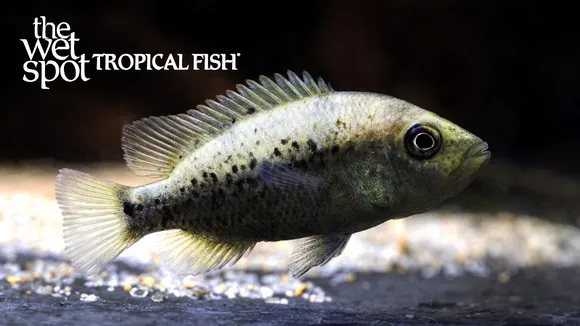 8.7 in (22 cm)79 gal (300 L)75–84°F (24–29°C)
Barton's cichlid
Herichthys bartoni
8.7 in (22 cm) · 79 gal (300 L)
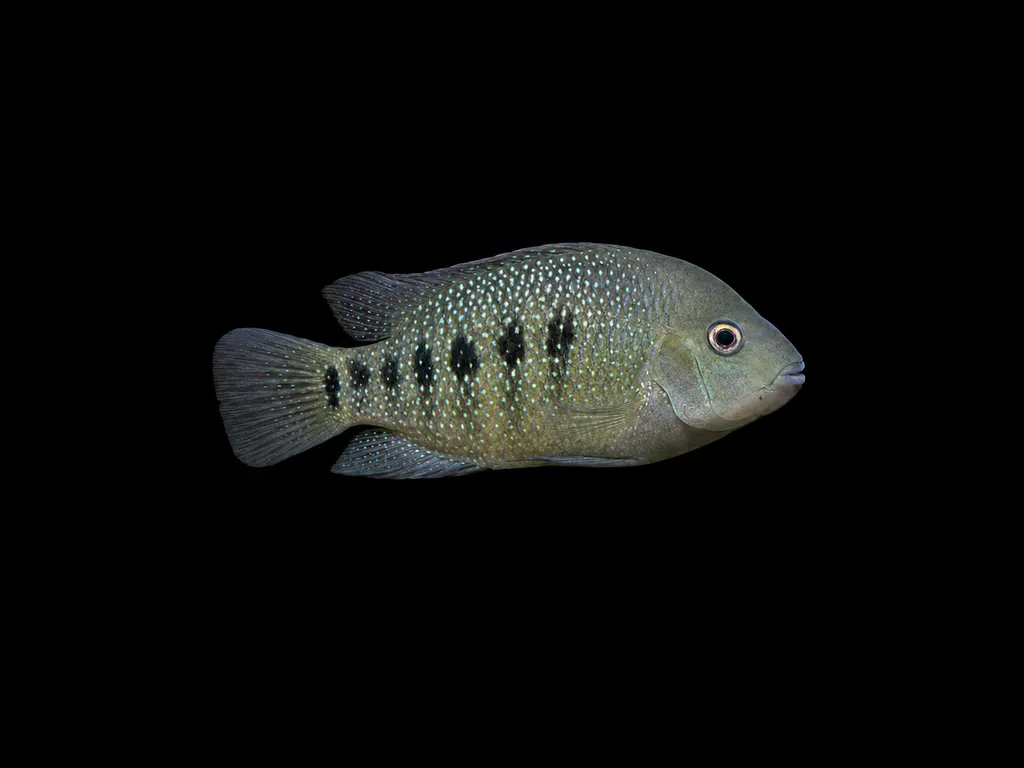 7.1 in (18 cm)79 gal (300 L)75–84°F (24–29°C)
Tamasopo cichlid
Herichthys tamasopoensis
7.1 in (18 cm) · 79 gal (300 L)
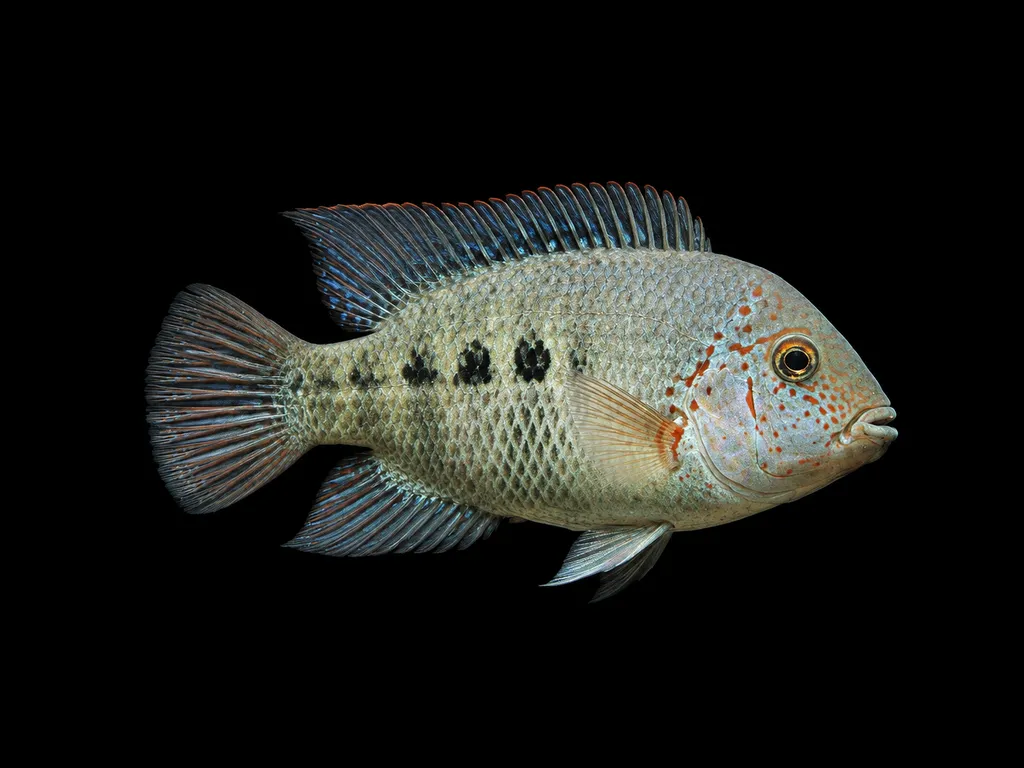 5.9 in (15 cm)66 gal (250 L)75–84°F (24–29°C)
Deppii cichlid
Herichthys deppii
5.9 in (15 cm) · 66 gal (250 L)
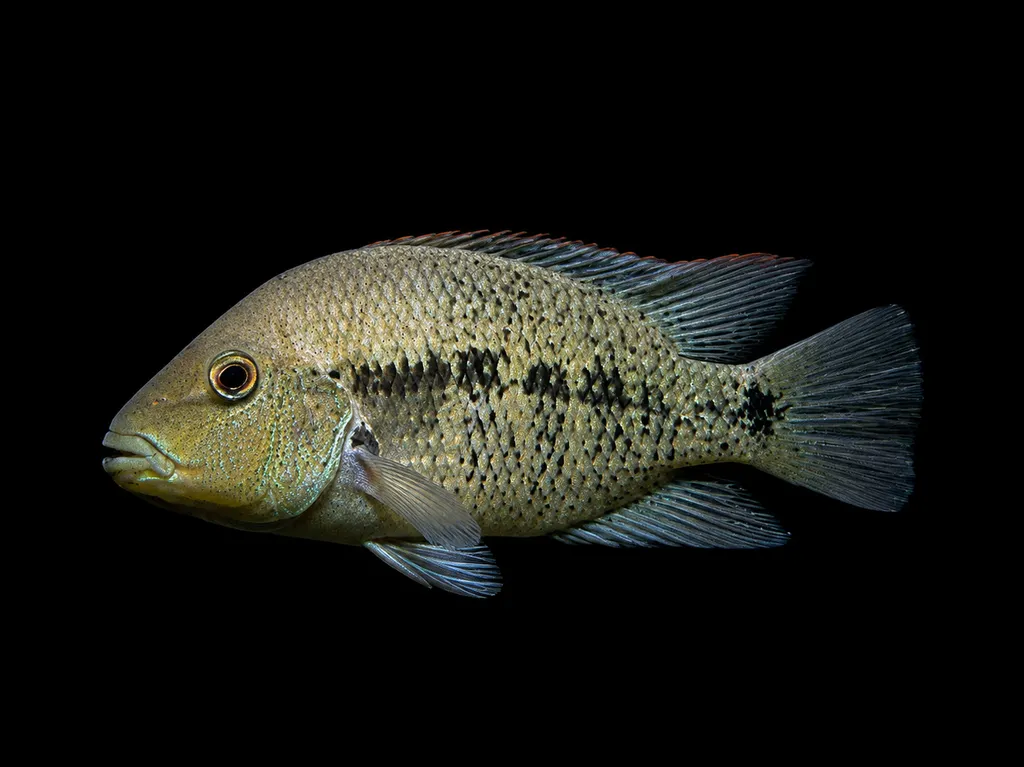 5.9 in (15 cm)79 gal (300 L)75–84°F (24–29°C)
Pantostictus cichlid
Herichthys pantostictus
5.9 in (15 cm) · 79 gal (300 L)
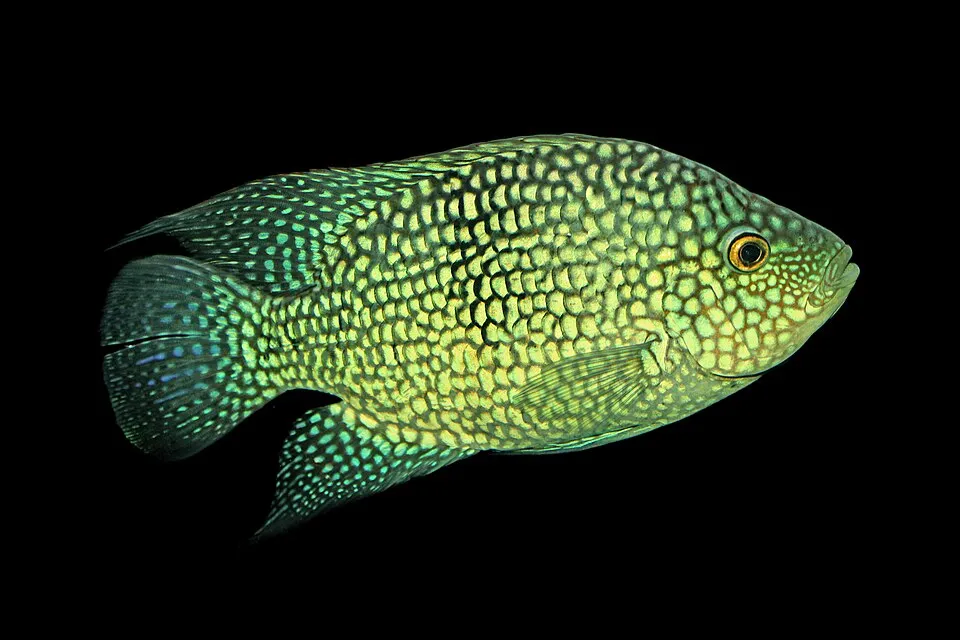 11.8 in (30 cm)55 gal (210 L)75–79°F (24–26°C)
Pearlscale cichlid
Herichthys carpintis
11.8 in (30 cm) · 55 gal (210 L)
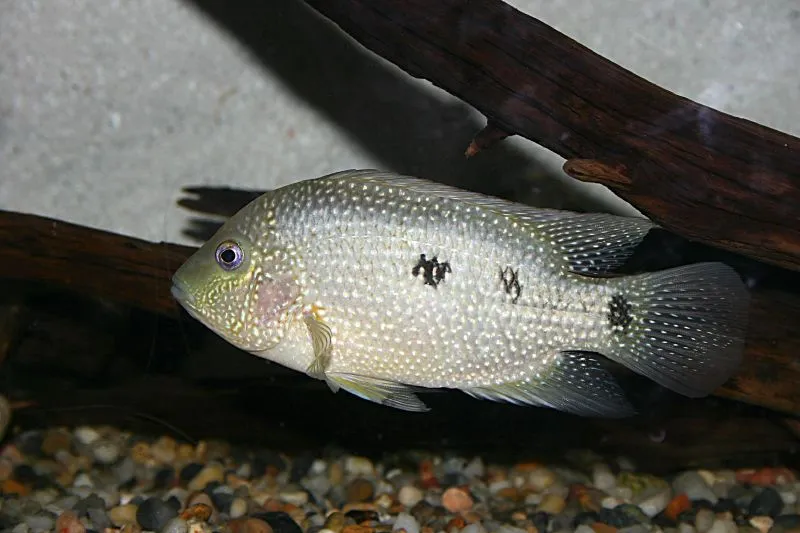 11.8 in (30 cm)66 gal (250 L)68–90°F (20–32°C)
Texas cichlid
Herichthys cyanoguttatus
11.8 in (30 cm) · 66 gal (250 L)