Pearlscale cichlid
Herichthys carpintis
Also known as Green Texas Cichlid
FreshwaterFish
Care at a glance
- Temperature
- 75–79°F
- 24–26°C
- pH
- 7.0–8.0
- Adult size
- 11.8 in
- 30 cm
- Minimum tank
- 55 gal
- 210 L
- Temperament
- Aggressive
- Social behavior
- Solitary
- Tankmates
- With caution
- Swim level
- Middle
- Difficulty
- Easy
- Breeding
- Hard
- Rarity
- Rare
- Family
- Cichlidae
- Origin
- Mexico
Overview
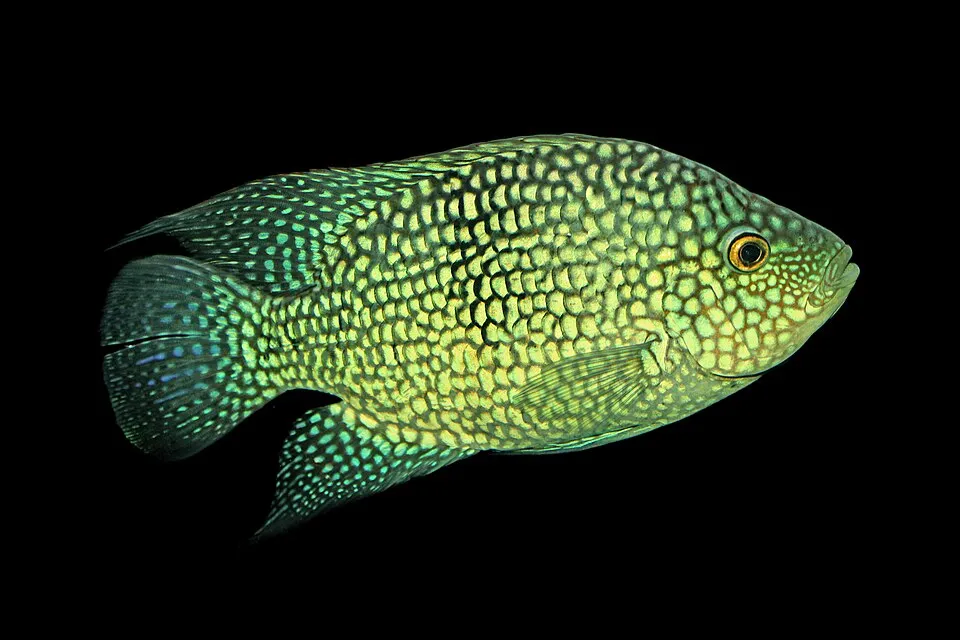
The pearlscale cichlid is a large, hardy and aggressive Central American cichlid that is generally kept alone or as a single pair in a spacious tank. It becomes strongly territorial, particularly when breeding, and a pair will clear a large area and drive off intruders, so tankmates must be big, tough and given plenty of room to avoid it. It is an enthusiastic digger that moves sand and rearranges decor, so use a sandy floor and heavy, stable rockwork, and skip rooted plants that will be uprooted. Care is otherwise straightforward, which makes it a good choice for a first big cichlid. Feed a quality cichlid pellet with frozen and fresh foods such as prawn and earthworm. Plan for a tank of at least 210 liters for one adult, and more for a pair.
In the wild
The pearlscale cichlid is native to northeastern Mexico, in the Panuco river basin and nearby coastal lagoons around Tampico. It lives in warm, hard, alkaline water and even tolerates slightly brackish conditions near the coast, though it is kept in fresh water in the aquarium. Aim for a pH of 7.0 to 8.0 and a temperature of 24 to 26 C, using neutral to hard water. A durable scape of sand, rounded rocks and sturdy driftwood suits it, with open swimming space in the middle. Because it digs and redecorates, keep any plants potted and robust or leave them out altogether.
Good to know
Herichthys carpintis is a member of the cichlid family, Cichlidae, and grows to around 30 cm. It is easily told apart by the scattering of large, pearly blue-green spangles across the head and body, which are bigger and bolder than the fine speckling of its close relative the Texas cichlid. Breeding fish often develop a bold black-and-white pattern with the front half of the body turning pale. It is a substrate spawner that lays eggs on a cleaned rock, with both parents guarding the eggs and fry. Breeding is demanding chiefly because of the space and tank size the fish require.
Did you know
The pearlscale is named for the large turquoise to pale blue spots that cover its body like scattered pearls. Spawning adults change dramatically, with the head and front of the body turning bright white against a dark rear, a strong contrast that signals they are guarding a nest.
Common questions
What size tank does a Pearlscale cichlid need?
A Pearlscale cichlid needs at least 55 gal (210 L). It spends most of its time in the middle.
What temperature and pH does a Pearlscale cichlid need?
A Pearlscale cichlid is comfortable at 75–79°F (24–26°C) with a pH of 7.0–8.0.
How big does a Pearlscale cichlid get?
An adult Pearlscale cichlid reaches about 11.8 in (30 cm).
Related species
 11.8 in (30 cm)66 gal (250 L)68–90°F (20–32°C)
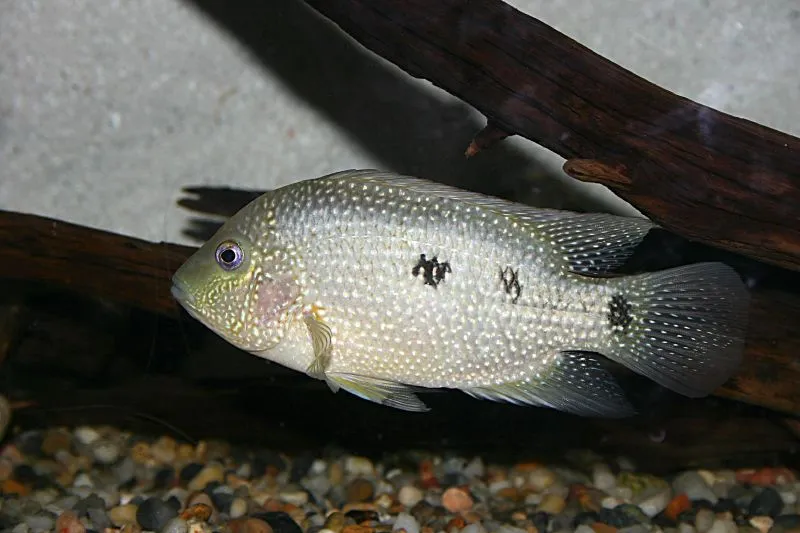
Texas cichlid
Herichthys cyanoguttatus
11.8 in (30 cm) · 66 gal (250 L)
 11.8 in (30 cm)106 gal (400 L)75–84°F (24–29°C)
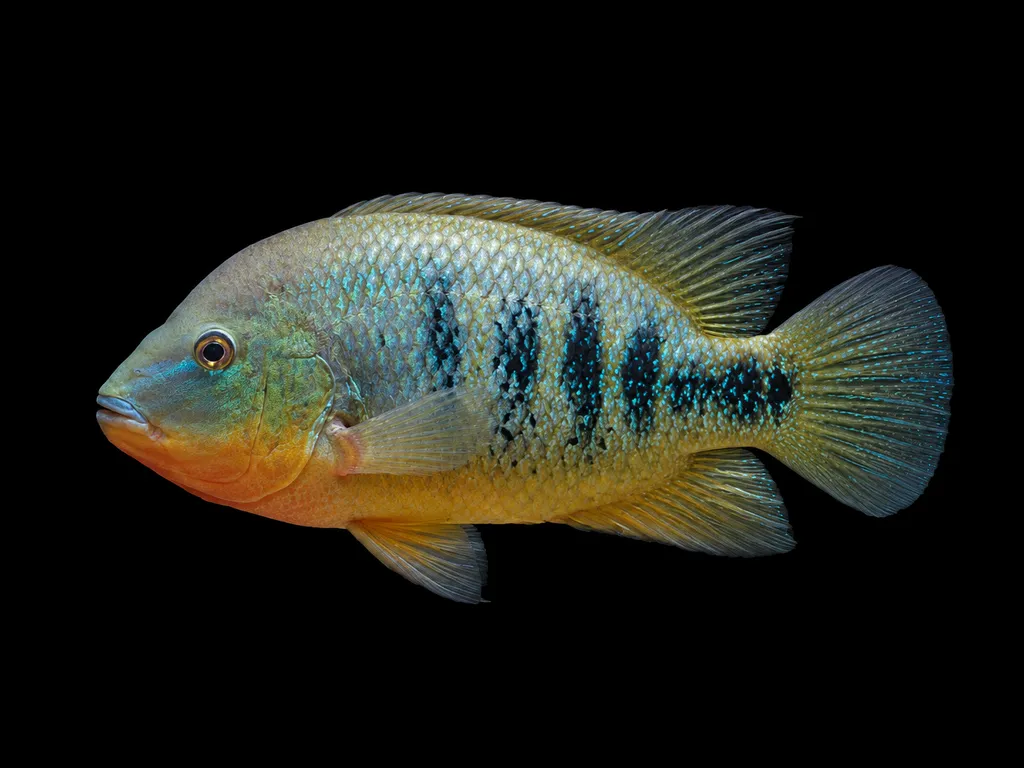
Curve-bar cichlid
Herichthys labridens
11.8 in (30 cm) · 106 gal (400 L)
 8.7 in (22 cm)79 gal (300 L)75–84°F (24–29°C)
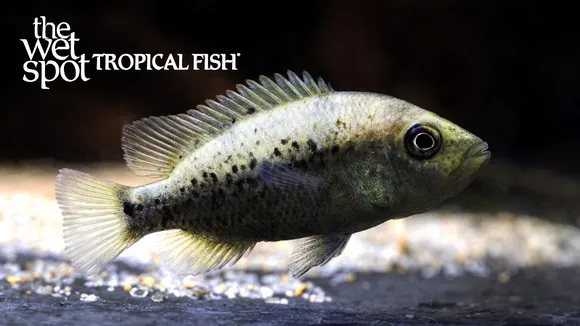
Barton's cichlid
Herichthys bartoni
8.7 in (22 cm) · 79 gal (300 L)
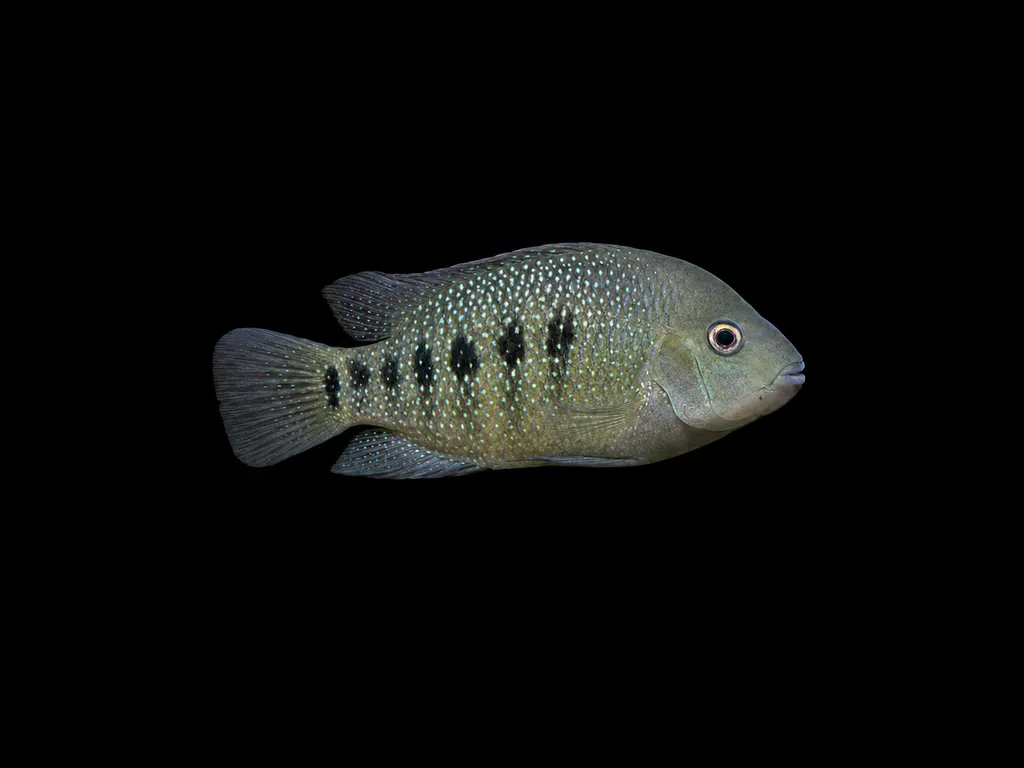 7.1 in (18 cm)79 gal (300 L)75–84°F (24–29°C)
Tamasopo cichlid
Herichthys tamasopoensis
7.1 in (18 cm) · 79 gal (300 L)
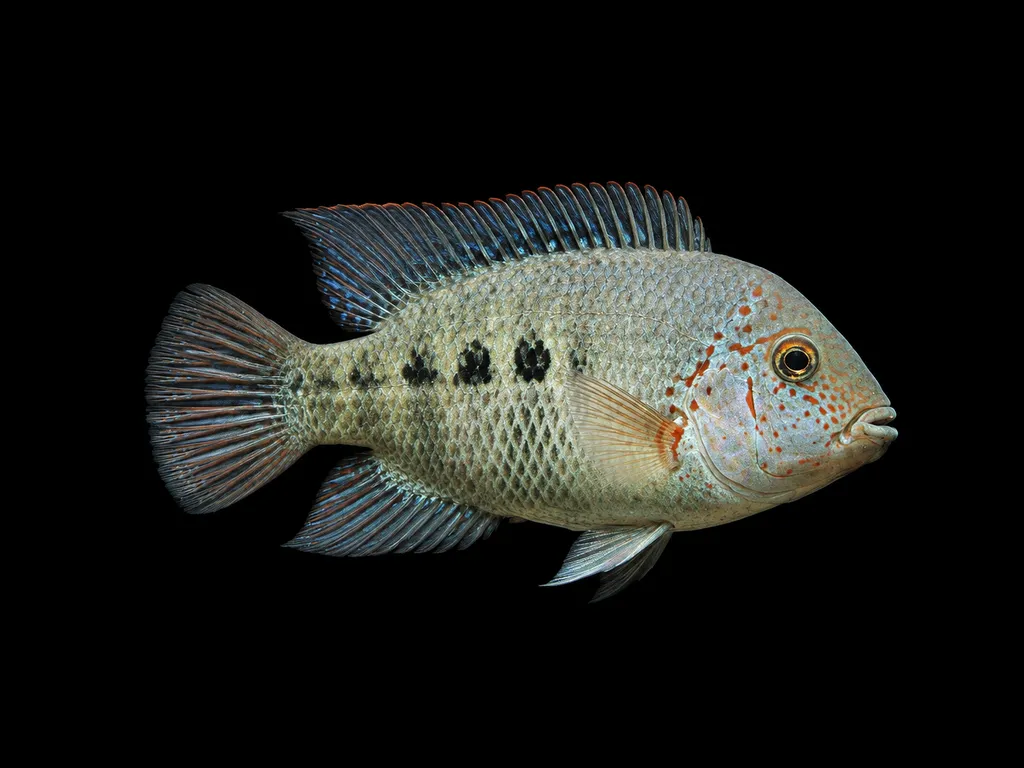 5.9 in (15 cm)66 gal (250 L)75–84°F (24–29°C)
Deppii cichlid
Herichthys deppii
5.9 in (15 cm) · 66 gal (250 L)
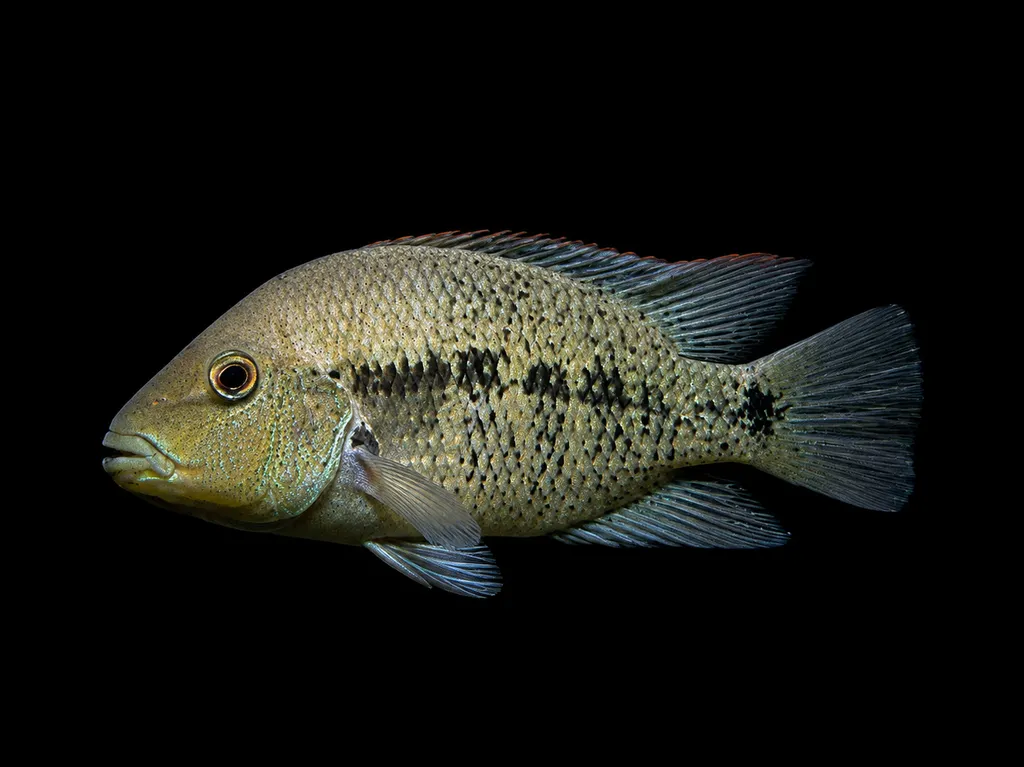 5.9 in (15 cm)79 gal (300 L)75–84°F (24–29°C)
Pantostictus cichlid
Herichthys pantostictus
5.9 in (15 cm) · 79 gal (300 L)