Pantostictus cichlid
Herichthys pantostictus
Also known as Chairel cichlid
FreshwaterFish
Care at a glance
- Temperature
- 75–84°F
- 24–29°C
- pH
- 7.2–8.5
- Adult size
- 5.9 in
- 15 cm
- Minimum tank
- 79 gal
- 300 L
- Temperament
- Aggressive
- Social behavior
- Solitary
- Tankmates
- With caution
- Swim level
- Bottom
- Diet
- Omnivore
- Difficulty
- Medium
- Breeding
- Substrate spawner · Medium
- Rarity
- Rare
- Family
- Cichlidae
- Origin
- Lower Pánuco and Tamesí, Mexico
Overview
The Pantostictus cichlid is a hard-tempered Mexican cichlid that holds a territory on the bottom of a large tank. It is best kept by someone with a little experience.
Did you know
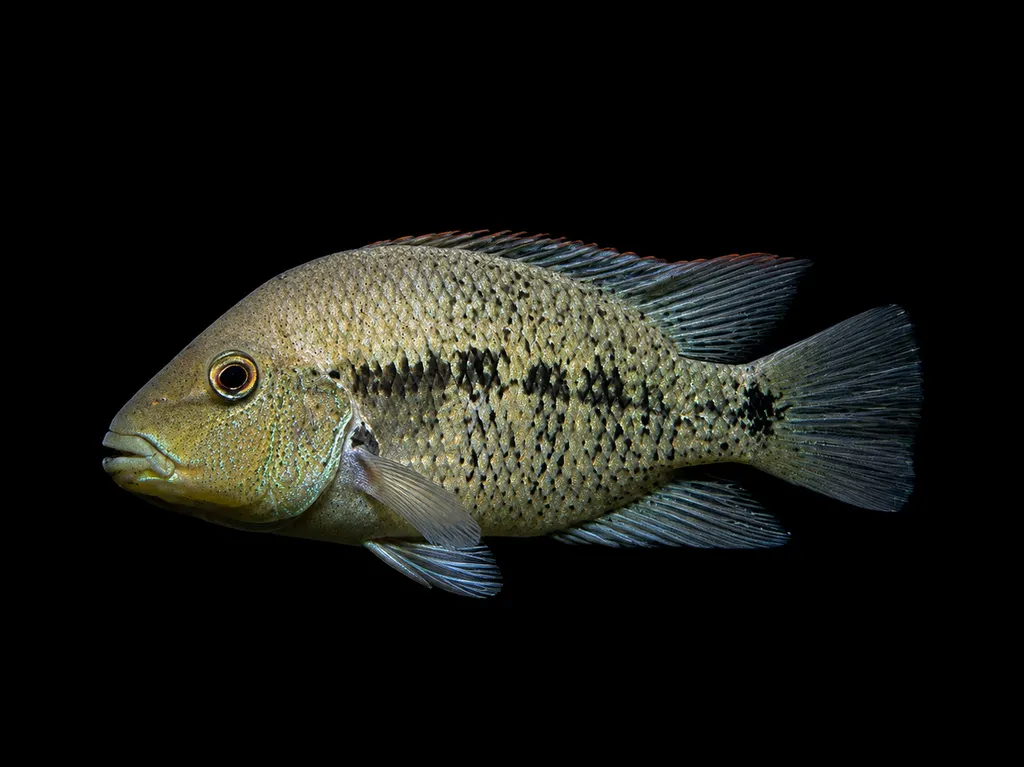
The Pantostictus cichlid's species name is Greek for all-spotted. Dark flecks are scattered across nearly every scale, so the fish looks printed with pepper rather than simply colored in.
Caring for the Pantostictus cichlid
Allow at least 79 gal (300 L) for a Pantostictus cichlid, with a sand bottom and plenty of rock and wood. Use the rock and wood for cover and to mark clearly divided territories. Run strong filtration.
Keep the water warm, hard and alkaline, at 75 to 84°F (24 to 29°C) and a pH of 7.2 to 8.5. This adaptable coastal fish handles those conditions well. It is an omnivore that takes sinking pellets, frozen foods and some vegetable matter.
Keep it as a single fish or a carefully matched pair, and never crowd it with others of its kind. It grows markedly more aggressive as it nears breeding size, and its speckling darkens as it settles in and claims its patch. Tank mates should be robust, similarly sized fish that can stand up to it. Even then, watch for bullying and give every fish escape routes.
The Pantostictus cichlid is a substrate spawner, and breeding it is of moderate difficulty. A pair cleans a firm surface, lays eggs on it and defends the eggs and fry together. It turns intensely territorial while breeding.
Good to know
The Pantostictus cichlid, Herichthys pantostictus, is a cichlid of the family Cichlidae. It is sometimes placed in the genus Nosferatu with its close relatives.
In the wild
The Pantostictus cichlid comes from the lower Pánuco and Tamesí drainages on the Atlantic coast of Mexico. It lives in slow rivers, murky lagoons and coastal lakes over mud and sand, sometimes in slightly brackish water.
Common questions
What size tank does a Pantostictus cichlid need?
A Pantostictus cichlid needs at least 79 gal (300 L). It spends most of its time in the bottom.
What temperature and pH does a Pantostictus cichlid need?
A Pantostictus cichlid is comfortable at 75–84°F (24–29°C) with a pH of 7.2–8.5.
What does a Pantostictus cichlid eat?
A Pantostictus cichlid is an omnivore. It takes sinking pellets, frozen foods and some vegetable matter.
How big does a Pantostictus cichlid get?
An adult Pantostictus cichlid reaches about 5.9 in (15 cm).
How does a Pantostictus cichlid breed?
Pantostictus cichlids are substrate spawners. A pair cleans a firm surface, lays its eggs there and guards the eggs and fry together. Breeding them is of moderate difficulty.
Related species
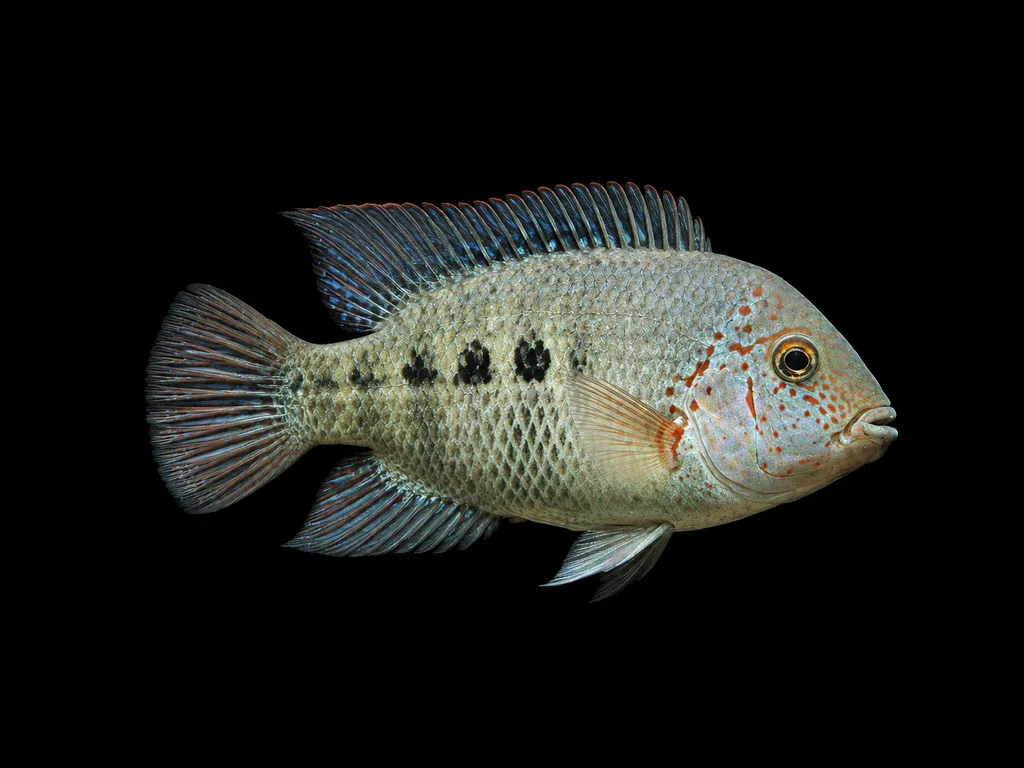 5.9 in (15 cm)66 gal (250 L)75–84°F (24–29°C)
Deppii cichlid
Herichthys deppii
5.9 in (15 cm) · 66 gal (250 L)
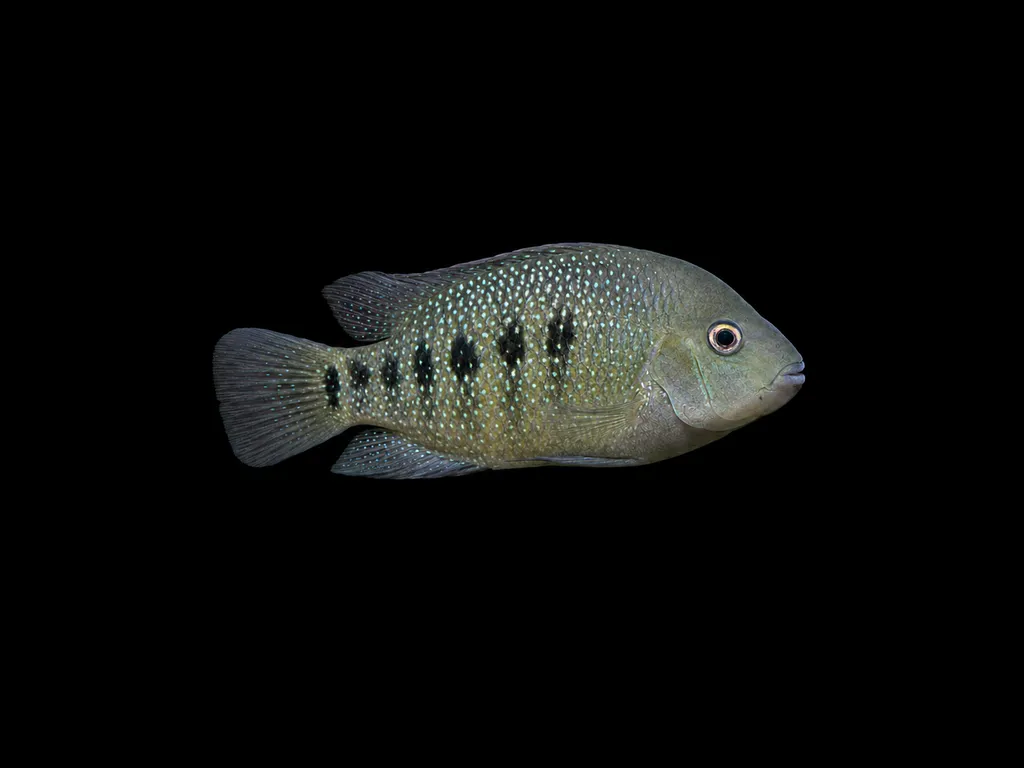 7.1 in (18 cm)79 gal (300 L)75–84°F (24–29°C)
Tamasopo cichlid
Herichthys tamasopoensis
7.1 in (18 cm) · 79 gal (300 L)
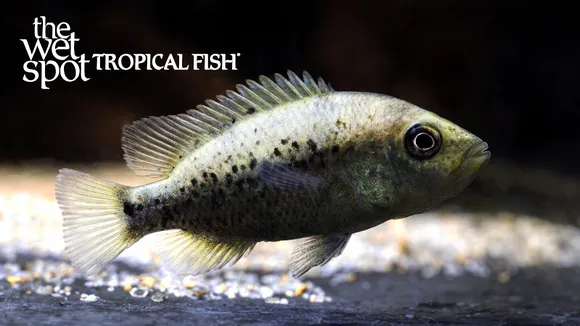 8.7 in (22 cm)79 gal (300 L)75–84°F (24–29°C)
Barton's cichlid
Herichthys bartoni
8.7 in (22 cm) · 79 gal (300 L)
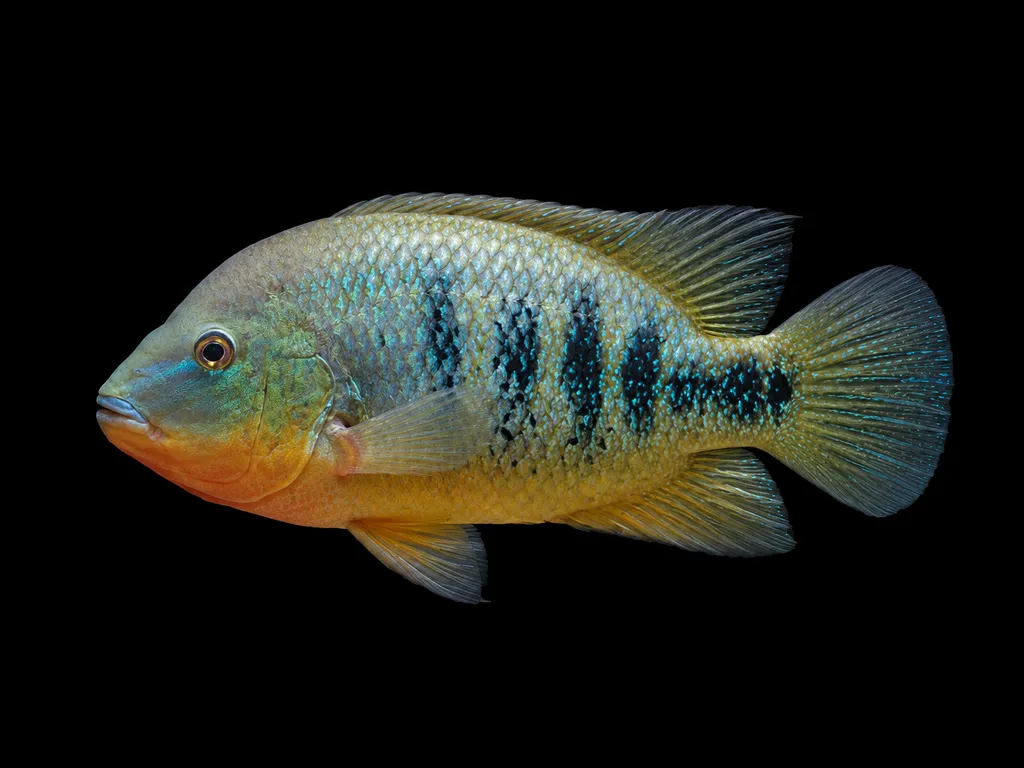 11.8 in (30 cm)106 gal (400 L)75–84°F (24–29°C)
Curve-bar cichlid
Herichthys labridens
11.8 in (30 cm) · 106 gal (400 L)
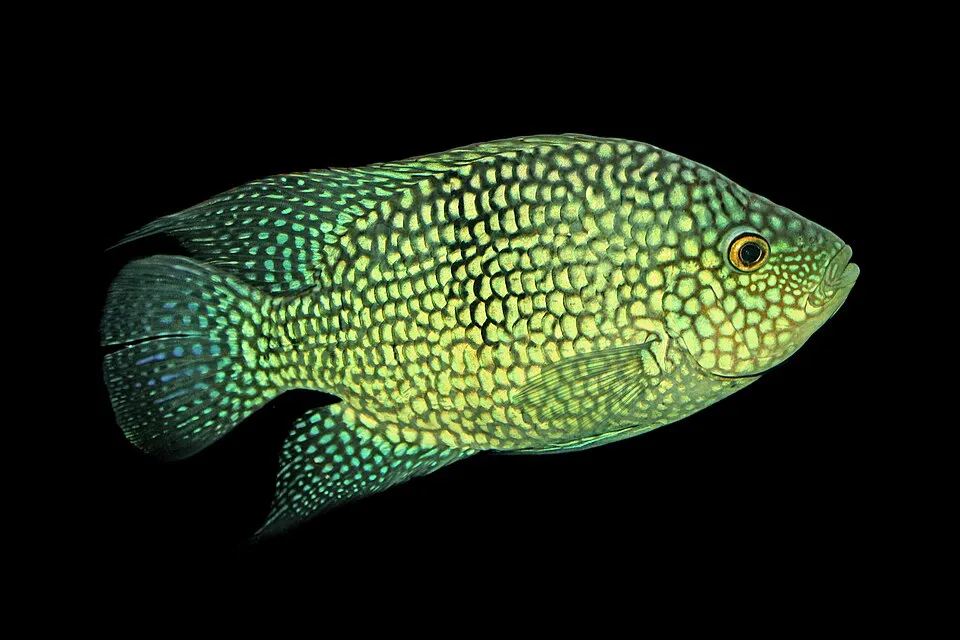 11.8 in (30 cm)55 gal (210 L)75–79°F (24–26°C)
Pearlscale cichlid
Herichthys carpintis
11.8 in (30 cm) · 55 gal (210 L)
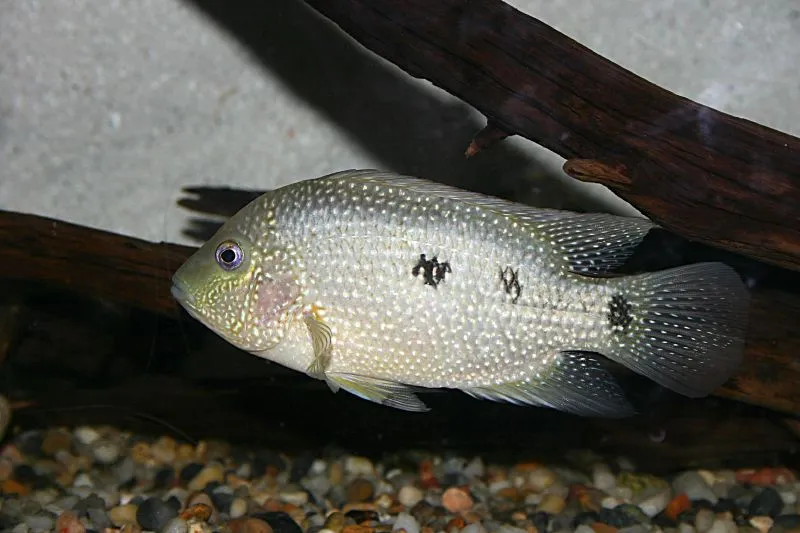 11.8 in (30 cm)66 gal (250 L)68–90°F (20–32°C)
Texas cichlid
Herichthys cyanoguttatus
11.8 in (30 cm) · 66 gal (250 L)