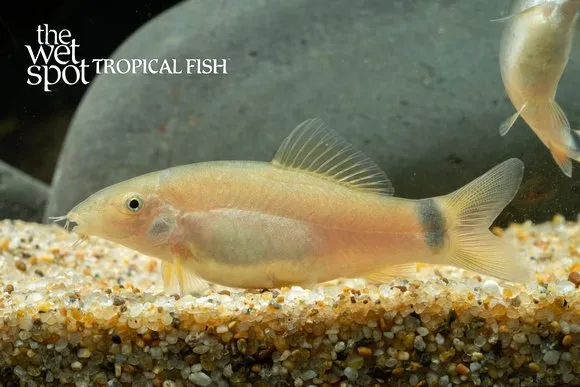
Sun loach
Yasuhikotakia eos
FreshwaterFish
Care at a glance
- Temperature
- 73–82°F
- 23–28°C
- pH
- 6.0–7.5
- Adult size
- 4.3 in
- 11 cm
- Minimum tank
- 53 gal
- 200 L
- Temperament
- Aggressive
- Social behavior
- Social
- Tankmates
- With caution
- Swim level
- Bottom
- Difficulty
- Medium
- Breeding
- No record
- Rarity
- Common
- Family
- Botiidae
- Origin
- Mekong basin (Laos, Cambodia, Thailand) and Dong Nai drainage, southern Vietnam
Overview
Keep them in a group of at least five or six, ideally ten or more, in a tank of 200 liters or larger with a base around 120 by 30 cm. They are active, nocturnal, and aggressive, forming complex pecking orders within the group. Kept singly or in small numbers they turn withdrawn or fiercely nippy toward tankmates, so the group matters. They are intolerant of organic waste, so run a mature setup with a turnover around four to five times the tank volume per hour and a tight lid, since they jump. Feed sinking pellets, frozen foods, and the occasional snail. They are strictly freshwater with no brackish needs. Never release aquarium fish into the wild, and check your local rules before keeping or rehoming them.
In the wild
Sun loaches come from the Mekong basin across Laos, Cambodia, and Thailand, plus the Dong Nai drainage in southern Vietnam. They live along the bottom of flowing rivers and streams, working through crevices in rock and wood. To match that, give them a long tank of at least 200 liters with a soft sand bed, plus rocks, driftwood, and caves to wedge into. Keep the water warm at 23 to 28 C, around pH 6 to 7.5, and keep it moving with strong, well oxygenated flow.
Good to know
This is a botiid loach in the family Botiidae, reaching about 11 cm as an adult. Like other botiids it carries sharp spines below the eyes, so handle it with a container rather than a net to avoid tangles and injury. There is no reliable record of it breeding in the aquarium. Watch new imports for skinny disease, a wasting condition caused by a Spironucleus flagellate.
Did you know
The spines tucked below each eye are a defensive trick. When the loach feels threatened it can flick them out, and they readily snag netting and even the skin of a larger fish that tries to swallow it. That is why hobbyists move these loaches in a cup or bag instead of a net.
Common questions
What size tank does a Sun loach need?
A Sun loach needs at least 53 gal (200 L). It spends most of its time in the bottom.
What temperature and pH does a Sun loach need?
A Sun loach is comfortable at 73–82°F (23–28°C) with a pH of 6.0–7.5.
How big does a Sun loach get?
An adult Sun loach reaches about 4.3 in (11 cm).
Related species
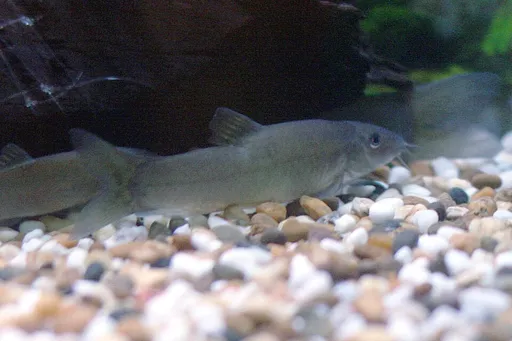 5.9 in (15 cm)53 gal (200 L)75–82°F (24–28°C)
Leconte's loach
Yasuhikotakia lecontei
5.9 in (15 cm) · 53 gal (200 L)
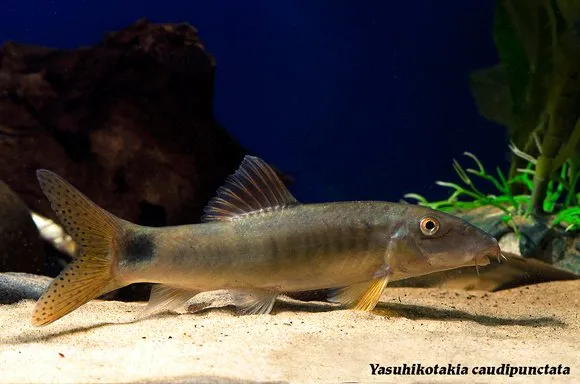 4.3 in (11 cm)37 gal (140 L)73–82°F (23–28°C)
Spottail loach
Yasuhikotakia caudipunctata
4.3 in (11 cm) · 37 gal (140 L)
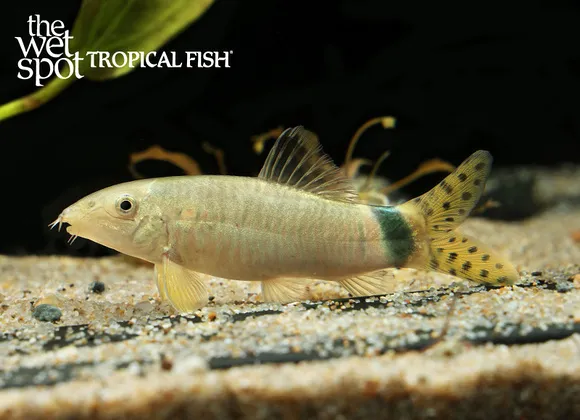 4.7 in (12 cm)42 gal (160 L)73–82°F (23–28°C)
Splendid loach
Yasuhikotakia splendida
4.7 in (12 cm) · 42 gal (160 L)
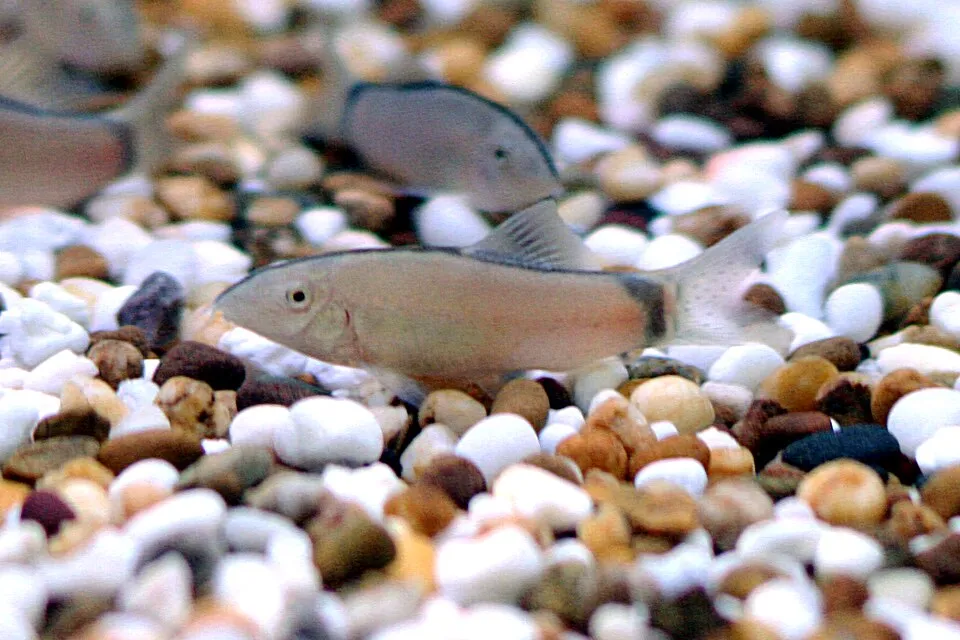 3.3 in (8.5 cm)37 gal (140 L)73–82°F (23–28°C)
Skunk loach
Yasuhikotakia morleti
3.3 in (8.5 cm) · 37 gal (140 L)
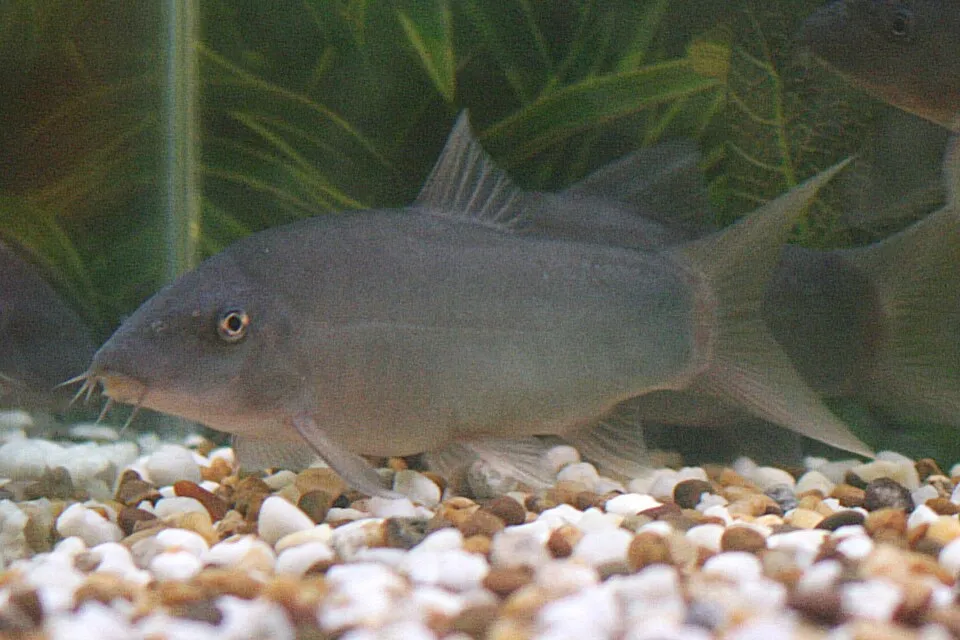 9.8 in (25 cm)75 gal (285 L)73–82°F (23–28°C)
Redtail loach
Yasuhikotakia modesta
9.8 in (25 cm) · 75 gal (285 L)
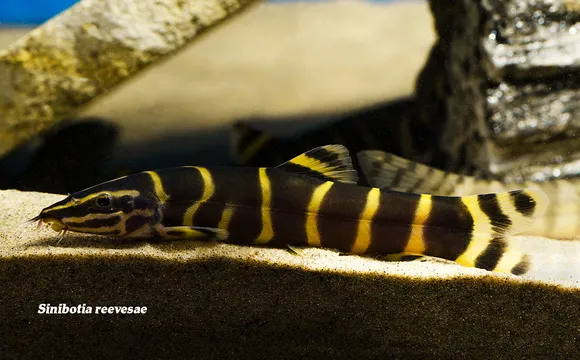 4.3 in (11 cm)37 gal (140 L)64–77°F (18–25°C)
Sichuan golden loach
Sinibotia reevesae
4.3 in (11 cm) · 37 gal (140 L)