Spilo
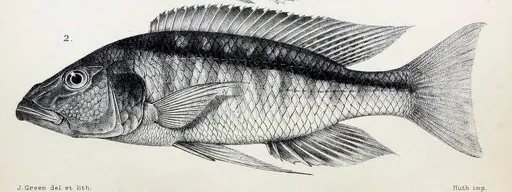
Champsochromis spilorhynchus
FreshwaterFish
Care at a glance
- Temperature
- 75–81°F
- 24–27°C
- pH
- 7.5–8.5
- Adult size
- 15.7 in
- 40 cm
- Minimum tank
- 125 gal
- 475 L
- Temperament
- Mostly peaceful
- Social behavior
- Solitary
- Own kind
- One male per tank
- Tankmates
- With caution
- Swim level
- Middle
- Difficulty
- Medium
- Breeding
- No record
- Rarity
- Very rare
- Family
- Cichlidae
- Origin
- Lake Malombe, Lake Malawi
Overview
This is a solitary, predatory fish that needs a very large tank of at least 475 liters with open water to swim and chase. It cruises the middle of the tank and will eat fish small enough to fit in its mouth, so choose tankmates carefully. Feed a high-protein carnivore diet of quality pellets and frozen foods; avoid feeder fish, which carry disease. Keep hard, alkaline, warm water with strong filtration.
In the wild
The spilo comes from Lake Malombe and Lake Malawi in East Africa, hunting in open water away from cover. Malawi water is hard and alkaline, so it needs the same: pH around 7.5 to 8.5 and a temperature in the mid-20s C. The real requirement is space, a long tank with lots of open swimming room rather than rockwork. This is an open-water predator, not a rock dweller.
Good to know
Champsochromis spilorhynchus is a large cichlid in the family Cichlidae, built as a streamlined, fast pursuit predator with an elongated body and a big mouth. It is one of the larger Malawi cichlids, reaching around 40 cm. Like other Malawi haps, it is a maternal mouthbrooder, with the female holding eggs and fry in her mouth. Its wild population is considered stable.
Did you know
It hunts more like an open-ocean fish than a typical lake cichlid, running down prey in midwater with bursts of speed rather than ambushing from cover. That kind of chase-down predation is unusual among Lake Malawi's cichlids.
Common questions
What size tank does a Spilo need?
A Spilo needs at least 125 gal (475 L). It spends most of its time in the middle.
What temperature and pH does a Spilo need?
A Spilo is comfortable at 75–81°F (24–27°C) with a pH of 7.5–8.5.
How big does a Spilo get?
An adult Spilo reaches about 15.7 in (40 cm).
Related species
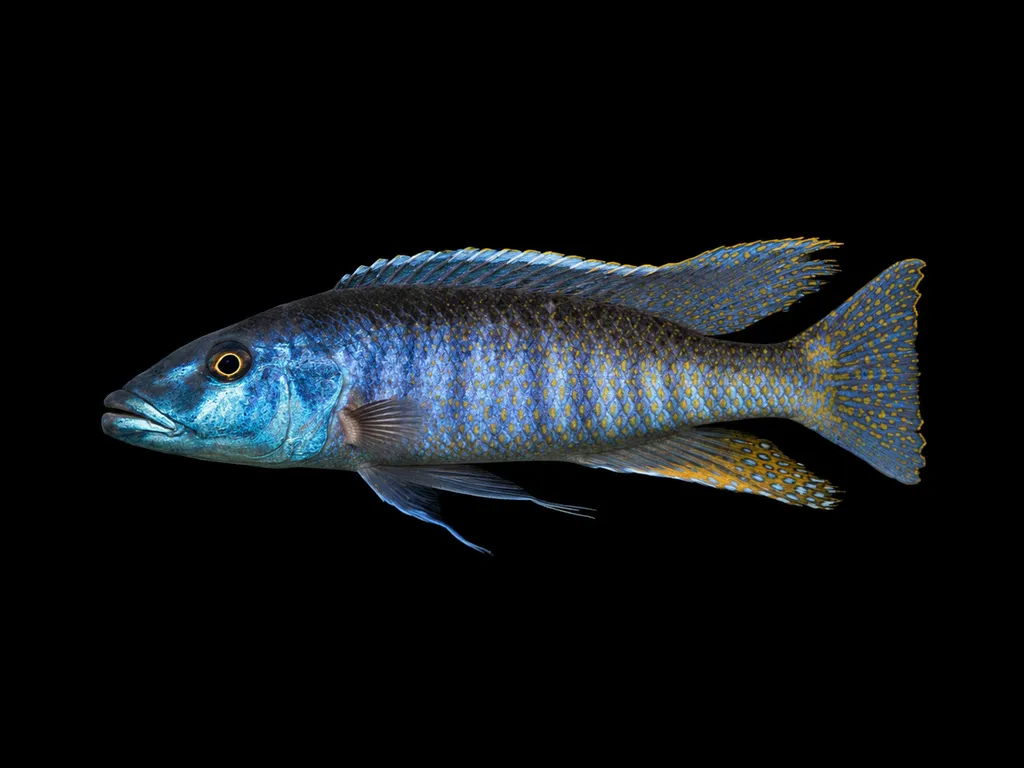 12.6 in (32 cm)185 gal (700 L)75–81°F (24–27°C)
Malawi trout cichlid
Champsochromis caeruleus
12.6 in (32 cm) · 185 gal (700 L)
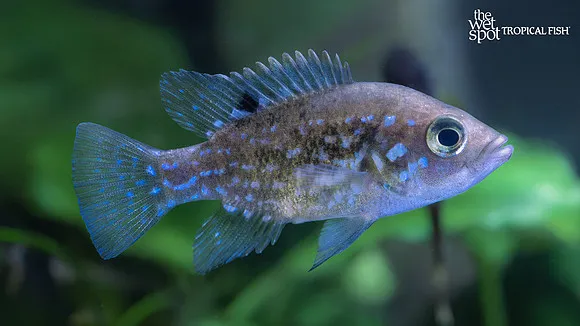 15.7 in (40 cm)119 gal (450 L)73–82°F (23–28°C)
Ngege tilapia
Oreochromis esculentus
15.7 in (40 cm) · 119 gal (450 L)
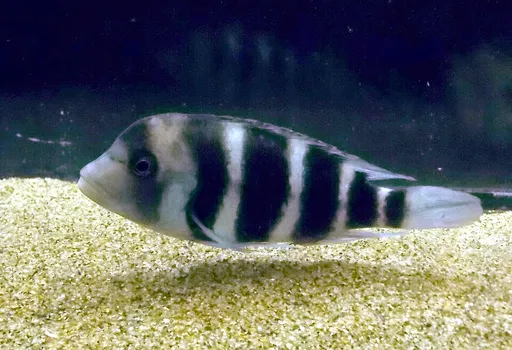 13.8 in (35 cm)119 gal (450 L)75–81°F (24–27°C)
Blue zaire frontosa
Cyphotilapia gibberosa
13.8 in (35 cm) · 119 gal (450 L)
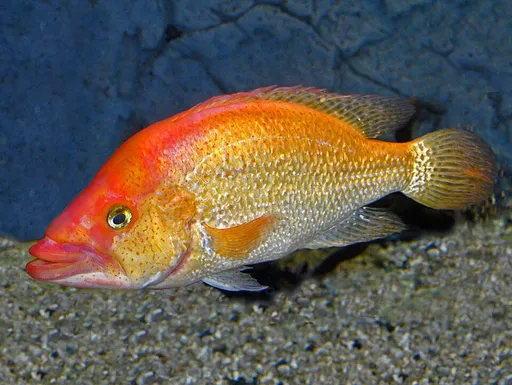 19.7 in (50 cm)151 gal (570 L)77–86°F (25–30°C)
Bay snook
Petenia splendida
19.7 in (50 cm) · 151 gal (570 L)
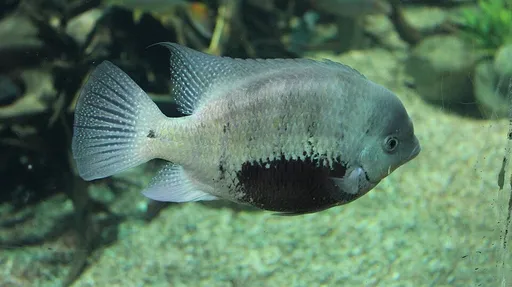 11.8 in (30 cm)119 gal (450 L)77–86°F (25–30°C)
Pantano cichlid
Cincelichthys pearsei
11.8 in (30 cm) · 119 gal (450 L)
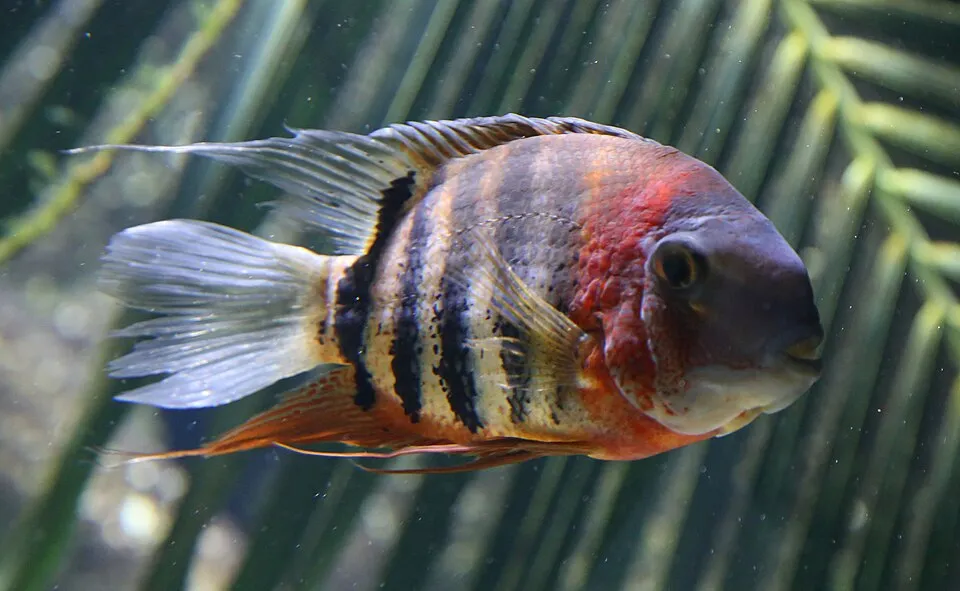 11.8 in (30 cm)65 gal (245 L)72–84°F (22–29°C)
Severum
Heros efasciatus
11.8 in (30 cm) · 65 gal (245 L)