Spangled cichlid
Acaronia vultuosa
Also known as Big eye cichlid
FreshwaterFish
Care at a glance
- Temperature
- 75–82°F
- 24–28°C
- pH
- 5.5–7.2
- Adult size
- 5.9 in
- 15 cm
- Minimum tank
- 79 gal
- 300 L
- Temperament
- Aggressive
- Social behavior
- Solitary
- Tankmates
- With caution
- Swim level
- Middle
- Diet
- Carnivore
- Difficulty
- Medium
- Breeding
- Substrate spawner · Medium
- Rarity
- Rare
- Family
- Cichlidae
- Origin
- Orinoco basin
Overview
The spangled cichlid is a large-eyed ambush predator that lurks in the middle of a planted tank. It is best kept by someone who has kept cichlids before.
Did you know
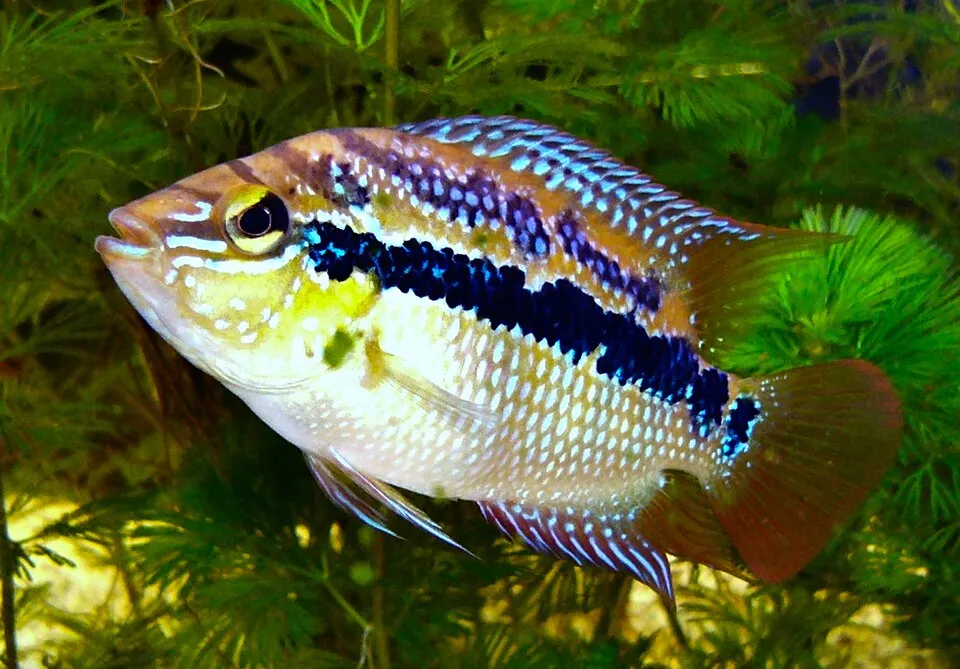
The spangled cichlid's species name, vultuosa, comes from the Latin for a grimacing, expressive face. It refers to the dark bars that run through the eyes and across the cheeks. They give this big-eyed fish a permanently stern, scowling look.
Caring for the spangled cichlid
Give a spangled cichlid a tank of at least 79 gal (300 L), well planted and stocked with wood. Add leaf litter over a soft floor, and keep the water still to gently moving. It hangs in the middle of the tank among the plants and wood, waiting under cover for prey.
Keep the water warm and soft to neutral, at 75 to 82°F (24 to 28°C) and a pH of 5.5 to 7.2. Feed meaty foods such as prawn, mussel, earthworms and large pellets.
Keep it alone or as a single pair. It is an aggressive ambush predator and will hunt any small fish you add. Choose only tank mates too big to be swallowed. It is a substrate spawner that guards its eggs and fry, and breeding it is moderately difficult.
Good to know
The spangled cichlid belongs to the cichlid family and was described by Kullander in 1989. Like its relatives, it has a strongly protrusible mouth that shoots forward to suck in prey. That trait is behind the basketmouth nickname its genus carries.
In the wild
The spangled cichlid comes from the Orinoco basin. It lurks among plants in shallow, weedy lagoons and slow backwaters.
Common questions
What size tank does a spangled cichlid need?
A spangled cichlid needs at least 79 gal (300 L). It spends most of its time in the middle.
What temperature and pH does a spangled cichlid need?
A spangled cichlid is comfortable at 75–82°F (24–28°C) with a pH of 5.5–7.2.
What does a spangled cichlid eat?
A spangled cichlid is an ambush predator that eats meaty foods such as prawn, mussel, earthworms and large pellets. It will also hunt any small fish in its tank.
How big does a spangled cichlid get?
An adult spangled cichlid reaches about 5.9 in (15 cm).
How does a spangled cichlid breed?
A spangled cichlid is a substrate spawner that guards its eggs and fry. Breeding it is moderately difficult.
Related species
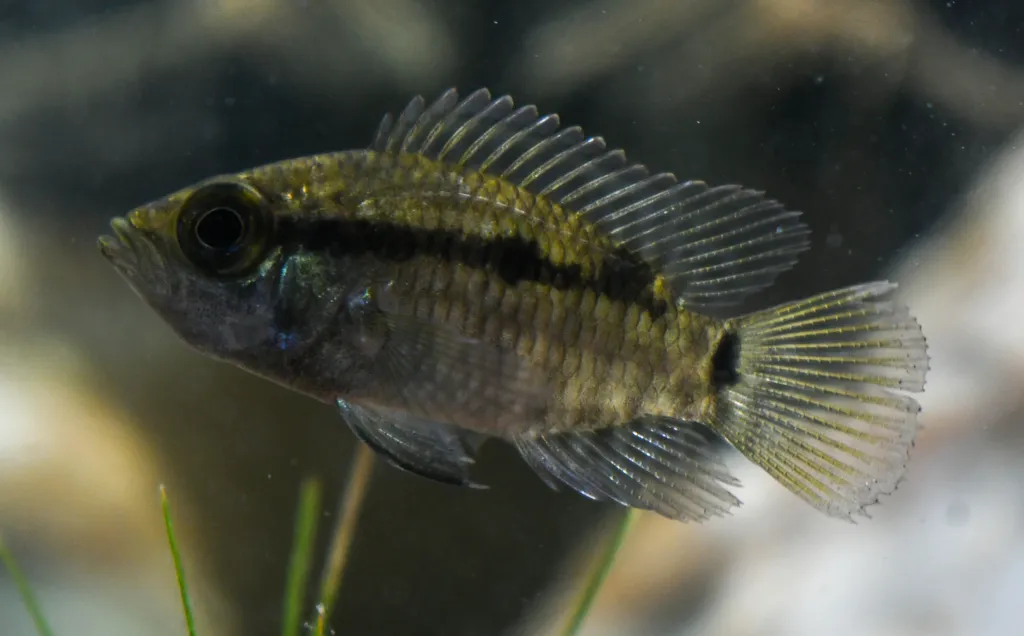 7.9 in (20 cm)79 gal (300 L)75–82°F (24–28°C)
Bigeye basketmouth
Acaronia nassa
7.9 in (20 cm) · 79 gal (300 L)
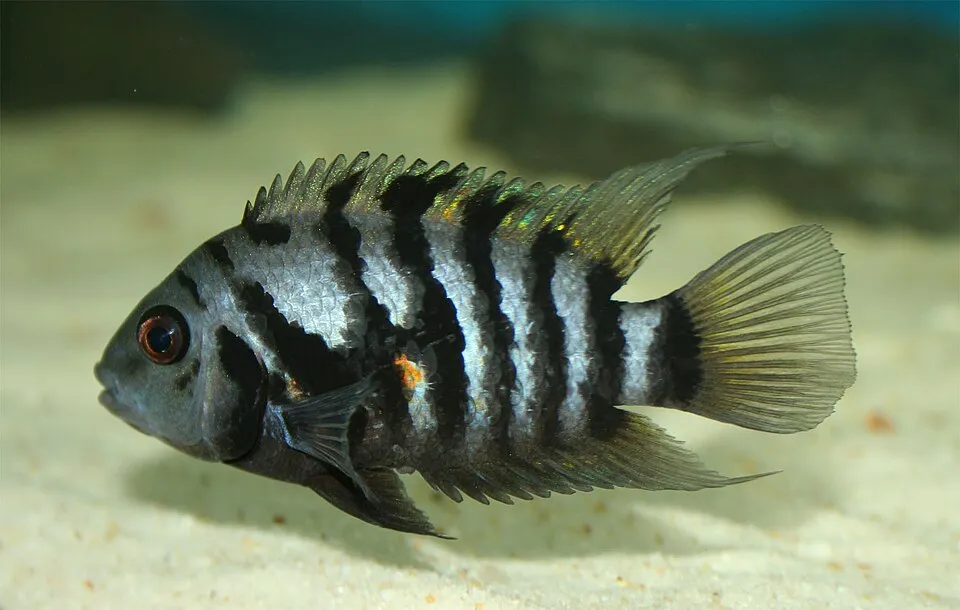 5.9 in (15 cm)25 gal (95 L)75–82°F (24–28°C)
Convict cichlid
Amatitlania nigrofasciata
5.9 in (15 cm) · 25 gal (95 L)
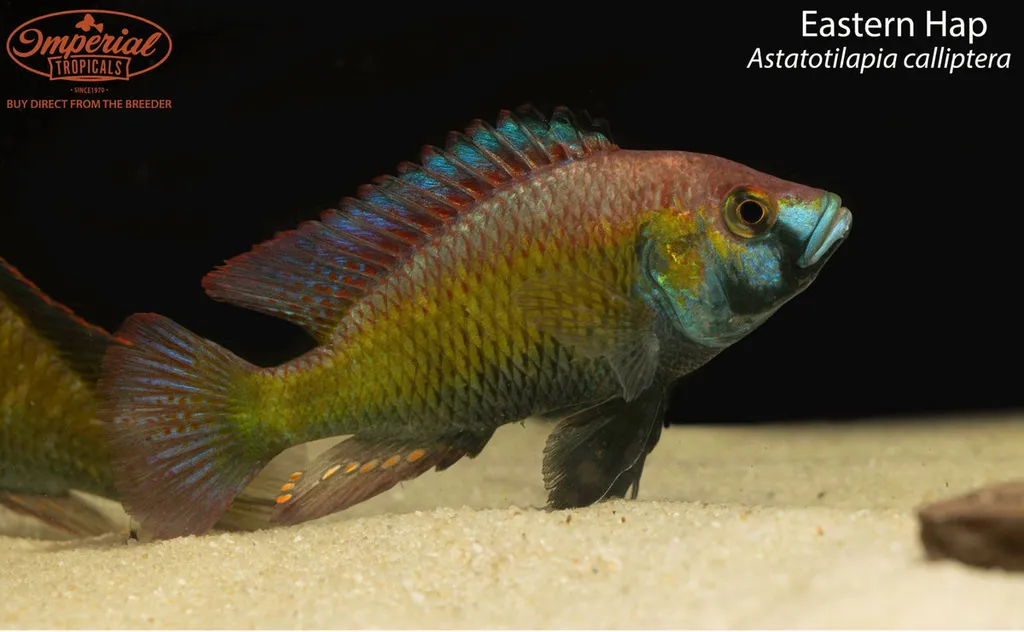 5.9 in (15 cm)66 gal (250 L)73–82°F (23–28°C)
Eastern happy
Astatotilapia calliptera
5.9 in (15 cm) · 66 gal (250 L)
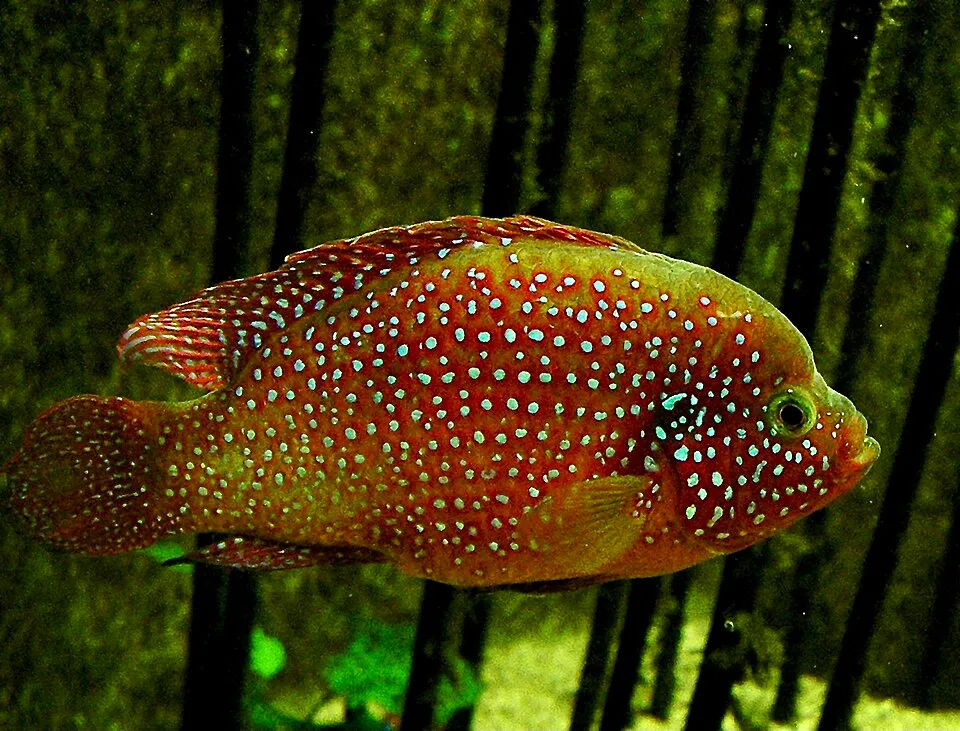 5.9 in (15 cm)30 gal (115 L)72–82°F (22–28°C)
Jewel cichlid
Rubricatochromis bimaculatus
5.9 in (15 cm) · 30 gal (115 L)
 5.9 in (15 cm)26 gal (100 L)72–79°F (22–26°C)
Salvin's cichlid
Trichromis salvini
5.9 in (15 cm) · 26 gal (100 L)
- 5.9 in (15 cm)53 gal (200 L)73–81°F (23–27°C)
Zebra nyererei
Pundamilia pundamilia
5.9 in (15 cm) · 53 gal (200 L)