Six-banded distichodus
Distichodus sexfasciatus
FreshwaterFish
Care at a glance
- Temperature
- 72–79°F
- 22–26°C
- pH
- 6.0–7.5
- Adult size
- 15.7 in
- 40 cm
- Minimum tank
- 143 gal
- 540 L
- Temperament
- Aggressive
- Social behavior
- Solitary
- Tankmates
- With caution
- Swim level
- Middle
- Difficulty
- Difficult
- Breeding
- No record
- Rarity
- Common
- Family
- Distichodontidae
- Origin
- Congo River basin and Lake Tanganyika
Overview
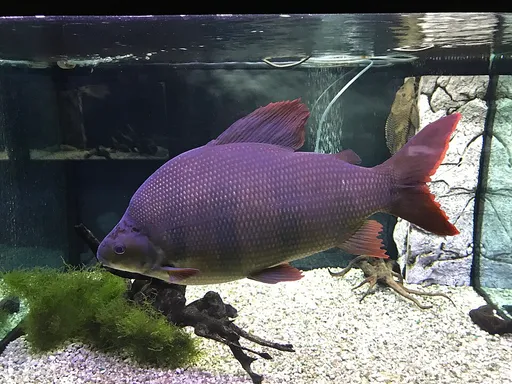
This is a tank-buster that turns spiteful with age, so plan around the adult and not the colorful juvenile in the shop. Keep one on its own in a tank of at least 540 liters, only alongside large robust tankmates that can hold their own. They are aggressive and swim in the middle of the water column, needing open space and a tight, heavy lid since they can push a loose cover off. Hold the temperature between 22 and 26 C and pH from 6 to 7.5. They devour soft plants, so feed a varied diet with plenty of vegetable matter and expect them to graze on anything green you add.
In the wild
Six-banded distichodus come from the Congo River basin and Lake Tanganyika, where they move through open water over sand and rock. To match that at home you need a very large tank, 540 liters at the minimum and more is better, with plenty of open swimming room, a sand or smooth substrate, and strong filtration to keep up with a big messy fish. Keep the water on the warm side, 22 to 26 C, with a pH from 6 to 7.5. Skip soft plants entirely, since they will be eaten, and stick to hardy attached species like Anubias and Java fern.
Good to know
This is a large characin in the family Distichodontidae, reaching about 40 cm as an adult. Breeding has no record in home tanks, so every fish in the trade is wild caught or farmed on a commercial scale rather than bred by hobbyists. They are long-lived and grow slowly into their full size, which is why the small juveniles get sold so often.
Did you know
The fish you see for sale is a juvenile in disguise. Young six-banded distichodus show bold dark bars and bright orange-red fins that draw buyers in, but as they grow toward 40 cm those colors fade and the temper sours, and most people are not ready for the spiteful adult that replaces the pretty little fish they bought.
Common questions
What size tank does a Six-banded distichodus need?
A Six-banded distichodus needs at least 143 gal (540 L). It spends most of its time in the middle.
What temperature and pH does a Six-banded distichodus need?
A Six-banded distichodus is comfortable at 72–79°F (22–26°C) with a pH of 6.0–7.5.
How big does a Six-banded distichodus get?
An adult Six-banded distichodus reaches about 15.7 in (40 cm).
Related species
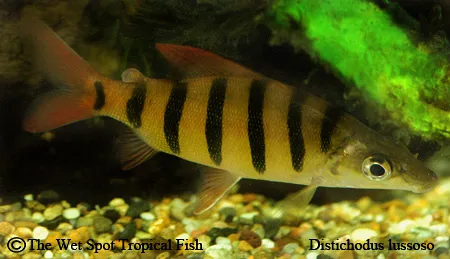 15 in (38 cm)119 gal (450 L)72–81°F (22–27°C)
Longnose distichodus
Distichodus lusosso
15 in (38 cm) · 119 gal (450 L)
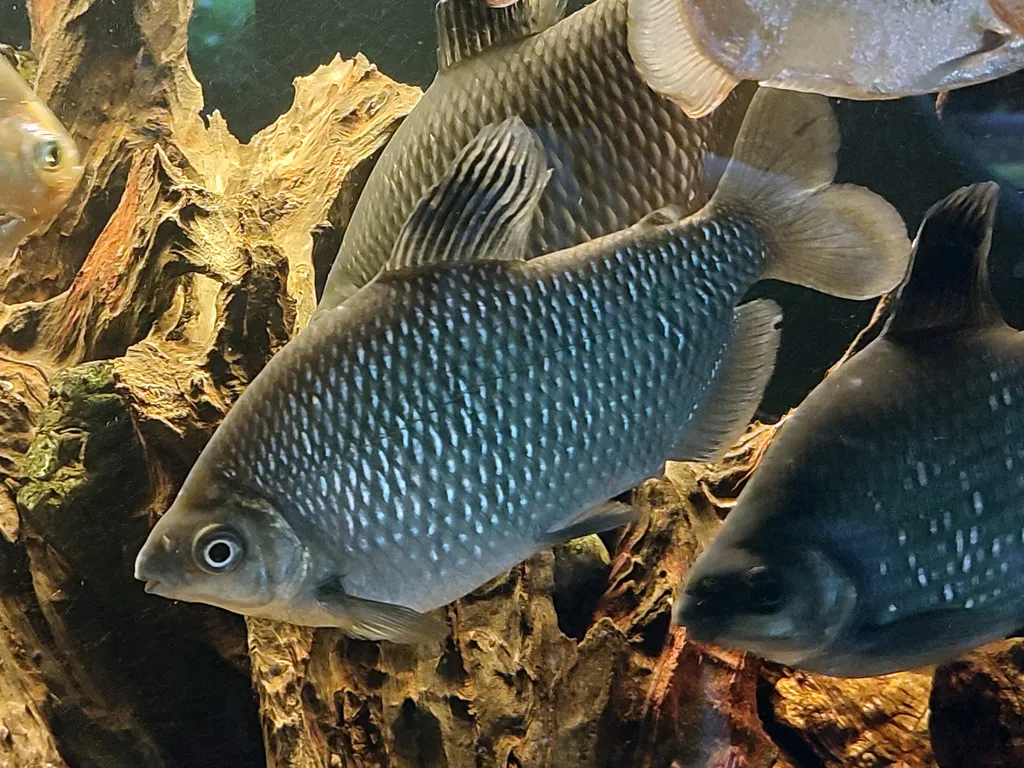 7.9 in (20 cm)53 gal (200 L)73–81°F (23–27°C)
Silver distichodus
Distichodus affinis
7.9 in (20 cm) · 53 gal (200 L)
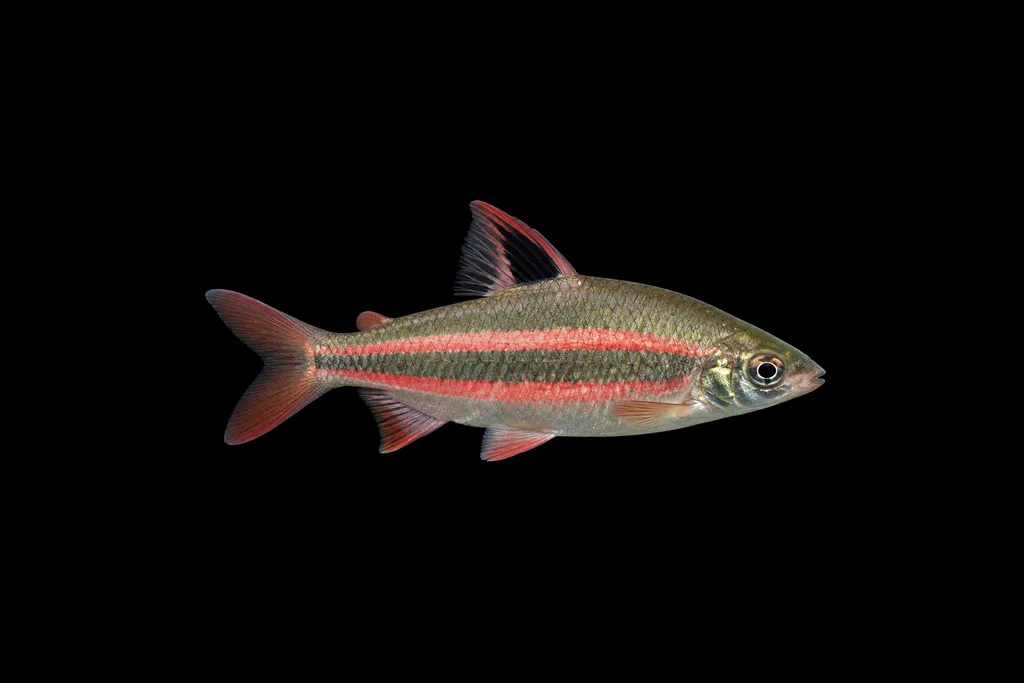 7.5 in (19 cm)40 gal (150 L)73–82°F (23–28°C)
Noboli distichodus
Distichodus noboli
7.5 in (19 cm) · 40 gal (150 L)
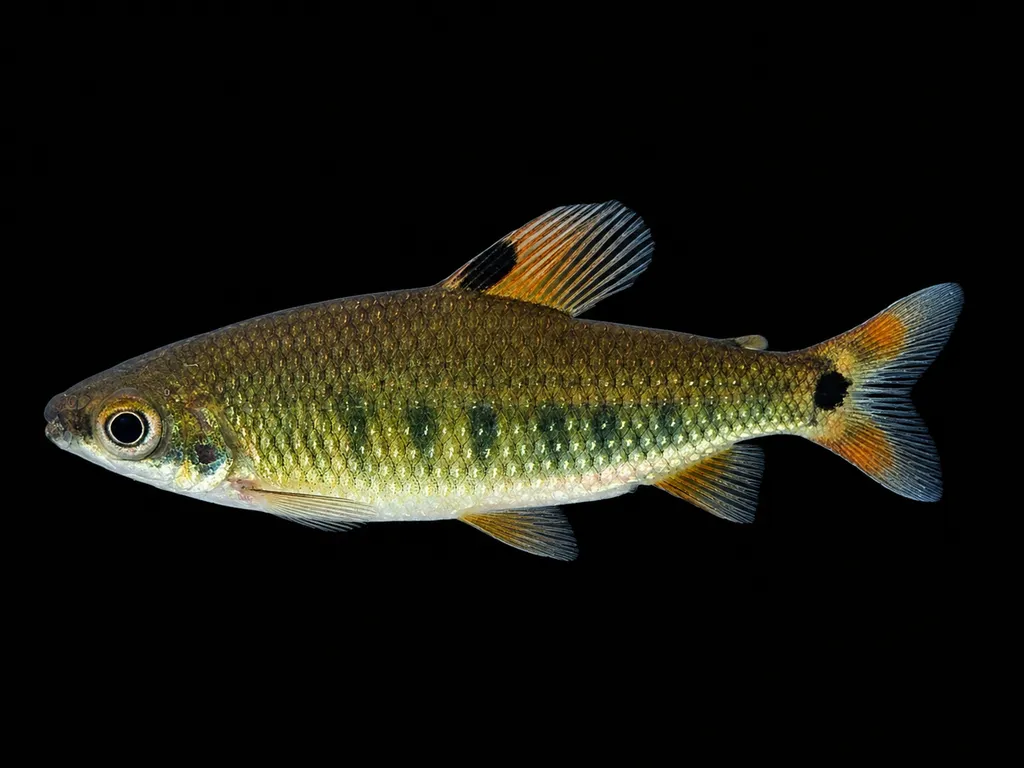 3 in (7.5 cm)30 gal (112 L)73–81°F (23–27°C)
Dwarf distichodus
Distichodus decemmaculatus
3 in (7.5 cm) · 30 gal (112 L)
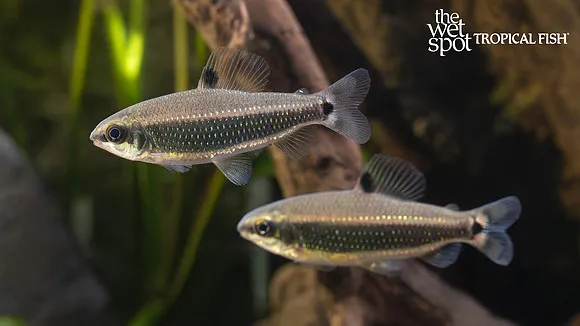 2.4 in (6 cm)20 gal (75 L)72–79°F (22–26°C)
Green dwarf distichodus
Distichodus teugelsi
2.4 in (6 cm) · 20 gal (75 L)
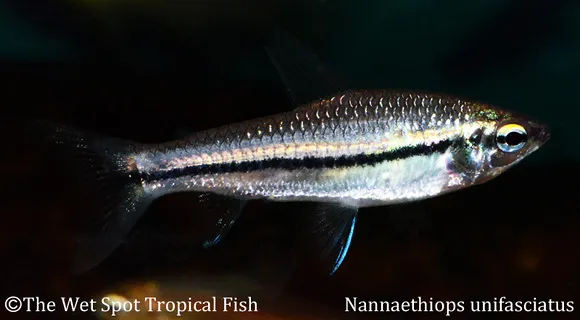 2.6 in (6.5 cm)16 gal (60 L)72–79°F (22–26°C)
African oneline tetra
Nannaethiops unitaeniatus
2.6 in (6.5 cm) · 16 gal (60 L)