Scooter dragonet
Synchiropus ocellatus
Also known as Scooter Blenny, Ocellated Dragonet, Red Scooter Dragonet
SaltwaterFish
Care at a glance
- Temperature
- 75–81°F
- 24–27°C
- pH
- 8.1–8.4
- Adult size
- 3.5 in
- 9 cm
- Minimum tank
- 29 gal
- 110 L
- Temperament
- Peaceful
- Social behavior
- Solitary
- Tankmates
- With caution
- Swim level
- Bottom
- Difficulty
- Medium
- Breeding
- Hard
- Rarity
- Common
- Reef safe
- Reef safe
- Family
- Callionymidae
- Origin
- Indo-Pacific, from Indonesia and the Philippines to French Polynesia, north to Japan and south to Australia
Overview
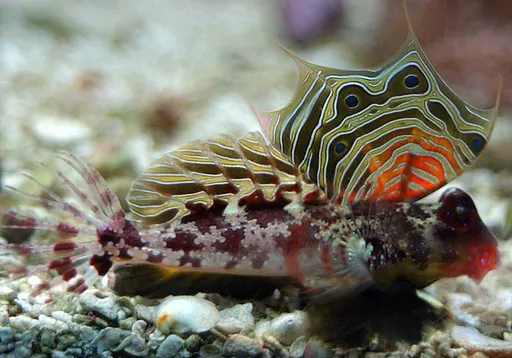
Scooter dragonets are peaceful, unhurried bottom feeders and reef safe, leaving corals and invertebrates alone. The catch is diet: in the wild and in the tank, their main food is a steady supply of live copepods and amphipods picked out of sand and rock, the same pod dependent lifestyle as a mandarinfish, so the tank needs to be well established with a mature refugium or a strong standing pod population before one is added. They are not fast eaters and take real time to hunt down each meal, so they can starve in a newer or overly clean system even while other fish look well fed. Keep one per tank, since males will fight, and supplement the natural pod supply with regular live copepod additions and frozen foods like mysis, brine shrimp, and finely chopped seafood once the fish is settled enough to notice them. Breeding has been done commercially but is difficult for home aquarists, with successful captive spawns mostly limited to dedicated breeding operations.
In the wild
Found across the Indo-Pacific from Indonesia and the Philippines to French Polynesia, north to Japan and south to Australia, on sandy bottoms and coral rubble at depths of roughly 1 to 30 meters. It spends its day hopping across the substrate in short bursts, pausing to peck at tiny prey between hops. The aquarium needs a mature setup at least six to eight months old with a deep sand bed and plenty of live rock arranged into crevices and overhangs to forage through, plus a tight fitting lid since dragonets are capable jumpers.
Good to know
A member of the dragonet family Callionymidae (some references place it in the genus Neosynchiropus), reaching about 9 cm, mottled brown, tan, and white with scattered eyespots that give it the ocellated and scooter names, the latter for its habit of scooting in short bursts across the bottom. Like other dragonets it has no scales and relies on a thick mucus coat for protection, and males can be told apart from females by a taller, more pointed first dorsal fin used in dominance displays.
Did you know
A scooter dragonet does not swim so much as bounce, covering the bottom in a series of short hops rather than a smooth glide, which is exactly where both its common name and its knack for finding pods tucked into every nook of the rock and sand come from.
Common questions
What size tank does a Scooter dragonet need?
A Scooter dragonet needs at least 29 gal (110 L). It spends most of its time in the bottom.
What temperature and pH does a Scooter dragonet need?
A Scooter dragonet is comfortable at 75–81°F (24–27°C) with a pH of 8.1–8.4.
How big does a Scooter dragonet get?
An adult Scooter dragonet reaches about 3.5 in (9 cm).
Related species
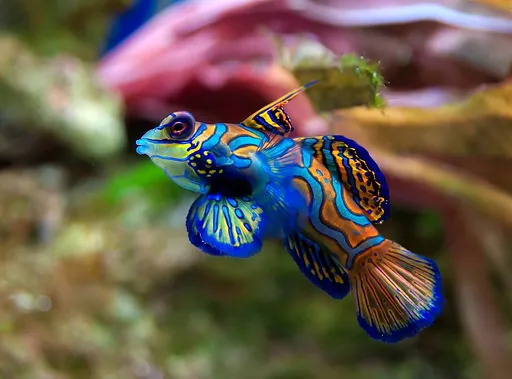 3.1 in (8 cm)29 gal (110 L)75–81°F (24–27°C)
Green mandarin dragonet
Synchiropus splendidus
3.1 in (8 cm) · 29 gal (110 L)
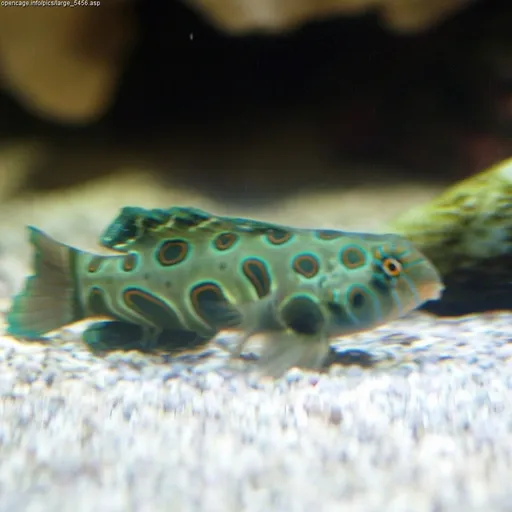 2.8 in (7 cm)29 gal (110 L)75–81°F (24–27°C)
Spotted mandarin dragonet
Synchiropus picturatus
2.8 in (7 cm) · 29 gal (110 L)
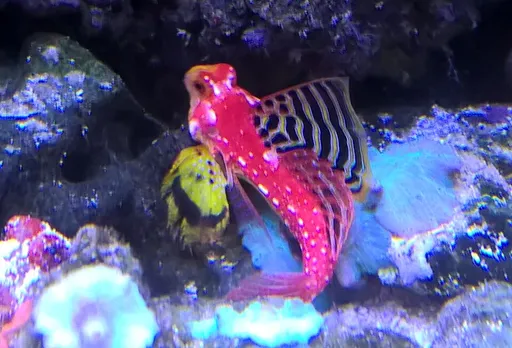 2.4 in (6 cm)53 gal (200 L)73–81°F (23–27°C)
Ruby red dragonet
Synchiropus sycorax
2.4 in (6 cm) · 53 gal (200 L)
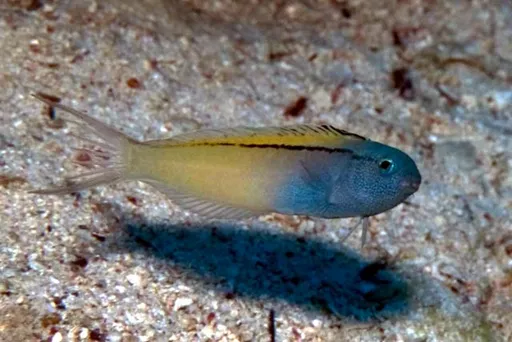 3.5 in (9 cm)20 gal (75 L)75–81°F (24–27°C)
Blackline fang blenny
Meiacanthus nigrolineatus
3.5 in (9 cm) · 20 gal (75 L)
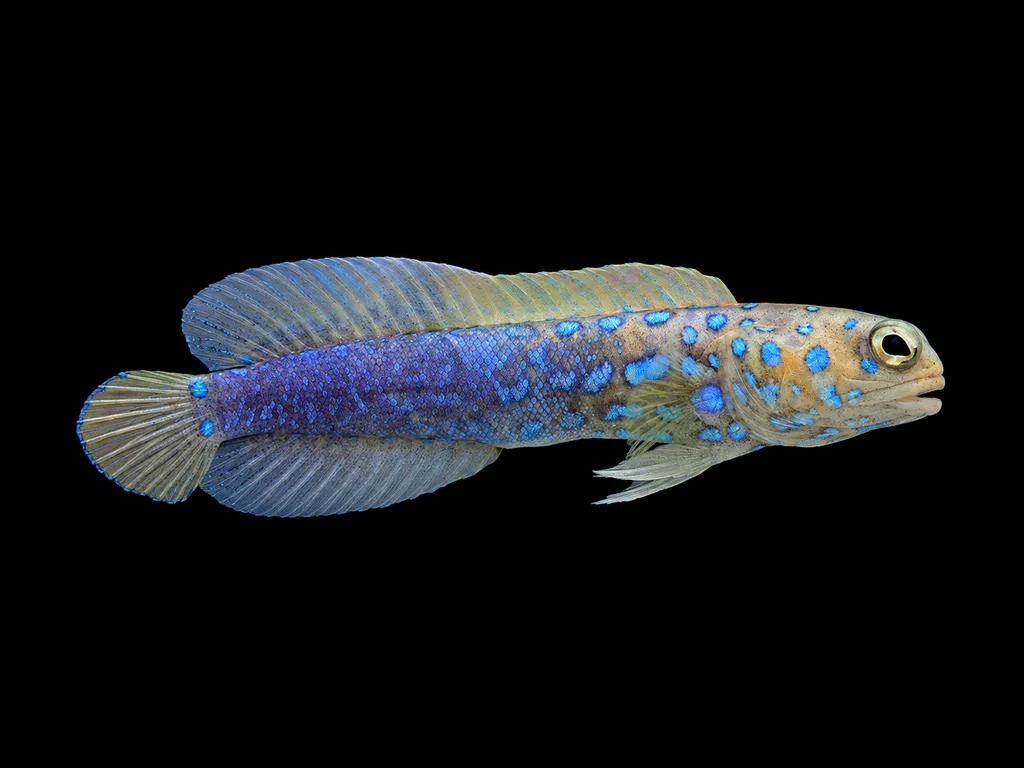 3.9 in (10 cm)30 gal (115 L)70–77°F (21–25°C)
Blue-spotted jawfish
Opistognathus rosenblatti
3.9 in (10 cm) · 30 gal (115 L)
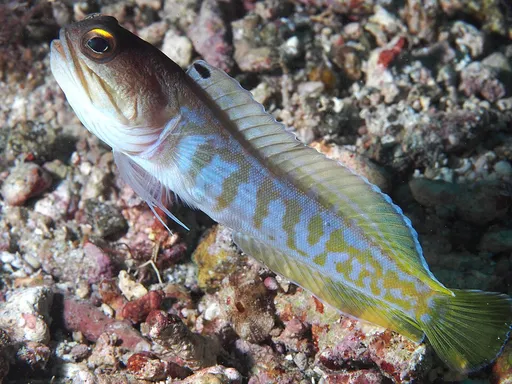 3.9 in (10 cm)30 gal (115 L)73–81°F (23–27°C)
Gold-specs jawfish
Opistognathus randalli
3.9 in (10 cm) · 30 gal (115 L)