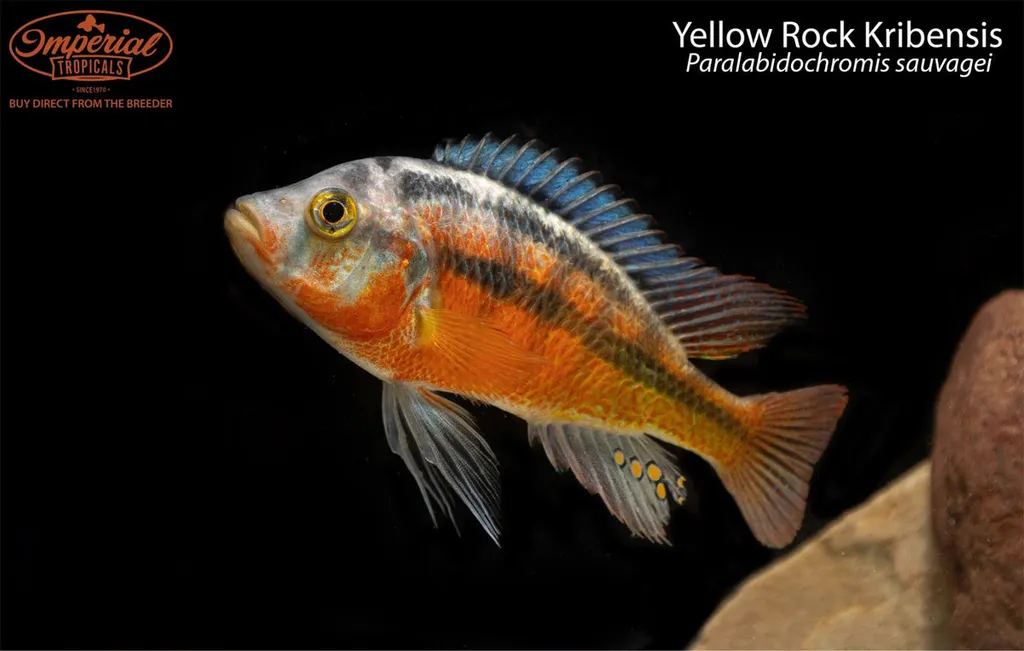
Rock kribensis
Paralabidochromis sauvagei
Also known as Haplochromis sauvagei, Sauvage's hap
FreshwaterFish
Care at a glance
- Temperature
- 73–81°F
- 23–27°C
- pH
- 7.0–8.5
- Adult size
- 4.7 in
- 12 cm
- Minimum tank
- 66 gal
- 250 L
- Temperament
- Mostly peaceful
- Social behavior
- Solitary
- Tankmates
- With caution
- Swim level
- Bottom
- Difficulty
- Medium
- Breeding
- Mouthbrooder · Medium
- Rarity
- Rare
- Family
- Cichlidae
- Origin
- Lake Victoria, Mwanza Gulf
Overview
The rock kribensis is a busy, rock-picking cichlid from Lake Victoria for a tank with plenty of stone. It is best with a little experience.
Did you know
The rock kribensis borrows its name from the West African kribs, some two thousand miles away. The two are not close relatives, and only a krib-like barred blush links this East African lake fish to them.
Caring for the rock kribensis
Give a rock kribensis at least 66 gal (250 L). Use a sand floor with generous stacked rock that forms caves, mazes and winding gaps for it to patrol and defend.
Keep the water hard, stable and neutral to alkaline, as the East African lakes require. Aim for 73 to 81°F (23 to 27°C) and a pH of 7.0 to 8.5. It works the bottom, picking small invertebrates from stone and crevice. Feed frozen bloodworms and mysis with a good cichlid pellet.
Keep a single fish or a male and female pair rather than several males, since rival males clash. It defends a patch of rock, so choose tank mates with some care.
It is a maternal mouthbrooder, and the female broods the eggs and fry in her mouth. Breeding it is moderately difficult.
Good to know
Paralabidochromis sauvagei is a cichlid of the family Cichlidae, also known as Haplochromis sauvagei and Sauvage's hap. Its species name honors the French naturalist Henri Emile Sauvage.
In the wild
The rock kribensis lives along rocky shores in the Mwanza Gulf and other parts of southern Lake Victoria. It works boulders and crevices for food.
Common questions
What size tank does a rock kribensis need?
A rock kribensis needs at least 66 gal (250 L). It spends most of its time in the bottom.
What temperature and pH does a rock kribensis need?
A rock kribensis is comfortable at 73–81°F (23–27°C) with a pH of 7.0–8.5.
What does a rock kribensis eat?
A rock kribensis picks small invertebrates from stone and crevice. Feed it frozen bloodworms and mysis with a good cichlid pellet.
How big does a rock kribensis get?
An adult rock kribensis reaches about 4.7 in (12 cm).
How does a rock kribensis breed?
Rock kribensis are maternal mouthbrooders, and the female broods the eggs and fry in her mouth. Breeding them is moderately difficult.
Related species
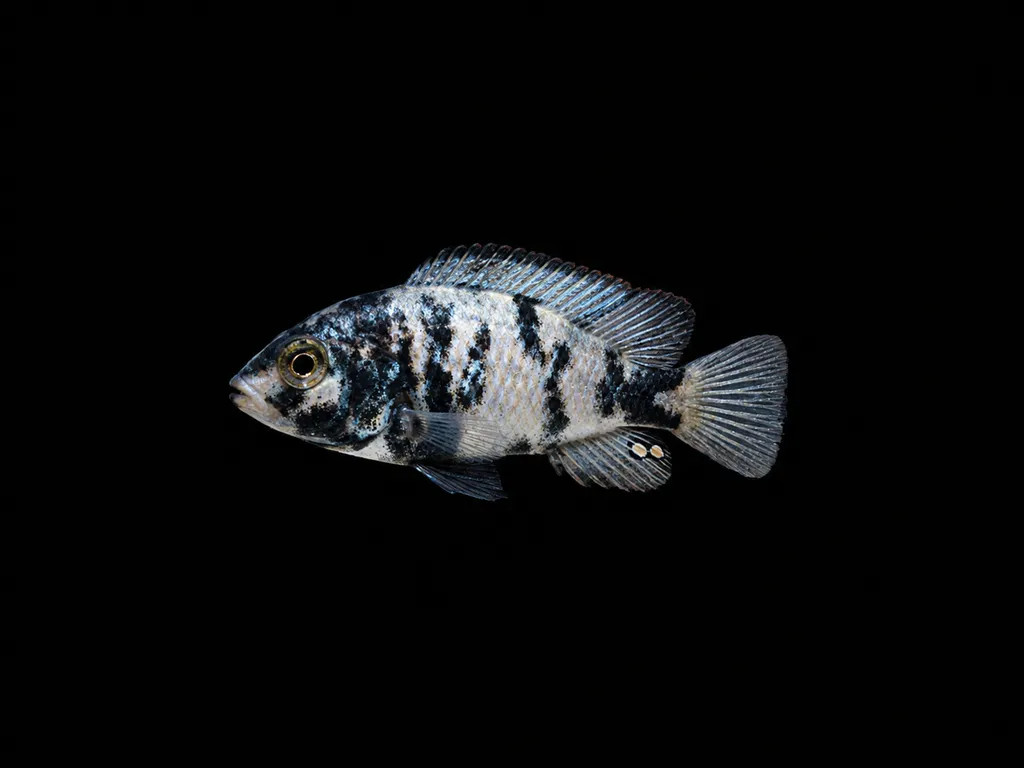 5.1 in (13 cm)66 gal (250 L)73–81°F (23–27°C)
Piebald hap
Paralabidochromis chromogynos
5.1 in (13 cm) · 66 gal (250 L)
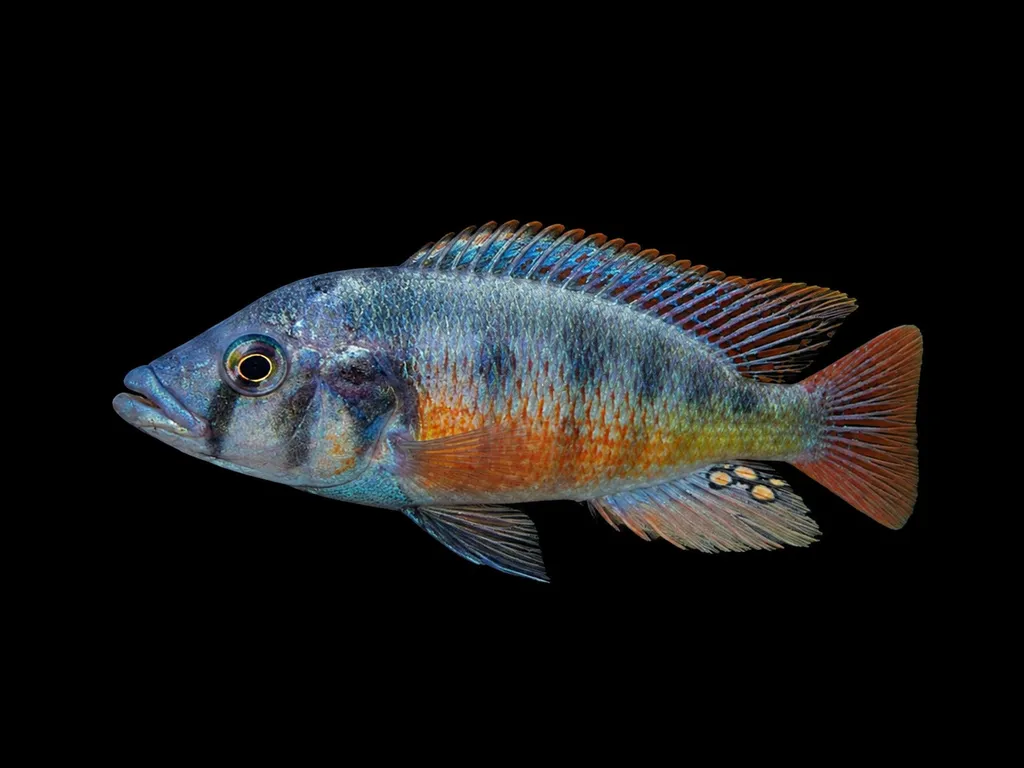 6.7 in (17 cm)66 gal (250 L)73–81°F (23–27°C)
Chilotes hap
Paralabidochromis chilotes
6.7 in (17 cm) · 66 gal (250 L)
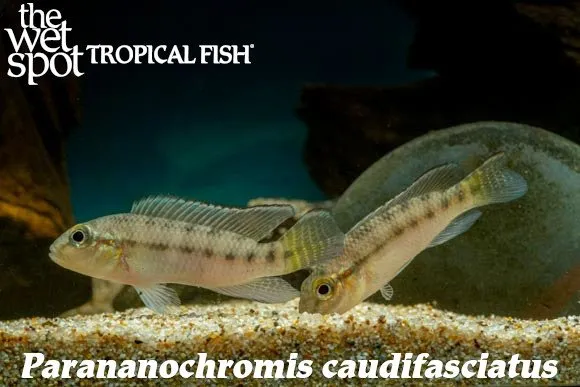 4.7 in (12 cm)42 gal (160 L)73–81°F (23–27°C)
Caudifasciatus parananochromis
Parananochromis caudifasciatus
4.7 in (12 cm) · 42 gal (160 L)
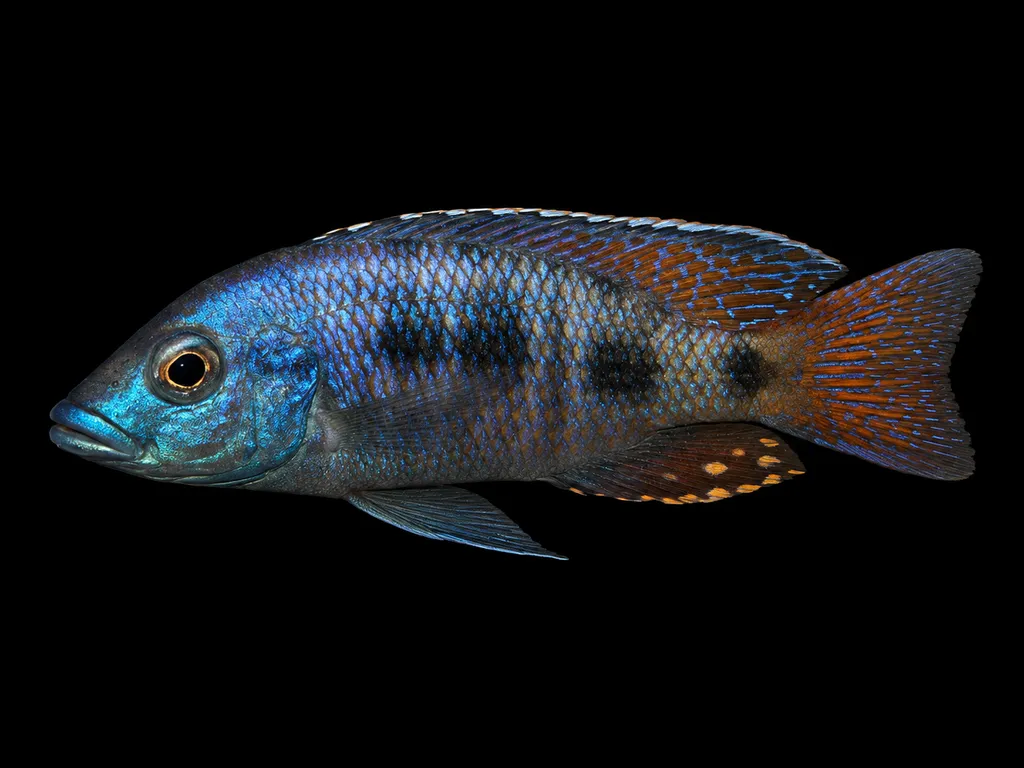 4.7 in (12 cm)79 gal (300 L)75–81°F (24–27°C)
Cave otopharynx
Otopharynx antron
4.7 in (12 cm) · 79 gal (300 L)
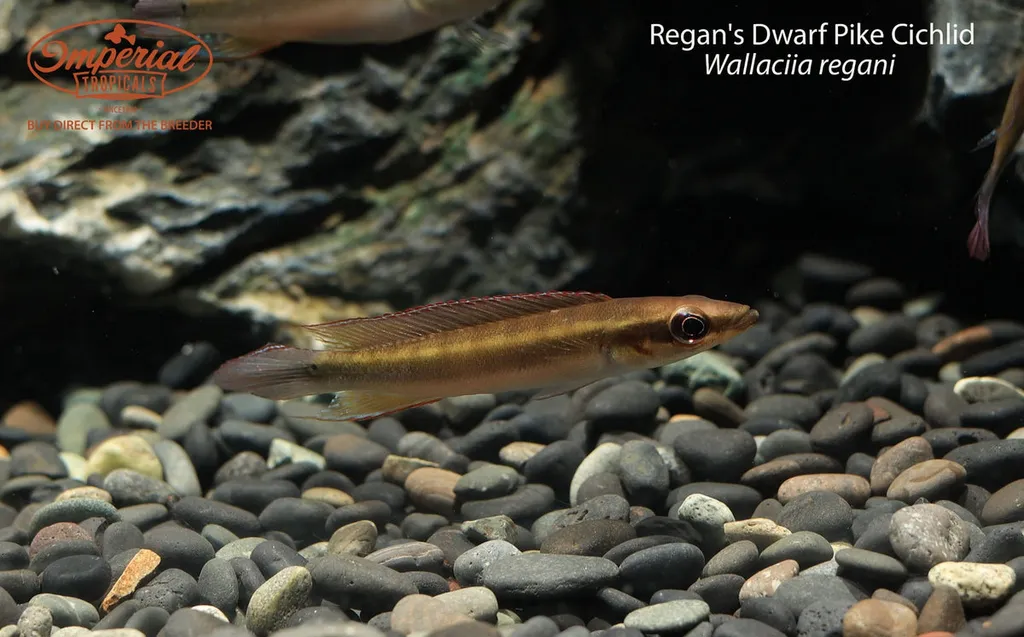 4.7 in (12 cm)40 gal (150 L)75–82°F (24–28°C)
Dwarf pike cichlid
Crenicichla regani
4.7 in (12 cm) · 40 gal (150 L)
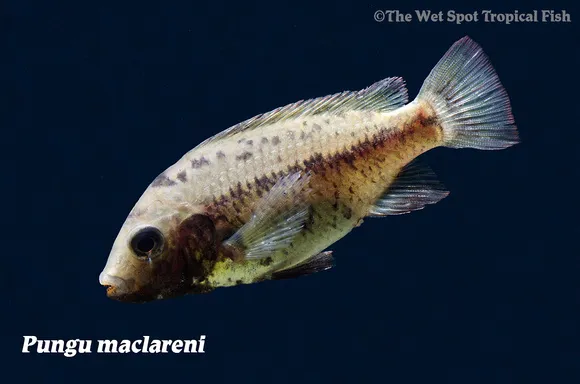 4.7 in (12 cm)53 gal (200 L)73–81°F (23–27°C)
Maclareni pungu
Pungu maclareni
4.7 in (12 cm) · 53 gal (200 L)