Red-lipped krib
Wallaceochromis rubrolabiatus
Also known as Pelvicachromis rubrolabiatus
FreshwaterFish
Care at a glance
- Temperature
- 73–81°F
- 23–27°C
- pH
- 5.5–7.0
- Adult size
- 3.1 in
- 8 cm
- Minimum tank
- 42 gal
- 160 L
- Temperament
- Mostly peaceful
- Social behavior
- Solitary
- Tankmates
- With caution
- Swim level
- Bottom
- Diet
- Omnivore
- Difficulty
- Medium
- Breeding
- Cave spawner · Medium
- Rarity
- Rare
- Family
- Cichlidae
- Origin
- Kolenté drainage, Guinea
Overview
The red-lipped krib is a West African dwarf cichlid, a touch larger than most of its krib relatives. It is moderately easy to keep.
Did you know
The red-lipped krib's genus honors a naturalist who never worked on its continent. Alfred Russel Wallace made his name in the Amazon and the Malay Archipelago. In 2016, taxonomists tied his name to this West African cichlid with the new genus Wallaceochromis.
Caring for the red-lipped krib
Set up at least 42 gal (160 L) for a red-lipped krib, with driftwood and leaf litter on a dark sand base. Add caves or half-buried pots for spawning, and keep the flow gentle and the light subdued to bring out the pair's color.
Keep the water soft and acidic, at 73 to 81°F (23 to 27°C) and a pH of 5.5 to 7.0. It works the lower tank, taking small foods. Feed frozen bloodworm, brine shrimp and a fine sinking pellet, with a little vegetable matter.
Keep a single fish or a bonded pair, which holds a small bottom territory around a cave. Pairs are mostly peaceful but become protective when breeding. Give them calm, small tank mates and enough cover that the pair can claim a corner without conflict.
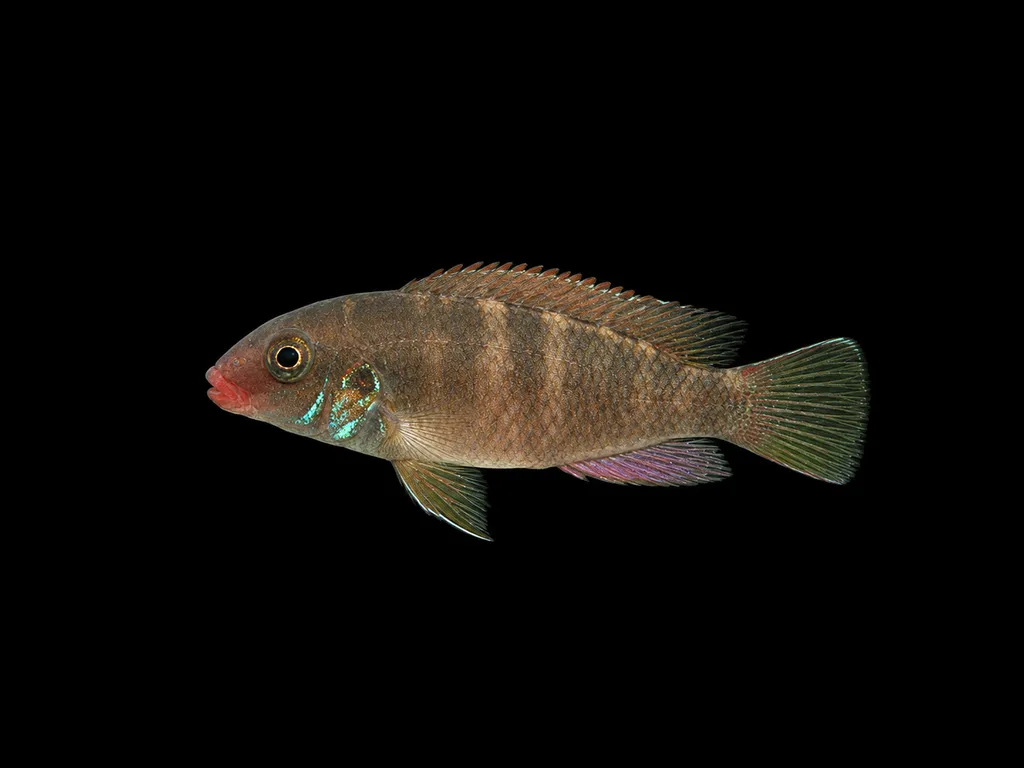
Males display a lipstick-red mouth, and the female flushes deep cherry-red on the belly when she is ready to breed. It is a cave spawner of moderate difficulty.
Good to know
Wallaceochromis rubrolabiatus is a cichlid of the family Cichlidae, marked with several dark vertical bars. Its species name means red lip, and it also goes by the name Pelvicachromis rubrolabiatus.
In the wild
The red-lipped krib comes from the Kolente drainage in Guinea. It lives in soft, acidic streams that run through shaded forest over sand and leaf litter.
Common questions
What size tank does a red-lipped krib need?
A red-lipped krib needs at least 42 gal (160 L). It spends most of its time in the bottom.
What temperature and pH does a red-lipped krib need?
A red-lipped krib is comfortable at 73–81°F (23–27°C) with a pH of 5.5–7.0.
What does a red-lipped krib eat?
A red-lipped krib takes small foods in the lower tank. Feed it frozen bloodworm, brine shrimp and a fine sinking pellet, with a little vegetable matter.
How big does a red-lipped krib get?
An adult red-lipped krib reaches about 3.1 in (8 cm).
How can you tell a male red-lipped krib from a female?
Males display a lipstick-red mouth. The female flushes deep cherry-red on the belly when she is ready to breed.
How does a red-lipped krib breed?
The red-lipped krib is a cave spawner of moderate difficulty. A pair holds a small territory around its cave and becomes protective when breeding.
Related species
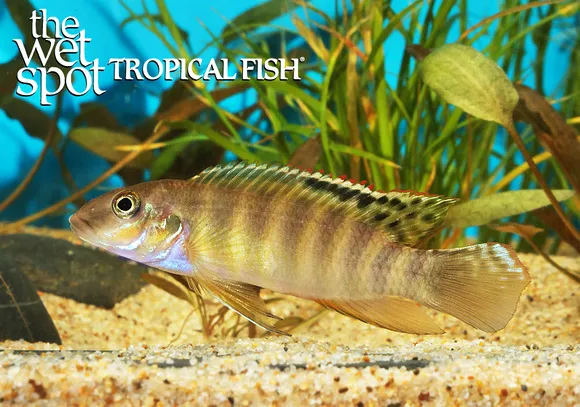 3.7 in (9.5 cm)42 gal (160 L)73–81°F (23–27°C)
Signatus wallaceochromis
Wallaceochromis signatus
3.7 in (9.5 cm) · 42 gal (160 L)
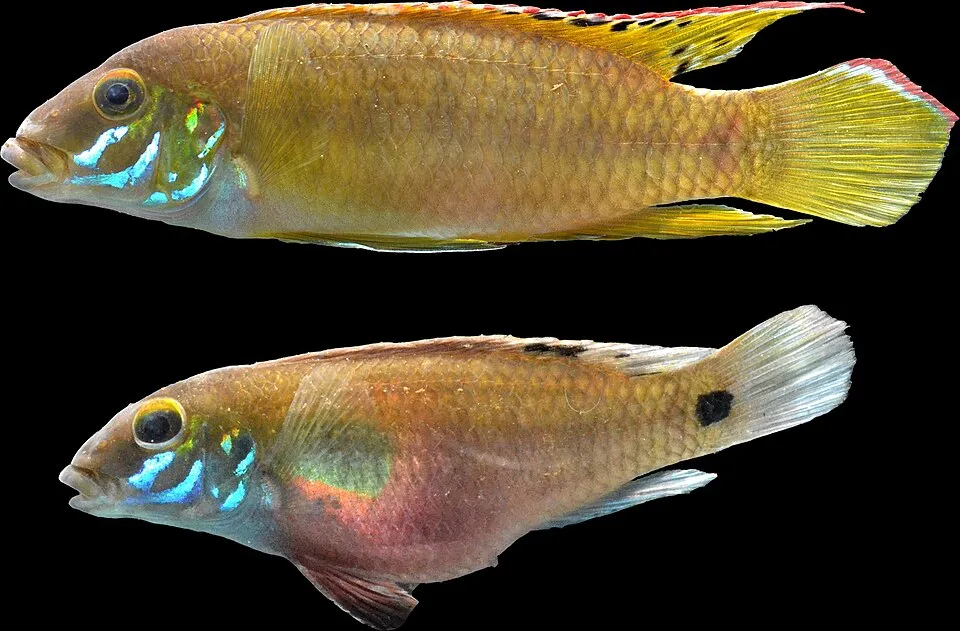 4.9 in (12.5 cm)30 gal (115 L)75–81°F (24–27°C)
Yellow kribensis
Wallaceochromis humilis
4.9 in (12.5 cm) · 30 gal (115 L)
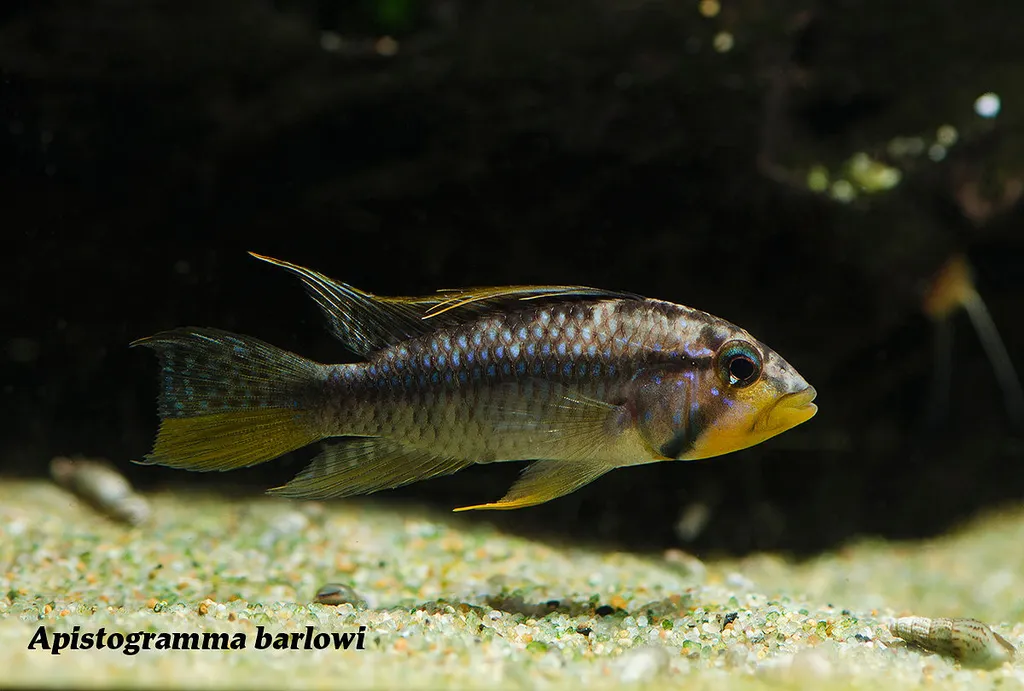 3.1 in (8 cm)20 gal (75 L)73–82°F (23–28°C)
Barlow's dwarf cichlid
Apistogramma barlowi
3.1 in (8 cm) · 20 gal (75 L)
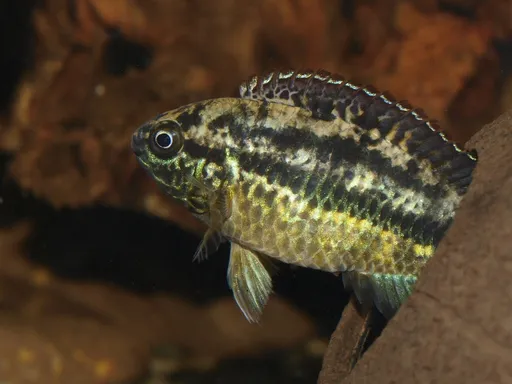 3.1 in (8 cm)16 gal (60 L)72–82°F (22–28°C)
Golden dwarf cichlid
Nannacara anomala
3.1 in (8 cm) · 16 gal (60 L)
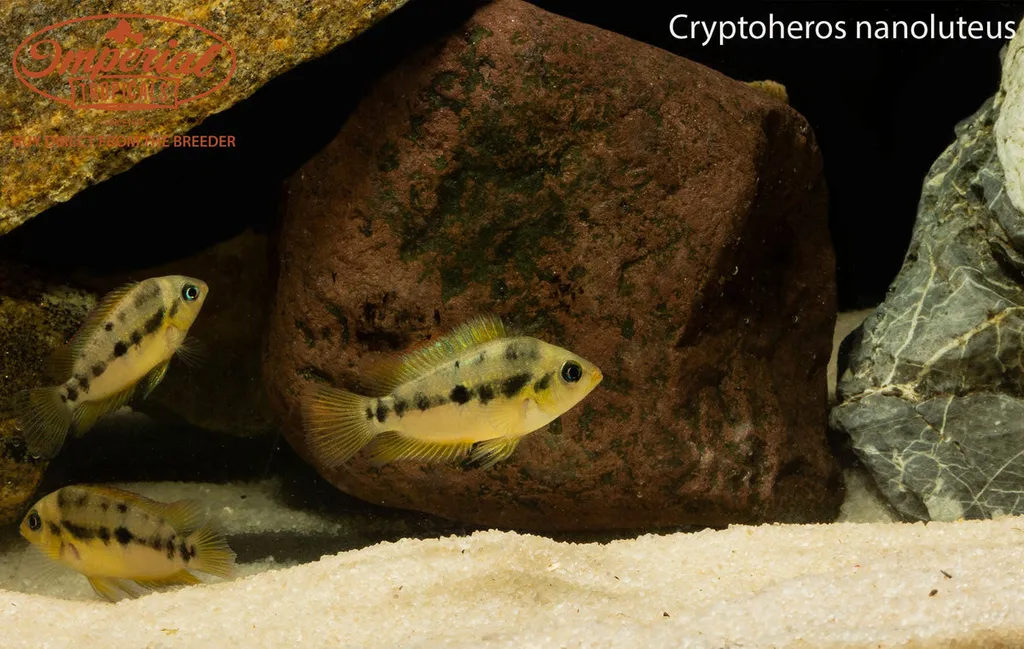 3.1 in (8 cm)29 gal (110 L)75–84°F (24–29°C)
Golden dwarf convict
Amatitlania nanolutea
3.1 in (8 cm) · 29 gal (110 L)
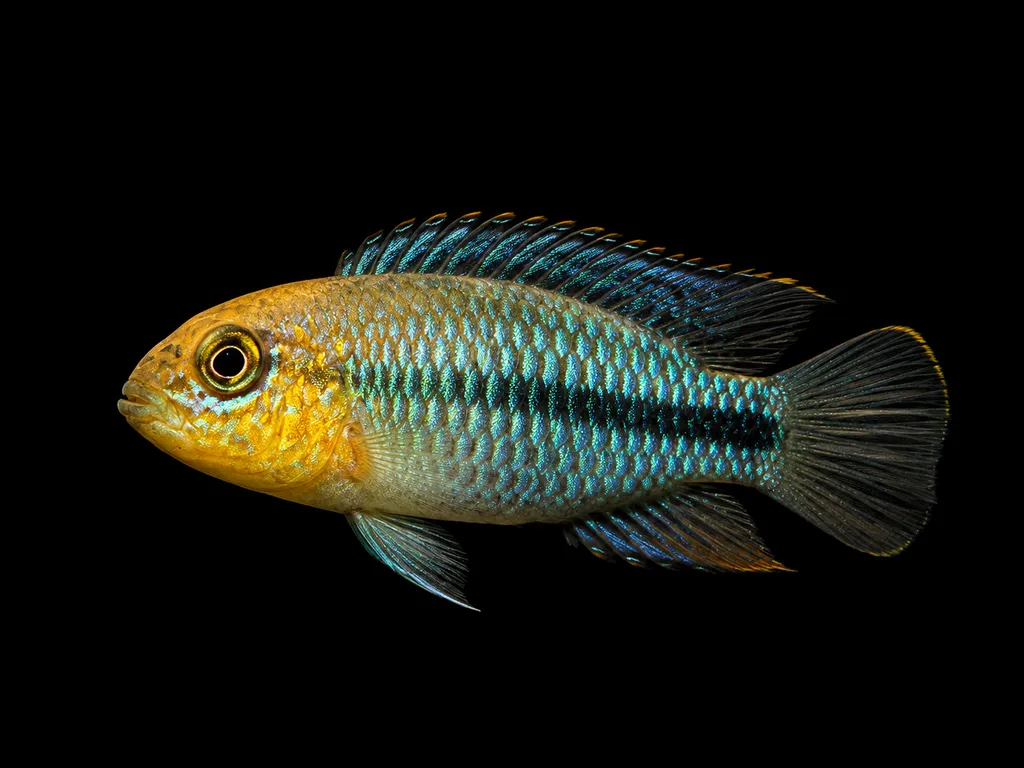 3.1 in (8 cm)14 gal (54 L)75–82°F (24–28°C)
Goldhead nannacara
Nannacara aureocephalus
3.1 in (8 cm) · 14 gal (54 L)