Variety of Flowerhorn cichlid
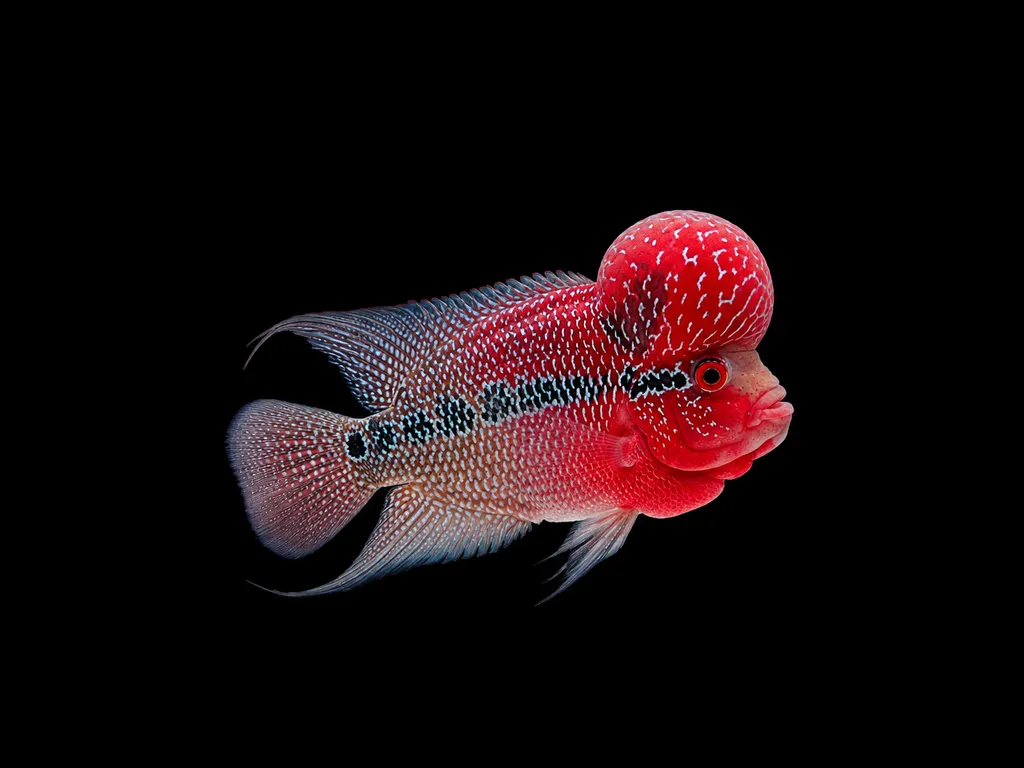
Red dragon flowerhorn
Amphilophus hybrid
The named variety of Amphilophus hybrid · See the species →
Also known as Red Dragon Flowerhorn Cichlid
FreshwaterFish
Care at a glance
- Temperature
- 77–88°F
- 25–31°C
- pH
- 6.5–7.8
- Adult size
- 15.7 in
- 40 cm
- Minimum tank
- 90 gal
- 340 L
- Temperament
- Aggressive
- Social behavior
- Solitary
- Own kind
- One male per tank
- Tankmates
- With caution
- Swim level
- Middle
- Difficulty
- Easy
- Breeding
- Substrate spawner · Hard
- Rarity
- Rare
- Family
- Cichlidae
Overview
Red dragon is a seller's description for a line of flowerhorn, not a certified strain. The red dragon flowerhorn is a large, aggressive hybrid cichlid that is easy to keep in a tank of its own.
Did you know
Buying a flowerhorn to breed from is a coin flip you cannot call for most of a year. Most males are sterile and look exactly like fertile ones. Keepers grow them out for eight to ten months and pair them before they find out which they bought.
Caring for the red dragon flowerhorn
Give one adult red dragon flowerhorn at least 90 gal (340 L), with a heater guard and a strong filter. Keep the setup simple and easy to clean, with a sandy floor and a couple of sturdy pieces of decor. Leave plenty of open swimming space. Secure or remove the decor, since these fish push everything around.
The red dragon flowerhorn is hardy and undemanding about water. Keep the water neutral and moderately hard, at 77 to 88°F (25 to 31°C) and a pH of 6.5 to 7.8. Feed a good quality cichlid pellet as the staple, with occasional frozen or fresh foods such as prawn and earthworm. Avoid overfeeding fatty foods.
Red dragons are large, strong and highly aggressive, so keep one alone in its own tank. A single fish treats the whole aquarium as its territory and may injure or kill tank mates. Many owners keep one as an interactive wet pet that learns to recognize the person who feeds it.
The forehead lump, properly a nuchal hump called the kok, is a normal male feature rather than a deformity. Red dragons are substrate spawners, but breeding is unpredictable and hard. Producing fry often depends on hand-selecting fertile fish.
Good to know
What arrives under the red dragon name differs between farms and between siblings out of one spawn. Fish are graded on red coverage, pearling and head shape, and Super Red Dragon, or SRD, names the premium tier of the line. A juvenile changes a great deal before it finishes, so the grade at purchase is a forecast. Because the base is a hybrid mix, red dragons do not breed true, and every spawn gets graded and culled. Color, pearling and head shape do not travel together, so two fish out of one pair can look unrelated.
In the wild
Flowerhorns are man-made hybrids, with no wild population anywhere. Their breeding dates to 1993, and they appeared on the Malaysian aquarium market in the late 1990s. The base stock crossed Central American cichlids, the red devil and trimac, with the blood parrot brought in from Taiwan. Red dragon is one of the later commercial lines out of that stock, and its cross has never been published.
Common questions
Is a red dragon flowerhorn a different species from the flowerhorn cichlid?
No. A red dragon flowerhorn is a variety of the flowerhorn cichlid, Amphilophus hybrid, and it wants the same tank, water and food as the species.
What size tank does a red dragon flowerhorn need?
A red dragon flowerhorn needs at least 90 gal (340 L). It spends most of its time in the middle.
What does a red dragon flowerhorn eat?
A red dragon flowerhorn eats a good quality cichlid pellet as its staple, with occasional frozen or fresh foods such as prawn and earthworm.
How big does a red dragon flowerhorn get?
An adult red dragon flowerhorn reaches about 15.7 in (40 cm).
How can you tell a male red dragon flowerhorn from a female?
Males carry the forehead lump, the nuchal hump called the kok. It is a normal male feature, not a deformity.
How does a red dragon flowerhorn breed?
Red dragon flowerhorns are substrate spawners, but breeding them is unpredictable and hard. Producing fry often depends on hand-selecting fertile fish.
Related species
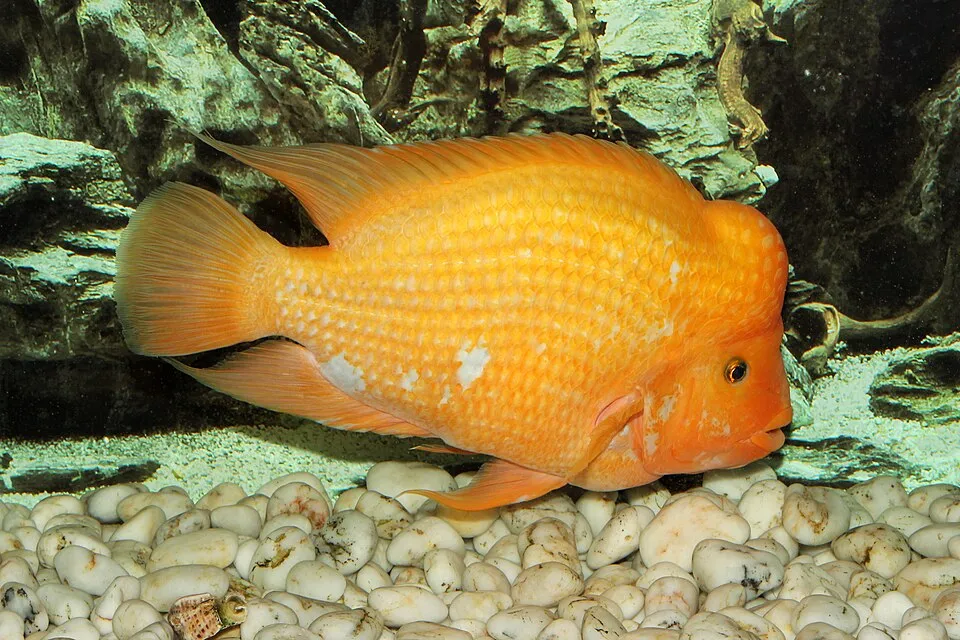 13.8 in (35 cm)79 gal (300 L)70–79°F (21–26°C)
Midas cichlid
Amphilophus citrinellus
13.8 in (35 cm) · 79 gal (300 L)
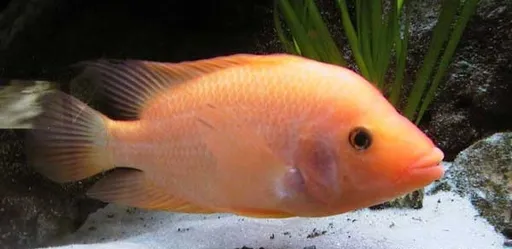 13.8 in (35 cm)75 gal (284 L)75–79°F (24–26°C)
Red devil cichlid
Amphilophus labiatus
13.8 in (35 cm) · 75 gal (284 L)
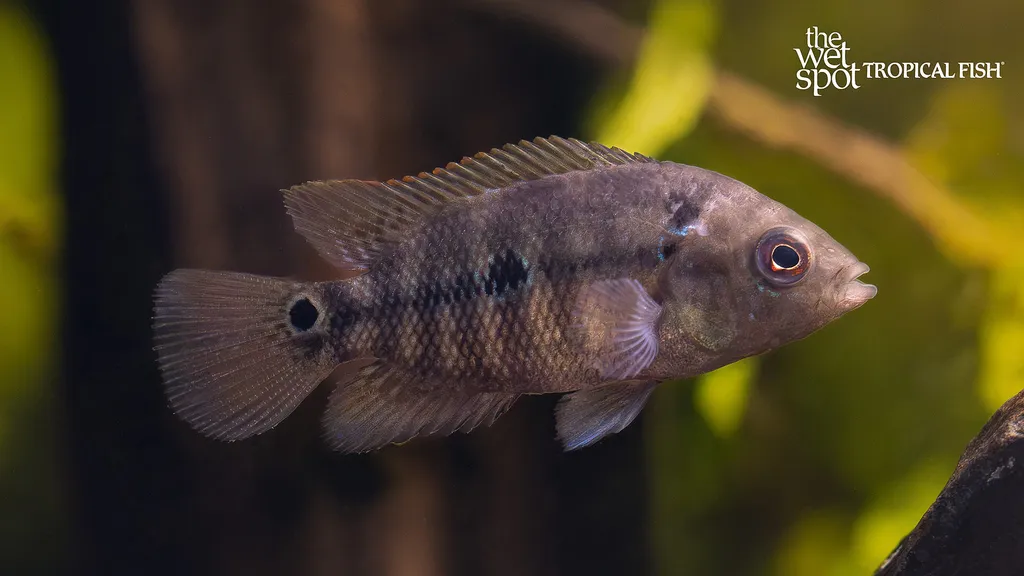 13.8 in (35 cm)90 gal (340 L)75–82°F (24–28°C)
Trimac cichlid
Amphilophus trimaculatus
13.8 in (35 cm) · 90 gal (340 L)
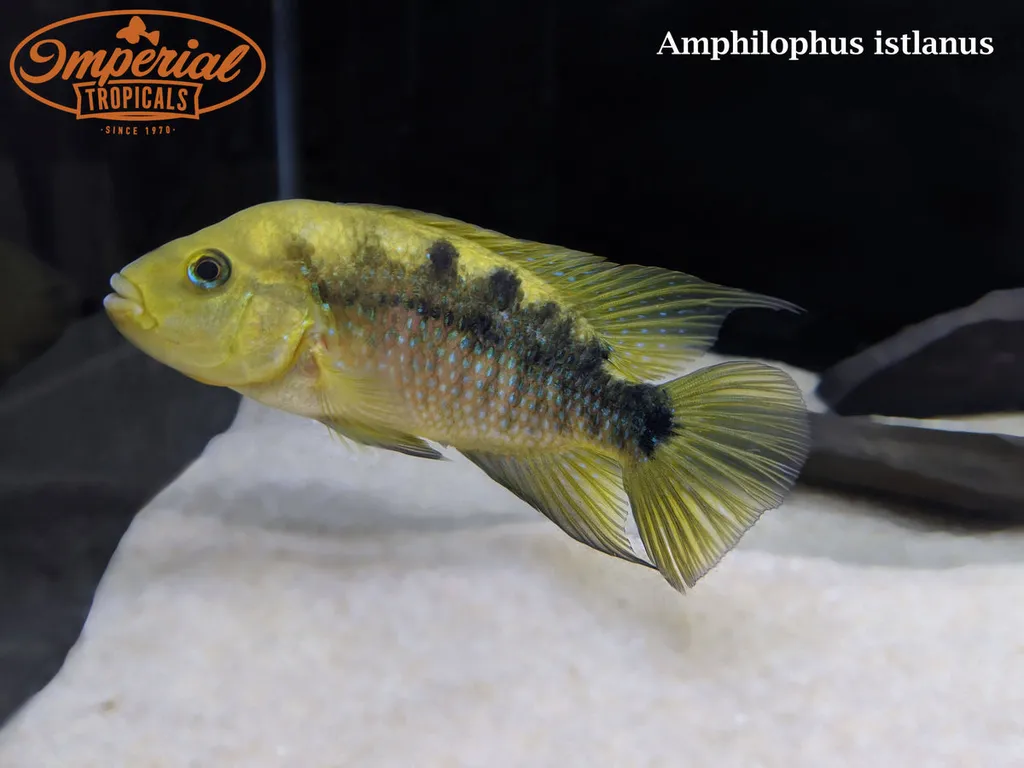 11.8 in (30 cm)119 gal (450 L)75–84°F (24–29°C)
Istlanus cichlid
Amphilophus istlanus
11.8 in (30 cm) · 119 gal (450 L)
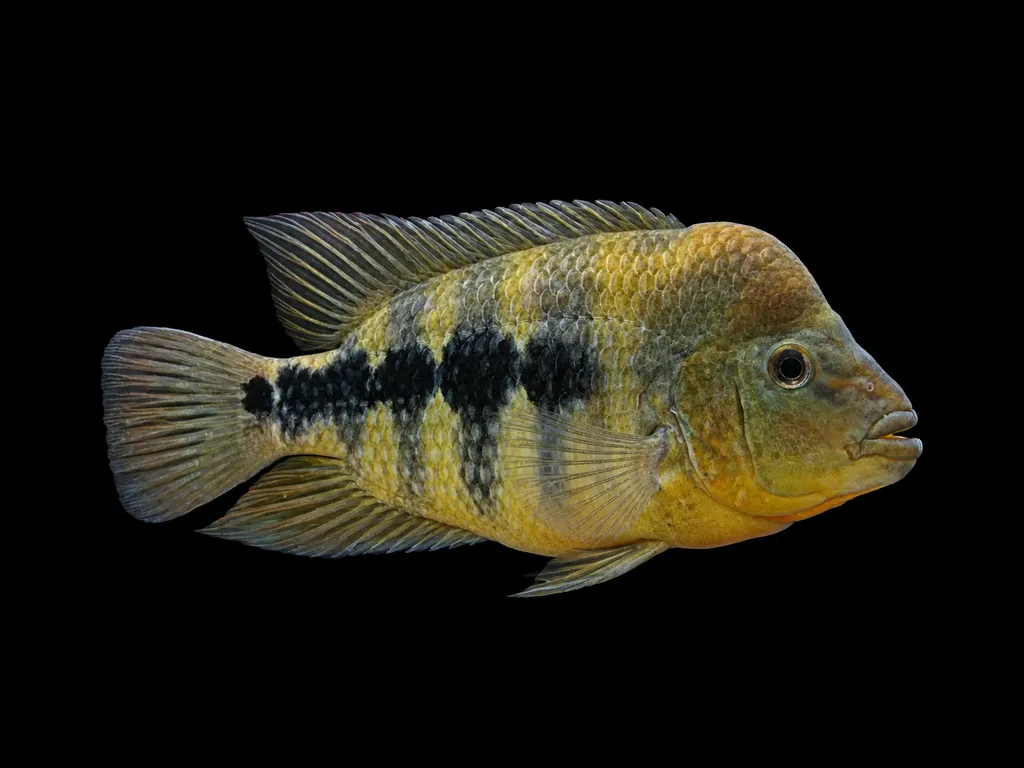 11.4 in (29 cm)132 gal (500 L)75–84°F (24–29°C)
Chancho midas cichlid
Amphilophus chancho
11.4 in (29 cm) · 132 gal (500 L)
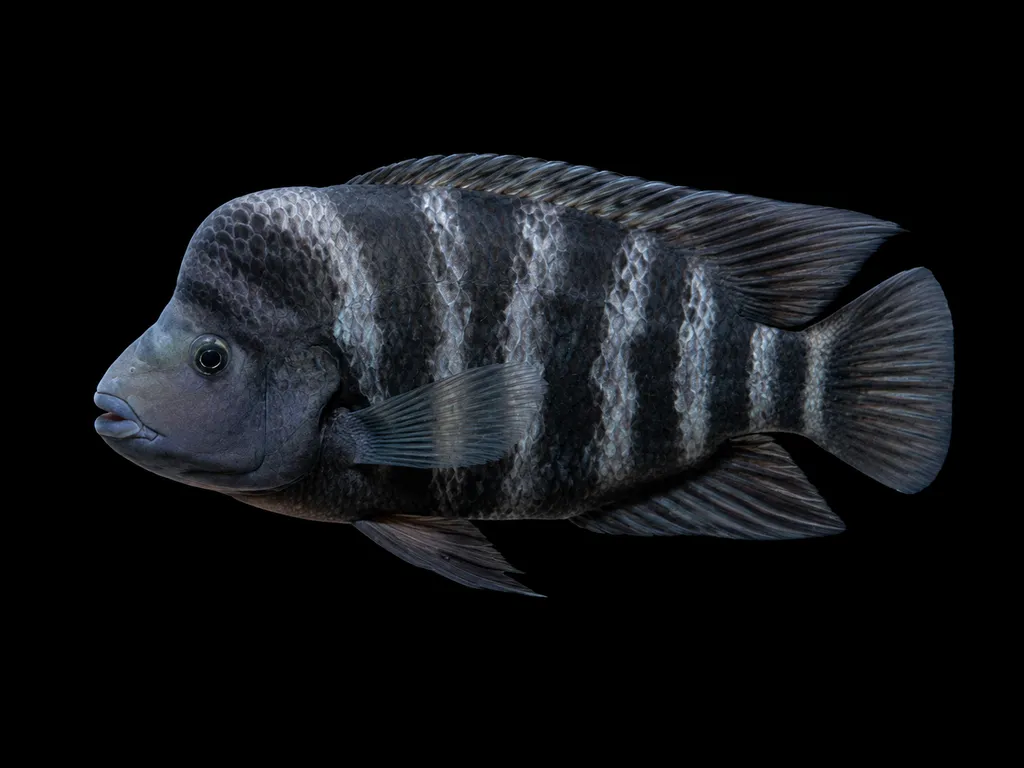 7.5 in (19 cm)119 gal (450 L)75–84°F (24–29°C)
Arrow midas cichlid
Amphilophus sagittae
7.5 in (19 cm) · 119 gal (450 L)