Egyptian mouthbrooder
Pseudocrenilabrus multicolor
Also known as Dwarf Egyptian mouthbrooder, Egyptian mouthbreeder
FreshwaterFish

Care at a glance
- Temperature
- 72–79°F
- 22–26°C
- pH
- 7.0–8.0
- Adult size
- 3.1 in
- 8 cm
- Minimum tank
- 20 gal
- 75 L
- Temperament
- Mostly peaceful
- Social behavior
- Social
- Tankmates
- With caution
- Swim level
- Middle
- Difficulty
- Easy
- Breeding
- Easy
- Rarity
- Common
- Family
- Cichlidae
- Origin
- Slow rivers, swamps and pools across northeastern Africa including the Nile basin.
Overview
A male with a few females fits in a planted tank as small as 75 liters with neutral to slightly alkaline water at 22 to 26 C, pH 7.0 to 8.0. It is peaceful enough for a mixed tank but males spar over territory during spawning. Feed small foods like flake, micro pellets and frozen brine shrimp or daphnia. Provide caves and plants so females have places to retreat.
In the wild
The Egyptian mouthbrooder is a small, widespread cichlid from slow and still waters across northeastern Africa, including the Nile system. It lives among plants and along soft bottoms in shallow water. Males flash gold, blue and red fins while females stay plain.
Good to know
This was one of the first mouthbrooding cichlids studied in detail, and the female carries the eggs and fry in her throat pouch. Males dig a small pit and display in it to court passing females. The species tolerates a wide range of conditions, from neutral to slightly alkaline water.
Did you know
Because it broods so readily and the female can be watched holding fry, this little cichlid has long been a favorite for teaching people how mouthbrooding works.
Common questions
What size tank does an Egyptian mouthbrooder need?
An Egyptian mouthbrooder needs at least 20 gal (75 L). It spends most of its time in the middle.
What temperature and pH does an Egyptian mouthbrooder need?
An Egyptian mouthbrooder is comfortable at 72–79°F (22–26°C) with a pH of 7.0–8.0.
How big does an Egyptian mouthbrooder get?
An adult Egyptian mouthbrooder reaches about 3.1 in (8 cm).
Related species
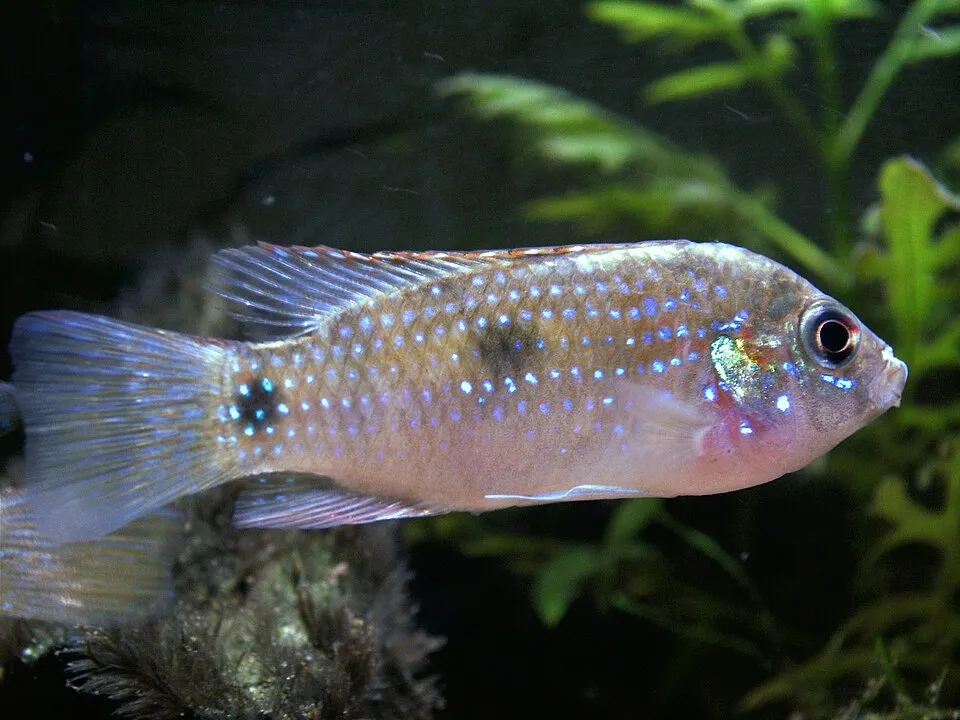 3.1 in (8 cm)25 gal (95 L)73–81°F (23–27°C)
African butterfly cichlid
Anomalochromis thomasi
3.1 in (8 cm) · 25 gal (95 L)
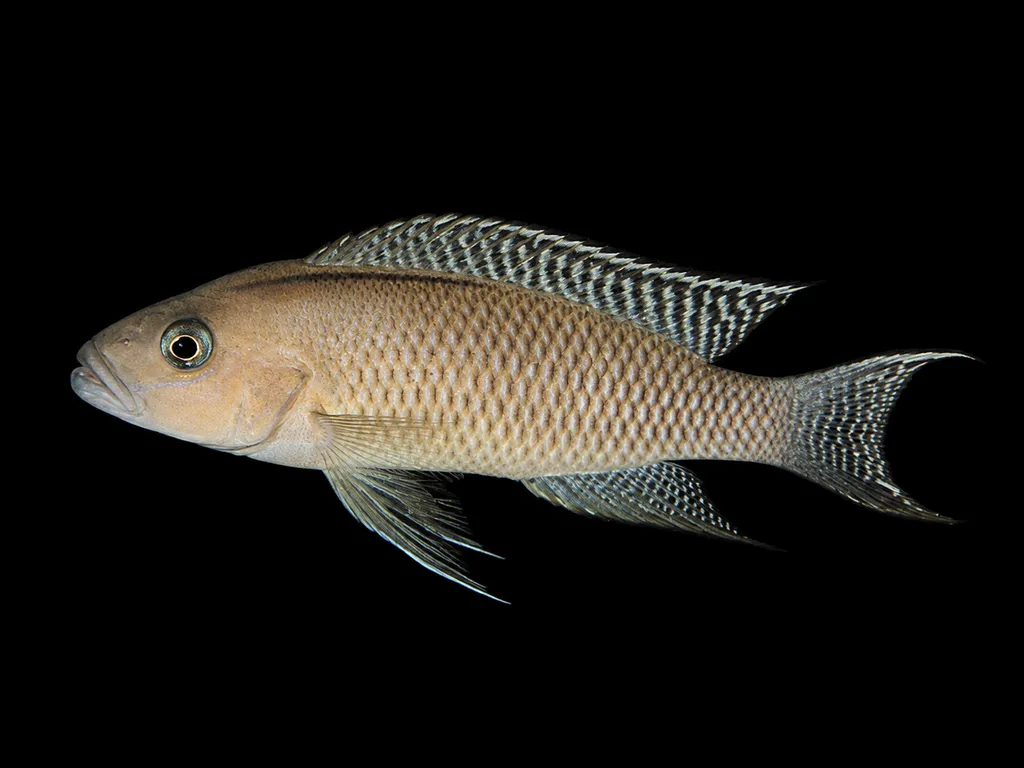 3.1 in (8 cm)42 gal (160 L)75–81°F (24–27°C)
Falcicula cichlid
Neolamprologus falcicula
3.1 in (8 cm) · 42 gal (160 L)
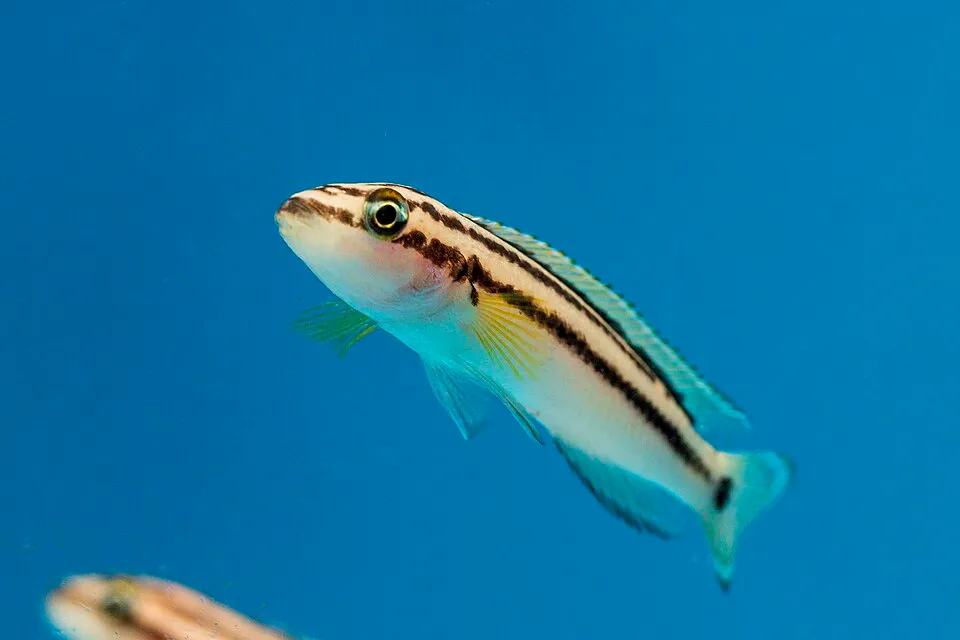 3.1 in (8 cm)18 gal (70 L)73–81°F (23–27°C)
Golden julie
Julidochromis ornatus
3.1 in (8 cm) · 18 gal (70 L)
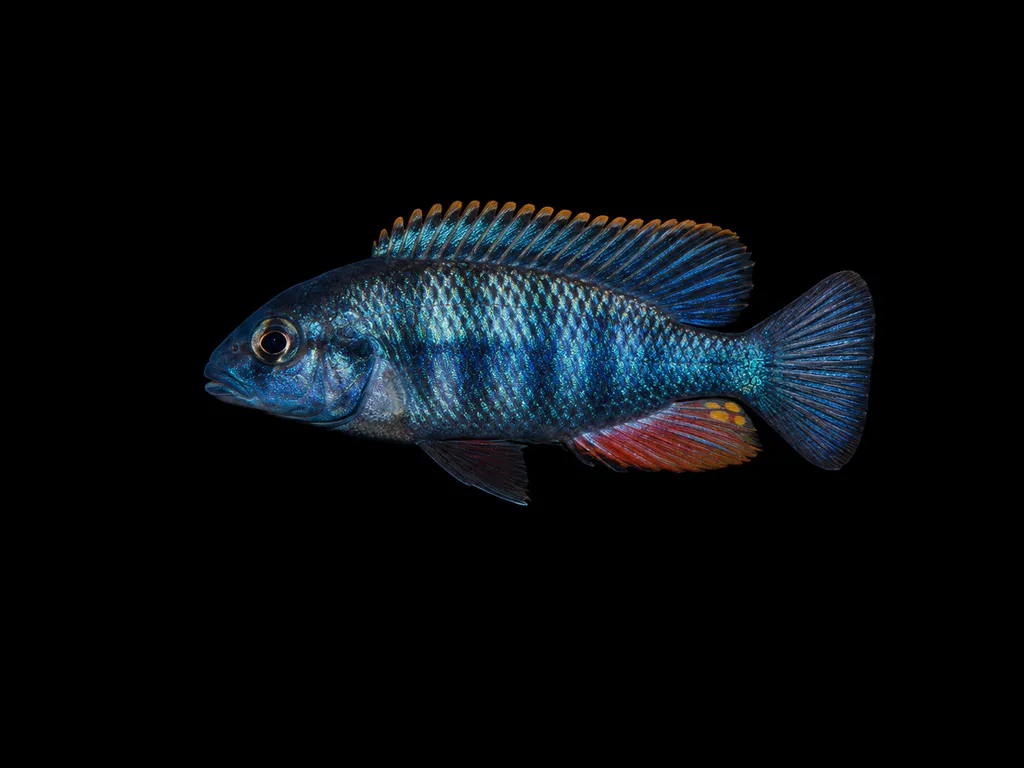 3.1 in (8 cm)42 gal (160 L)73–81°F (23–27°C)
Perrieri hap
Prognathochromis perrieri
3.1 in (8 cm) · 42 gal (160 L)
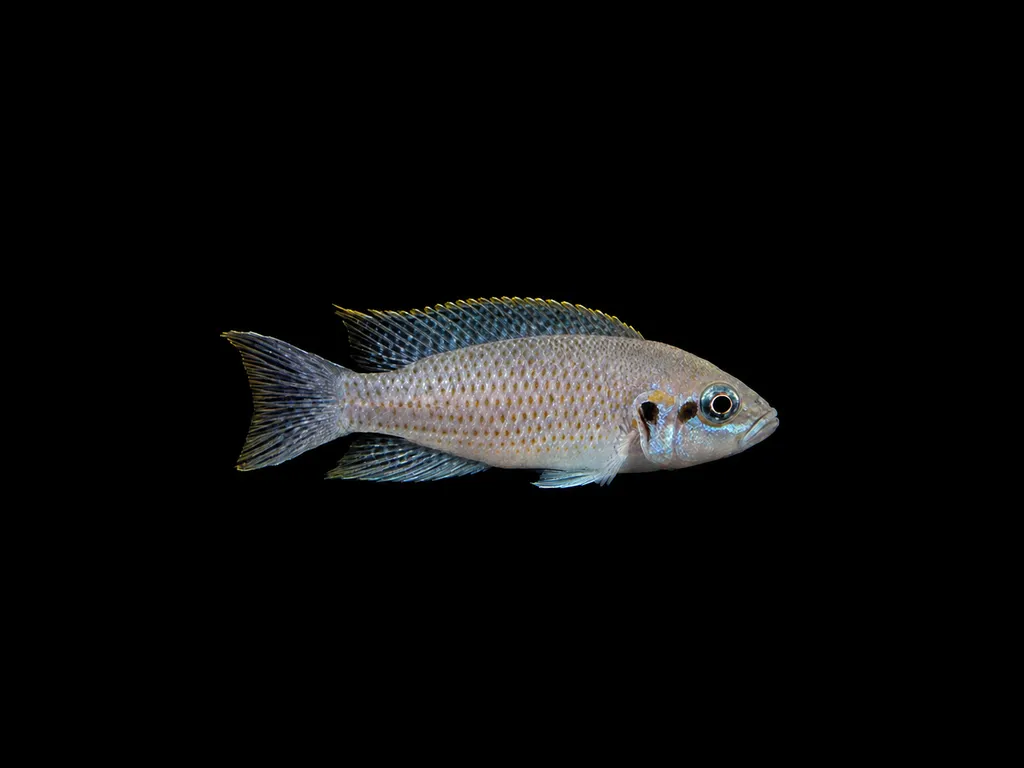 3.1 in (8 cm)42 gal (160 L)75–81°F (24–27°C)
Splendid lamprologus
Neolamprologus splendens
3.1 in (8 cm) · 42 gal (160 L)
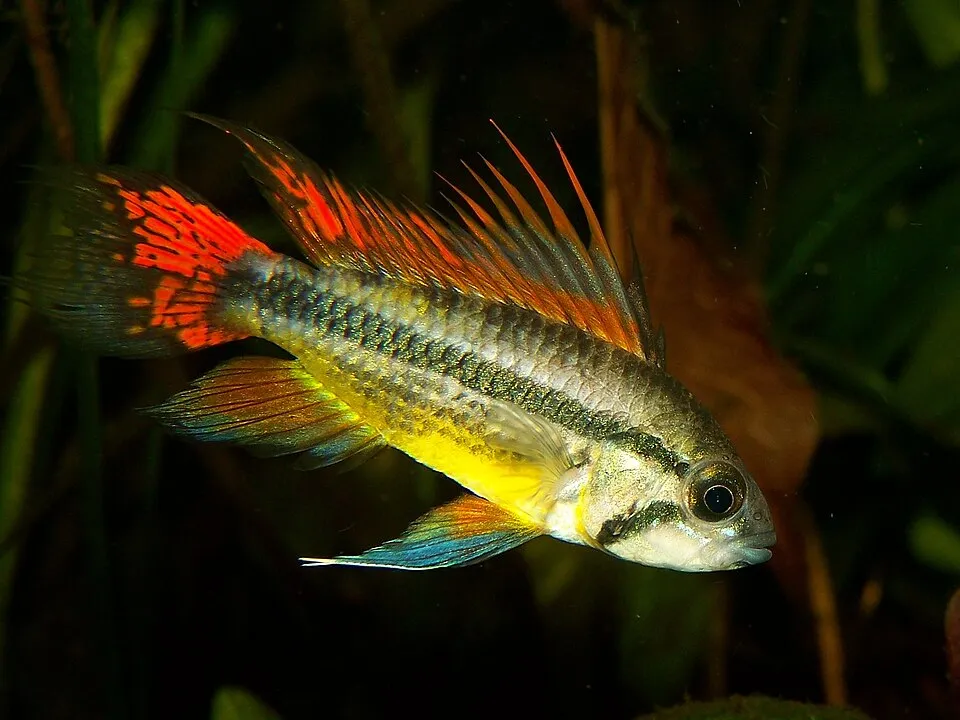 3 in (7.5 cm)18 gal (70 L)72–84°F (22–29°C)
Cockatoo cichlid
Apistogramma cacatuoides
3 in (7.5 cm) · 18 gal (70 L)