Pearl eartheater
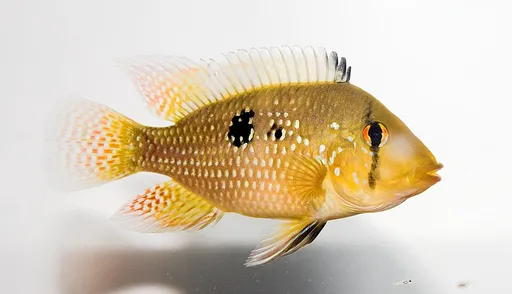
Geophagus brasiliensis
Also known as Pearl cichlid, Brazilian cichlid
FreshwaterFish
Care at a glance
- Temperature
- 68–79°F
- 20–26°C
- pH
- 6.5–7.5
- Adult size
- 11 in
- 28 cm
- Minimum tank
- 75 gal
- 284 L
- Temperament
- Mostly peaceful
- Social behavior
- Solitary
- Tankmates
- With caution
- Swim level
- Bottom
- Difficulty
- Easy
- Breeding
- Easy
- Rarity
- Very common
- Family
- Cichlidae
- Origin
- Coastal drainages of eastern and southern Brazil
Overview
Keep them singly or as a mated pair in a tank of 284 liters or larger, since they need room and stay solitary rather than living in a group. They are mostly peaceful but territorial, especially when breeding, so expect them to claim and defend a patch of the bottom. They spend their time at the substrate, mouthing sand and spitting it back out to pull food from it. Water can run from 20 to 26 C at a pH of 6.5 to 7.5, which gives you a lot of room to work with. Feed sinking pellets, frozen foods like bloodworms and brine, and the occasional vegetable matter. Skip small tankmates and shrimp, since anything that fits in the mouth gets eaten.
In the wild
Pearl eartheaters come from the coastal drainages of eastern and southern Brazil, where they range over sandy beds in rivers and lakes, including cooler subtropical stretches that stay milder than most South American cichlid water. Give them a deep, fine sand bed so they can sift it the way they do constantly in the wild, with rockwork and driftwood to break up sightlines and mark out territory. Secure or pot any plants, since these fish dig and will uproot loose ones. Run a tank of at least 284 liters, with temperature anywhere from 20 to 26 C and a pH of 6.5 to 7.5. They handle that range easily and take cooler water better than most of their relatives.
Good to know
This is Geophagus brasiliensis, a large eartheater in the family Cichlidae, reaching about 28 cm as an adult. It is an easy biparental substrate spawner, with both parents guarding the eggs and fry. A healthy fish can live well over a decade. Most in the trade are tank-bred, though wild-type stock turns up too.
Did you know
The eartheater name comes from how they feed. They take in mouthfuls of sand, sort out worms, insect larvae, and other small bits inside the mouth and gills, then spit the clean sand back out. Watch a tank of them and the surface of the sand bed is never still, since they rework it all day long.
Common questions
What size tank does a Pearl eartheater need?
A Pearl eartheater needs at least 75 gal (284 L). It spends most of its time in the bottom.
What temperature and pH does a Pearl eartheater need?
A Pearl eartheater is comfortable at 68–79°F (20–26°C) with a pH of 6.5–7.5.
How big does a Pearl eartheater get?
An adult Pearl eartheater reaches about 11 in (28 cm).
Related species
 11.8 in (30 cm)159 gal (600 L)77–84°F (25–29°C)
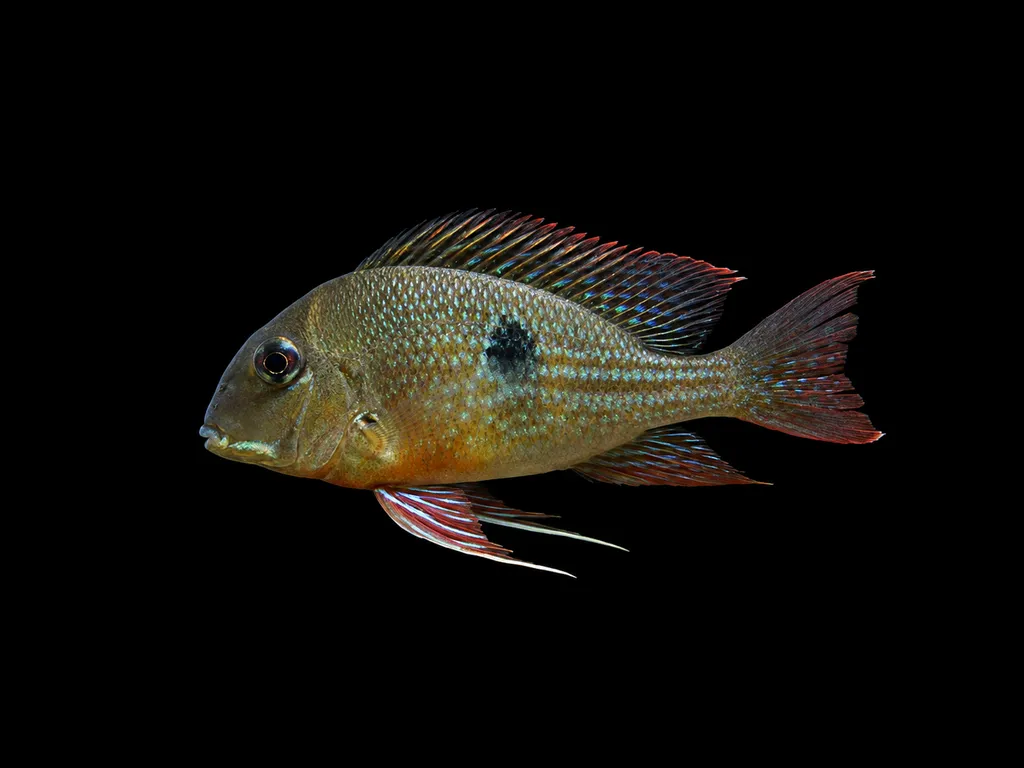
Proximus eartheater
Geophagus proximus
11.8 in (30 cm) · 159 gal (600 L)
 10.2 in (26 cm)119 gal (450 L)77–84°F (25–29°C)
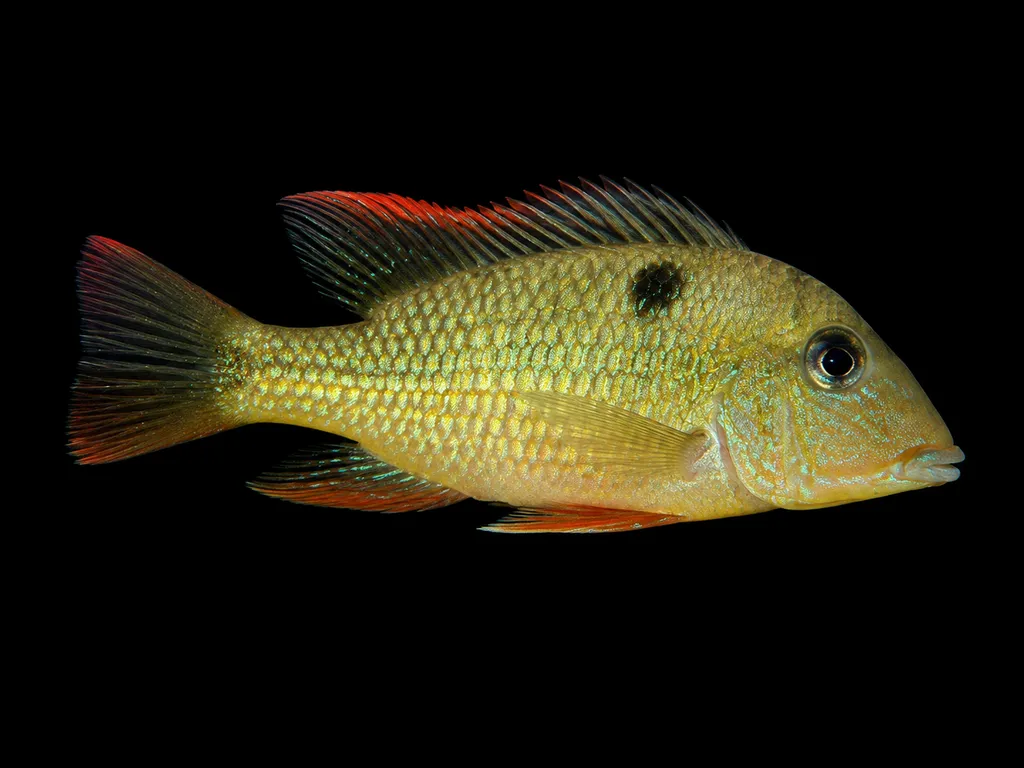
Panama eartheater
Geophagus crassilabris
10.2 in (26 cm) · 119 gal (450 L)
 9.8 in (25 cm)119 gal (450 L)77–84°F (25–29°C)
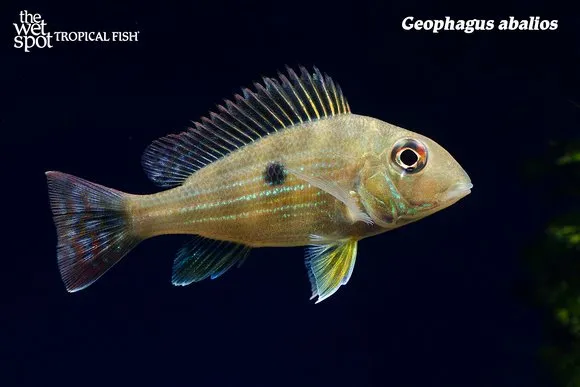
Abalios eartheater
Geophagus abalios
9.8 in (25 cm) · 119 gal (450 L)
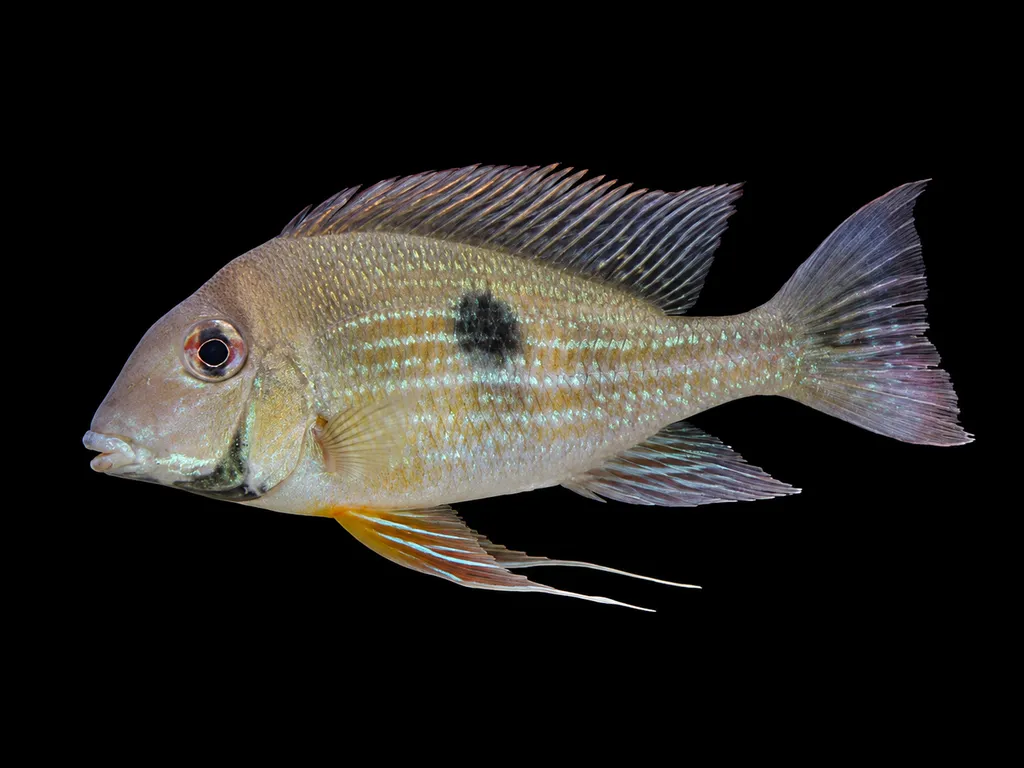 9.8 in (25 cm)119 gal (450 L)77–84°F (25–29°C)
Dicrozoster eartheater
Geophagus dicrozoster
9.8 in (25 cm) · 119 gal (450 L)
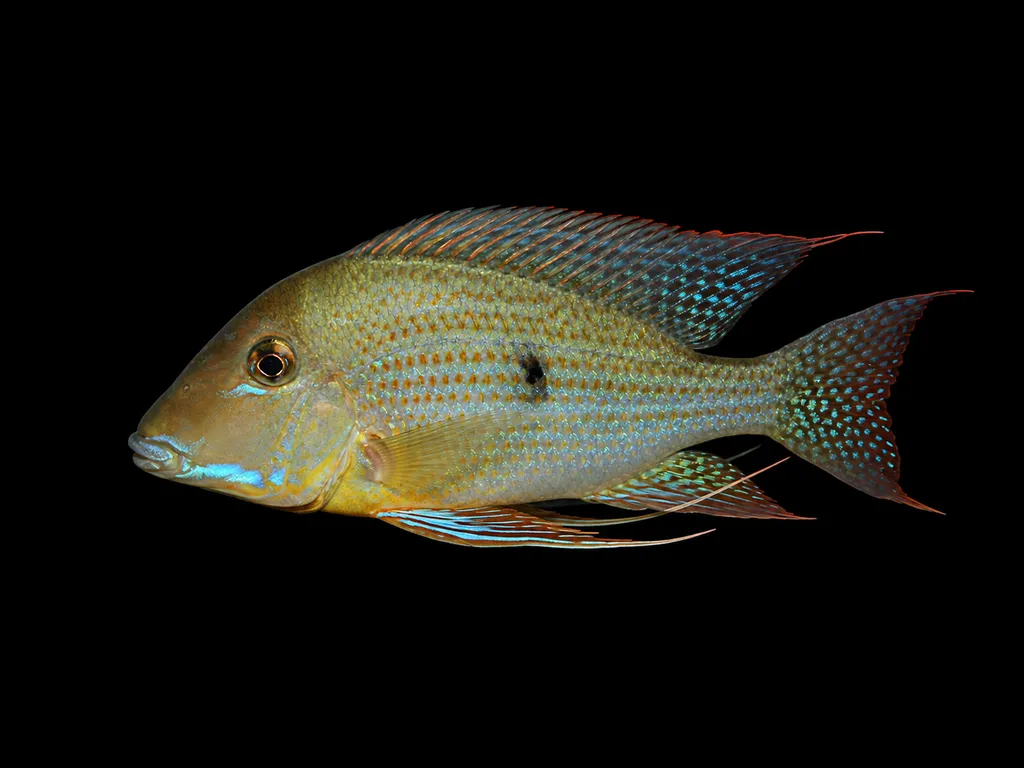 9.4 in (24 cm)119 gal (450 L)77–84°F (25–29°C)
Neambi eartheater
Geophagus neambi
9.4 in (24 cm) · 119 gal (450 L)
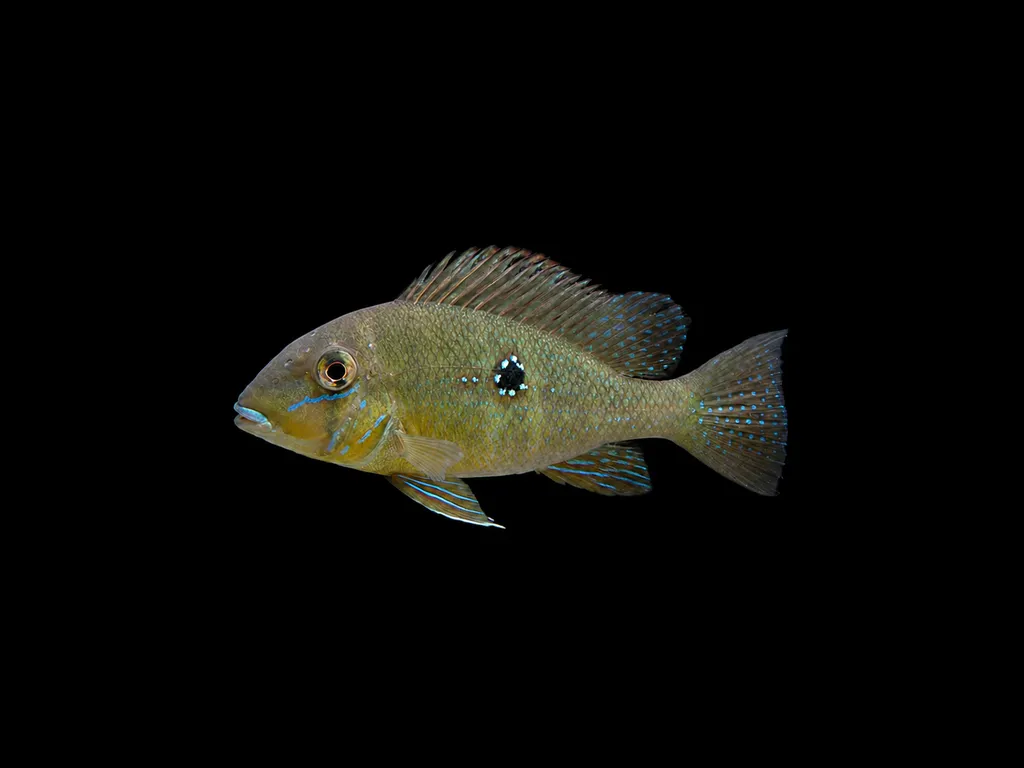 9.4 in (24 cm)119 gal (450 L)77–84°F (25–29°C)
Silverspot eartheater
Geophagus argyrostictus
9.4 in (24 cm) · 119 gal (450 L)