Pearl bubble coral
Physogyra lichtensteini
Also known as Pearl Coral, Grape Bubble Coral, Tipped Bubblegum Coral
SaltwaterCoral
Care at a glance
- Temperature
- 75–81°F
- 24–27°C
- pH
- 8.1–8.4
- Adult size
- 9.8 in
- 25 cm
- Minimum tank
- 11 gal
- 40 L
- Temperament
- Mostly peaceful
- Social behavior
- Solitary
- Swim level
- Bottom
- Difficulty
- Beginner
- Breeding
- Hard
- Rarity
- Common
- Reef safe
- Reef safe
- Family
- Plerogyridae
- Origin
- Indo-Pacific, from the Red Sea and East Africa to the Solomon Islands and Australia
Overview
It does best under lower light than most LPS, roughly 75–150 PAR, with gentle, low to moderate flow that will not blow its small vesicles around. Place it in a shaded lower or mid spot with room around it, since its nighttime sweeper tentacles are potent and can reach and damage corals placed downstream. Feeding is optional since it draws most of its energy from light, but it will take fine meaty foods after dark once the tentacles emerge. Keep water quality stable, since it tolerates swings less well than the closely related Plerogyra.
In the wild
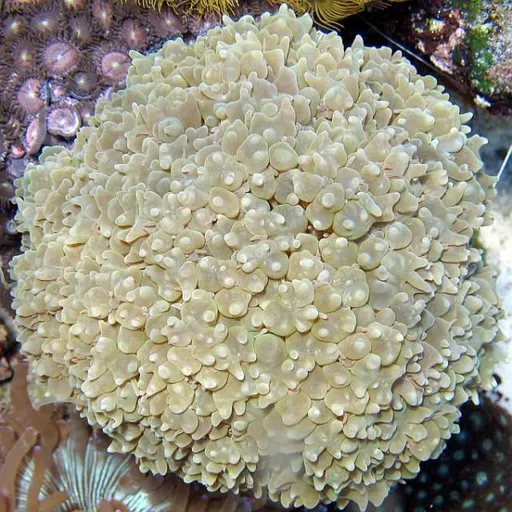
Physogyra lichtensteini lives in shaded lagoons, caves, and the protected undersides of reef slopes across the Indo-Pacific, conditions with low light and gentle water movement. Colonies form meandering plates studded with clusters of small, teardrop-shaped vesicles that pack far more densely than the larger bubbles of its relative Plerogyra. In the aquarium it wants a similarly shaded, calm spot low to mid in the tank where those clustered bubbles are not disturbed.
Good to know
Physogyra lichtensteini is the only species in its genus and, like Plerogyra, belongs to the family Plerogyridae. It is told apart from Plerogyra sinuosa by its smaller, far more numerous vesicles, only 3–5 mm across compared with the roughly 1–2.5 cm bubbles of Plerogyra, and by a skeleton that forms broad plates rather than tall winding ridges. It leans heavily on its zooxanthellae and, like other bubble corals, only reveals its true feeding tentacles once the bubbles deflate at night.
Did you know
Even though its bubbles are only a few millimeters across, a mature Physogyra colony can carry hundreds of them clustered together, giving it a denser, pearl-studded look next to the larger, looser grapes of Plerogyra.
Common questions
What size tank does a Pearl bubble coral need?
A Pearl bubble coral needs at least 11 gal (40 L). It spends most of its time in the bottom.
What temperature and pH does a Pearl bubble coral need?
A Pearl bubble coral is comfortable at 75–81°F (24–27°C) with a pH of 8.1–8.4.
How big does a Pearl bubble coral get?
An adult Pearl bubble coral reaches about 9.8 in (25 cm).
Related species
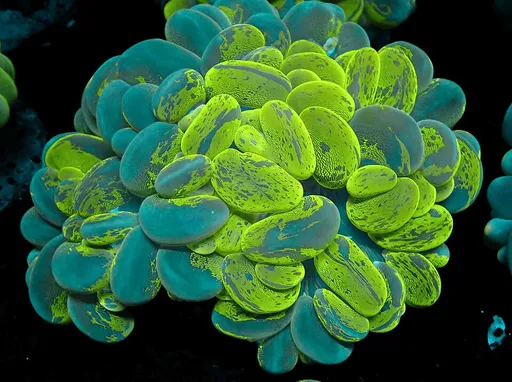 11.8 in (30 cm)11 gal (40 L)75–81°F (24–27°C)
Bubble coral
Plerogyra sinuosa
11.8 in (30 cm) · 11 gal (40 L)
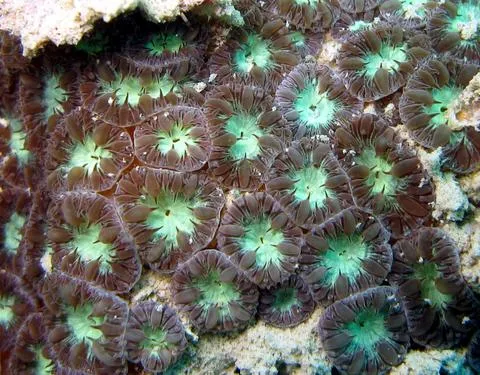 5.9 in (15 cm)20 gal (75 L)75–81°F (24–27°C)
Blastomussa wellsi
5.9 in (15 cm) · 20 gal (75 L)
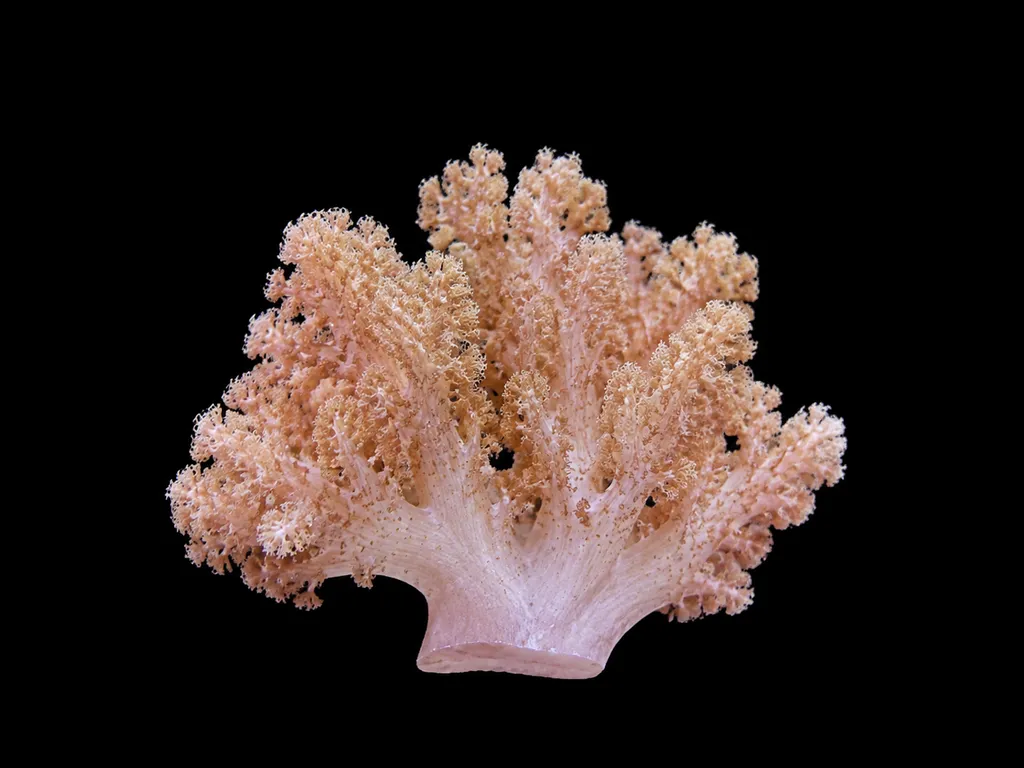 9.8 in (25 cm)26 gal (100 L)75–81°F (24–27°C)
Cauliflower colt coral
Klyxum simplex
9.8 in (25 cm) · 26 gal (100 L)
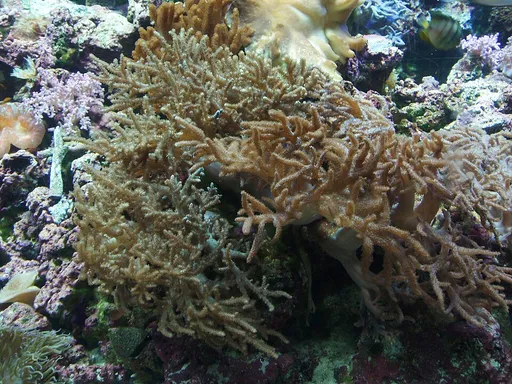 9.8 in (25 cm)20 gal (75 L)75–81°F (24–27°C)
Finger leather
Sinularia
9.8 in (25 cm) · 20 gal (75 L)
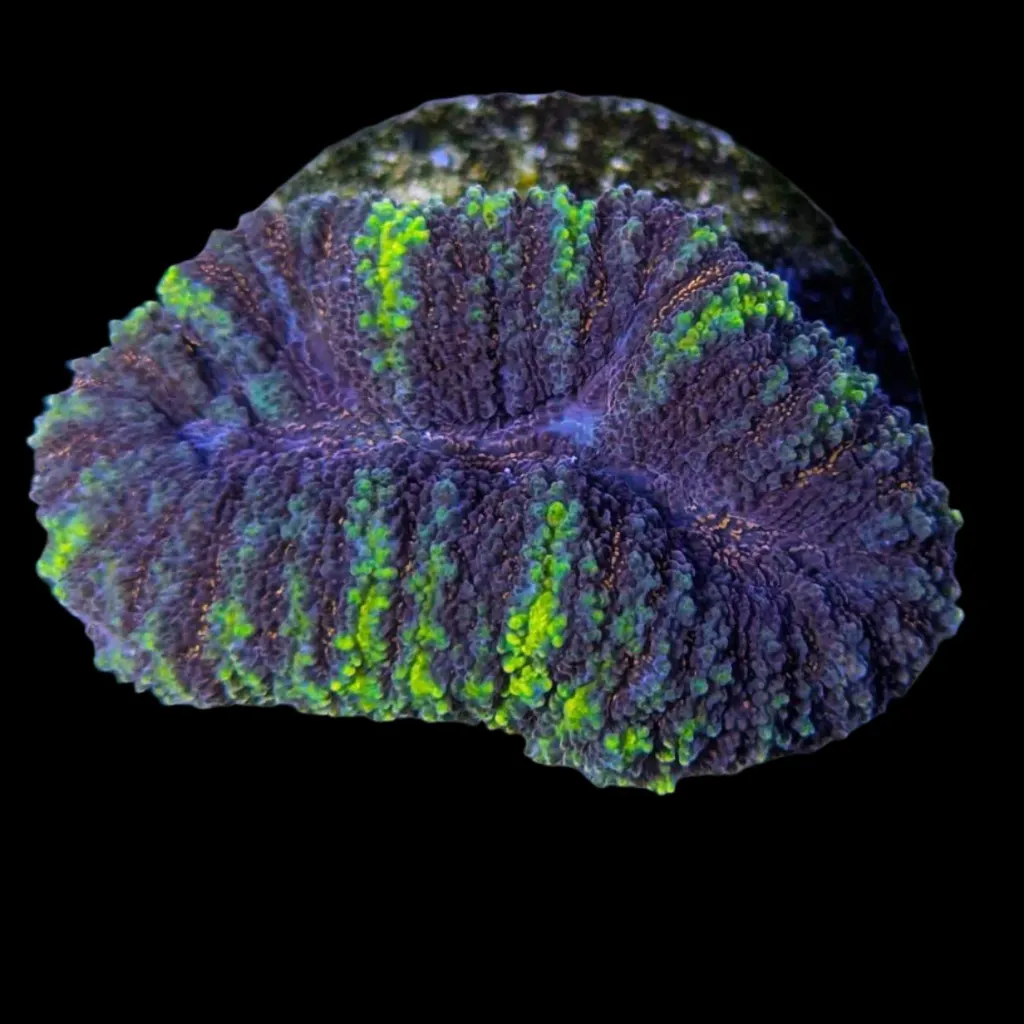 9.8 in (25 cm)26 gal (100 L)75–81°F (24–27°C)
Grooved brain coral
Lobophyllia recta
9.8 in (25 cm) · 26 gal (100 L)
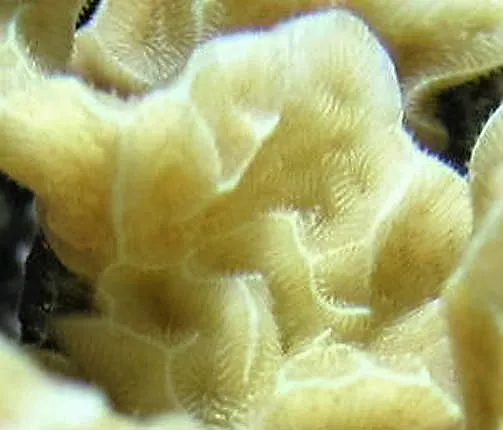 9.8 in (25 cm)20 gal (75 L)75–81°F (24–27°C)
Leaf coral
Pavona frondifera
9.8 in (25 cm) · 20 gal (75 L)